The Matador 100 Project: Dustdevils, Superchunk, Railroad Jerk (Olé 003 through Olé 005)
This project continues to move forward and why shouldn’t it? Two self-titled releases as well as a record of older, unreleased material round out Matador’s first five releases. Let’s get to it…
Dustdevils – Geek Drip (Olé-003)
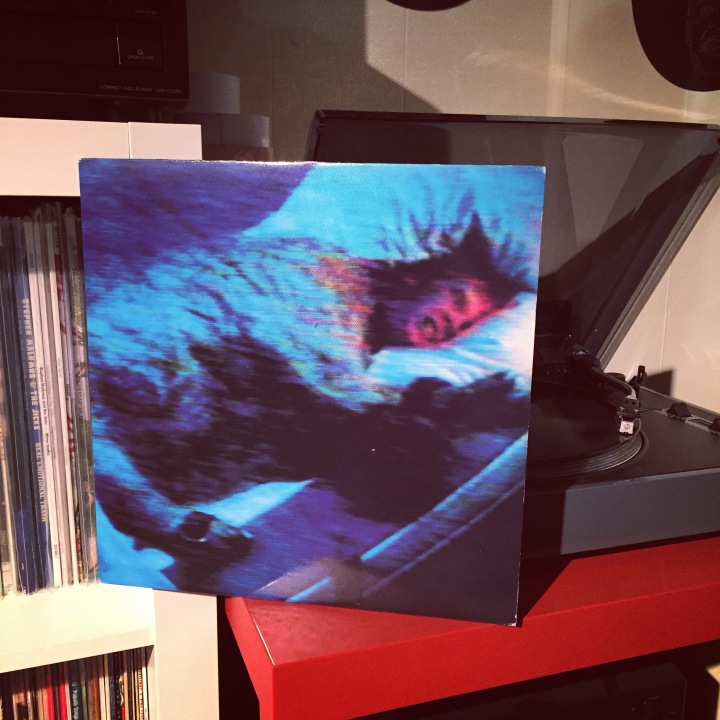
The first controversy happens with this Dustdevils’ release of older material (circa ’88). The catalog number on the record sleeve says “Olé-02″ not the Olé-03 noted on Matador’s official discography. To complicate matters, this record was actually released after the HP Zinker 7”. Who knows why the switch happened? I’ll go with the discography for the purposes of this little project in hopes the surviving members of HP and DD don’t get into some kind of indi rock feud over it.
Some research I did on Dustdevils (read “read it on Wikipedia) revealed that Pavement’s Mark Ibold played with the band. There is a mention of a “Mark” on the album’s sleeve (“Hello to Mark & Rick”), but a “Keith” seems to be credited with playing bass. I don’t know if this means this Keith played on these early recordings and Mark later joined or what. That said, “Keith” seems to be Keith Gregory of The Wedding Present who later covered Pavement’s “Box Elder.” But I digress.
From the opening tracks, Dustdevils are an early missing link between Matador and Sonic Youth. I remember reading there were always flirtations between the label and SY until their eventual signing and plenty of Matador bands have toured with SY, but this record could have easily been recorded by Sonic Youth. The female vocals are a little more traditional than Kim Gordon’s growl, but everything else sounds like it’s in the same ballpark. An excellent discovery. I will have to check out more polished releases from Dustdevils.
Superchunk – S/T (Olé-004)
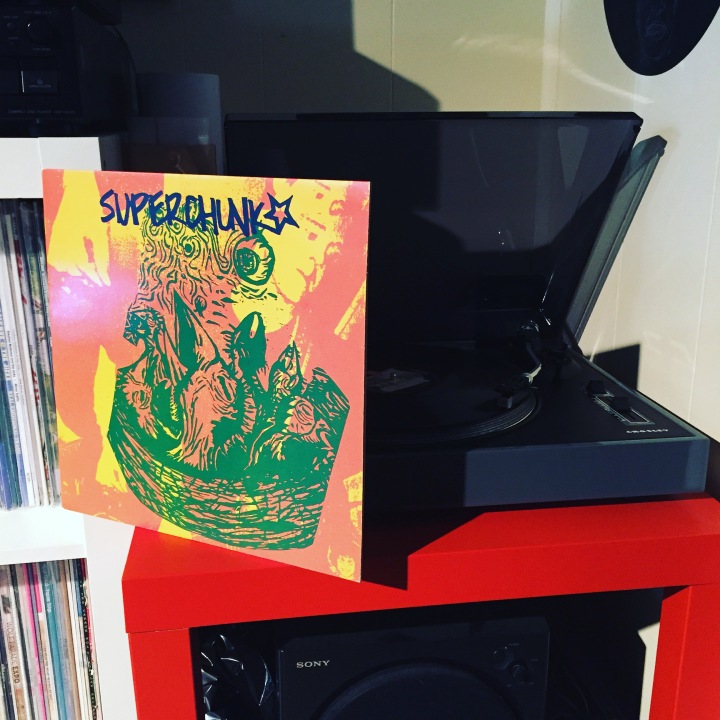
This is a bit of the holy grail for me in the first 5-10 releases. It’s a legendary band’s debut release and proved that they were pretty great in 1990. I somehow remember not liking early Superchunk, but that may have been No Pocky for Kitty (another album to revisit).
The band certainly sounds like everything from the 90’s from Guided By Voices to Yo La Tengo, but it’s “Slack Motherfucker” that will always stand out as their anthem. One could argue that while Pavement represented 90’s indie rock as a band, “Slack Motherfucker” was the song that set it all off or at least made the official mixed tape. Of course, it’s easy to tell this is a Superchunk record from the get-go. Driving bass lines, aggressive, feed-back-laden guitars and that familiar Mac McCaughan struggle. It’s quintessential Superchunk, a sound I’ve had to learn to love, oddly enough. I think my only aversion to their sound in the 90’s was the fact I finally listened to them after knowing a lot of bands that sounded like them. In the end, no one does Superchunk like Superchunk and Superchunk is the start.
I looked for references to Superchunk and Matador for some backstory, but there’s not much out there. In Our Noise: The Story of Merge Records, there’s a little bit of an error in describing Matador as a label mainly releasing 7″ records (30% of the first 10 releases are singles, only 1 of the first 5). Of course, the label had only released two EP’s and a 7″ by the time Superchunk came out. It seems as if the band fulfilled their contract for three LP’s before leaving the label when Matador signed a distribution deal with Columbia. So, that’s just a lot of words to tell you nothing about this record.
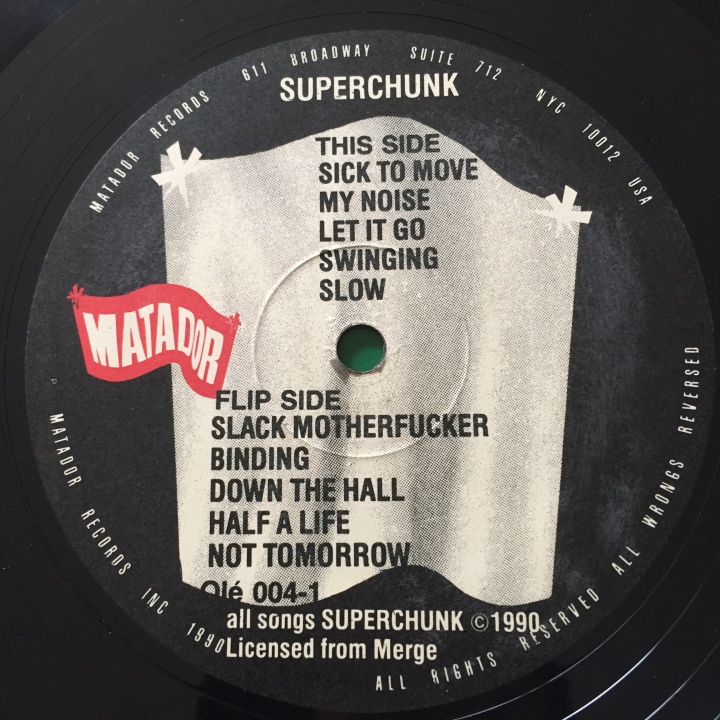
Maybe the biggest development is the addition of the iconic Matador capote or cape. The logo shows up in the now-familiar red as well as the white on black for the track listings on the record label. There is no logo, however, on the sleeve. One of the things that captivated me most about Matador was the simplicity of their logo and how it stood out. It suggested a brutish sophistication and pageantry other record labels didn’t convey. While I realize releases on labels such as Sub Pop and Merge were plenty smart, they still seemed aggressive and appealing to the less subtle subset of the music community. Matador’s label always suggested something smarter and artier to me. Of course, this is just my perception of a piece of graphic design and has no basis in reality when one considers the music on Matador, but it’s part of what attracted me to the label.
In other iconic Matador packaging features… This is the first time I’ve noticed the words “All Rights Reserved All Wrongs Reversed” which seems pretty prophetic in relation to developments in music sharing in the decades to follow. At the time, the only pirating was in the form of dubbed tapes and the promo copies people bought at used record stores. (See below for one such example of a promo bought and paid for.) It makes me think of some copyleft ideal or something. Hopefully, it means Matador was encouraging of fans distributing their product via these blackmarket and pirated means. Of course, I’m sure they were not as keen on corporate entities trying the same thing. That or it’s just a funny play on words and sardonic sentiment intended to make you smirk.
Railroad Jerk – S/T (Olé-005)
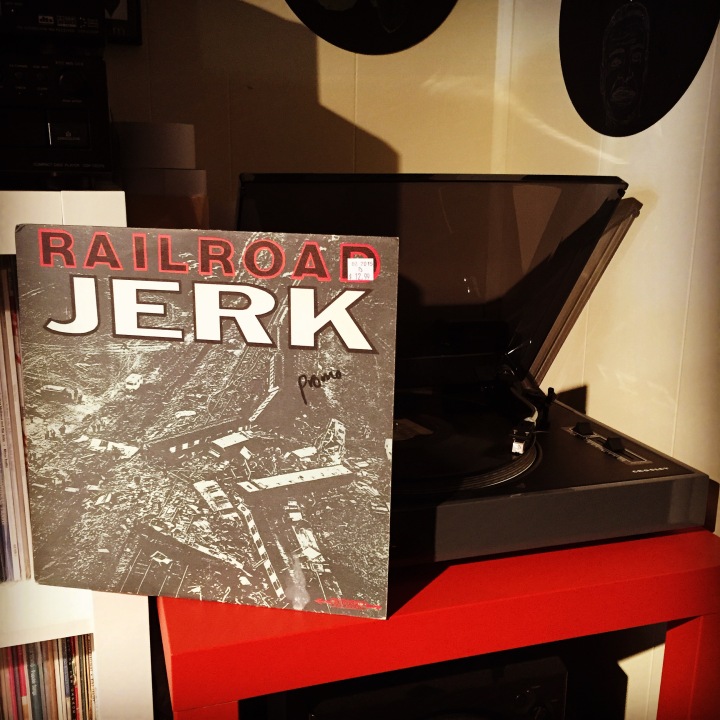
To be honest, I knew nothing about Railroad Jerk other than they seemed to turn up on every Matador compilation (or at least one, twice) and they kinda sounded like their name. Chugging along with jerky lyrics delivered by what sounds like a jerk… I don’t mean those guys are actual jerks. They just sound like jerks which works well for a rock band.
Railroad Jerk is another lost gem I was hoping to find in this journey through Matador’s early catalog. So far, I haven’t been let down and this record makes me think I should have explored Railroad Jerk much earlier. Their punk-blues aesthetic was unique among the lo-fi, college guy thing. There was an edge, aggression without being as show-boat-y as a Jon Spencer. I look forward to the next three releases from Railroad Jerk – three more if I go on to the next 100.
The Matador 100 Project: H.P. Zinker’s The Know It All (Olé 002-7)
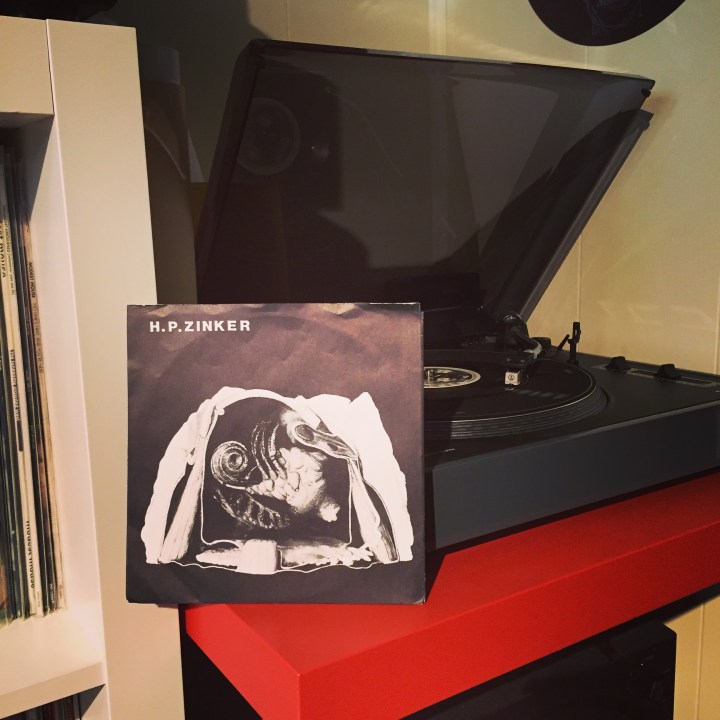
So, this little project where I listen to the first 100 releases (on vinyl) from Matador Records continues. It would have been cool to venture into new bands, but we’re back with H.P. Zinker’s second release, “The Know It All.” Actually, I learned via Twitter conversation that HP also released the first record for Thrill Jockey. So, they were fairly important to the ’90 indie scene. I didn’t realize as I was in high school in West-Central Ohio. The Yellow Springs NPR station didn’t reach us among the corn fields.
That said, this record is just a two-song 7″ to follow up Zinker’s EP debut. There isn’t much to say other that it’s a much more stereotypical release of the times with its sped up beat to match the crumbling end of hardcore punk and angry/agro sleaze of grunge and garage rock. I don’t particularly enjoy it like the EP, but it would fit with those songs to make a decent LP.
The Elmer Fudd affect is there, just not as pronounced. “The Know It All” is pretty fast and straightforward. It sounds as if they picked up a proper metal drummer as well as a thirst for Alice Cooper and his ilk. I also wonder if they were listening to a lot of Mudhoney at the time. The track certainly fits their MO.
“Sip of Death” is of a similar aesthetic. This record would easily fit on early Sub Pop releases. It’s not as Elmer Fudd-ish as everything else, but that doesn’t really separate the track from the rest. The band has certainly put together two more aggressive tracks with this little record.
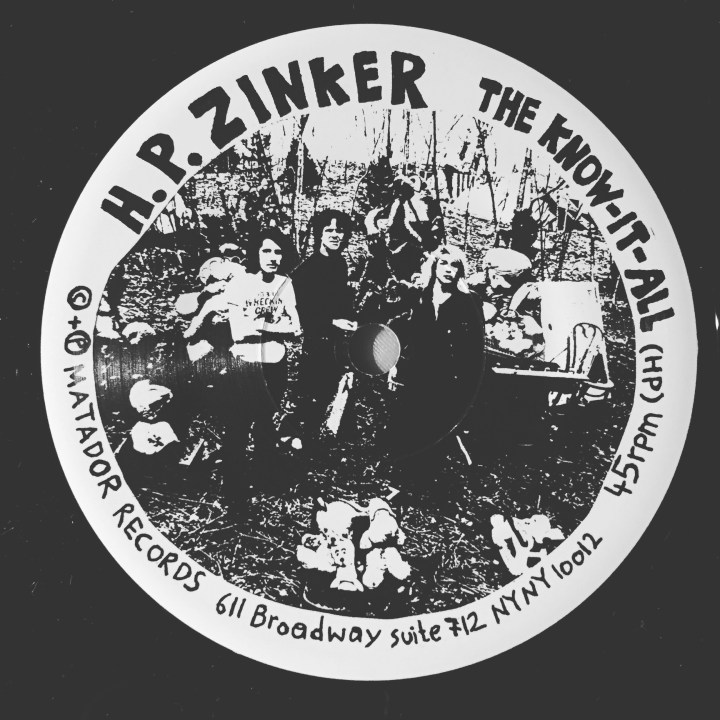
The design of the packaging is much more stark and less dated that the EP. There’s nothing that screams “Matador” aside from the “olé” in front of the release number. I honestly never noticed that the “ole” was actually a “olé” which makes total sense since this is Matador.
Anyway, this is release number two. Sorry there’s not much to report. Number three will be out in a week. The third release is in the mail and I have to figure out how much I’m willing to spend for number 4 (Superchunk’s debut S/T LP).


 Beer and Pavement
5 comments