Crooked Fingers – Breaks in the Armor
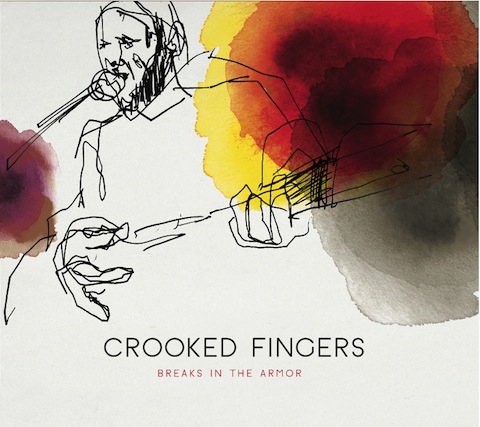
Eric Bachman, like Stephen Malkmus, is one of my generation‘s gracefully aging rock heroes. For previous generations, that may fall upon the likes of Paul McCartney, David Bowie, or Bruce Springsteen. These musicians create a huge buzz when they’re young, creating art that is immediate and loaded with energy ideal for the times. Then, they get older and develop into better musicians along the way. Lost is some of that urgency, but they gain a certain proficiency in their craft that keeps their die-hard fans interested.
Bachman fronted one of my favorite bands of all-time, Archers of Loaf. The music he has created since their late-nineties demise is far from the blue-collar, Carolina indie that spoke to me in my 20’s. Instead, he opted for darker, more textured songs about drunks and hurt. I gravitated to this new direction as it was a chance to still hear and see one of my favorite artists. Even though Crooked Fingers albums tend to not resemble anything on a Loaf record – aside from Bachman’s growl – the live show reminded me why Loaf was so engaging.
The Crooked Fingers discography is an odd lot. The first two albums (Crooked Fingers and Bring on the Snakes) are nice companion pieces, telling stories of drunken depression and back alley romance. Red Devil Dawn brought together the bar band Bachman had created in filling the void left by Loaf, capturing the live energy for what is a powerful record. Things began to get shaky with the adventurous concept album Dignity and Shame. Projects like these either spur on huge crossovers or signal the end of a band. At the time, it seemed to mean the latter.
Then, Bachman recorded a solo record from a van in Seattle. The naked craftsmanship of To the Races helped me to appreciate his talent sans the Loaf hangover. The songs are expertly written and the subtle production and arrangements help create one of the most intimate records no one listens to.
Instead of building on the rawness of Races, Bachman continued to go down the path Dignity led him in recording the forgettable Forfeit/Fortune. The feel of this record was one of Bachman searching for something new or a direction he could embrace. Although it contained elements from his earlier Crooked Fingers projects, it had this forced aura of eclecticism and variety. Honestly, I haven’t listened to that album in a couple of years and I don’t feel the need to do it now.
Then, something unexpected happened. Archers of Loaf, the last holdout in the 90’s reunion/revival circuit, did the unthinkable and reunited for a tour this year. The original plan was to tour in support of reissues of the band’s four albums, but now there’s talk of recording. We’ll see.
An unexpected result of that reunion might be the moving Breaks in the Armor. This record is a return to the darkness enjoyed on the first two Crooked Fingers albums while somehow capturing the energy and urgency of Archers of Loaf the way Red Devil Dawn couldn’t quite achieve. Additionally, the raw beauty of To the Races is present as is an improved musician in Bachman.
What I find interesting are the similarities between Breaks in Armor and Malkmus’ Mirror Traffic. Both come out and were record in the midst of reunions with the bands that made them famous. It’s easy to detect the new-found/reinvigorated energy in both. Also, the growth in songwriting and musicianship in both men is apparent. I have been impressed with Malkmus’ new insistence of actually singing. Likewise, Bachman stretches his range, often ditching the Neil Diamond bravado demonstrated on previous albums. Plus, both featured female vocals that add much to their sounds. Finally, Crooked Fingers and the Jicks feature some incredibly solid work on the bass that fills out their sound and reminds you that there are other people in these bands.
What was often missing from the Diamond dirges of other Crooked Fingers records was the power of Arechers of Loaf-era Bachman. He seems to have rediscovered an aggressive guitar playing alternate guitar tunings that made Loaf records so unique. I have to think this has a lot to do with his time on stage with his Loaf mates. While I’m glad to see Loaf touring, I am even more excited to hear Bachman rediscovering his inner-rocker in developing Crooked Fingers as a group with a future.
“Typhoon” opens steady and low, much like the early material, but one already detects the change in sound as Bachman allows some room for female vocals and plays like he did in Loaf’s later years. The second track, “Bad Blood,” is a straight-up rocker that reminds me so much of Archers of Loaf in the way Bachman plucks the strings, bending them to his will. The melody and drama reveal a more mature version of what Archers of Loaf used to be. The tone quiets with “The Hatchet,” similar to To the Races. It’s a beautiful track with subtle touches that flesh out the mood created.
This is followed by what is almost a pop song with a huge bassline featured out front. “The Counterfeiter” is a song Bachman might have dirged-to-death, but instead he lets the melody flow in creating a real head-bobber. This is maybe the most rewarding song of the album just for the fact that it breaks away from anything I’ve heard from Bachman. If there was ever an opportunity for a stripped-down Crooked Fingers track to make a crossover onto adult alternative stations, this would be it.
“Heavy Hours” regains the quiet established before and is yet another beautiful track, something Bachman had in him but rarely exploited. That quiet is broken a bit by the marching of “Black Candles” and its eerie resemblance to a Low song. “Went to the City” builds on the piano that’s been hinted at throughout, thrusting the instrument to the forefront as Bachman stretches his considerable vocal chops, singing yet another pop song.
Crooked Fingers used to depend on a steady movement with the low end all filled out while Bachman growled on. “Your Apocalypse” is a track that could have fallen into that trap had it not been for a quickening of the pace, a higher octave, and some incredibly well-crafted arrangements. Even the guitar solo is uplifting.
“War Horses” opens with a buzz and steady beat that suggest dirge, but Bachman’s soaring vocals carry the day once again. “She Tows the Line” follows in a similar manner, building on the momentum that’s been created so far. “Our New Favorite” is the bluegrass ending I didn’t expect but welcomed with open arms.
Though Breaks in the Armor doesn’t attain the same sonic levels as Stephen Malkmus’ Mirror Traffic, it is no less a triumph in its demonstration of an already-accomplished artist developing, even maturing. For me, albums like these are the albums with which I want to grow old. I don’t need Wilco and their brand of dad-rock. I need my heroes to continue their growth, recalling the glory days while building toward the future. It seems as long as musicians are still hungry to break through, they will continue to avoid complacency and grow.
Breaks in the Armor is easily the most advanced and cohesive Crooked Fingers album yet. This Bachman project quickly approaching the dad-rock equivalent of an Icky Mettle or Vee-Vee. And if this is what dad-rock is going to be, I’m okay with that.
Nevermind
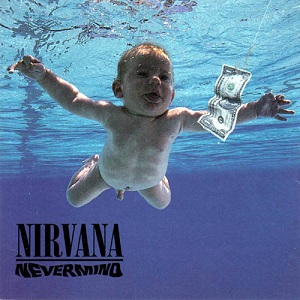 Twenty years ago tomorrow, music changed for me and changed me. September 24, 1991 was the day Geffen released Nirvana’s Nevermind, widely considered a game-changing album throughout the record industry. It changed even more than that.
Well, honestly, it didn’t change me on that exact date, 20 years ago. The shift came some time after, whenever “Smells Like Teen Spirit” entered my zone of awareness. I searched out the track and decided it was worthy a purchase. I can’t remember who actually paid for the cassette, but my brother and I exchanged it back and forth as we played the hell out of it.
By now, the story of Nevermind is well-known. It bumped Michael Jackson and/or several hair metal bands from their perch atop the Billboard charts. It set off a signing frenzy of bands from Seattle. Grunge became a household term to describe anything in flannel, combat boots, and full of feedback. It ignited a cultural revolution – which may have only been superficial, but a movement nonetheless.
For me, it opened up a whole new world. There was the introduction to an underground I had no idea existed. It validated my disgust for the mainstream. And it gave new voice to my burgeoning political views. It did all this and then some.
Nirvana was one of the first (and maybe only) true indie bands to completely blow up. Their previous record, Bleach, sold a few thousand copies and sounded nothing like a band ready to take the world by storm. I love some tracks from that record, but I never heard anything on Bleach that made me think Nevermind was possible – and this was in retrospect.
The band was originally signed to Sub Pop. In fact, Nevermind featured Sub Pop’s logo, indicating that the label would pay its bills with Nirvana money for years to come. The Sub Pop narrative became an obsession of mine. My uncle was school chums with Jonathan Poneman, co-founder of the label. My uncle developed a substance addiction and Poneman developed bands. The rest was history. Still, I felt some sort of connection to the label and even the band that went beyond mere fandom.
Nirvana started getting press and at every turn, Kurt Cobain was championing some great band. Off the top of my head, I can think of Meat Puppets, Sonic Youth, Dinosaur Jr, The Breeders, Beat Happening, Bikini Kill, etc. that came into my collection mainly due to Cobain’s insistence that his fans listen to other bands besides his own. And each of those new bands lead me to an infinite number of bands I won’t list here (not to mention all the great bands on Sub Pop over the years).
The funny part about Nirvana and Nevermind‘s influence over my music tastes is that this record wasn’t that great. Sure, it’s a nice collection of good songs. However, it’s a clear ripoff of The Pixies’ loud-quiet-loud dynamic. Someone had finally put to tape a collection that properly nodded to the underground and then spruced it up with a remix. It’s a slick-sounding record which sort of betrays what Nirvana was about. Lucky for us, MTV still showed music videos and live performances at that time to help us see what Nirvana was all about. Still, I’d have to say that In Utero was a stronger album and represented a truer version of Nirvana, but it didn’t have the impact Nevermind had.
Either way, the aesthetic and message of that album, Cobain’s championing of the underground, and my new obsession with Sub Pop and the Pacific Northwest pushed me into what is turning out to be a lifelong pursuit of independent rock, aka indie rock. Sure, Pavement is my favorite band of all-time, but Nirvana was my first true love.
Cobain not only used Nevermind as a way to promote the music he loved, but it was also the thing that vaulted him in the public eye in a way that made him the spokesperson of our generation. Fair or not, Kurt Cobain spoke to and sometimes for all of us. And the things of which he spoke were important. He was notorious for testing gender lines and the status quo. My eventual path down progressivism was initially guided by Cobain’s own political and social views. There are pieces of that in Nevermind. I found them while listening and re-listening in vain attempts to decipher Cobain’s screams.
It’s easy for someone to discount Nevermind‘s importance to society. I mean, it basically rehashed the previous 20 years of punk in one fell swoop. So, very little new ground was ever covered within its grooves. One might even point out that the record industry looks very much the same despite Nirvana’s success.
Still, it was the first wildly successful record that sounded the way indie bands did in those days. Nevermind‘s release was the culmination of decades of punk, hardcore, and indie breaking through a wall put up by major labels and corporate radio. That had as much to do with its big sound as anything. And the lasting effect is that indie artists actually share space on industry sales lists with major label releases. They command the same venues and often outlast their corporate cousins. I’m not sure indie music is as strong without Nevermind‘s success, even if it wasn’t an indie release itself.
And what about the music?
Maybe some of the most famous guitar licks to open an album ever happen at the beginning of “Smells Like Teen Spirit.” The best part of the song is that insults the mainstream kids who flocked to stores to buy Nirvana’s major label debut. It was an inside joke with legendary riot grrrl Kathleen Hanna. It’s the song that signified everything was changing. Maybe that change was fashionable or superficial for some, but whatever it was happened as this song first hit the airwaves.
The second track was the fourth single off the record. Interestingly, “In Bloom” was considered for Bleach, but I think most would agree that it fits with Nevermind‘s anti-mainstream theme. I don’t know whether it was prophetic or not, but the song came out as a single at the right time as sort of retort to all the d-bags and jocks who were adopting Nirvana as their own.
“Come As You Are” was the second single and, quite honestly, was more hit-worthy than “Smells Like Teen Spirit.” The only thing it lacked was the punch the first track contained. Still, a hit is a hit. Sadly, it’s clichéd to say, but this song was ironically accurate with its now infamous gun lyric.
“Breed” brought it in a way that Bleach-era Nirvana did. This song reeked of angst and alienation. Plus, it never hurt to attract young males with aggression and some heavy guitars.
The third single was “Lithium,” a song I think would have felt at home on In Utero, Nirvana’s best album. Teenage angst and male awkwardness comes through loud and clear. The loud-quiet-loud dynamic is certainly apparent. This is maybe Nevermind‘s best track.
Where do I begin with “Polly?” As the story goes, some assholes sang the song while raping a woman. Cobain was disgusted by the entire episode and made sure to call out the perpetrators in the liner notes for Nirvana’s rarities release, Incesticide. Aesthetically, it didn’t fit with Bleach and found itself on Nevermind. We all ate up that grunge performed acoustically thing. (see: MTV Unplugged)
Fuck, man. Rocking out to “Territorial Pissings” was what it was all about. And was he saying “gotta find a way, a better way” or was it “gotta find a way, I better wait?” Does it matter?
A perfect B-side for “Smells Like Teen Spirit” was “Drain You.” This is maybe the lone love song of Nevermind. Following “Drain You” is the fantastic “Lounge Act” with its obtuse drug references. “Stay Away” was what every teen-age boy questioning everything thought all the time. “On a Plain” is one of the best songs any band has ever snuck into a next-to last slot.
“Something in the Way” is an eerie and depressing way to close the record. However, it hints at the subtlety Cobain longed to fit into his repertoire, getting away from the aggression of grunge and moving beyond Nevermind‘s pure aggression into something more complex.
I could write about the hidden track (“Endless, Nameless”), but it was hidden for a reason…
Nevermind was an important record for many reasons. This is the first time I’ve seen the reason to celebrate something that’s 20 years old. This album represented a movement, even a generation. I remember feeling a ton of dissatisfaction with the world and Nevermind captured that. In fact, I’d argue that Nevermind is still meaningful to our current condition. Generation X has been through a lot and Nevermind was there for all of it.
I was lucky enough to see Nirvana during their In Utero tour. They were probably the last huge band I could ever love. Nevermind was the beginning and the last two decades of searching for the thrill Nevermind gave me since has made for a fun ride through indie rock. Happy birthday, Nevermind.
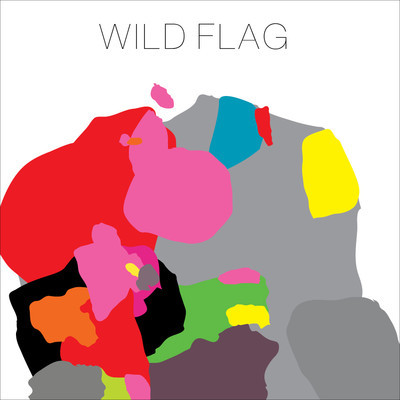
Wild Flag vs. Escondidian Imperial Black IPA
 vs.
vs. 
Sometimes it is hard to find everything in a band or beer that you want. Sometimes a little imbalance accentuates positives, but it also reveals a downfall in design. Balance is nice, but it’s even better when it features superiority in all parts. Supergroups and anniversary ales usually come through with elite components that fill our every need and want.
The supergroup is a unique collection of great musicians from other great bands. Each member of a supergroup was a key piece in other bands. The supergroup is often left to fantasy, but once in a while, they come to fruition.
Wild Flag is a super group for the grrrl set. There are two members of Sleater-Kinney (Carrie Brownstein and Janet Weiss) which provides the band instant credibility. There’s also Mary Timony of Helium and Rebecca Cole of the Minders[1]. Together, these four womyn make a pretty powerful quartet. Fire and brimstone happens when the collective power of this supergroup comes down upon you. Just watch what they’re capable of and you’ll understand…
The beer equivalent of that nastiness above is Stone’s 15th Anniversary Escondidian Imperial Black IPA. It’s dainty Sublimely Self-Righteous’ badass older sister who wears black eyeliner, a mohawk, and a “Show Me Your Riffs” t-shirt. She just kicked your ass and you liked it – not in a creepy way; you were just happy to be a pawn in her riot grrrl plan to rule the neighborhood. Anyway, the beer is loaded with all the components you want from a beer: big hop flavor and aroma, super-roasty malt character, booze, and just the right amount of sweetness not to let the rest get out of hand. It’s a near-perfect beer. And despite the high ABV, it should be consumed yesterday. I feel lucky I bought two[2], but the second won’t last much longer.
And there’s music…
Wild Flag is raucous from the first bombast of “Romance,” a track that makes even romance sound a bit punk. “Something Came Over Me” features the cool tones of Timony, recalling the best guitar rock-era Helium material she used to shell out circa the Beavis and Butt-head 90’s indie[3]. Carrie returns to the mic to bring home the steady “Boom” that features some nice guitar play and the added benefit of Cole on organ.
“Glass Tambourine” again features Timony fronting the band’s version of something Weiss might have played as a Jick with its flourishes of prog rock excellence. “Endless Talk” continues the Brownstein-Timony-Brownstein pattern to the album’s vocal leaders. Brownstein’s turns are a definite nods to her and Weiss’ Sleater-Kinney days, but these songs are more new wave than punk (in a totally cool way).
“Short Version” showcases some of the band’s guitar chops. “Electric Band” is loaded with late-Helium imagery of dragons and rock bands or whatever Timony used to go on about[4]. Still, this band’s superiority to her final Helium efforts is rather apparent on this track. “Future Crimes” drives and actually features a nice bit of urgency for a group of rockers hanging around their 40’s.
The next track, “Racehorse,” is maybe the band’s most conventional rock sound. I imagine the video for this song would feature the band playing their instruments seductively[5] while dressed in horse costumes for a salivating Bob Nastanovich[6]. At the song’s climax, Bob foams at the mouth and has to be carted away by paramedics. The album comes to a close with the Timony-voiced “Black Tiles” with her most mid-90’s Helium-esque delivery yet. This final track ends abruptly, but it does what the last song of an album or show should do: make you want more.
This record and beer demonstrate how overwhelming strength in all areas can make for a pretty fantastic experience when done right. The Escondidian doesn’t back down in flavor components. Each part overwhelms the senses with smile-inducing quality. Wild Flag’s debut does much the same thing with some pretty solid parts of its own. Brownstein and Timony play back and forth perfectly, much like the hops and roasted malt of the Escondidian. They are backed well by Cole on organ and backing vocals. Also bringing it on the backing vocals is maybe the best drummer alive: Janet Weiss. For me, she’s the booze that comes full-force without overtaking the delicious malt and hop characters. Or something like that[7].
I’m for supergroups and superbeers that bring a ton of character but still find a way to balance its best attributes. Both Stone’s 15th Anniversary brew and Wild Flag’s self-titled debut bring this concept home. Now, all I have to do is find a moment when I can sip on one and drop the needle on the other without interruption.
Notes:
1The Minders are associated with the Animal Elephant Six Collective. So, there’s that.
2How could I not buy two at just under $6 a pop? There is no better deal in craft beer.
3I really have no idea what this sentence means. Maybe I was just trying to string some words together in an incoherent rant – a feeble attempt to read like a 90’s ‘zine.
4I wonder if Timony ever had a thing with Jack Black when he was writing all that silly Tenacious D material.
5This is redundant and not because they’re ladies playing guitars. No. It’s redundant because they’re rock stars, rocking balls/ovaries to the wall and all that. That’s sexy no matter what you are. Don’t believe me? Go watch Jon Spencer or Annie Clark or Daniel Johnston…well, maybe not that last one.
6I just read for the second or third time today that one of the leading reasons for the Pavement tour last year was Bob’s horse betting debts. So, this seemed apropos.
7That was maybe stretching it too far.
Beirut – The Rip Tide
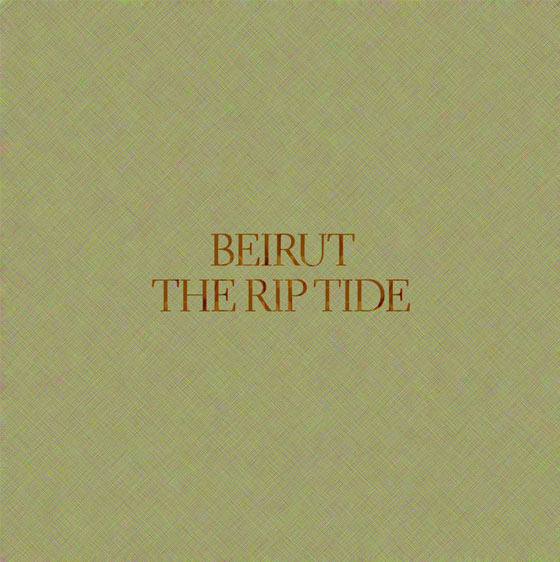
Listening to a Beirut album is like when I had to take a map quiz in sixth grade. If you didn’t study, you were fucked. If you didn’t read early reviews of the record, you would have no idea from where the band’s sound is coming. The sounds that come from these records are hardly from the States. They are from Eastern Europe, Paris, the Mexican countryside, or wherever Zach Condon finds himself these days. These albums cover the sounds of cultures other than our own without being shitty world music you find in bookstores or hippie joints. A Beirut album is an overseas trip packaged on a vinyl disc.
When Condon travels, he doesn’t buy souvenirs or send postcards. Instead, he collects sounds, plays with local musicians, and brings back new music for Brooklyn hipsters to consume. He doesn’t do it in a National Geographic/misappropriation sort of way. There’s respect for the culture that birthed the music and Condon makes himself a native just long enough to authentically use these sounds.
Of course, all Beirut albums tend to veer toward music with common elements. Horns and strings that soar before rum-pumming along, marching in each locale’s unique gate. So, there are common elements that exist in all these musical influences Condon gathers, but they all combine to make the band’s unique sound.
Enter the bookish The Rip Tide.
And when I say “bookish,” I quite literally mean that the album sleeve is hardcover cloth packaging, much like an actual book. It’s heavy and somewhat thick like a book, but the stories within come on vinyl, not paper.
Those stories all come out with a truly American flare (or United States of Condon?). Left behind is the overwhelming feeling Condon is aping some street musicians as he plays a record that sounds 100% his. This is a pop record sung in an old-timey voice with histrionic horns to lend power. The melodrama is unveiled subtlely, but you catch it and allow the record to let you sit back and enjoy life for a moment.
Of course, it’s over before you know it. As is typical of a Beirut release, there’s very little material there. It seems whatever Condon overindulges in cultural influences, he makes up for it by only recording nine tracks for this LP. Still, this record makes me rather excited to see the band for the first time in October.
Stephen Malkmus & the Jicks – Mirror Traffic
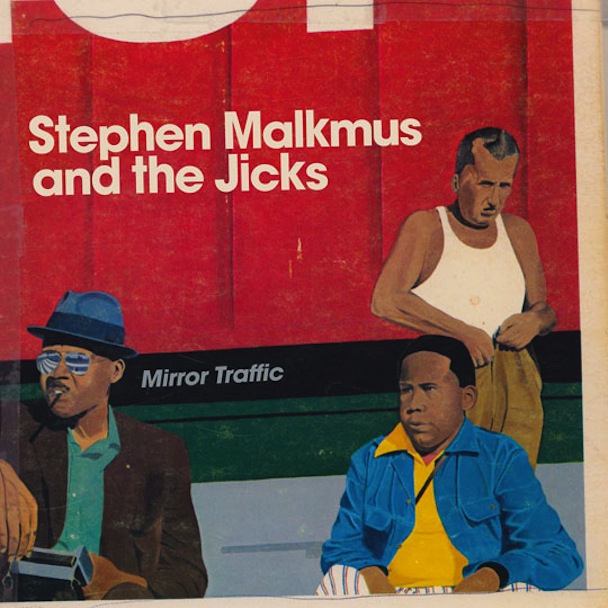
Stephen Malkmus will never live up to what he did in the nineties. Of course, he shouldn’t have to. He said enough with the Pavement output that he has nothing left to prove, for me anyway. What’s most amazing about that material is that Pavement was actually not that great of a band. Sure the whole was greater than the sum of the parts and they had a certain chemistry, but the band was not technically that talented. Well, aside from Malk’s songwriting. Eventually, his overall musicianship surpassed those of his band mates, the band was unceremoniously dumped, and the Jicks were born.
The Jicks have been for the most part hired guns. Granted, they’re hired to help write and record and really be a part of the band, but they’re often still involved with their own projects. Also, in contrast to the ambiguity that was Pavement’s structure in the early days, there is no doubt from the beginning whose band this is. Still, SM finally has a group of musicians that can match his vision. Long gone are the days of Malk taking over the drum kit to show Westy how his part should be played. The parts of the Jicks make a pretty formidable band of professional musicians who can make whatever is going on in Stephen Malkmus’ brain a reality.
What also has changed is the necessity for Malk to fill holes all on his own. With Pavement (and to some extent early on in the Jicks era), SM would deliver his lyrics with a jazz musician’s impulsive stroke. He would bend and contort his words to fill space and make an otherwise forgettable sequence memorable. One has to assume that he also dumbed down song structures to better match the band’s capabilities. This second point is hard to detect, but after watching Malk’s songcraft development over the last few Jicks albums, it’s hard to make an argument that Pavement was a better band of musicians.
Never had I fully realized how much further ahead Malkmus was from his band mates in Pavement until I saw them reunite last summer. During guitar solos, bridges, and moments of improvisation, Malk was lazily tearing away at his guitar, almost playing around. His playing was effortless and extremely tight. The gap between Stephen Mallmus and Pavement had grown over the decade. I always thought the gap was there, but it was way more apparent last summer.
I don’t mean to pick on Pavement. They are still my favorite band who produced my favorite records and some of the more memorable moments I’ve seen on a live stage. They hold a special place in my heart and will never be replaced. Of course, I sometimes wonder how much of that was Stephen Malkmus and how much was the entire band. I suspect a little bit of both. I also think it worked really well for a decade and went as far as it was meant to go before it ended.
In the meantime, Stephen Malkmus continued to grow past Pavement. His self-titled debut was just the next record. However, he was now writing for people who would be able to play what he wrote. The record is loaded with hits, but it never truly received the attention it deserved commercially. The break from Pavement continued as Malk became more comfortable with his somewhat regular/irregular lineup and produced Pig Lib, an album that nearly sounded identical to an SM & the Jicks live show rather than a studio album consisting of mostly Stephen Malkmus and the jicks (lower-case j).
Face the Truth sounded like the next Pavement album, building off Terror Twilight‘s ominous laziness. However, as suggested above, the band was much more capable in carrying out Malk’s song ideas and the album quickly takes you beyond Pavement. Then, Face the Truth explores Malk’s bluesier side as his guitar heroism grew by leaps and bounds. It’s as if the time he spent playing with capable musicians finally allowed him to just play and explore. With Pavement, he often started the songs and the rest of the band received their cues from him. The Jicks are self-sufficient and don’t need the same amount of direction. This has allowed Malk to just play and even sing it straight.
Stephen Malkmus & the Jicks finally felt like a realized entity once Real Emotional Trash hit the market. Pseudo-blues and jazz jams from their live show combined with Malk’s lyrical wit made this a highlight in 2008. Songs meandered. Shit got weird, but it felt like this new band was fully realized and ready for something more.*
All of this comes together in the form of the excellently produced, written, and executed Mirror Traffic.
Loopy “Tigers” opens with a sing-along rock edge that hints at the seventies-esque production that continues. The second track, “No One (Is As I Are Be)”, is your lazy Sunday, AM radio piece of gold soundz that even brings the French horn and piano to the party.
“Senator” is your customary third track that doubles as the album’s single. For my money, this is the most complete, best Stephen Malkmus & the Jicks song ever. Malk’s bizarre lyrical content, topical-ish subject matter, and cool delivery is matched by a rather rocking track that hits epic proportions without trying too hard. If it were not for all that blow job business, this would be the late summer’s college dorm , radio hit.
“Brain Gallop” takes things back down a notch with an easy, breezy tone that brings forward more of that subtle seventies production value. In case you hadn’t heard, Beck Hansen produced this album. Channeling the ghosts of John Lennon and Harry Nilsson and whatever rock/pop rockers he’s been listening to, Beck subtly adds nuance that was missing from previous Jicks records. He doesn’t do much. There’s reverb here. Echoes there. More organ over there. It’s a masterful work, really. It’s as if he was there but wasn’t really there.
Side 2 kicks off with “Jumblegloss” which recalls some spacier, janglier moments in the Pavement discography, but just intro’s the second half of the first disc. This cut-off works well to set the table for “Asking Price”, a Pavement-esqe mid-tempo, quiet track that tempts chaos without every really losing structure. Again, the careful playing of the Jicks backs SM’s signature lyrical delivery without him having to fill the holes with bends and turns.
“Stick Figures In Love” is a fun song a la SM’s debut. Plenty of seventies’ jangle and guitar heroism carries the track. It moves and causes toe-tapping one can’t help. Malk’s voice is almost too quiet, but you can make it out, suggesting a near-perfect mix and setting up the moment Malk hollers and echoes the song’s climax. The writing is almost Shins-like, something I’d rarely suspect from a Malkmus-penned song. Additionally, I love the groove coming through Joanna Bolme’s bass. It moves me.
“Spazz” reminds me a ton of earlier Pavement songs that fused punk, jazz, jangle, and the weird. Its herky-jerky movement is only accentuated by Beck’s expert dial-work and the Jicks’ collective musicianship. “Long Hard Book” is the (almost) country track a la “Heaven Is a Truck” or “Father to a Sister of Thought.” “Share The Red” closes the first disc with a steady ballad, Malk-style and lovely and comes to some parental truths and the rare moment of perceived emotion.
“Tune Grief” is the glam rocker to kick off what is a jam-packed side 3. (There is no side 4, just a bizarre etching. I suspect Malk’s kids were messing around with his records.) Malkmus makes a case for himself to play the lead in the sequel to the Velvet Goldmine that should never happen.
“Forever 28” is this record’s “Jenny and the Ess-Dog” without all the Volvos, toe rings, and discarded guitars. The following track “All Over Gently” moves and grooves as only seventies pseudo-blues rock often tried to do while maintaining something more upbeat and relatively poppy. I could totally imagine Malk doing this song on an early episode of The Muppet Show with Gonzo doing something indescribable to his harem of chickens backstage.
“Fall Away” is as soft and pretty a Stephen Malkmus song you’ll find. Even so, it contains a bit of urgency wanting to break out that never quite arrives. “Gorgeous Georgie” closes things out Mirror Traffic with a shaky bit of finality and even a touch of the storytelling that’s become ever-present in Malk songs, post-Pavement. The song does what a good closer should do and just makes the listener want to hear more. So, you remove the record and return side 1 to the turntable.
As I’ve mentioned before, Beck’s fingerprints are all over this record, but you’ll need Vince Masuka to find them. The mixing is expertly done. The production takes nothing from Stephen Malkmus’ aesthetic. If anything, it supplements it well, even pushing it to some modest heights.
As for the Jicks, they are as professional as tight a band as you’ll find. Other than Malk and the already mentioned Bolme, keyboardist Mike Clark and drummer Janet Weiss (now moved on to Wild Flag, FTW!) round up what is a great, great band. Clark took subtlety classes from Beck and augments what would have been excellent songs anyway. Janet Weiss proves once again that she’s one of the best drummers alive. The woman just knows how to treat her skins.
There have been times I’ve been down on Stephen Malkmus & the Jicks. I just wanted them to be another Pavement, but they are obviously not. And after revisiting Malk’s entire discography and spending a lot of time with Mirror Traffic over the last week, I am really getting to like what Malk’s done since 2k started. Now, he’s equaled the number of Pavement records he recorded and doesn’t show signs of stopping. What also won’t stop is his growth and I can’t wait to see how big he grows.
*Somehow, I forgot to write up Real Emotional Trash. I’m not sure how as the title track runs through my head all the time. Still, hat tip to Justin for pointing out my transgression.
On Reissues: Clap Your Hands Say Yeah
 The reissue is a right of passage of sorts for rock bands these days. Take an album that’s classic, hard to find, by a band with a legacy to uphold, or some combination of the three and you have a perfect candidate for reissue. Some come with extras while others are just a reprint of the original. Sometimes, it’s just the chance to own the vinyl version of a long-forgotten gem.
Which albums are being released? Pavement has had the deluxe treatment for all their albums so far. Bands like The Breeders, Joy Division, Neutral Milk Hotel, and many others have re-released albums on vinyl for a bit of nostalgia without the scratches. Archers of Loaf are touring this year and next in support of the reissue of their classic records, often complete with extras. Many bands I’ve followed over the years are now flooding me with reissues I must have.
Such is Clap Your Hands Say Yeah’s self-titled, self-released debut. However, unlike the bands I’ve mentioned above, Clap Your Hands Say Yeah recorded their first released their record only six years ago. Is that really long enough to cement their place in history or stir up nostalgia for the days before Facebook and Google+?
Don’t get me wrong. The album is good, great even. I placed it near the middle of my best of the decade list. So, I bought into the hype – albeit a little late – all the blogs were putting out there about this band with the really long name. Clap Your Hands Say Yeah is an album that deserves recognition on the level of a reissue or even a volume of its own in the 33 1/3 series.
However, after six years, is there really a need for a reissue of this particular record? Availability aside[1], CYHSY has not stood the test of time. Six years is nothing. I mean, I’ll have been married six years tomorrow and no one’s giving me a reissue. Hell, CYHSY the band hasn’t really stood the test of time. They released a record that sounded like how John Hughes dreamed, a forgettable sophomore effort[2], and then they disappeared. There was the shitty solo effort, random one-off gigs, and endless promises of a return, the last of which looks promising.
This reissue fills a couple of purposes. For one, the band probably didn’t press that many on the first go-around. The album was self-released. They didn’t have the capital, nor the distribution to sell that many records. So, why print too many that will just infest your guest room for years to come. Second, the band has decided to have another go at this rock ‘n roll thing and are touring in support of a new record. Is there a better way to resurrect a rock career than to drum up nostalgia for past brilliance? I think not.
Clap Your Hands Say Yeah sounded[3] like no one else in 2005. Shit. No one sounds like them now. It was bohemian, Dylan-esque and Talking Heads-like in the way every band should be. There was a ton of bass without being cliched, jammy, or funky. Frontman Alec Ounsworth had/has one of the most unique vocal deliveries in rock. He mumbles and sours at the same time. It’s as if he doesn’t give himself time to fully enunciate as he has to get the words in his head out. And the band behind him was solid through and through.
And what landed on my front porch this week was vinyl copy of a record that meant a lot to me in the first year I moved to Columbia, the first year of my marriage. So, there’s a lot of sentimental value there. I never owned a copy of the record before, just a beat-up CD-copy my sister burned for me. Now, I’m the proud owner of a thick piece of vinyl slid into a high-quality jacket with a design as unique as the album it carries.
So, as I raise a glass to six glorious years with my favorite person who’s not my daughter, I will also celebrate what is a fun, electric, and completely captivating record. I only hope that this reissue is also a return to the band’s form and they’ll last as long as I hope my marriage will last.
Notes:
1Of course, iTunes and Napster (or whatever was the Napster of 2005) were around in those days. If you really wanted a copy of this record, you could get it, but I digress.
2I suspect there were good songs under David Fridmann’s messy production, but I’m just not sure. I’m also not sure I’ll ever forgive the band nor Fridmann for that record.
3I use past tense here because they are a band of the past until they prove that this new record and road effort is worthy of what the band did six years ago. They were a great band. We’ll see if they still are.
CoMusic Review: Cicada Summer
Originally posted at the Collective…
 2011 in Columbia, Missouri will forever bee known as the “Summer of Cicadas.” They rose from the ground to live, copulate, and make a lot of noise before dying. It will be another 13 (or 17) years until they do it all over when their offspring return from the earth to do it all again.
A motley crew of Columbia and St. Louis musicians collaborated on a collection of songs to commemorate the event. On Cicada Summer, music in the forms of freak folk, hip-hop, techno, joke metal, and some stuff in between all make an effort to tell 17 stories of 2011’s edition of Middle Missouri cicadas.
What follows is a rundown of the tracks. If it sounds interesting to you, check out their Bandcamp site and buy yourself a copy. You can name your price. I paid $5 at the With Heart Handmade Market, but that was a bargain.
1. Claque – “Summer Song” A nice echo-y, Coctails-esqe groove backs Ian Curtis vocals to describe cicadas as they anticipate their summer of fun.
2.J-Tran – “13 Year Itch” From what I understand, this particular group of cicadas waited 13 years to share their song, a song you hear from the beginning of J-Tran’s track. Then, over a hypnotic chorus and tinny beats, one hears the rap of the cicada, telling their story with a nerdy flow that’s easy to imagine playing all summer long.
3. nerdcamp 2K eleven – “PSD (Piercing Siren of Death)” A cappella harmonizing, rounds, vocal percussion, and hand claps are pieced together to create the shortest and possibly most charming track of the collection. Piercing siren of death? Hardly.
4. poopdeth – “sSSs” The cicada hum is more of a hard “s” sound than it is that of a “z.” A sample of cicadas loops throughout this acoustic to brings to mind Lou Barlow in his most lo-fi, Sebodohian moments. Despite that aesthetic, there are no words, just humming along with the mighty cicada.
5. Dee Bird – “Another State” This is maybe my favorite song of the summer, Missourian or otherwise. A love goes away for the summer. Tornadoes and dying cicadas just make that love miss the one she’s left behind. This is a perfect summer love song.
6. Butterflies – “Yummy! Pass the Sprinkles…” A certain ice cream parlor in CoMo opted to make some cicada ice cream. The first batch went incredibly fast and soon all the major media outlets came calling. The owner of said parlor decided that maybe calling the health department would be a good idea. That first batch also became the last batch. Butterflies documents the story.
7. Nick Browned – “Still in Love in 2024” What about the cicadas in 13 years from now? Will they still love each other the way this year’s swarm did?Electronic soundscapes with a buzz that is all cicada characterizes this track.
8. Abstraked & Mantra – “Summer for Cicadaz” Old-school beats and rhymes flow telling the 2011 cicada story at a breakneck pace. Layered and gone before you know it, much like those fucking cicadas.
9. Lizzie Wright Super Space Ship – “The Great Southern Brood” Sampled Cicadas provide the background as Lizzie Wright forces a melody that has been running through my head ever since. An urgency gets down to the science of the cicadas’ cycle, before breaking down into a sing along on your back porch. The lament of waiting 13 years to hear that song is felt and lingers.
10. TheFarthest Forests – “When the Peepers Sing” It’s amazing how many nice, sleepy love songs can be written about a bug that rears its horrifying song every 13 or so years. The melody recalls a slowed-down Sam Cooke classic quite well.
11. Robby Jones – “Oh, I’m a Cicada” Every campfire needs this song.
12. Swarm – “Swarm” There’s nothing like a joke-metal song to capture the true essence of standing under a sycamore when the cicadas were at their peak buzziness.
13. Cat Drugs – “Haiku” For the haiku obsessed.
14. Fine Peduncle – “Magicicada” Fine Peduncle smartly uses cicada samples to create an even smarter track about a sect of cicadas who are on the 17-year cycle. “Magicicada” is reminiscent of Now, It’s Overhead, a Saddle Creek band who made noisy, fast electronica that rocked harder than most.
15. Sleep In Sundays – “In The Water” Another cicada0-infested track backs whispery vocals and acoustic guitar. Like many of the tracks on this comp, “In the Water” captures the feeling of any summer in a sleepy college town, cicadas or not. Think Iron & Wine with more Beatles and less Eagles.
16. Family Psychic – “Thirteen Years” Ambient noises, tweets and twitters of what I assume is some rather manipulated cicadas humming – These are the characteristics of an instrumental track that would fit in well at the moment right before terror twilight when the cicadas are at their most menacing.
17. Chillysox – “Why Do You Keep Me Up At Night” I was out of town at the height of the cicada cycle, but I remember reading how annoying the cicadas became, often making it impossible to sleep or be heard. Still, the oppressive Missouri heat makes it hard to lift a finger to do anything about it.
For a last-second project of local bands writing and recording songs about an insect that only comes around every 13 years, this is a pretty impressive compilation. Regardless of context, this would be an impressive compilation. There’s variety, but the quality is pretty obvious from the first track on. I would recommend this to anyone who wants a document to remember the cicada summer in Middle Missouri, but I’d also recommend this compilation for anyone who loves great music.
Before all the cicadas die, buy a copy at Bandcamp and pay them the appropriate price: between $13 and $17 should be about right.
The Race for the Best Album of 2011
Normally, I like to publish a mid-year top-ten. However, this year’s crop has been somewhat uninspiring and I have purchased just a few more than ten 2011 albums anyway[1]. This hardly seemed like a year to post ten albums at the midway point that could find themselves at the top of the heap by year’s end.
Two recent acquisitions, however, may already be vying for best-of-2011 honors. Cults major label debut and Bon Iver’s proper follow-up to For Emma, Forever Ago seem likely candidates for best-of honors. I’ve been playing them back-to-back and have been going back and forth between the attributes of both and where they would rank had I created that mid-term list.
Cults is a summer record, which usually plays to the needs of the mid-year list. It feels current, fun, even urgent. The band has somehow been able to capitalize on the new current obsession over Phil Spector-era doo-wop, but without the tape-hiss their contemporaries seem to fetishize. Conversely, the production is subdued and not so overwhelming. Cults achieved a full, ghostly sound without building a Spector-esque wall[2].
This album is loaded with summertime hits that stick to the amygdala and have a staying power that outlasts the sunshine and long days. Upon dropping the needle, I thought for sure the first track was their “hit”, but the second track is the indisputable hit single of the record. “Abducted” starts out sleepy with mono-like production before unleashing a fully stereo bombast. The bass drives this song as does the emotional female vocals of Madeline Follin and her back-and-forth with Brian Oblivion[3].
Track #2, the real hit better known as “Outside”, is the sleepy summer song Sleigh Bells never wrote. Even as out of touch with popular singles as I am[4], this song was instantly recognizable to me. Spacey and retro production encases this ditty about longing to go out into the nice weather while a fading love wants to hole up inside. Is there a better topic for a summer track than this?
Touches of Walkmen linger as the third track, “You Know What I Mean”, with dreamy guitar jangle and echoed snaps provide a beat for easy slow dancing. “Most Wanted” is a dance hit with whiny-girl vocals and wavy piano backing, broken by well-timed guitar muscle. Big beats open “Walk at Night”, maybe the most chillwave[5] of the bunch. Still, I can’t help but think of the Walkmen as bits of vintage guitar seep in, under the dance-inspired production. It wouldn’t seem to fit, but it works.
The vintage summer vibe continues from there as “Never Heal Myself” carries the torch admirably.
“Oh My God” is your “Outside” companion piece as Follin laments about what could be if she wasn’t shackled to her lazy partner who prefers sitting inside to catching some rays. The beat and bass are heavy on this one, but that Wall of Sound aesthetic has made its impression. Sonically, this track showcases what can be done with a drum machine, guitar, and a capable female vocalist. Really, this is a big summer record. The two tracks about lazy boyfriends sitting inside capture the moment well and should be on everyone’s summer playlist.
Doo-wop and whatnot fills the rest of the record, rarely straying. The record closes with the great track “Rave On” that uses the quiet-loud dynamic expertly, showcasing the production and instrumentation that litters the previous tracks. All this brings to close an album that will undoubtedly make every year-end list. Expect it to be a part of mine.
That said, Bon Iver/Justin Vernon has recorded a nice album himself.
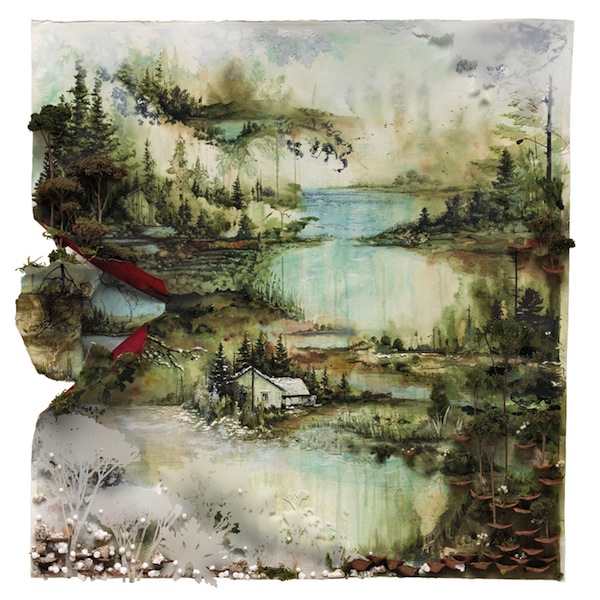 The perfect storm of a much-anticipated follow-up to a critically-acclaimed debut (with a novel-worthy back-story[6]) as put out on a great indie (Jagjaguar) after a year or two of impressive collaborations arrived last week in the form of Bon Iver. Maybe the most impressive part about this record is that it makes me hesitate to put Cults at the top of my (nonexistent) mid-year list.
Instead of writing songs about one place (girlfriend-less, band-less, depressed Wisconsin shack), Justin Vernon has opted for a record featuring locales from all over the world and consciousness. And that’s not the only place Vernon has parted from For Emma, Forever Ago. From the first track, “Perth”, it is apparent Bon Iver is a different band sonically. The sound is big, even loud and aggressive. Electric guitars! Electric guitars!
“Minnesota, WI” opens with something that closely resembles everything I listened to at the end of the last century before leading into vocals that more closely resemble those of Tunde Adebimpe, TV on the Radio’s multi-talented frontman. The aforementioned instrumentation at the beginning of this track reminds me of early Modest Mouse as well as the jazz-influenced indie of nineties Chicago (Joan of Arc, Sea & Cake). All that and there’s some impressive banjo work and the ever-present Vernon falsetto[7].
The third track, “Holocene”, resembles something closer to For Emma than the first two tracks with its sad tale, falsetto, and acoustic guitar. Vernon understands subtlty, dynamics, and phrasing better than most songwriters. This is something he has certainly not lost between albums one and two.
“Towers” is possibly the most upbeat Bon Iver track ever[8], placing it firmly in early-nineties Gin Blossom territory without all the fleeting success that band “enjoyed.” “Michicant” is a touching lullaby that you can feel even if you’ve yet to figure out what exactly is being said. This track also demonstrates Bon Iver’s uncanny ability create to the slow, quiet build like no other band or musician[9].
“Hinnom, TX” sounds like another TV on the Radio track with its mix of falsetto and low echos. “Wash.” follows with a similar feel, but this is quiet, slow-building Vernon at his finest. “Calgary” hints at some keyboards a la Peter Gabriel that will be more dominant by the final track, but I’ll get to that later. Before that, “Lisbon, OH” is simply some ambient noise in order to provide transition to the final track[10]…
“Beth/Rest” might be the most challenging track of the lot. It’s over-the-top, bad eighties quality makes it a tough listen. Had it not been for Destroyer’s all-out-assault on anti-eighties aesthetics earlier this year, this track might have been unlistenable. It certainly sticks out and I’m not convinced it’s good or bad. It just is what it is: a bad Bruce Hornsby song[11]. Still, the track is not a bad song, it’s just a bad choice of aesthetic, much like Vernon’s over- and unnecessary use of Autotune, particularly on “Woods” off Blood Bank[12].
Every great record is allowed its one transgression while still maintaining its value. Bon Iver demonstrates a great artist who continues to expand his sound and experiment without shame while never really losing whatever made us love him in the first place.
Both albums are easily the best of 2011 so far[13], but I’m not yet sure which is better. And does it really matter? Cults fills our need to dance and remember the summer fondly. Bon Iver continues to develop a rich and engaging sound that promises great things with each new release. I honestly hate ranking records as my lists tend to be fluid, something a blog post rarely allows[14]. Just know that these are two of the best records of 2011. Interesting that they came out so close to the solstice, a time we often reflect on what’s happened so far and what has yet to take place. There are many other records set to be released in the coming weeks and months. Hopefully, these two excellent releases are harbingers of things to come.
Notes:
1It was thirteen before these two arrived and there are several pre-orders just waiting in the wings.
2This is where I wished I understood music production better. First, what makes that wall of sound and why does it sound so ghostly, spacey?
3Somehow, I doubt “Oblivion” is Brian’s real last name. Either way, it’s as rock ‘n roll a name as I’ve seen in a long time.
4I love individual, great songs, but I hate singles. I feel that starting with the cassette single and ending with whatever age of mp3-dominated crap we currently find ourselves, the single has nearly ruined popular music. The best “singles” are the hidden gems embedded into great albums.
5I still don’t get what exactly chillwave is, but it seemed to fit this track.
6Yet another novel I will never write. In fact, I thought an excellent novel would be one where the album never sees the light of day. It’s just the story of the time a guy spends in a cabin, writing and recording music about his various breakups in bands and relationships.
7I really wanted to work in something regarding this piece on wimpy indie rock, but I couldn’t figure out where it fit. I might revisit it, but the topic is a bit outdated.
8This isn’t saying much.
9Rivaled only by Yo La Tengo’s ability to complete the slow build, quiet or loud or both.
10I’m not gonna lie. The record could have ended here.
11I crossed out “bad” as I feel this would have been redundant in describing Bruce Hornsby’s work.
12At least he used loops and layers with the Autotune in creating something totally original and engaging. That said, of all the dudes in indie rock, Justin Vernon needs Autotune the least.
13Well, Fleet Foxes might have something to say about this.
14I use lists all the time, but they never truly represent how I feel about music or beer. It’s just a lazy way to write about stuff you like. The order in which these items are placed add another dimension to the topic that isn’t inherent in the text.
Jerusalem & the Starbaskets – Dost
Punk rock died when the first kid said, “Punk’s not dead. Punk’s not dead!”
And so warbled Silver Jew David Berman, the Nashville poet whose career bridged the lo-fi nineties with the alt.country nineties. His lament perfectly describes the mess that is Jerusalem & the Starbaskets’ Dost.
 When I say “mess” I mean it in the most flattering terms. Just as punk rock and traditional country can get a bit sloppy, Dost turns a disaster into something comforting and real. While the songwriting and performances are tight, the vocals and production keep a drunk slob happy.
Mixed into the set of songs, the listener finds perfect examples of garage rock and whiskey tunes, but don’t overlook the bits of Pavement or even touches of Nirvana scattered throughout.
In fact, my first listen made me wonder how things would have been different had Kurt Cobain grown up in Memphis instead of the Pacific Northwest. For one, he would have chosen whiskey over heroin and for two, he would have likely written sad songs as opposed to the angry material he did record. Nirvana could have easily recorded a record very much like Dost had Cobain been from Tennessee and not Washington.
At least two reviews I’ve read on Dost claim that the songs would be better had they received slicker treatment in the studio. The melodies are convoluted by feedback and tape hiss. The vocals are hard to make out with all the echo and overdubs. Some of the subtleties in the instruments employed are hard to pick out due to a messy recording process. Etc.
Apparently these same reviewers hate Guided By Voices and Sebadoh or any number of bands lumped under the lo-fi identifier journalists and bloggers lazily toss around. Dost maintains a certain charm and authenticity with this record’s (under)production. Some hate it, but it lends to the experience of Jerusalem’s material, especially live. One cannot possibly understand how a band translates live if a record is overproduced from studio slickness and autotune abuse.
Where Dost goes right – overcoming whoever’s hangups over production – is in songcraft and delivery. Both sides of the record open with pleasant guitar interludes before launching into garage-based rockers. Those tracks are followed by a mix of country drunkeness and mid-tempo indie rock. All songs fit together without trying too hard to jump genres. The Jerusalem aesthetic holds true throughout.
Singer/guitarist Jeremy Freeze comes from Memphis, bringing with him that Memphis warble, much like Berman does on the lyrics above from the song “Tennessee.” However, Freeze has a piece of Columbia in him as well as our own Kim Sherman sits behind the kit keeping his train on the tracks.
There are electronic flourishes subtly placed on various tracks, but they don’t take over the production, leaving the listener a document that remains true to a Jerusalem live show. And this is where the deliver part comes in. Freeze is a gifted and loose guitarist that moves effortlessly between genres, tempos, and sonics. Sherman is as steady a drummer as one would hope. It’s the backbeat of this band and its obvious connection to post-punk country and independently-created garage rock that hold together the beautiful sloppiness within. Or something like that.
Honestly, I’ve probably overwritten this review. I realized this as I discovered the phrase “no thinking all feeling” on the record sleeve, recognizing that this is the essence of Dost and it should be seen as so. Consider this record a perfect document of Columbia in the summer and put it on repeat.
Highlights for me included “Chocolate Covered Every Berry” (below), “First Cigarette in the Rain”, and “Fuck a Parade” among others. Look for Dost in your local record store or buy it here.
This review was written for The Collective but will publish there tomorrow. Consider this a bonus for reading this blog, but click over to the other sometime tomorrow and possibly Sunday as I have more to say about other things then.
Thao and Mirah Kill Rock Stars
 Women in rock rarely get their due, unless it’s for a special issue of Rolling Stone[1]. It’s perceived they’re in the band to provide an aesthetic, visual and/or musical. And when they’re the primary artist, they’re rarely taken seriously.
Just this past weekend, a show was put on in honor of some of the best bands of the 80’s underground. Despite the decidedly male-dominated nature of that scene, several women took center stage, playing the part of the 80’s underground punk rocker. Unfortunately, according to Brooklyn Vegan, even these accomplished, talented women were subjected to catcalls.
Still, underneath the ignorance and sexism, women create some of the most dynamic music there is, comparable to their male counterparts. We often just have to give it the time and attention the music deserves[2], especially when two prolific women in (indie) rock team up as Thao and Mirah have.
I’m not sure why this is the issue on which I’ve chosen to focus. It could be that I recently finished the Patti Smith memoir Just Kids and the idea that a dynamic, creative rock star is virtually ignored in the rock ‘n roll canon because she happens to be female. It probably didn’t help her legacy[3] that the love of her life was a gay S&M artist. Still, Patti Smith doesn’t get the respect she deserves. She was/is uncompromising, hard to define. Much of the same can be said of Thao and Mirah[4].
Thao & Mirah is one those rare records that’s ambitious without being sprawling. It’s textured without being overdone. There’s some pretty thoughtful and creative work in there musically. Lyrically, it’s aggressive and witty. Thao and Mirah are two of the more unique voices in indie rock and those voices meld together perfectly.
This is not your typical rock record and – fair or not – these are not the typical rock stars. Will this be recognized as a rock record or something folkier? Well, it’s a rock record, almost avant garde at times. It’s percussion forward, demonstrating some real balls-to-the-walls attitude. It’s not the stereotypical female duo record by any means. And the album should be judged on these merits.
The songs are varied throughout. The first six or seven tracks move between styles, vocalists, effects, dynamics. “Eleven” is as much an attention-grabber as any opening track should be with its organically electronic beats a la tUnE-YarDS[5]. “Folks,” “Little Cup,” and “Teeth” are speedy, folky tracks that are more thanks to inventive vocal performances by both singers and some interesting and varied percussion. Mirah’s minimalist soul comes through in “Rubies and Rocks.”
The album’s best shot at a pop anthem exists in “Spaced Out Orbit” Ironically, this track’s poetic style most reminds me of Patti Smith’s writing. This suggests that mainstream pop stardom probably won’t happen with here…that is, until Lady Gaga decides to cover it[6].”How Dare You” is the duet for which baby dykes everywhere will scream. “Likeable Man” comes off hot with its driving rhythm and directives, but it’s certainly a feminist rant[7].
After the Frente!-like[8] “Hallelujah,” the record closes with the stomp “Squareneck.” What’s interesting is that this last song leaves the listener with the an impression this is more of a rock act than previously thought. However, Thao and Mirah are killing rock star myths with each track. I guess it makes sense the record came out on Kill Rock Stars[9].
Thao & Mirah is one of the more interesting collabs I’ve heard in a while. It’s been on repeat over the past few days and that’s saying something with the last couple of records I’ve received and reviewed. For this record, the women in (indie) rock should get their due. And it’s not just because it’s a good record by women; it’s just a good record.
Notes:
1And even after that, they follow it up with a scantily-clad singer on the next cover.
2I recognize that by calling attention to the gender issue that I’m no better than those who ignore women in rock by making gender a part of the appeal for the record I’m about to review. That said, I find it interesting the attention this record has received compared to some all-male projects with musicians of similar status.
3OK. She is in the hall of fame and generally those who really understand rock history recognize Smith’s importance and her influence on music and art. However, the general public doesn’t recognize Smith for anything, really.
4This is where I probably should just tell you about the music.
5WTF? Right? This ridiculousness might be the biggest reason I’ll never completely succumb to tUn…ah, fuck it…Tune-Yards’ wiles.
6I’m serious. I say Gaga as she seems like the most willing pop star to take on something like this. Maybe Beyonce’s sister who pretends to be alt, but probably not.
7“Rant” is not meant to be derogatory. Both artists seem to have some feminist threads throughout. This was the track that sorta got me hot, then I read the lyrics.
8Yes, I made a Frente! reference. It felt cheap and lazy, but it was exactly what I thought as soon as I played this track. I liked Frente! back in the day, but the song is strikingly out of place on this album. Luckily, the final track salvages the album.
9See what I did there? Honestly, I’ve had no time to finish this post with single-parenting and all that. So, this is what you get. The next paragraph is even worse. I just ran out of ideas.


 Beer and Pavement
leave a comment