This is not a record review
So, I’ve been working on this post for a while. It’s not taking so long because I’m crafting it. Rather, it’s taking so long because I haven’t had time to work on it. In the meantime, there have been ideas for posts pass me by. So, I’m publishing this thing without hyperlinks, pics, or footnotes. Agree with me. Tell me where I’m wrong. Just don’t hold me to any standard set on this blog in previous posts.
Or at least this is not one I should have written weeks ago. I mean, record reviews are dead, right? No one reads them anymore. And when they’re written, they say very little about the music. Besides, we all just check the number or count the stars. Who has time to see if someone else thinks you should buy the record? Buy it or don’t. We don’t need record reviews and we sure as hell shouldn’t write them.
I used to buy records based on what was written in the back of a Rolling Stone or Spin. And when I bought the record without reading a single review, I’d sometimes read the reviewer’s take after the fact to see if at least one person heard it the way I did. I’d often find a disconnect and simply move on to another source of reviews that was closer to my own opinions and tastes. My infatuation with a magazine’s record reviews never lasted long. I eventually turned to online sources for reviews such as Pitchfork, but even that was short-lived.
And like assholes, we all started our own blogs where we pushed our own reviews onto the world. So, now, instead of less record reviews through which to sort, there are now thousands or even millions more. Plus, we had to consider our own reviews. What would my blog say about this band? What will my Facebook status say tomorrow about this record? The review has taken over.
But I don’t like to look at it that way.
The way I see it is that we now have a new platform to discuss art, especially music. No longer do I have to take it from a professional journalist or a punk at P4k. Hell, I don’t even have to blindly accept what a friend has to say in his/her blog post. At the least, I can look elsewhere or leave a comment. At the most, I can publish my own thoughts. Either way, what is created in this (cyber)space is a forum for discussion. No longer is it a one-way distribution. The exchange comes from multiple directions and is inclusive. Is this still a review? I don’t know, but it’s certainly more interesting.
I’m not going to review Arcade Fire’s newest record, The Suburbs. I’m not going to tell you why it’s great or where it falls short. In the end, you’ll make up your own mind. You’ll buy it or not. It doesn’t make any difference to me.
Besides, is it really possible to judge an Arcade Fire album fairly these days? With the president set by “Funeral”, it’s hard to imagine any album could measure up. When I saw Pitchfork’s review, reading just the score as I do these days, I was impressed with its showing of 8.6. Then I read this take and questioned the entire thing, album and review.
But who really cares?
When one plays The Suburbs, it is instantly clear that Win Butler and co. have written their own review. You see, the album isn’t literally about the suburbs. The suburbs are a metaphor for succeeding, for making it. There was a time when every working stiff’s dream was to make enough money to house his family in the ‘burbs. Sure, it was the pinnacle of nuclear familial status, but there was also a certain sense of selling out. Arcade Fire has to deal with that sort of quandary as well.
The opening title track lets the listener know right away that this is not your youth’s Arcade Fire. It’s a mature pop sound that either invites or turns you off. No matter, because this intro and the following tracks of synth-lite pop and Boss-centric dramatics is just the aesthetics, something Arcade Fire used to use like few others ever could. This pop sheen is just a fresh coat of paint or new siding to cover the charm of uncertainty below.
What Arcade Fire does with the content of their latest album is break down how said record will be perceived, how they will be perceived. The band has written the review for us. There’s no need to write our own or give any credence to Rolling Stone‘s take. The band tells you exactly what to make of The Suburbs throughout the record.
The death of anything punk, alternative, or indie is proclaimed over a pop piano playing of what can only be described as the band’s Billy Joel moment. The song breaks down the divisions of culture created in the 70’s at the hands of Sex Pistols and Stooges, longing for the time to just simply enjoy life and art without the inevitable judgment of hipsters and bloggers. This is the first time Arcade Fire rejects youth, something I never thought I’d hear them do.
The second track, “Ready to Start,” continues to toy with youthful cynicism and shows us a band that is both aware of what it’s doing and unconcerned with what you think of it. “Modern Man” asserts Arcade Fire’s rightful place in (modern) dad-rock, albeit rather cool dad-rock. You know, it’s touch being a middle-aged white dude, living in the suburbs and all that. [winking emoticon here] If anything, these two tracks hint at the themes and aesthetics to come.
A full rejection of hipsterdom comes next, but it’s more than what Pitchfork says it is. “Rococo” references a couple of important cultural moments. The first of these moments is also known as “late Baroque”, possibly a response to the band’s silly and somewhat lazy label of “Baroque pop” or simply an assertion of their artistic transition into something different. The original Rococo movement was a significant transition in European culture. The “other” Rococo was a band in the midst of the 70’s punk and progressive rock scenes. Because of either timing, energy, or a combination of the two, Rococo were often lumped in with the The Clash and Sex Pistols. However, they were very different from the punk rock of the day. Both of these meanings hint at something way deeper to the Arcade Fire sound than simply dissing some hipsters.
“Empty Room” certainly starts out like your typical Arcade Fire track with the strings and anthemic guitar feedback. The track celebrates the band’s breaking from their aesthetic shackles, proclaiming, “When I’m by myself, I can be myself,” a typical sentiment from anyone trying so hard to not be what everyone proclaims them to be.
In “City with No Children”, the band provides another take on the youthful perspective of their music. With the amount of information available to kids, their primary audience, the band sadly sees its listeners as cynics well before they should be. The result is that they can’t return to their unknown origins. There is no way this record will be judged on its own merit. There will always be the Arcade Fire mystique created by classic debuts, Pitchfork 10’s, and YouTube videos of the band playing among their fans.
Despite all the assertions of change in Win Butler’s voice, “Half Light I” assures the listener that this is still the same old Arcade Fire you’ve grown to love. They’re just expanding, taking on another appearance in the half light. The abrupt shift in aesthetics of The Suburbs is sort of like a terror twilight, that moment before the sun goes down when things just feel ominous. Interestingly, another reference to the Rococo period happens as the band sings, “They hide the ocean in a shell,” as artists of the time used shells as a popular motif for their designs.
In the track’s continuation, “Half Light II,” Arcade Fire contemplates their shift and development as a band. It’s a track that moves them forward as they grasp at whatever magic brought them together. Also, the aesthetics provided some huge 80’s synthesizers pull the listener to go along with this change.
“Suburban War” is where Arcade Fire lets you go your merry way in case you’ve given up on them at this point. They realize you’ve grown apart from them or vice versa. Here’s where the metaphor of the suburbs as success, particularly in the music industry, hit hardest as sides are chosen, divided by almost exclusively by musical tastes.
And as the band came to terms with this shift and the inevitable loss of a portion of their audience, they set out to write a record. “Month of May” takes the listener to the recording process. The band made their commitment to record this album in an uncompromising style. Cynicism and apathy are called out again (“The kids are all standing with their arms folded tight”) as the band’s groove pleads with the listener to simply move his body, enjoy the moment.
I’m not going to continue through the track list from here. This is beginning to resemble a review and that was not my intent. I think you get the point. Arcade Fire reviewed the album for you. It’s extremely meta. they’ve rejected all those who would turn their nose up at this incredible rock record.
Sure, the punk ethos is gone from the surface and the anthems are not as anthemic, but this album can stand on its own. It can stand up to your skepticism, your expectations.
Ten at the Middle of ’10
Sorry for the inadvertent two-week layoff. Time just got away from me. I did start about three posts in that time period which is my typical schedule1. Now, on with the post…
 Usually I like to list the best records at the midpoint of the year. So, below, you will find a rather pathetic list as I’m not sure I’ve purchased ten good records2 to include at the midpoint of 2010, but I must keep up with the Jones or whatever. This list is in no particular order and is surely missing something, but I’m sure you’ll tell me what that is in the comments.
Spoon – Transference
I know some people don’t like Spoon. They’re too whorish. They smirk too hard. They demand attention. They only put on a good show half of the time. Their frontman is named “Britt”. This is all forgotten as one puts the needle to the record. Britt Daniel writes how I think. It’s not always PC, but it’s brutally honest. The production on a Spoon record is like nothing else3. It’s sparse and it echoes. It’s textured without being too much. Spoon doesn’t make bad records and Transference is just another example of this fact.
Let’s Wrestle – In the Court of the Wrestling Let’s
I love naiveté in my indie rock and these boys bring it wrapped nicely in a Billy Bragg package. It’s punk without being cliched. It’s fun without being too stupid. In the Court of the Wrestling Let’smakes me feel young. I sing to it in the car. My 21-month-old likes it. It’s on Merge. How can you hate this record? The answer is that you can’t. No matter how hard you try not to, you love this record. This is the album you will grow to love soon.
Los Campesinos! – Romance Is Boring
So emotive Brits singing anthem after anthem about sex and getting drunk and dancing doesn’t do it for you? That’s fine. This record is big and fun without losing touch.
The Soft Pack – The Soft Pack
There’s not enough straight-up college rock anymore4. This was what they called music before alternative and indie that wasn’t hardcore or on the radio. The Soft Pack have hit that nerve. They’re like a post-90’s-indie Smithereens5. It’s nothing flashy. It’s just good.
Broken Social Scene – Forgiveness Rock Record
I went into this one with low expectations and came out happily surprised. The pleasure from this record has carried over the last month or so since the record was released. Sure, it’s not the best BSS album, but I’ll listen to it a ton more than that outtakes record. Really, it is one of the top ten albums this year. However, I still contend the last two tracks are two of the weakest in the BSS canon.
Wolf Parade – Expo 86
Like BSS, these Canucks6 are graded by a different set of criteria than everyone else7. Though this is their third-best record, it’s better than 99% of the crap that passes for music these days8.
The National – High Violet
Everyone’s album of the year had to make my list. It really is that good. I can’t guarantee that it will finish at the top of the heap by year’s end, but it will certainly be on the list. That and there’s something there to which I’m connecting. It could be the Ohio-centric narrative or the album’s struggle to break free of the limitations of adulthood or it’s just a really cool-sounding record.
Quasi – American Gong
I was close to writing this band off. Then several folks in my circle saw them live and reported that the band was doing well. It seems adding a bassist and replacing the keys with some strings has worked. American Gong is maybe the band’s best work in 10 or 15 years.
The Tallest Man on the Earth – The Wild Hunt
The new Dylan has arrived9. I don’t mean to make it sound like TTMONE writes songs as timeless and inspiring as Dylan, but he comes close. That and he sounds a shit-ton like the old man10. That has to count for something in this post-pop, post-hip-hop world.
Titus Andronicus – The Monitor
Rock ‘n roll did not die. Bruce Springsteen has seen to that if not in his own material it happens in his influence on music. TA is maybe the most Springsteen-like band making music right now. They don’t always sound like the Boss or write like him, but the feel and urgency of a Springsteen album is here. They’re like Arcade Fire with balls or Cono Oberst with a PBR11. It’s guttural. It’s meaningful. It’s Jersey12.
Bonus: Pavement – Quarantine the Past
I hate including compilations. They typically suck and leave out so much great material while including the worst in a band’s discography. That said, this is maybe the best best-of I’ve ever heard. Of course I’m biased, but I couldn’t have put together a better comp that fills my need for nostalgia13 while properly educating the masses to the greatness that was Pavement. Seriously, it’s worth a listen and your dollars.
Before the year’s out, I need to check out albums by The Besnard Lakes, Midlake, and The Black Keys. I am also awaiting deliveries/releases from the likes of Arcade Fire, Superchunk14, Fleet Foxes, The Shins, Here We Go Magic, and Kurt Vile15. Are there others I’ve missed?
As a super double bonus, here are my top five beers of the year so far. Again, this list is in no particular order and your comments are welcome.
Russian River Supplication
It was too bad I only had one of these beauties. The guy who organized the order said that it was one of his favorites was right. It was just the right amount of sour. The balance and complexity of flavors made the $20 I laid down for 12 ounces16 worth it. It’s made me somewhat obsessive about spending more time with this brewery…even considering their inappropriate use of Comic Sans.
Great Lakes Brewing Lake Erie Monster DIPA
This beer was found by accident. In a drive-through17 in Bellefontaine, Ohio, there were four-packs of this beauty. I tried desperately that night to drink all four, but my morning the flight the next day told me to leave it and dream fondly of the citrus and pine with which this divine concoction graced my tongue. Hopefully, Mom finds some more for me when she drives out here next week.
Odell’s Saboteur
Brett and coffee in the same beer? Yes. And it’s good? Yes. What a great surprise this beer was. There was so much going on in this brown-with-brett brew. Perfect for pairing with almost anything. I wish I had another right now.
Mikkeller 1000 IBU
1000 IBU’s shouldn’t even be drinkable18. Sure, it will be hoppy as hell, but some balance is nice once in a while. Well, Mikkeller somehow figured 1000 IBU’s out a way to make it work. This beer is so smooth and drinkable. It’s quite surprising. They figured out a way to capture the actual taste of hops.
Ken Schmidt/Maui/Stone Kona Coffee Macadamia Coconut Porter
I don’t normally go for porters but this one is hard to resist. The coffee, macadamia, and coconut meld perfectly to brew a beer that is just sweet enough to delight. This beer and the black pilsner Stone also collaborated to make are two of my favorite beers of the last couple of years.
Bonus: My go-to beer of the year is Lagunitas Hop Stoopid
Everyone has to have that inexpensive beer they can pick up whenever from the store at a moment’s notice without spending a wad of cash. At $4 a pop, 22 0z. of this hop bomb is all I need. It seems every time I go to the store to buy some beer, I leave with a Hop Stoopid as well.
Look to see if any of the albums or beers on this list hold up in December. I figure most if not all of the beers and about half of the albums will make the year-end top-10’s. What have I missed?
Notes:19
1Plus, I have this Tumblr thing going and a kid, etc.
2Partly this is due to saving some money and partly due to chillwave.
3One of the two best Interpol tracks I’ve ever heard was recorded by Britt.
4Except that if you read this blog, that’s all I write about.
5For the record, I never really like the Smithereens that much. The comparison just fits, me thinks.
6My sister used to just buy records based on the fact they were reviewed in Pitchfork and the band was from Canada. The Pitchfork thing doesn’t work as well anymore, but the Canadian thing does…except for Nickleback and Barenaked Ladies.
7Possibly a Canadian indie band criteria?
8Cranky, old record store clerk line.
9I’m sure that I’m the first to say this.
10My father-in-law couldn’t get over how much this dude reminded him of Dylan.
11In this sentence, “balls” and “PBR” are interchangeable.
12I think I just wrote New Jersey’s new state motto/tagline.
13I wish someone had gone back in time with this album on cassette tape, handed me a copy, and told me that this would be my favorite band. It sort of feels like they did.
14!!!!!!!!
15The last two will join Pavement, TTMONE, Titus, Wolf Parade, and Broken Social Scene for P4k. I’m really looking forward to that weekend in July.
16I know. I know.
17These are big in Ohio. You drive through a building with beverages and snack items lining the walls. You order without getting out of the car, pay, and drive off with a load of beer. I used to think every state had drive-throughs. I found out I was wrong.
18It is thought that most people can only taste up to 100-120. Your hoppy beers start in the 50’s and usually top out in the 80’s. Crazy hop bombs usually claim 100 IBU’s. 1000 IBU’s is insane.
19I nearly forgot the footnotes. You’re welcome.
When Bands Become Conventional
There was this funny phenomenon back in the day when Pavement would release an album. Fans and critics would complain that they were losing their edge and making conventional classic rock records1. Part of the “problem” was that each album’s production value improved as better recording studios became accessible to the band. They moved away from their lo-fi beginnings as they recorded on better equipment with better engineers2 turning the nobs. Also, Stephen Malkmus started crafting songs instead of just throwing sounds together over the hiss of the tape. All this growth coincided with the band becoming a proper outfit3. They left day jobs and became full-time indie rockers4.
The transformation into a conventional rock band spit in the face of everything for which their fans thought Pavement stood5. Of course, complaining about a Pavement album is a right of passage for every Pavement fan6. Those who knew them from the early Slay Tracks era hated the slick sounding Slanted and Enchanted. I remember every Pavement fan I knew hated Wowee Zowee when it was released only to love it as soon as “that piece of shit” Brighten the Corners hit the shelves. The phenomena even worked retroactively. I discovered Slanted after Crooked Rain, Crooked Rain thought it superior in every way despite my obsession with the newer record. A lot of us blamed this regression on the band giving in to traditional rock band structures, becoming a conventional rock ‘n roll band.
Of course, this was all ridiculous as each Pavement album stands on its own merit, regardless of the state of the band. In fact, one could argue that they were less of a cohesive band by their farewell album, Terror Twilight despite how so many die-hard fans complained of its adult contemporary-like accessibility. Regardless, that’s the impression fans and some critics had. Punk rock ruined us all. We love sloppy, ramshackle rock bands7. They always made us feel like we could do the same thing. We couldn’t, but the fact that our favorite bands were fuck-ups made them so attainable.
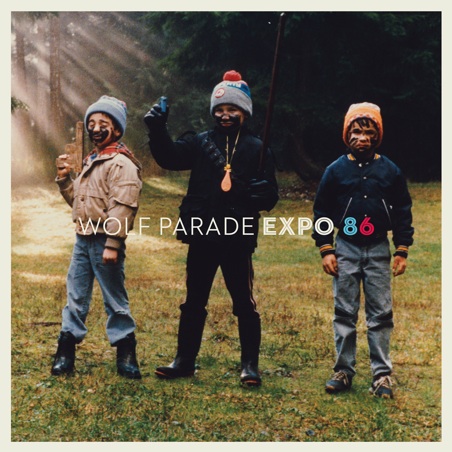 Wolf Parade is a different band. They were a combination of other bands those in the underground love(d). Each member has his share of other projects with nearly as much clout as Wolf Parade. However, none of those bands ever recorded an album as glorious as Apologies to the Queen Mary. That was their debut, relegating them to careers aimed at surpassing that achievement8. Every album the members release on their own or collectively is compared to Apologies which is too bad as each album should be judged on its own merit, within its own, unique context.
The band’s follow-up was the forgettable9 At Mount Zoomer. However, had their sophomore album been the debut of another band or a piece in any other discography, it would have hailed as a great record. It just didn’t measure up to Apologies.
Now comes Expo 86, maybe the band’s most cohesive effort to date. I still can’t tell if it’s a good thing or a bad thing. That’s why it’s taken me over a week to put these thoughts in a blog post. Despite my doubts, the album is good. I can’t wrap my head around it as of yet, but I’m working hard on this one10. I’m not getting that punch-in-the-gut feeling Apologies gave me, but there is a slight tingle.
Never have the writing and vocal styles of Spencer Krug and Dan Boeckner fit together so seamlessly. I always felt their albums were battles to see which style would win out. In the end, both would go back to their various projects dejected. There, Krug and Boeckner would find themselves again and return to the fight that is a Wolf Parade record. Not so on Expo 86. I had trouble keeping score between the two primary musicians, losing track as to who was singing and whose song they were hacking. The album fits itself from beginning to end. I can’t deny the cohesion11.
Then I wonder if this is a good thing. Should I not only feel that punch in the gut but also that slap to the face? Apologies grabbed me from the opening beats. It took me to the woodshed and had its way with me. I was hypnotized despite its uneven, two-pronged attack. Of course, the cohesion on that album was somehow created from Isaac Brock’s production in which he stripped both Krug and Boeckner of their identities…but I digress12.
Expo 86 is, at the very least, worth several listens before writing it off. Some will complain about its mediocrity, that it’s neither good nor bad.
At its very best, it’s a challenging album that takes time to appreciate, an album that stays in the rotation because it’s too interesting to dismiss and thought-provoking enough to garner discussion and debate.
Either way, the transformation of Wolf Parade into a conventional, cohesive band is having an effect. Expo 86 might not be the end of this story. It might just be the beginning. The direction the band takes from here will be telling as to whether this move toward a conventional rock band is a good or bad thing. For me, Expo 86 will appreciate if the conventional turns out to be the same thing that drew me rock ‘n roll in the first place13. However, this development might just give me fodder to complain about each successive album, only appreciating the previous release once Wolf Parade releases another. Then, maybe Wolf Parade will be a lot like Pavement.
Notes:
1Which is so laughable in retrospect. Pavement couldn’t make a classic rock record of they tried. And besides, what the hell is “classic rock”? I feel like it used to be the Beatles, Stones, maybe Zeppelin. Now it’s as if every hair metal band from ’83 is classic rock. Classic rock might be the worst moniker for a genre of music this side of indie, crunk, and slow-core.
2Sorry, Gary Young. You were a shitty drummer, gymnast, and record producer. Pavement was better off without your burnt-out California, gun-toting, plant man shtick.
3And by “proper”, I simply mean that they practiced a bit before they toured, maybe rehearsed before recording. I don’t think they ever all lived in the same city at the same time. Pavement might be more proper than ever just by simply doing this reunion thing.
4I believe that I read somewhere that Bob Nastanovich actually left another day job in order to join the reunion. He was maintaining some horse racing database or something.
5The emphasis should be on the what the fans thought here. I don’t think that it was ever Pavement’s collected stance to abstain from becoming a real band. They certainly toured a shit-ton in the mid-nineties and played nice with some alt-rock luminaries (sans Smashing Pumpkins, but who played nice with that asshole Billy Corgan?). Pavement were a vehicle for their fans to reject anything conventional even though the band was a pretty conventional rock outfit for the most part – dudes with guitars played loudly.
6Just wait for all the blog posts from their upcoming summer dates around the country.
7See Black Flag who was hated by their own fans once they started incorporating metal riffs and grew their hair long. Of course, we’re all thankful Henry Rollins stuck with the dirty gym shorts and didn’t discover spandex.
8Another band who did this but has failed miserably in trying to attain the same heights as their debut is Interpol. Turn on the Bright Lights is as perfect a debut as there has ever been, but when when the following two duds are taken into consideration. I haven’t heard the new Interpol record. I think it’s safe to say that it will be a dud as well.
9I only use this term because no one ever remembers this record. It had a really bad cover and strayed far from Apologies, ironically making a sound much closer to what the band members intended for their first go-around.
10I’m still listening to it constantly, trying to piece together a coherent thought beyond the coherence of the record. Is that coherent? Coherently coherent?
11Or overuse the term, apparently. That, I guess, is a characteristic/flaw of my writing. I’m redundant and use the same word over and over, in case you haven’t noticed. Good thing I don’t do this for a living.
12That’s what the footnotes are for. I actually really love what Brock did to Wolf Parade. A synth-heavy debut would have come off contrived, pretentious. Looking back, it’s actually quite surprising Brock stripped the music down so much considering his tendency to overdo it. Somehow, he made it work but at the cost of what makes the individual parts of Wolf Parade so amazing. A good topic to debate would be whether Isaac Brock ruined Wolf Parade or did he make them great?
13You know, rebellion, your parents hate it, has a good beat, danceability, etc.
Beer? Give me Bloodbuzz.
 I’m originally from Ohio. Whenever there’s a reference to the Buckeye State, I smile. So, when I heard The National’s “Bloodbuzz Ohio” (from the just released High Violet) I couldn’t keep the corners of my mouth from rising a bit.
I realize for most, Ohio is just another, depressing, fly-over, Midwestern state. While there’s truth to that, that’s not the whole story. The part of Ohio from which I come was pretty rural, pretty rundown. Then, Honda came and the industrial jobs popped up everywhere. There was steady growth. Folks built new homes and bought bigger cars. The second half of my childhood saw a boom in Ohio’s economy, standard of living. Superficial and consumptive? Sure, but it was the kind of wealth people from that part of Ohio rarely enjoyed.
And as the rest of the economy has gone, so has Ohio. In fact, Ohio may be worse off than most states. It’s in really bad shape and it doesn’t help that so many people racked up loads of debt to build those new homes and buy those bigger cars. It’s pretty depressing these days.
The most depressing part for me is that I don’t really have a piece of Ohio anymore. Yes, I have family and friends there, but that’s still just a Facebook connection or familial tie or both. Ohio’s not part of my being the way it used to be. Ohio’s tattooed on my arm, but she doesn’t remember me.
Anyway, Matt Berninger of The National gets that sentiment. There’s something to be said for the laments of white guys who are suddenly smacked in the face with the responsibility of a family and mortgage as the rest of the world crumbles around them. It’s a privileged life, but one is not allowed to feel sorry for one’s self when the American dream is being realized.
Then, I think about Ohio. These things go in cycles. Will things always be this hopeless/full? That kind of stress weighs on me. Apparently, it weighs on Berninger as well.
And this is why I appreciate The National. Everything they do is weighty. They feel the pressures I do. They drink to forget…or to remember. I can’t figure out which.
There’s the low grumble of a Cohen poetic. Strings carry; grooves ground. There’s space in their songs, but it fills arenas with its echoes. There’s the urgency of the moment. There’s experience. There’s something real going on here.
I won’t bore you with my white-guy-in-his-mid-thirties bullshit anymore. I won’t bother with footnotes. The potential for them in this post is eternal. I’ll just leave you with the fact that The National make good, heady music. Here’s a record you should buy. Let it marinade for moment. As it sinks in, remember or try to forget. High Violet is the kind of record in which one can get lost or find one’s own Ohio. I can’t figure out which.
Forgiveness Record Review
There’s this guy I know who has a pretty realistic perspective on movies. If he reads on various film review sites that it’s a C movie, he looks for it to be the best C movie it can be. No one went to Gigli expecting Citizen Kane. If someone actually pays money to see a Gigli, they hold it up to I Know Who Killed Me, Glitter, or Showgirls. My friend lowers or raises his expectations based on reviews before entering the theater, allowing for the most enjoyment possible for lesser cinematic fair1.
Music sort of works that way for me as well. If I read some lukewarm-to-bad reviews of albums, my expectations are automatically lower. The same goes for bad performances or a string of less-than-stellar releases. I only expect the album to be so good. If it meets that low expectation, the album has done the best it can do in my eyes. Sometimes, that’s OK.
Enter Broken Social Scene’s Forgiveness Rock Record.
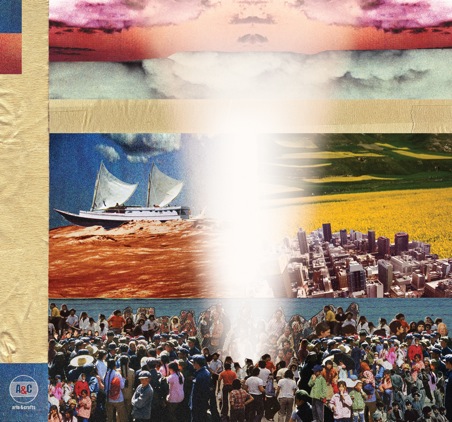 Every person or outlet I trust thought this was a lame duck at best and a crap sandwich at worst. I was beginning to regret pre-ordering the thing as visions of the last two Broken Social Scene Presents… inhabited my nightmares2. There was virtually no reason for me to like this record.
Then I listened to the record.
Forgiveness Rock Record is as varied and textured as any other Broken Social Scene record. It may not be the best effort from the Canadian super-group, but it has to be better than 90% of the crap that passes for music these days. It has highs and lows, but it was fine. The record wasn’t anywhere near as bad as folks wanted me to believe. It met and exceeded my expectations.
But what if I don’t take those reviews into account? What if I judge the album on its own merits? What’s wrong with this record?
The LP opens with “World Sick”, as big a BSS rave as any song in their catalog, starting easy and breazy only to blow up into a chorus that’s all “hey, everybody on stage NOW” kind of a moment for which BSS is known. “Chase Scene” is just what the title suggests. Imagine every chase scene in the history of action movies and then imagine a mashup of all the accompanying songs played during those scenes. There’s urgency, horns, and some cheesy-ass keyboards3.
“Texico Bitches” is a moving, danceable ditty with odd word-play found all over BSS records. In “Forced to Love”, the band picks up the pace and devolves4 into something electronic with the entrance to “All to All” which reminds me of a Stars song through and through. The movie meme returns with the bombastic and Motown/Stax horn-driven “Art House Director” calling into memory the band’s cinematic collaborations5.
The sleepy “Highway Slipper Jam” breaks the momentum with hushed vocals, looped acoustic guitar, and whistling. The poetic profanity that makes me smile whenever I listen to a BSS record kicks in with “Ungrateful Little Father”6, bouncing over a blip-heavy percussive love-fest. “Meet Me in the Basement” is proof that no one does an instrumental like BSS by including prog rock, pop flourishes, and that ever-present urgency. This leads into the quiet opening to “Sentimental X’s” which continues the Stars love as it speeds into some blips, bleeps, and more prog.
A cool, white-boy R&B track known as “Sweetest Kill” comes in to kill the mood in a good way. The song cheeses its way to the following track, “Romance to the Grave”. I don’t know whether it’s supposed to be Northeast country-western, Canadian surf, or just another indie movie soundtrack, but this instrumental leads into basically a Sea and Cake song, complete with Sam Prekop vocals7.
After such a strong start and middle, the album fades a little. “Water in Hell” is the all-American rocker BSS rarely plays. The album continues to jump genres, eras, and made-up clichés as they play a song comfortable on any grassroots rock record from 1974. It might be the low-point of the record, but it’s inoffensive enough to simply ignore. “Me and My Hand” opens like a Wayne Coyne ballad complete with off-kilter guitar strums and off-key vocals. It doesn’t close any better.
Despite the two final tracks, I find very little wrong with Forgiveness. It’s a crisper sound than previous work, more hi-fi than lo-fi. There are an annoying amount of blips, bleeps, and blops, but they’re harmless enough. The prog touches are a bit off-putting, but they generally work with the material. I see where a BSS fan would be disappointed, but this is a seriously good record.
I place a lot of the blame/credit for all the new sounds on producer John McEntire8. This record just sounds like a Tortoise/Sea & Cake record. That’s all and I’m fine with that. Sure, BSS broke down a lot of limitations put on (indie) rock in the mid-nineties, particularly by bands from Chicago. However, their willingness to embrace these origins and influences is a great strength of the Toronto collective. To prove this point further, BSS enlisted the help of such folks as the aforementioned Sam Prekop, Spiral Stairs, Doug McCombs, and Sebastian Grainger9.
Broken Social Scene’s ability to create new music that also nods to its forefathers is something I admire in the group. It sets them apart from so many hipster acts who merely rip-off their predecessors. There’s a collaborative aura around BSS already, but when they include indie rock luminaries the result becomes rich with substance and context10.
Forgiveness Rock Record has nothing for which it needs to apologize. I get why folks might not like it, but it speaks to me loud and clear. Broken Social Scene is still the most engaging, exciting band in the scene at this very moment. Sure, one can argue that other acts are more esoteric, post-ironic, or punk, but those bands are not as consistently good as BSS.
So, were my expectations lowered? Sure, but that only allowed me to be open to what this record had in store for the listener. I can hear Broken Social Scene at its best as well as all their influences in Forgiveness. I can appreciate the Chicago post-everything scene from which McEntire developed. It’s all there and that makes for a complex, thrilling, and emotive record I will put on repeat throughout the summer11.
Notes:
1Except that this means most movies with great reviews will likely not meet expectations. So, my friend sees a lot of crappy movies in the process. Of course, he can always be counted on to see a summer blockbuster at a minute’s notice.
2This explains why I have yet to purchase the massive 10-song EP they released of outtakes. Who does that? Even a band like Pavement waits for the re-issue to tack on the outtakes. No one releases 10-song outtakes. Hell, Caribou’s last record only had ten tracks and it’s an LP!
3Actually, the lyrics are a bit silly. They remind me of something straight out of Team America: World Police with its rather literal lyrics about the scene of his life. A little silly, but an interesting track nonetheless.
4Actually, the only thing that’s “electronic” is in “All to All”. It’s sort of hard to tell when one track ends and the next begins here.
5Well, there’s really only been that teacher/crack-addicted hipster movie a few years back, but there’s word that they are composing soundtracks for a couple projects as I write this.
6I guess “mother fucker” is a synonym for “father” in a way. Kind of makes me feel dirty.
7And is it just me or does Kevin Drew often call upon his inner-Prekop on such tracks? A little post-modern to actually include Prekop in the proceedings.
8I am not much of Tortoise fan and have learned to tolerate Sea & Cake’s development over the years into Tortoise-light.
9Which barely speaks to my point, but he’s another name to add to the list. Sadly, no J Mascis this time around.
10Who’s not hoping that they’ll join the stage with Pavement on any of the bands’ corresponding tour stops. My bet is on the Toronto show where my sister will surely give me a full report.
11I realize that records cannot generally be put on “repeat”. The iPod will play this album a lot this summer and I will drop the needle as often as I find time at home. I hope this clarifies everything.
Sometimes I Want to Remember
The best part about an iPod is that one can periodically revisit music that hasn’t been heard in months or years on the spur of the moment. Normally, to listen to an album or song, one would have to plan ahead or wait until they’re home, in front of their collection to put that one record on he just has to hear at that moment. The iPod is a luxury as it places an entire collection in the palm of one’s hand1.
Such was the case as I drove home the other day2. I wanted to listen to something old and comfortable, something to which I could sing along. This sent my mind wandering to a times when I turned to a record for comfort in times of trouble making the words of the songs on that record a part of me. It didn’t necessarily have to be a great record. It just had to be the right record for that moment in time.
 I scrolled through the iPod until I landed on Eef Barzelay’s 2006 solo effort, Bitter Honey3. I don’t know that it made any end-of-year lists, but it made mine. 2006 was the middle of maybe the two worst years of my life4. Barzelay’s sad, sad album spoke to me. The album’s sadness allowed me to be comforted by the fact I was not alone in my own depression5. There were even moments of anger and hope which carried me through that time. The album’s place in my all-time list has less to do with its merit than it does its meaning to me and that time.
Similarly, Modest Mouse’s This Is a Long Drive for Someone with Nothing to Think About came to mind as a record that helped me through a tough time. My last year of college sucked ass. I went through a crisis of what to do with my life in May, after graduation. Some things happened that called into question my educational trajectory at the worst possible time. My girlfriend/fiancée of three years decided to cheat on me and leave me for an accountant with a house6. I made an ass of myself on a weekly basis with various rebound attempts. Then, when things were starting to work in my favor again, it all went to hell. I was set to live in Seattle – my dream city – when some unforeseen events caused me to return to my parents with my tail between my legs7. And through all of this, Long Drive was there. In fact, that chapter of my life falling apart and coming around was framed by two Modest Mouse shows8.
When I listen to these albums, it’s hard to separate them from my experiences in order to judge them solely on their quality. I can’t give either record or others with similar meaning a true rating. I might include them in this list or that list, but it’s completely based on the episodes associated with the music. It’s why some music stays in the rotation and others fade no matter how great the product9.
So, I think I will have to revisit some of these records. Bitter Honey is as good a place as any. I’ll try not to bore you with the details of my personal struggles from 2005-2007. Just know that the sentiment expressed by Mr. Barzelay closely paralleled my own experiences, metaphorically anyway.
That was my ass you saw bouncing
Next to Ludicris
It was only onscreen for a second
But it was kinda hard to miss
Bitter Honey open with the title track10 which also happened to be the hook that convinced me to buy this CD. The song is just sad and at that time in my life, that’s how I felt11. Nothing was going my way. I needed some company to go with my misery.
Anyway, the track moves on, describing sad moments in a woman’s life. It’s always odd to hear a feminist lament from a man, but somehow Eef Barzelay delivers without a tinge of condescension or even sarcasm. He’s just telling a woman’s story of a life where her only value is as a sexual object, caregiver, or both. There’s no preachy moment, Eef just tells it.
While “The Ballad of Bitter Honey” just made me sad, “Thanksgiving Waves” was the first song that crushed me. It puts forth this idea that it’s you and your lover in this predicament together. We turn to those we love and trust most in tough times, only to lose our love under the stress. Luckily, I didn’t lose my love. The thought of that possibility scared me every day. “NMA” is that apathetic kind of sad. The third track builds off of the second and wonders when the us-against-them attitude devolves into detachment.
“Well” is the track that still cuts a bit. My crisis had to do with work performance. I wasn’t performing well for many reasons, too many to get into here12. This song fills me with the fear of being found out. You know, that fear deep inside that everyone you love will discover you’re a fraud, a liar, a cheat. And on top of it all, you’re incompetent. Then, the focus of the song suddenly shifts or at least it did for me. Somehow, Barzelay’s phrasing made me think of my superior who was partially responsible for making me feel this way. My fears and anxieties shift to anger as this song carries on. The final line says what I have always wanted to say…
The truthfulness must leave the room
If I ever wish you well
The next several tracks focus on hopeless love stories. “Words that Escape Me” imagines his love dieing just so he can see how he’ll feel. “Little Red Dot” is a nice little ditty that would fit the bill for a lifelong love as much as a child13. “Let Us Be Naked” is about the exposure one experiences in the sweetest of loves. In “I Wasn’t Really Drunk”, the protagonist pretends to drink in order to be closer to his alcoholic lover, only to discover she has no feelings for him when they’re sober14.
“Escape Artist” gets back to escape from one’s reality that only a lover can provide. It’s risky. It probably won’t work, but we’re desperate.
Oddly, the record finishes with “Joy to the World”. I don’t know why, but it works. After the rest of Bitter Honey would drag me down, there’s a slight glimmer of hope in a Christmas carol sung by a Jewish country singer from Brooklyn that makes it fit. I don’t know. At this point in the record, I’m drained of cynicism and am ready for something else.
Is there a record that you often revisit not for its prowess but for the feelings and memories it stirs inside of you? Please share the albums that have meaning to you. You don’t have to go into details about the events surrounding those albums, but you can if you’re in need of some therapy.
Notes:
1It really is quite an amazing human accomplishment. To think that we’ve gone from vinyl to eight track to cassette tapes to CD’s to MP3’s in my lifetime is akin to folks who lived before the Wright Bothers and eventually flew a commercial airliner.
2I drive a lot for my job. This will hopefully slow in the coming year, but I’ve logged more than 20,000 miles on the Prius in less than a year. That’s a lot for me.
3Admittedly, this is not an old record, but it does fill the comfort I was seeking.
4I will try to keep the details to a minimum. There is no need to rehash that time. It will just make for an uncomfortable silence in the comments.
5I attribute this idea – for me anyway – to something Wayne Coyne once said about why we all love sad songs so much. The idea of finding community in sadness is a comforting one. I may have to write a post on it.
6In her defense, he did play bass in a band and was unnaturally tall. Still, it was sort of a jerk move.
7Of course, if none of this hadn’t happened, I wouldn’t know my partner and certainly wouldn’t have my daughter. I completely recognize how fortunate I am.
8The first was my first MM show overall in a basement bagel/beer dive known as Bernie’s. The second was my third MM show in Cincinnati at a bar/laundry joint known as Sudsy’s. Both shows were extremely memorable.
9Due to a pretty meh lifestyle at the moment, I find it hard to keep listening to music just a year old. I guess that’s a good thing.
10The actual title is “The Ballad of Bitter Honey”.
11No, I didn’t have a complex about the size of my ass. It was the helplessness one feels when being judged. I explain it better in the next paragraph.
12I probably should have been on something. Oh well. That which doesn’t kill us only makes us stronger or some shit.
13I’m already planning the second birthday video invite.
14This happened to me once, the first night I drank in fact.
Two for the Road
We had to travel in order to visit some family this past weekend1. So, I took advantage of the time to listen to new records2 throughout our travels.
 I first heard Let’s Wrestle’s “I Won’t Lie to You” on a compilation3 a while back. From the get-go, I was hooked. Then I found out they were signed to Merge. What else did I need to know?
The band’s material is all over the map. There’s the punk charm of Billy Bragg, sans the politic. I hear a ton of Dinosaur Jr’s rawkward geekiness, without the guitar heroics. Plus, the presence of the youthful exuberance of a young Noise Addict4, with British accents instead of Aussie. The sound is still raw and emulates their heroes more so than creating their own niche, but that’s to be expected from such a youthful bunch of hooligans.
As a whole, In the Court of the Wrestling Let’s is as danceable and fun debut as one might want. It won’t shatter anyone’s expectations of rock ‘n roll, but it will remind you why you go to rock shows and buy more albums than you need5. There are even instances where I can tell this band won’t do punk records forever and my expand their repertoire to make albums of more substance in the future. However, for now, I want them to flaunt their youth and remind me that a piece of me is still young6. That’s why this record will be in heavy rotation for the spring and summer months, possibly beyond.
…
 I’m lame. I have a minor crush on Zooey Deschanel. It’s nothing serious7, nor creepy. I just think she’s cute and her quirkiness gets me every time. There are no posters on my wall. The screen saver on my computer is not a series of Zooey Deschanel images. I just have a lame-ass guy crush on a Hollywood/Indie “it” girl8.
This does not cloud my view of her music. Sure, I loved Volume 1 she did with M Ward as the combo She and Him, but I was not alone in proclaiming the album’s greatness. Volume 2, on the other hand it is taking me some time to get.
The second She and Him album is bigger and brighter than the first. Deschanel still sings about relationships she’s had, not those for which she longs9. M Ward is still a master of producing 50-year-old hits. While all this sounds good, it doesn’t quite fit into the neat package that Volume 1 did, pulling me in from the first listen. Volume 2 is a good companion/sequel, but I don’t think I would give it as much time as I have had it not been for the band’s first effort. Eventually, it will grow on me and earn a regular spot in the rotation, but I doubt it ever overtakes Volume 1‘s place in the all-time list.
Notes10:
1We hit Pittsburgh before heading up to Huntingdon (near State College). I love older cities and towns like these. There’s so much character in eastern states. I miss it.
2Obviously, I did not listen to records on the road. The first album reviewed here is only out on CD. So, I lowered myself to purchasing said CD and played it on the ride to the airport. The second album came with the now-expected Mp3 download.
3The comp was created by my sister for my daughter Lucia after videos of Lu surfaced of her dancing in our living room naked. Lu’s aunt thought that she needed a mix in order to encourage more dancing. On the compilation are songs by Prince, The Clash, Unicorns, Michael and Janet Jackson, as well as Sponge Bob Squarepants.
4Early nineties teen band from Australia which was a pre-Claire Danes Ben Lee, released records on Thurston Moore’s and the Beastie Boys’ labels, respectively.
5It’s fun, exciting, makes you feel like you’re part of a community, etc.
6Despite the pains in my back that seem to shoot down my leg every morning.
7Then, I would be writing about my upcoming divorce. No worries.
8As far as indie it girls, there’s been Julianna Hatfield, Liz Phair, the Deal sisters before they became bloated on drugs, Neko Case, Feist, etc. Those crushes all fade eventually.
9This is a key difference between her and most indie musicians. Normally, they are way more awkward and unsure of themselves or they put on such a persona that their shyness doesn’t seem apparent at first. Zooey is a different creature all together.
10Look. It’s a very sensible size for a footnote section. I bet you’re proud of me…or hoping that the footnotes go away. For now, they stay.
When Indie Rockers Grow Old
When indie rockers grow old, they begin to resemble their not-so-indie forefathers. They do things like put out greatest hits records and break from their bands to collaborate with the hippest of collaborators. Pavement did one of these. The Shins’ James Mercer did the other.
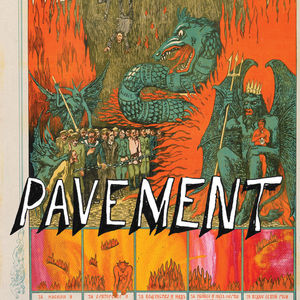 Quarantine the Past is Pavement’s attempt at a greatest hits 1 collection. It’s really a great collection, but I’m completely biased2. They give you all the hits as well as a few hidden gems that need to be polished after all those years in the safe deposit box. Revisiting the two selected tracks from the Perfect Sound Forever EP3 was a good enough reason to blow my kid’s college fund on this bugger4.
Of course, this is what a band does to connect a younger generation to their catalog in one, affordable release5. Kids will pick up this LP and get a taste of what Pavement is like. Of course, as with all greatest hit collections, they will miss out on what makes the albums so cherished to long-time fans6. A selection from a band’s oeuvre never does it the same justice as the entire catalog can provide.
Quaratineine does what it can. It spread the tracks evenly among Pavement’s five LP’s as well as a few selections from EP’s and comps7. One cannot possible grapple with all that is Pavement from this record, but it’s a start. Like the collection of Nick Drake tracks I bought after watching that Volkswagen ad8, it only scratches the surface of what is to be consumed. Quarantine does this admirably, but is limited by the same thing that limits all greatest hits collections, especially from a band with no actual hits9.
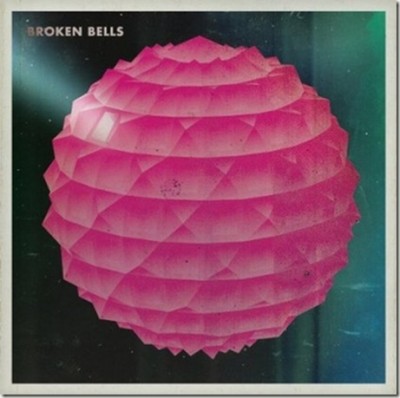 James Mercer has been around the block, but his band The Shins has only been known for the past decade. That might not be long enough to garner the credibility of a Pavement10, but it is enough to earn a shot at recording an album with one of the industry’s elite producers in Danger Mouse. Sure, Beck and that guy from Sparklehorse who committed suicide have recently done the same with Danger Mouse, but Mercer brings his own style to the Mouse’s droppings.
Jangly guitars, emotive vocals over cool, hip-hop beats, blips, bleeps, and plenty 70’s soul accoutrement equal Broken Bells. It’s chill11. It’s crossover. It’s sort of boring and forgettable. Unlike the bass-in-your-face of the Beck album, Danger Mouse and Mercer just put the listener to sleep. Sure, any track released from this LP will be a hit on adult contemporary alternative radio and it will undoubtedly win a Grammy12, but it’s a bit of a snooze.
I sort of imagine that Danger Mouse heard the soundtrack to Judgment Night13 and thought that was the future of music. Ever since, he has found ways to mix rap with rock into this new hybrid bound to make loads of cheddar. The trouble is that it’s been overdone. He does have a unique ear for pop music, but Beck was doing this a long time ago before he lost his way14. That and Mercer’s work didn’t need a dance beat to be good. I’m OK with the collaboration, but it doesn’t blow my mind the way it would have for many had it been featured ad nausea on MTV in 1999.
In conclusion, indie rockers are just the new rockers. They release greatest hits collections and stray from their bands to make a unique sound with the hot producer. It all works with the same success rate as it always has15. It’s OK, but it doesn’t compare to the work they’ve done in the past.
Notes:
1Or misses. I mean, really, did Pavement ever have a hit? Nope. Their songs all sounded like hits that would never appeal to the masses. So, maybe they are the greatest “hits” with the quotation marks that you can undoubtedly see. I’ll stop now.
2If you haven’t figured this out, just wait.
3Songs I had forgotten even existed as I am way more obsessed with Pavement’s five proper albums than I am any of their singles, EP’s, or compilation contributions.
4Because, let’s face it, the reason Pavement releases enhanced versions of their albums and now a greatest hits collection is that their fanbase are now in their mid-thirties with good jobs thanks to their college degrees and lots of discretionary funds.
5See The Doors, The Beatles, Rolling Stones, Abba, etc.
6Which was mostly ridiculing each release until the next one came out. “Wowee Zowee is a piece of shit compared to Crooked Rain.” [flash forward two years] “Gawd! Paevement has sold-out with Brighten the Corners. I wish they’d do another album like Wowee Zowee. That was their best record so far.” And so on.
7As an avid mix tape maker in the nineties, I really appreciate the time and care that was obviously take in putting this album together. However, at the conclusion of every song, I’m already humming/singing the opening to the next track on the original album sequence.
8I also bought a VW primarily because of that ad.
9I prefer “misses” as I once used in a title for a mix I made for a girlfriend.
10I realize that this is ludicrous as The Shins have been around as long as Pavement were together. The difference is that Pavement broke up and furthered their legend by doing nothing. Mercer should have considered this route one of the two times he fired band mates.
11I refuse to use the term “chillwave” for two reasons: 1) I don’t really know what chill-wave is. 2) I don’t think this constitutes as chillwave, brah.
12This gives you some indication of how I feel about the Grammies.
13Precursor to rap-rock craze.
14See Midnight Vultures
15It’s C work. It passes. No one will quit listening to them. It won’t increase their audience size or demographic. It does nothing to advance their personal brand.
4
I have four records to tell you about1. They’ve been out long enough for you to shape your own opinions, but I’m here to give you mine. They range from the instantly great to the three listen minimum and a little something in between. This isn’t a March Madness themed review2. These are not the “final four” records by any means. They’re just the four about which I have to tell you.
…
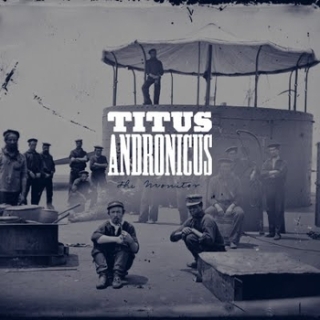 Titus Andronicus recorded a concept album that’s either about a guy who leaves New Jersey for Boston as told through a metaphor of a Civil War battle or vice versa. It’s really good and rocks your socks off, but throughout I wondered how we got here.
Like TA, a guy named Springsteen rose from the polluted land and water of New Jersey to give his side of the story. This guy – I’ll call him “Bruce” – wrote a record called Nebraska about some kids on a killing spree. It’s really a good record. That and it’s a concept record of the highest order. Bruce tells a story or string of stories that are expertly-pieced together in a way that 99¢ spent at iTunes could never do for you.
From that same state of Nebraska is a Omahan named Conor Oberst3 who has been called the “next, next Dylan” by some. Bruce, of course, was the “next Dylan,” one “next.” Conor has recorded under several monikers and with a couple of bands. One of those bands was Desaparecidos4. In that band, Conor screamed over feedback-excessive guitars about all the injustices of suburban sprawl surrounding his beloved-Omaha. Where Bruce succeeded in telling a narrative about Nebraska from his Jersey perspective, Conor told a global story from his Nebraskan vantage point. Both recordings5 are prime examples of concept albums done right and done with real emotion.
So, when you have a band that sounds like Desaparecidos playing Bruce Springsteen songs, you figure it should work no matter the concept. And it does, sound-wise. The bombastic blue-collar anthems of Springsteen work when screamed over a punk rawk onslaught hard to deny. There are horns, guest speakers6, bagpipes, and a kitchen sink7 for good measure. The Monitor delivers a punch to the gut like few albums have for me over the last several years.
However, as a concept album, the record is a stretch. How a guy moving to Boston from Jersey relates to the most famous naval battle of the Civil War8 is beyond my comprehension. Of course, the band believes in the concept and makes it convincing enough for the listener to play along9. One cannot ignore such conviction, especially when it sounds this good.
To make it simple, go buy this record now. You can buy the other three records mentioned below, but buy this one first.
…
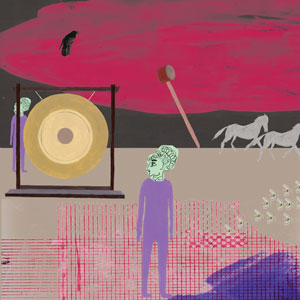 Quasi used to be be quirky and sad. Somehow, the bitterness in Sam Coomes10 has grown into an anger, nearly to the point of capitulation11. Of course, he hasn’t totally let go of his failures and the resulting anger, but the loss of the roxichord12 alone makes one question God’s existence all together. The anger suits Quasi. So, does a bass player.
I like Quasi’s new direction more with each recording. They’ve eased into a more traditional rock sound, leaving behind the whim and whimsy disguised as despair in their mid-nineties work. As they rock more, the strength of Janet Weiss‘ drumming comes to the forefront. Not since her final Sleater-Kinney album13 have I heard a kit endure more punishment. It’s good to hear, as is Coomes’ underrated songwriting. The roxichorded Quasi allowed Coomes the room to play with cliche and rhyme, crafting fine pop songs, but his adoption of a guitar turned to 11 has expanded their sound beyond the novelty of an organ and birds tweeting14. Even new bass player Joanna Bolme brings some wieght to the songs, making me think for a second that “Little White Horse” is a Mike Watt song15.
This album might just be a case of a must-have for a long-term fan, but I doubt it. Quasi rocks a ton and writes some good hooks. It’s not exactly what the kids are listening to these days with its nod to the Beatles and familiar culprits in the Blues and Punk eras. However, it contains just enough punch to surprise you. Totally worth a listen and absolutely worth a peek when they travel to your town.
…
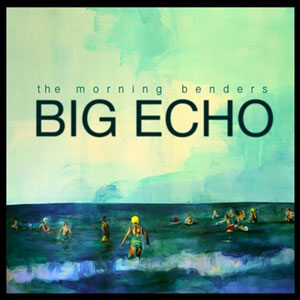 The Morning Bender‘s sophomore effort, Big Echo, lost me from the beginning. Their influences are all over the place. It’s hard to pinpoint what they’re doing and whether it’s them or Chris Taylor’s (Grizzly Bear) production work16. So, I did what any self-respecting music fan would do: I listened to it again.
Sometimes the best albums are not fully understood right away. I didn’t get The Soft Bulletin or Yankee Hotel Foxtrot the first time around. Those albums are growers. They take time and effort to get, but when you figure it out, it’s worth it. The Soft Bulletin was such a departure from the Lips’ hardcore and grunge-esque days that I felt I had been duped. Then, I saw them support the album live. In the early incarnations of what is now an extravaganza of sorts, the visuals paired with Soft Bulletin material made it rather clear. Coyne’s dramatic, bloody performance and calculated explanations didn’t hurt either17. The Wilco record was just not as alt.country18 as I expected. They built an album out of conceptual tracks and dysfunction, not middle-class cow punk. It took a few listens to get past the limitations of their genre, but I did and was glad. Neither album was easy to hear the first time around. However, the pay-off for giving them additional listens was worth the time.
Now, I don’t think Big Echo is so good that the fourth or tenth listen will blow my mind, but I think it has room to grow. For certain are the lush arrangements and detailed textures within. As mentioned before, the influences are many, but they include Beach Boys, Shins, Lips, etc. So, it generally works. The album has components and complexity that makes the listener want to return in order to give it a fair chance. You should too.
…
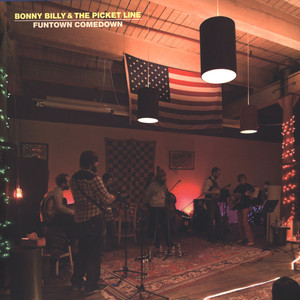 No one gets more out of a few songs and forty-three different pseudonyms than Will Oldham19. Sure, you probably have all these songs in some form or another, but you don’t have this record of a live performance just outside of his hometown Louisville. Oldham, who always seems to have a record out, released this LP under cover of darkness, almost causing me to miss it completely. The record is a grand document of a little gig that inspires reviewers to throw around terms such as “hoot-nanny,” “ramshackle,” and “ramblin’.”20 And it’s lovely. No one croons or writes a tune to croon to like Bonny ‘Prince’ Billy. The band he assembles to pull off the task isn’t too shabby either. When I first played it, I was afraid that I was actually enjoying a Prairie Home Companion. Luckily, there was no mumbling, rambling semi-jokes by Garrison Keillor21 or faceless men frantically trying to make sound effects with kazoos and hallow coconut shells. It was just Billy and his merry band of minstrels.
It’s not ground-breaking22. It won’t make you want everything Will Oldham has ever done. But it will comfort you when snow falls in mid-March or wake you when the sun shines in November.
Notes:
1We’re up to six now, but those others will wait for another post.
2For two reasons: 1) I hate themed reviews. And 2) I’m avoiding sports as long as possible on this blog.
3I realize some folks have their issues with Oberst, but they really need to review his oeuvre objectively. He’s a hell of a songwriter, lyricist. The hype surrounding him has made this impossible to fairly assess, though. I don’t know that he’s the next Dylan or Springsteen, but he’s a talented wordsmith.
4Originally, this band was supposed to be a hip hop project, but it somehow evolved into hyper-political emo band.
5I’m really not trying to equate Conor Oberst’s side-project to maybe Bruce Springsteen’s greatest achievement on record, but thematically and aesthetically these are good connections in understanding Titus Andronicus.
6That one guy who talks over Hold Steady records about beat poetry and Springsteen utopias lends inside voice to a Whitman poem.
7Not really, but it could have worked.
8Typically, the Battle of Hampton Roads earns this honor. One of the ships involved in this battles was the Monitor. And now you know.
9It’s sort of like when you repeat a lie over and over, so much that it becomes the truth. You know who did that really well? Our last white president was a master at the repeated-lie-becomes-truth-trick.
10Primarily attributed to his divorce from Quasi drummer Janet Weiss, maritally-speaking.
11Judging from Quasi’s recent output and the state of the union, I blame this on our last white president.
12Arguably the best rock instrument that is not a guitar (including bass) or guitar. Sorry, keytar and Hammond B3.
13The Woods is as good a farewell album as there has ever been. Of course, they’ll be back soon enough.
14However, there is a track featuring a howling wolf.
15I mention this only because I have been listening to Ball-Hog or Tugboat? a lot lately.
16Which, by the way, is pretty fantastic. Orchestral, layered, textured, you name it. This guy should do this more often.
17I contend that the early portion of the Lips is by far their best live work. Finally, they were ripping off the Butthole Surfers without being so obvious. The three of them crowded in front of a relatively small projector as it displayed some of the same fractured footage they show today only without all the tomfoolery of bunny costumes and giant, inflatable balls. At that time, it was all about the music and imagery, not the shenanigans.
18This is a term I’ve had a love/hate relationship with for a long time now. Sure, I love me some cow punk/post-punk country music, but I just can’t place my finger on why this is an actual genre. What really constitutes alt.country these days? Magnolia Electric Co? Will Oldham? The reincarnation of Son Volt?
19Will Oldham, Bonny ‘Prince’ Billy, Palace Brothers, Palace Songs, Palace, Bonny Billy, Bill, etc.
20None of which I will use here.
21Garrison Keillor is fine, I guess. I just know that when I hear his baritone delivery of a corny joke, half of my Saturday is gone.
22But it’s certainly better than that load of crap Old Joy Oldham starred in as an actor hiking through the woods with his buddy. Gawd! That thing was awful. And he didn’t sing.
Dissatisfied
 2010 feels a lot like the Reagan era1. The economy’s in the shitter. Libertarians2 and the like are dominating the political discourse. The difference between the haves and have-nots is embarrassingly large, yet the have-nots are garnering all the blame. Things generally suck right now.
The music of that time spoke to this sense of impending doom3. The hardcore scene spoke to the frustration and paranoia of the working class. Jangly, angst-ridden college rock from Manchester spoke to the fears of the educated. And the music was good because of this uneasiness. There was an urgency that spoke to the last days before nuclear annihilation. More importantly, there was a dissatisfaction with the whole deal.
The Soft Pack4 deliver the discontent with their self-titled LP, channeling the words of Westerberg, Minutemen politic, voice of Lou Reed5, Rollins’ urgency, and Joy Division-like darkness6. The band gets at the dissatisfaction in the air with this record like the musicians of the hardcore 80’s did in their time7. Of course, as the picture of who has brought this blight upon us8 clarifies, so does the sound. Gone are screaming vocals hidden beneath a tidal wave of guitars-turned-to-eleven. Still, the tradition of ferocity and velocity of drums and guitar are very, very present.
Malcontentment is all over this record. The exasperation of unsuccessfully urging others to join your fight describes one of the most frustrating experiences one can have (“C’mon”). It’s especially frustrating when such simple, rudimentary appeals to emotion elicit such fervor while reason and logic are discarded as simultaneously elitist and transparent9.
There’s a negativity toward the good in the world (“Down on Loving”). How can we be so happy with mediocrity all the time? Things are not good just because people think they’re happy.
Mortality is realized only as one looks to grow self-reliant (“Answer to Yourself”). You figure out that the only one you can depend on is yourself. the irony is that you won’t be around long enough to fulfill your potential10.
There’s both the dissatisfaction of where we live11 (“Move Along”) and being a part of something larger than one’s surroundings (“Pull Out”12). It’s a classic contradiction. I hate where I’m living11, but I don’t want to live anywhere else. The grass is greener over there, but I’ll put a fence up so that I don’t have to look at it.
The disgusting over-consumption and selfishness of the rich is called out (“More or Less”). Of course, the term “rich” is relevant. It could mean the über-rich who lament the taxes they pay and the constant fight to keep the poor out. It could also address the consumption of Americans in general. We are a rich and wasteful people.
The dissatisfaction turns sad as the album moves toward its end. The complacency surrounding everyday unsolved murder mysteries is sadly recreated (“Tides of Time”). The energy folks waste arguing over this life while deaths go unexplained day after day is a bit sickening. If it could happen to anyone, it could happen to me. Will I be forgotten13?
A call to arms theme returns since the first track (“Flammable”). The band moves from waiting for others to join the fight into action to burning everything in their path. Just give me a reason and I’ll burn you.
Nothing’s more depressing than the end to a relationship. It’s even worse when it just sort of ends, one person moves on to the next part of their life. The other poor bastard is the one left behind and doesn’t put up a fight14 (“Mexico”).
And maybe the biggest bringers of disgust can be found in the hangers-on, freeloaders, even sycophants (“Parasites”). Some of us live for others to follow every word we sputter15. Even then, we despise these admirers who can’t think critically and take us for who we are16. On the other hand, there are those who can see through the worship to a parasite’s true, pathetic nature. It turns us off from hero-worship, religion, and political zealotry. It causes us to question humanity in general. How can so many of us be so stupid?
Truth be told, I am dissatisfied. That’s maybe why this record spoke to me so clearly. It could also be why I’ve interpreted the message so negatively. But this is what I want from music. I want it to recognize my disillusionment with my station in life. I want to know that someone else feels that way too. Then the dissatisfaction I feel is satisfyingly real, even legitimate.
The Soft Pack makes me feel not so alone the way The Replacements and Afghan Whigs with their own miserable lives expressed in song once did. Sometimes I need a record to remind me, to pinch me. That is what The Soft Pack did for me. If you want to feel happy and good about life, listen to The Black-Eyed Peas or Miley Cyrus17. If you want to feel alive and present, listen to a band like The Soft Pack. Dissatisfaction is guaranteed.
Notes:
1Except, of course, we have a black guy as president. That’s a pretty striking difference.
2Read “tea-baggers” here, but there were no tea-baggers back then, or at least they were in the bath houses. I’m mostly getting at rich, white dudes who want to keep their money so they appeal to a socially conservative agenda to get their way.
3Sans the ghastly pop and hair metal that dominated the charts at the time. I’m referring to the bubbling underground of hardcore scenes and college campuses. Although, maybe all that bad music spoke more to our doomed futures than anything played on your college radio station. If you’re still reading this footnote, you have clearly realized that I have digressed.
4Formerly The Muslims. I wonder why they changed their name?
5I’m thinking more Velvet Underground era, not Berlin and beyond.
6With some New Order jangles sprinkled throughout.
7Except that The Soft Pack have the advantage of the Internet and the groundwork those seminal groups laid.
8I’m talking the disgustingly rich and greedy corporations here.
9Obama suffers and succeeds because of both. W only appealed to the emotions of his base.
10Look at any number of rock stars who died in their prime, usually at the age of 27.
11I once blogged this point into the ground. Maybe you’ve read that blog.
12This song so reminds me of Pavement’s “Two States,” but instead of splitting California into north and south, The Soft Pack support the state’s succession from the union.
13I often have visions of dying too soon due to an aneurysm, randomly driving off the side of the road, or both. I just wanted that to be somewhere in writing. Is that morbid?
14This once happened to me. I was left behind, but don’t worry. I was well over the relationship for a while as my girlfriend had been planning her exodus for several months. So, it’s cool.
15To subscribe, look under “Daddy’s Work” to the right. Click on “Entries RSS” and take me to your reader.
16This does not refer to you, dear reader.
17This is how out-of-touch I am with mainstream music. Should I have used Lady Gaga instead?


 Beer and Pavement
4 comments