In the works…
A post is in the works. Work combined with the struggles to post daily make it hard to get something out every morning. There will be a post by the end of Thursday, CST.
How about that Joe Paterno news?
Neil Hamburger
I saw Neil Hamburger the other night and hastily wrote it up for the Collective…

Do you like comedy? If you do, you probably didn’t attend Friday’s Neil Hamburger gig at Mojo’s. The anti-comic’s anti-comic was there to makes us uncomfortably laugh with Britney Spears jokes, the clearing of his throat, and spilled drinks everywhere.
I don’t know what it is about Hamburger, brilliantly played by Greg Trunkington, but his act is so awful that it’s good. And you’re not laughing at him out of pitty. There’s a retro touch that takes you back to the days when lounge singers would drunkenly give comedy a try and fail miserably. Hamburger is the sad opener for Tony Clifton in his prime. I’m talking about the “real” Tony Clifton, of course.
Have I completely turned you off on Neil Hamburger? That’s not my intention as his schtick is genius. The timing always seems off, but its consistently off on purpose due to whatever is always stuck in his throat and the three drinks he cradles in his arm. A Neil Hamburger performance is unique in every way. It’s so bizarre and awkward, you’re forced to laugh out of a loss of any other reaction.
Hamburger brought his A-game Friday. Jokes were nailed. I rolled on the floor. The openers were forgotten. If you didn’t go, you missed out on a brand of humor you won’t find anywhere else. Or until Neil Hamburger graces our college town with his presence once again.
As hinted before, there were openers. Local Diggy Splash and his troupe put on some skits and a few individual bits. The jokes ranged from terrible to silly to groan-inducing. At times, this group really gets anti-humor in a way that the headliner’s get it, but sometimes silly just won out. Honestly, Diggy ought to change his moniker to something more Biblical and work on his Jesus-holding-a-drink routine, but what do I know? I like anti-humor.
Touring with Hamburger is JP Incorporated. JP sings awful songs about fictional sit-coms and consumer products, playing on the current retromania that’s all over the place. Loud graphics and semi-obscene imagery assist the man in the fake beard as he sings about Jazzbot Xtreme and Crap Factory. It’s an odd but entertaining act for sure. So, a perfect opener for a Neil Hamburger set.
200
I’ve been at this…rather, we’ve been at this now for 200 posts. Thanks to those who followed me from the last place or clicked my name after I left too many comments some other place. The next 200 should come quicker if I’m able to keep up this one-a-day pace. Cheers.

+

=
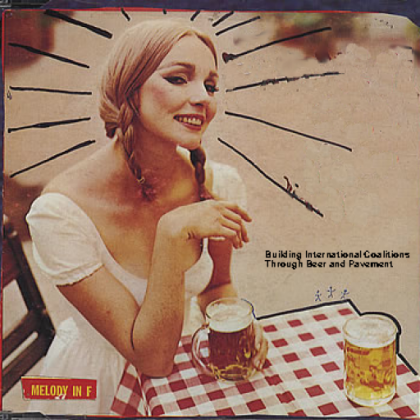
My Response to Drinkify
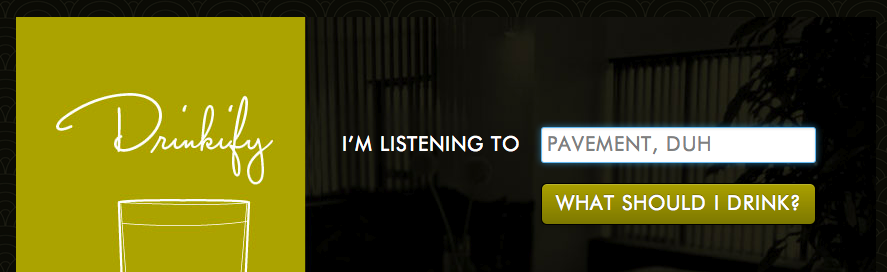
Carrie Wade thinks she’s really funny, so funny that she posted this atrocity on my Facebook wall. Really? We’re supposed to believe that Pavement pairs well with 1 PBR? What, because they’re like hipster slackers of something? Eff that.
I’m taking it upon myself to pair some bands with beers that make sense. Comment freely or suggest your own pairings. The wrong that has been created on Drinkify must be stopped. I mean, we’re trying to build coalitions up in this joint.
Pavement – Saison
I considered choosing one beer for Pavement but settled on a style instead. With a band like Pavement, it depends on the record. Crooked Rain, Crooked Rain might require the smooth quirkiness of a Boulevard Tank 7, but Wowee Zowee is a Boulevard Saison Brett all the way. The Saison is one of the more versatile styles out there. These beers can be loved or hated, depending on one’s mood, but they are generally appreciated. The range of flavors (earthy to citrusy to sour to bitter) is only equaled by the range of Pavement’s discography. Also of note is that Stephen Malkmus represents the entirety of the Stillwater lineup of artisanal Saisons.
Wilco – Schlafly American Pale Ale
What goes better with dad rock better than a slightly hoppier pale ale from the St. Louis area? Wilco, of course. This easy-drinking lesson in hoppiness is the perfect beer for the dad who wants to still show that he’s cool without drinking anything too bitter or high in alcohol. I mean, he does have to drive home. I also considered Three Floyds’ Alpha King, but figured it only paired with Wilco’s more obtuse work like A Ghost Is Born.
Fiery Furnaces – New Belgium La Folie
They’re both difficult to love sometimes, but if you put forth the effort to find what’s good, it’s totally worth it. Because of this, both have the most loyal of fans who must learn to ignore all the judgmental stares from their peers for choosing to like something so difficult. I considered several more artsy, more difficult bands (Joan of Arc, Beat Happening) along with other Flanders red ales (Duchesse De Bourgogne, New Garus Wisconsin Belgian Red). The pairing just seems right.
Guided By Voices – Bell’s Two-Hearted Ale
I realize that Bob Pollard drinks Bud, not sissy craft beers, but the classic IPA is perfect for macro-arena rock from the midwest. I was torn on several bands and IPA’s, but I settled on two classics. The best part of the IPA are all the variations it’s birthed along with other possible pairings. Dinosaur Jr ruins your eardrums like a Stone Ruination IPA (which is really an imperial IPA) ruins your tastebuds. Other Stone varieties also pair well with similar indie outfits such as Cali-Belgique (Yuck) or the 15th Anniversary Escondidian Imperial Black IPA (Chavez). Of course, there’s always old standbys like a Modus Hoperandi (Superchunk) or Lagunitas Hop Stoopid (Archers of Loaf)…I could go on and on, but there are other beers and bands to pair.
Where was I?
Sonic Youth – Founders Canadian Breakfast Stout
There is a ton going on in a Sonic Youth record. Layers of rebuilt guitars and alternate tunings upon alternate tunings create a cacophony that’s all their own. And over the years, SY has grown into almost a completely different band. While they sound nothing like themselves 30 years ago, only they could have evolved the way they have. This is much like Canadian Breakfast Stout, the much hyped and oft-cited imperial stout of the moment. At the moment, there’s a lot of noise in that beer. The suspicion is that it will undergo a Sonic Youth-like metamorphosis while in the bottle that sits in my cellar. I’ve had a taste, but I can’t wait to have another.
Sufjan Stevens – He-Brew Genesis 15:15
Speaking of having a lot going on, this musician and beer pack a whole lota flavor in relatively small packages. Sufjan Stevens brings one layered opus after another from his home in Brookly, much like the brewers at Schmaltz/He’Brew. The religious imagery and connotations are undeniable…This is a pairing made in heaven.
Wild Flag – Avery/Russian River Collaboration not Litigation
The members of Wild Flag were never in any danger of suing one another, but they have collaborated to create one the year’s best records. The Avery/Russian River collab is nearly as caustic and full of riot grrrl power as Wild Flag is. Plus, at nearly, 9% ABV, it makes you as woozy as one might feel after a Carrie Brownstein windmill combined with a Mary Timony classic rock non-riff. Confused? You should be.
I think I have more, but it will take some time to sort them out. In the meantime, what are your favorite beer/music pairings? Do you like any of the pairings I suggested above? Do you have a better pairing for the bands and beers I listed here? As usual, leave some comments.
Top 5 Bands I “Discovered” Opening for Other Bands
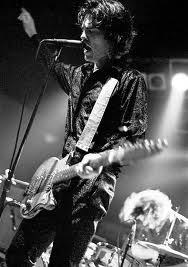
I’ve been to a lot of shows over the last 20 years. Less than some, more than most. I’ve seen pretty much every important artist of my generation (aside from REM and Radiohead for some inexplicable reason). Of course, I’ve also seen a lot of openers. Sometimes I skip the opening act, but sometimes I catch a set better than the headliner’s. There have been other times I went just to see the opener.
So, here’s a list of bands who opened for other bands that I “discovered.” Surely, there were people who had heard of these bands before I, but I found them in a place I wasn’t looking.
5.Dirty Three – The first time I saw Pavement marked the night I discovered Dirty Three. Between rants about struggling to find one’s personal pharmacist in the middle of the night, DT played the most intense guitar rock at a slow, methodical pace. Instead listening to a singer go on and on about his #whitewhines, the most sorrowful violin imaginable gave us the soundtrack to the Three’s tales of woe.
4. 764-HERO, The Shins – I discovered these two bands at completely different points in Modest Mouse’s history. 764-HERO opened for MM in the fall of 1996 in a tiny Columbus, OH club called Bernie’s, a bagel/beer joint in a High Street basement. I saw the Shins on MM’s first tour on a major label’s dime. It would be a full year before their record would be released and several years before Natalie Portman changed Zach Braff’s fictional life.
3. Iron & Wine – Like the two above, I saw Iron & Wine open for an Isaac Brock-fronted band. This time, it was Ugly Casanova. We had been anticipating UC’s set that we hardly noticed the bearded man whispering on-stage.
2. Superchunk – This one makes me a little embarrassed to admit. For various reasons, I was slow to picking up on Superchunk. They opened for Guided By Voices, a band I was quick to accept. For that night, Superchunk was the superior band.
1. Jon Spencer Blues Explosion – I was late to jump on the JSBX bandwagon but at least it was during their Orange tour. The band opened for the Breeders and all I could remember was a man screaming “Blues Explosion” as he made love to a theromone.
Top 5… on the way
There will be a top-5 today. I just haven’t had time to finish it. (Don’t worry. It’s nothing special.) However, instead of at the beginning of the day, it will come closer to the end. There will be a post tomorrow as well.
Stay tuned…
The Night Before Stout Day
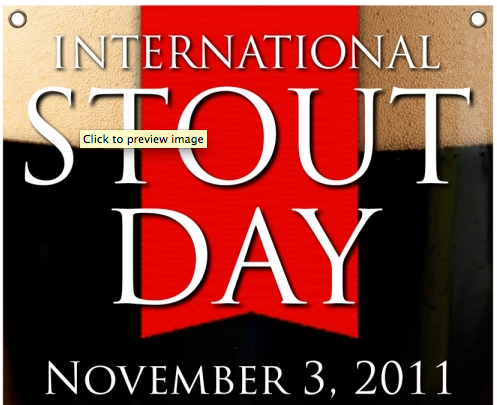
So, Thursday was International Stout Day. I’ve been cutting back, so I had no stout (or any beer for that matter) on Thursday. However, as one blogger put it, I was “pre-loaded for the holiday.” Instead of having a stout on ISD, I enjoyed what might be the most hyped stout of the year: Founders Canadian Breakfast Stout.
Yes, I already have a bottle. There’s some debate out there as to when is the best time to crack open said bottle. I planned to open mine at some point before the end of the year. Now, I won’t have to as I’ve had a glass-worth of the beer and now I can age it away in my cellar. And there’s good reason…
Our best beer bar is located in a restaurant called Sycamore. Sycamore hosts the most incredible beer dinners. Wednesday’s affair featured Founders and their lineup of badass beers. The night featured a firkin of Harvest Ale and, more importantly, a keg of the highly sought after Canadian Breakfast Stout, or “CBS” as the beer nerds call it.
Anyway, for $10, I received a glass of CBS. It was too cold at first, so I warmed it as best I could while sipping slowly. There’s tons of bourbon, but I was surprised to taste so much coffee in this beer. Had it not been for the oak, bourbon, and thick, syrupy mouthfeel, I could have sworn it was Founders Breakfast Stout and not the CBS. Still, this was a sticky mess of a beer. The sweetness from the maple syrup was almost overwhelming. I felt my mouth and hands were sticky in the same way the are during a pancake dinner when I was a kid.
The beer was lot to handle with all that stickiness and the inevitable heat from all that alcohol. However, as is typical of the North American beer geek, this hot, sticky mess was a glorious drink to behold. So, we drank it all in one evening, picking apart what may be a top-5 beer for anyone.
Like I said, I’ll hold onto my bottle of the liquid gold. My wife wants me to sell on eBay for a $100, but I could never do that. First, I want to see what it tastes like after being aged a bit. Second, I don’t know that this beer – nor any beer – is really worth $100. It was good. I don’t regret the $10 I paid for my glass, but no one should have to pay $100 for a beer.
After we were all nearly done with the CBS, a beer club member pulled out a Black Tuesday from The Bruery. Now, that beer is a behemoth. Imagine a Dogfish Head World Wide Stout (if you’ve had one) with a huge bourbon and oak presence. Then, imagine that 18% slobber-knocker in a 750 mL bottle. Yeah. Let that sink in for a moment.
So, that’s how I prepped myself for International Stout Day.
The Oxford Companion to Beer Controversy and What it Means to the Rest of Us
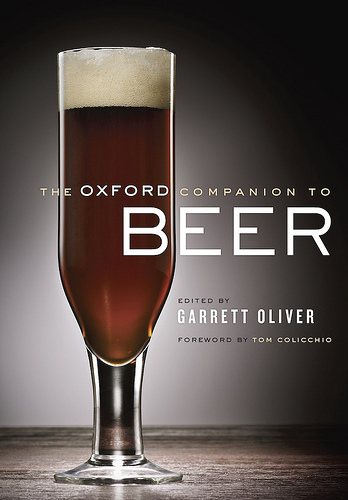 I’ve been watching the debate over the Oxford Companion to Beer from a distance. It seems that the largest single document of beer history and general information is wrought with errors. Some are historical inaccuracies while others are simply internal errors that should have been avoided. The book was heralded as major achievement in beer scholarship before it was released. Now, it’s being ridiculed all over the beer blogosphere.
There are a few places one can look for clarification, if you’re interested. Stan at Appellation Beer has started some interesting conversations on the topic, as usual. The resulting comments to Stan’s posts are always insightful. He has a knack of attracting such discourse. A new favorite of mine is Martyn Cornell’s Zythophile where some of the controversy has originated. (FWIW, Zythophile is an impressive blog documenting beer’s history in great detail by Cornell, a well-respected and accomplished beer historian/expert.) However, the place to go for OCB controversy headquarters is this wiki. That’s where you’ll find every mistake as it’s revealed in addition to a rebuttal from author/editor Garrett Oliver and links to most of the important criticisms.
Regardless, it’s a hot topic throughout the beer community. (That’s right, I wrote “community.”) I’ve attempted to question the critiques and have been largely shot down as my enjoyment of beer is not nearly as dependant on beer’s history as it is for others. That’s fine. Beer history isn’t for everyone. Still, my main point is to not throw out the baby with the bath water. The OCB is an achievement with or without historical and editorial errors. Apparently, the technical articles (~400 pages worth) are impressive enough to warrant a read. Others disagree.
I’m not nearly as passionate about the history of beer as some seem to be. So, I had to think of something where the history does matter to me. To some degree, that would be indie rock. How would I feel if the Oxford Companion to Indie Rock was filled with historical inaccuracy and lazy editorial work?
Luckily, Michael Azerrad already took a stab at this with his seminal work Our Band Could Be Your Life. Granted, Azerrad only covered the independent years of thirteen bands, but they were probably the most important bands to indie’s history. As far as I can tell, his book contains no significant errors. I’ve read a ton about all of these bands (some of them whole books of their own) and I never noticed a problem. I guess that’s what the beer historian community wants as well. I get that.
Another book I’d add to the OCIR would be John Sellers’ excellent Perfect from Now On: How Indie Rock Saved My Life. This book’s detailed history of indie rock is told only from the perspective of the author. However, it covers a wider range of bands and sets a timeline for indie’s trajectory, culminating with some fantastic stories about Guided By Voices. Sure, it’s a memoir, but it’s an essential read for understanding indie rock.
Garrett Oliver of Brooklyn Brewery fame as well as the author of several great beer books of his own was the editor for OCB. The indie rock equivalent has to be Sonic Youth’s Thurston Moore. Moore has not only lived most of indie rock’s history, he’s curated it in one way or another, hence the six degrees of Thurston Moore. Accuracy would be assured with Moore at the helm.
When I consider the above books and Moore, I cannot fathom errors such as the ones people are finding in the OCB. If an OCIR revealed as many errors that I could identify, I’d be highly disappointed. I don’t know that I’d be angry, but I could imagine Chuck Klosterman being upset for being left out and not able to help fix rather avoidable problems. So, this helps me see the critics side of things.
All that said, I will wait for the second edition of the Oxford Companion to Beer as long as Oliver and his contributors take each criticism and error seriously. You all should probably do the same as it’s an expensive book. Otherwise, little will change, leaving us with a frustratingly flawed book. In the meantime, I’ll stay out of the debate (aside from this one post) and consider some other books in the meantime. Retromania anyone?
Session #57 – Beery Confessions: Guilty Secrets/Guilty Pleasure Beer
This month’s session is “Beery Confessions: Guilty Secrets/Guilty Pleasure Beer” which is not the sort of thing budding beer bloggers want to share. We have reps to protect. However, if anything, it should demonstrate that even I will stoop to a lesser beer out of sheer pleasure and not just necessity. I’ll skip the opportunity to tell you about an embarrassing drunken escapade. There are just too many of those to share. Instead, I’ll stick with the guilty pleasure angle.
This past summer, my wife and I traveled to Spain, spending much of our time with a close friend. Spain is not known for great beers, but I had a lot of fun searching out the best. There were fresh pilsners to hold me over and even a few interesting craft finds. Overall, I can’t complain about the beer I had, but there is one beer choice I made on several occassions that I’m not completely proud of.
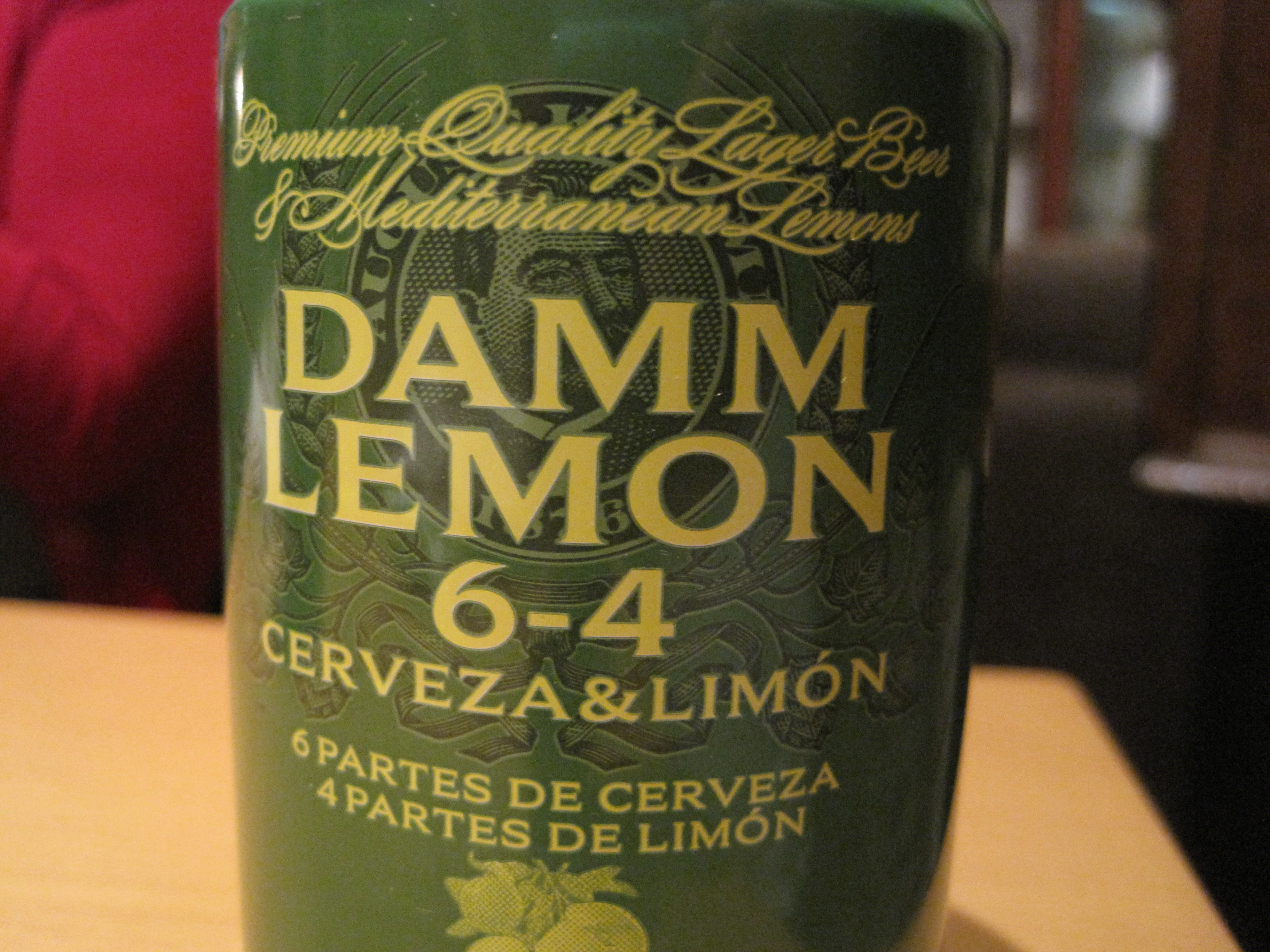
As most beer nerds do, I checked out the tap handles at every bar, cafe, and restaurant we passed. While in Barcelona, we would often hang out at the cafe just below the apartment we were renting. Like most, smaller establishments, they had two beers on tap from the same brewery: Damm. One tap was reserved for the brewery’s flagship beer, Estrella Damm, while the other was reserved for my new guilty pleasure, Damm Lemon.
Yes. The beer geek who goes for 10% imperial stouts and DIPA’s measuring close to 100 IBU’s chose a shandy. The Damm Lemon (or “damn lemon” as it became known in our circle) was comprised of six parts cervaza to four parts lemon. It was the weekest of session beers in that it was low in alcohol (3.1%) and even lower on anything resembling beer.
My first clue should have been when I finally decided to order a damn lemon. First of all, my Spanish is terrible. I try to piece together what to say, usually pronouncing everything with a French accent. So, I think I asked for a “cervatha de la lemón.” I don’t know whether the girl laughed at my lame attempt at ordering in Spanish or the fact that I was ordering a shandy. Somehow, I suspect both. She corrected me and told me it’s called a “lata” or something that sounded like that. I drank two and recieved the same odd look both times. The second time around made me think that I was choosing a girly drink. Normally, this doesn’t bother me, but my inner-12-year-old cringed at the thought. Although, in retrospect, it may have been more of a case of “Why is this old guy drinking a kid’s beer?”
When our friend arrived in Barcelona, I introduced him to Damm Lemon and he loved it. we made a pact to purchase a sixer one night for dinner. The agreement was realized one evening after a long day of sight-seeing, tapas, and plenty of drinking. We were already a little buzzed. So, some 3% lemonade beer wasn’t going to hurt. We dutifully finished the entire sixer despite tipsiness to start with and what I remember to be a rather decadent dinner of various things soaked in olive oil, bread, lots of pork products, and a boatload of cheese.
I tasted many good things during my trip to Spain, but none could be quite equal the guilty pleasure Damm Lemon turned out to be. We even tried ham-flavored potato chips and that doesn’t seem as guilt-inducing as a shandy. Still, I don’t regret a thing and would likely do it again.
Homebrewed
I’ve hinted and shared bits of information concerning two homebrews I currently have around to consume. Well, I’ve had a chance to enjoy and share these brews with others. That’s given me some insight into what I have inside all those bottles taking up space in my cellar. The numbers denote the how many batches I’ve done. There has been a cider and a couple of collaborative projects, but these put me at 9 and 10 batches of my own doing.
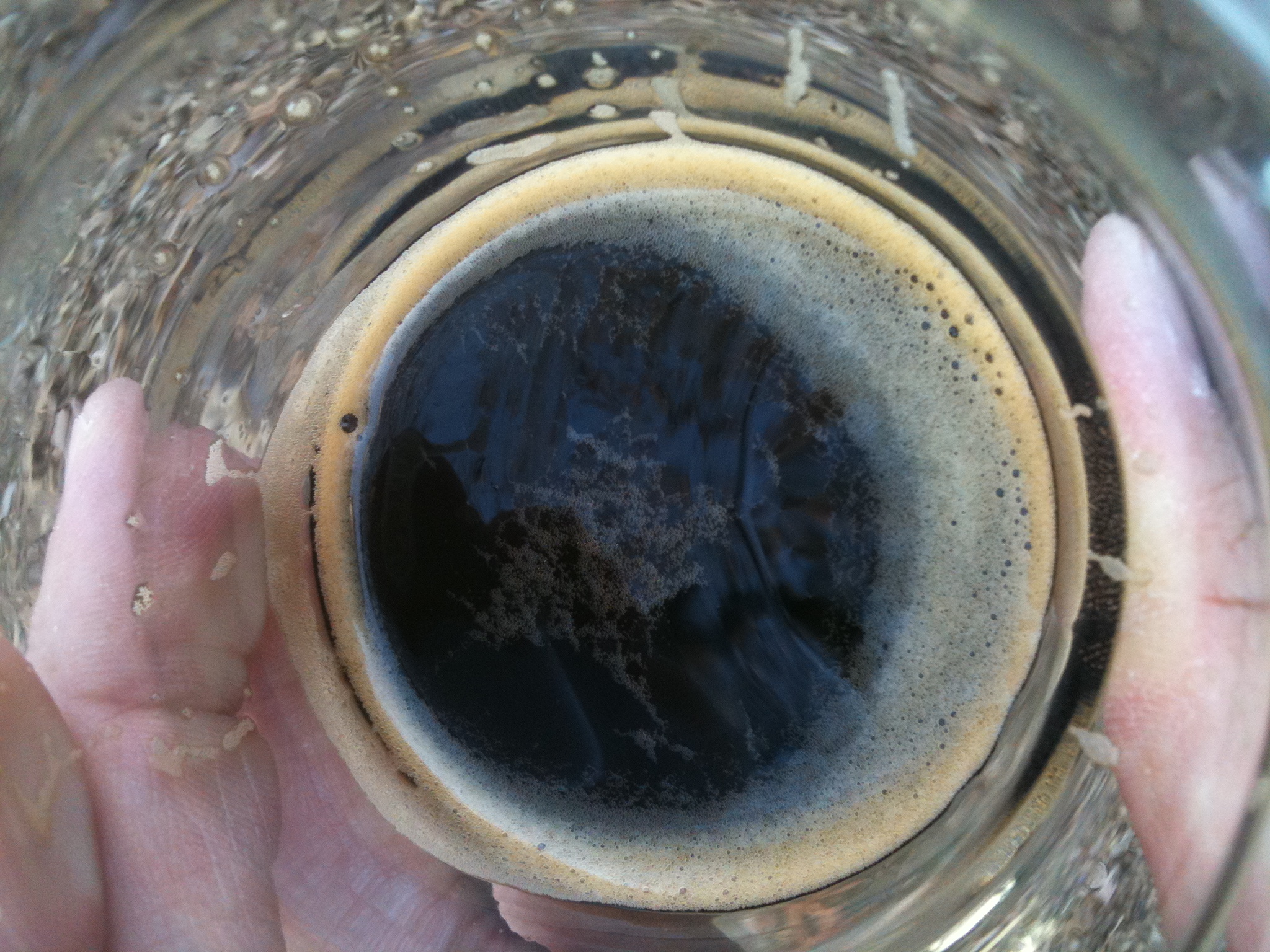 Batch #9 – Black Francis Imperial Stout (recipe)
This was to be part of a Christmas gift for people, particularly family, but that idea went out the window once we counted up the souvenirs we purchased in Spain. So, I’ve been drinking and sharing this beer, especially now that the weather has turned a bit.
Black Francis is a relatively big imperial stout (9% ABV) aged with oak chips, cocoa nibs, and vanilla beans all soaked in bourbon. Soaking the chips creates an effect similar to a bourbon barrel, but it actually allows for mor surface to touch the beer than a barrel. I wish I had aged it longer, but I worried about a potential exposure issue and I’m impatient with beer.
The beer itself contains an overwhelming amount of bourbon in the nose, but one can catch a bit of the chocolate if he’s paying attention. The vanilla doesn’t come through on its own. It seems the vanilla just augments the other flavors in the beer. The oak comes through a bit under the bourbon, but this may be the vanilla as the two components often bring the same flavors to a beer. I’ve used cocoa nibs before without much success. The vanilla, however, brings the chocolate out a bit. I’m hoping to save a few bottles to see if the bourbon subsides a bit, making room for the vanilla and chocolate to come forward.
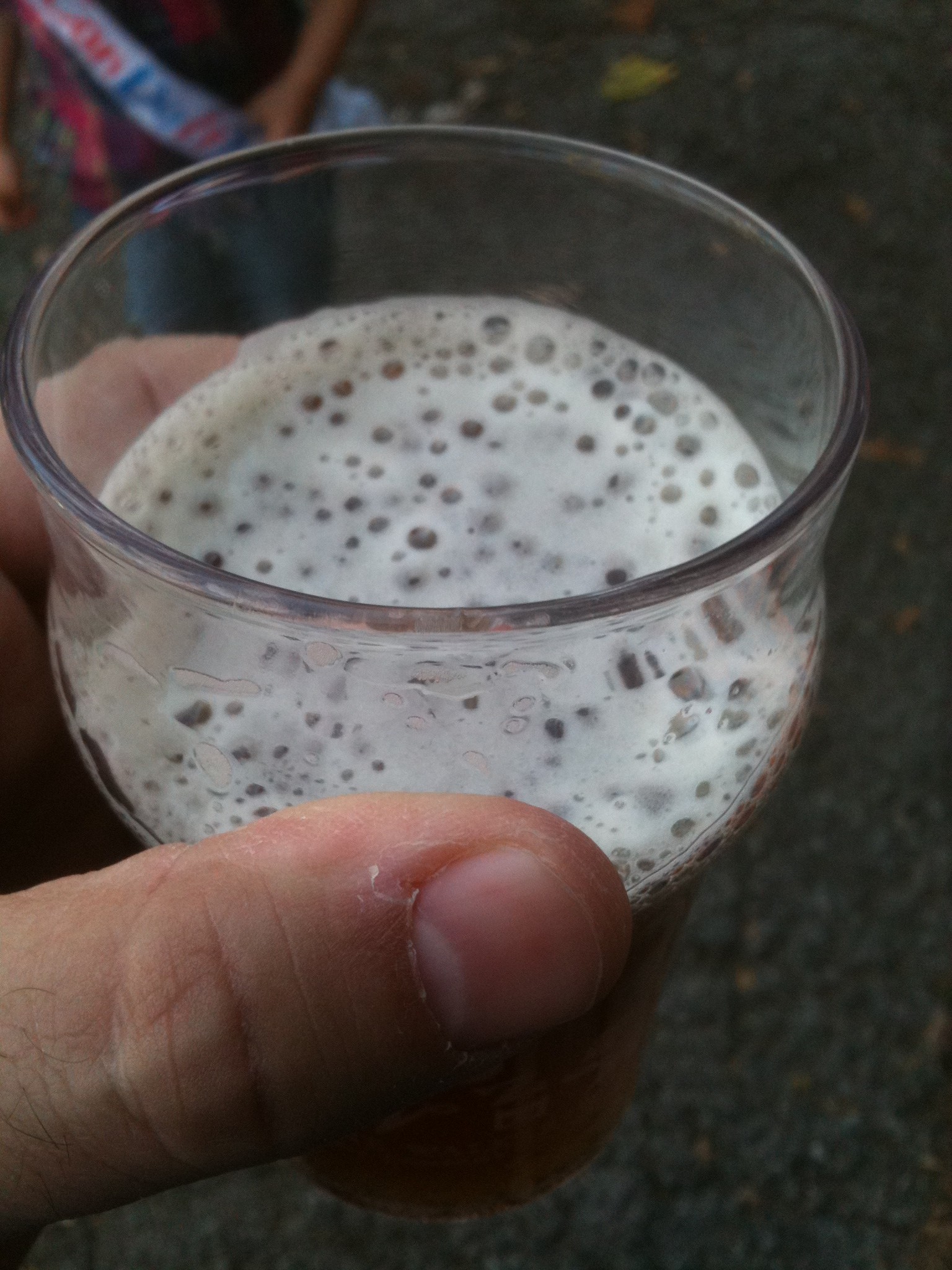 Batch #10 – Simcoe-Dependency IPA (recipe)
This is my third go at this brew. The first was an extract beer and a huge success. The second time I tried to brew the beer, my thermometer boke in the wort, causing me to dump the entire batch. This time around, I brewed an all-grain batch with friends. Many remember the first batch and have been looking forward to trying this one.
Simcoe-Dependency is a single-hopped IPA, meaning that I only used one hop for bittering, flavor, and aroma. The Simcoe hop is one of my favorites. It adds a catty, grapefruit-like presence to a beer. For my money, it’s the most potent, identifiable hop out there and is the ideal hop to be solely featured in a beer. All my favorite single-hop commercial brews are Simcoe-specific.
This batch turned out rather different from the first. It’s dryer and features the slight tartness from the hop more so than I’m accustomed. The aroma isn’t as awesome as I remember, causing me to think that doubling the amount of hops in the dry-hop could have made a huge difference. The dryness comes from the dry yeast I used that seemed to eat up all the sugars, dropping my final gravity lower than expected. A sweeter beer might have showcased the hops better, but I have no complaints.
Another interesting aspect of the IPA is the patience factor I alluded to in my summary of the stout. For some reason, I have grown impatient with the time it takes to properly bottle condition my IPA’s. I brewed one in the spring as well as this one more recently. Both were not what I expected on the first few tries. However, as they sit around, they become more complex and the hop presence grows to favorable levels, almost completely changing the flavor and aroma of the beer over a matter of days or weeks. If there’s a lesson to be learned from these two brews, it’s that patience can make a world of difference between a good beer and a great one. Also, relax, don’t worry, have a homebrew.


 Beer and Pavement
1 comment