Royal Rye Wine
So, I figured I’d enter the contest. I mean, Mikkeller is easily one of my favorite breweries and I’d do just about anything to try this beer. But what sets me apart from other beer geeks who will enter this contest for such a beer?
Well, for one, I have written a ton here about Mikkeller beers despite the relative difficulty we have just scoring any in the middle of Missouri. Just look at the tag cloud to the right. No other brewery is listed as large as Mikkeller. I may have to consider changing the “beer” portion of this blog’s title to “Mikkeller”. Here’s a rundown of Mikkeller mentions over the last two years of posting…
- There was the month or so after 1000 IBU was first released where it seemed to make an appearance at every tasting I participated, including a Saturday night with three dads.
- The beer made such an impression that it easily slid into a mid-2010 best of list.
- There was a post wrought with errors where I all I gushed over the brilliance of IPA’s produced outside the IPA-USA that just boggled my mind and dominated my IBU consumption.
- Last year’s holiday season was dominated by Mikkeller beers.
- I wrote a thorough defense of Mikkeller after trying their incredibly tasty coffee IPA. Hell, even Mikkel Borg Bjergsø himself posted this piece on his Facebook page.
- I wrote about Mikkeller even while reviewing Stillwater’s work.
- There was the post about gypsies in craft beer and indie rock. Of course, Mikkeller garnered a mention.
- Mikkeller is my number one go-to brewery.
- Thanks was given just for Mikkeller’s existence, especially in the Missouri market.
- Santa’s Little Helper has given me an excellent Christmas story to tell about a Christmas Eve celebration that resulted in my climbing onto a snowy roof.
- The quartet of Red White, Santa’s Little Helper, To From, and Hoppy Lovin’ Christmas made my top-5 holiday beer list.
- There’s the top-5 stout recognition.
- Three Mikkeller beers (two collabs with Stillwater) made my top-10 of 2011.
So, to say that I am a huge fan of Mikkeller brews and support them every step of the way is an understatement. I just wish I had more access to more of their beer. Still, winning this prize of a bottle of Royal Rye Wine would cause me to make some promises I will surely keep:
- I will dedicate a page on this blog with it’s own Mikkeller-inspired emblem for all things Mikkeller, including the running list of posts.
- I will review the Royal Rye Wine complete with a playlist that pairs perfectly with the awarded beer. I’ll make the playlist available to my readers via Spotify and even send a copy to Mikkel Borg Bjergsø.
- I will write a post reviewing every Mikkeller beer I’ve ever had, even the ones I’ve completely forgotten about.
There. If this post doesn’t win me a bottle of Royal Rye Wine, I don’t know what will. Or maybe it’s just too difficult to ship a beer like that all the way to Columbia, Missouri.
Please give nothing but support for my quest and for Mikkeller’s beer in the comments. No comments about the cost of said beers. They’re totally worth it and I won’t have you disparage them.
Update: Tomorrow the winner of a bottle of Royal Rye Wine will be announced on mikkeller.dk on Facebook and on Twitter.
Double update: I won! Details to come.
Example of Craft Beer & Indie Rock Connection #1
Granted, Goose Island is now owned by a decidedly non-craft beer brewing company, but it’s still craft beer. The video below captures that craft beer spirit and pairs it with an obvious Sufjan Stevens track. If only all craft brewers would do this sort of marketing. I could get behind a Stone promo with The Soft Pack playing in the background or maybe a Portland brewer paired with The Thermals. Sufjan Stevens now lives in Brooklyn, but his music probably shouldn’t be used for any brewery outside of Illinois or Michigan. Music about a locale should go with beer from that same city or region. (H/T BeerNews.org)
Top 10 Beers of 2011
In no particular order, here are my ten favorite beers of the year. A few are new for 2011 and some were just new to the market in which I live (Missouri). What did I miss? Are there better examples from the following breweries or of the following styles? Discuss in the comments. Warning: There’s a whole lotta Miekkeller and Stillwater in this list.
Mikkeller Black Imperial Stout – I love the ultra-boozy, thick imperial stout. You know, the kind that is sold in 12 oz. (or Euro equvialent 11.2 oz.) that costs more than many six-packs and bombers. The ABV is obscene and they’re good now or after a couple of years in the cellar. This entry into the sub-style from Mikkeller is astoundingly good. It’s all I can do to keep myself from cleaning the shelves around town of the monster in a bottle. My bank account appreciates it, but my stomach and tongue glare at me with resentment.
Founders Canadian Breakfast Stout – Another huge imperial stout that is maybe the most hyped beer of all-time. Hyperbole aside, this beer lived up to the hype. It’s a mouthful as the maple syrup, coffee, oak, and all the things one would expect from a Founders imperial stout are there. I feel lucky to have tried CBS on tap and still have a bottle to save for later.
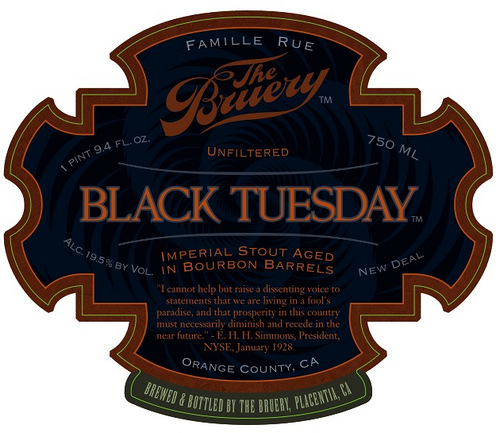
The Bruery Black Tuesday – A glass of this fantastic beer crossed my lips at the same event that provided my portion of CBS. More in the vein of Mikkeller’s Black, Black Tuesday is a gigantic imperial stout. Howevern, unlike Black that comes in a bottle more appropriate for a single serving, this Goliath comes in 750 mL bottles, meant to be shared with a group. Still, I lucked out by being in the right place at the right time and got to try this beast next to the one above. Life’s good for the beer geek.
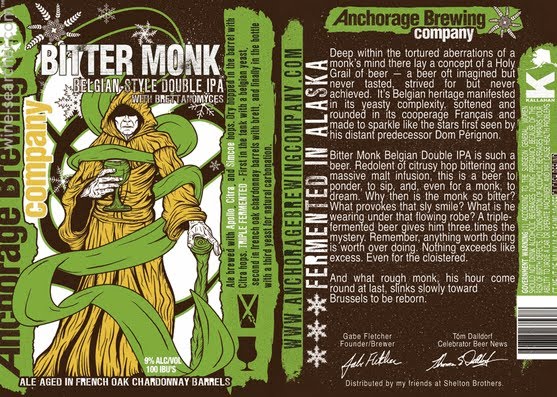
Anchorage Bitter Monk – Moving on from imperial stouts, a surprising arrival showed up in stores this year. Anchorage makes what is one of the more complexly interesting beers I’ve had in a long time. The huge hop presence of a DIPA is balanced with chardonnay barrel-aging and even Brettanomyces… basically a dream beer. Despite its relatively high price point, I’ve noticed this beer doesn’t hang out on shelves for long.
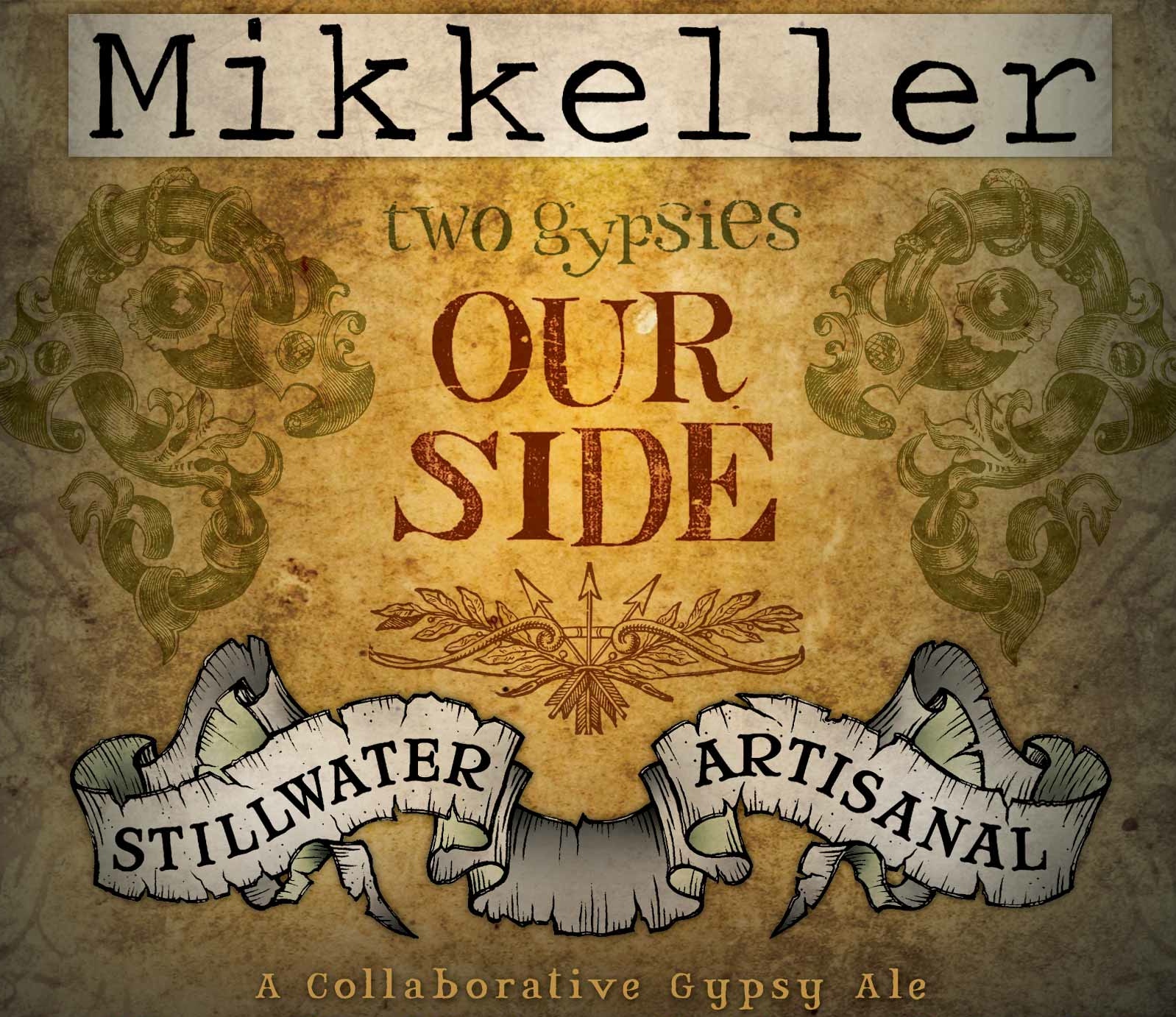
Stillwater/Mikkeller Two Gypsies Our Side – Another beer that finds a way to bring piney hops to the farmhouse, making this hybrid style a sure thing to be cloned over and over in the coming year. Where Bitter Monk relies more heavily on the barrel aging and Brett, this beer keeps it simple but still strikes a chord with the beer nerd in search of a complex, challenging experience.
New Belgium La Terroir – A third, less-intense version of the IPA/Saison hybrid is New Belgium’s La Terroir. Technically, none of these beers really fits a style, but they highlight the best of the Saison/Farmhouse/wild end as well as capitalizing on the resinous hoppiness we all love in our IPA’s. This third in the hybrid group of beers on my list is more of a barrel-aged wild ale with the peachy presence of an Amarillo and Cascade dry-hop.
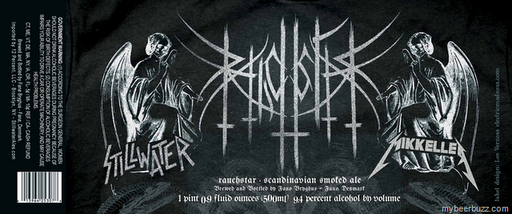
Stillwater/Mikkeller Rauchstar – Second Stillwater/Mikkeller brew on my list is also another hybrid beer. This beer also happened to just slide into the top-10 as it was consumed the day after Xmas. Yes, it’s a smoked beer, but it’s also highly hopped and there’s that Stillwater tang that’s unmistakable. Really, this was a shockingly good beer that I wished I had more of. Plus, the label is pretty wicked.

Odell Friek – I’ve really learned to appreciate Kriek Lambics and the like over the last year, especially when paired with chocolate. This one delivered and has made a brief return to our market right at the end of the year. It’s very welcome. My previous experience with Odell’s Woodcut series did not end well and I have another of their beers I’ve been advised to wait out. Still, when they do it right, I still have to give them credit. Friek is a freak of a good beer.

Firestone Walker Double Jack DIPA – I realize that this is far from a new beer for most beer enthusiasts, but it was new to our little market this year and very welcome. While some will go more for the bigger, richer, oakier varieties of beer, but this DIPA is exceptional. The only thing that may challenge it is their Union Jack IPA which just arrived.

Stone 15th Anniversary Escondidian Imperial Black IPA – Another welcomed sight on the shelves and coolers here was Stone. Then, they came correct with their 15th anniversary ale, a big, hoppy double black IPA. Really, this beer was phenomenal and has extended the legend of the black IPA.
Comment freely…

10 American Craft Beer Myths
I had a lot of fun responding to Ding’s list of ten American craft beer myths, but I figured that I should provide my own list. Ding’s was a pretty solid and engaging list in its own right. So, I will have to come correct with my own.
10. Higher ABV beers are just better.
I’ll admit that I fall under this myth’s spell from time-to-time. It’s that easy trap of “more is better” we Americans find ourselves in on a consistent basis. Then, after we’ve suffered through a nauseating night of thick, molasses-like beer product, shaking off the alcohol-induced blindness, we realize that reaching only for beers over 10% ABV is not always advisable. Conversely, we are often pleasantly surprised that the 6% beer in our hand might be the tastiest experience we’ve had in a long, long time.
9. Lower ABV beers demonstrate a brewer’s skill better than high ABV beers.
This is a big myth I’m seeing all over the beer blogosphere, particularly from beer purists. While I won’t deny that it takes a particularly skilled brewer to make a flavorful beer at 5% ABV or lower, I also won’t pretend that there’s no skill in making double the ingredients work in conjuring up a light and refreshing 9% beer. Let’s face it, there’s skill in brewing good beer that both allows you to drink all night and that puts you under the table with one sip. The point of these first two myths is that ABV really should have little to do with judging a beer, yet many enthusiasts and bloggers spend a lot of time on the subject.
8. Imperial stouts are the ideal pairing with chocolate desserts.
My favorite dessert beers happen to be imperial stouts, especially of the chocolate or bourbon barrel variety. However, when considering what pairs best with my chocolate dessert, the most ideal match is something that contrasts the chocolate. Beers such as lambics and krieks, brewed with tart fruits, make the best pairing with a rich chocolate cake. Why overwhelm and muddle the taste experience with more of the same? When we drink imperial stouts with chocolate desserts, it’s hard to tell where one taste begins and where the other ends. Pairing a cherry lambic with chocolate leaves no doubt.
7. The more hops, the better.
Although I am a huge hop head, I understand and respect constraint. I love Mikkeller’s 1000 IBU, but going that beer is incredibly balanced and nuanced. There can be too many hops in a beer. Aside from the overwhelming bitterness that can leave you cotton-mouthed, there can also be unintended consequences. Let’s take into consideration some of the bigger double and even so-called triple IPA’s out this year. Particularly those east of the Mississippi, there was a presence of onions and garlic in these highly-hopped beers. I don’t think this was due to brewer error. I just think there was something off about this past year’s hop harvest. When you’re dumping an enormous amount of an ingredient into any concoction, the smallest off flavor will multiply exponentially. Besides, we need some malt in our beer-y diets now and again.
6. Bourbon barrels are nothing but awesome.
Here’s another trend in brewing that I actually like: bourbon barrel aging. However, I grow tired of every heavy beer tasting like bourbon. It seems to me that we could all cut out the middle man (beer) and just drink bourbon straight. This is something to which I am not opposed and have imbibed on many occasions (thanks to my bourbon whiskey and scotch drinking wife). Sometimes, it’s preferable to just drink beer or bourbon.
5. Bombers are a headache.
I’ve recently read a few rants over the economic failure and wastefulness of the bomber. While I cannot argue that the bomber is economically a better choice than the individual 12 oz. beer, there are other advantages that come with bombers. If you do the math, the bomber is ripping you off. The trouble is that many states, including this one, do not offer extensive sales in individual 12 oz. bottles. So, comparing the two bottle options is not usually applicable. (In MO, one has to buy at least three individual bottles that originate in six-packs.) What the bomber does better than any other delivery system is that it promotes the sharing of a beer with a friend. Sure, a big 11% imperial stout should be shared, but the 11 oz. each friend receives seems about right. If you’re not into sharing, the bomber is also ideal for one evening’s worth of beer as two is my usual number when not getting hammered on the holidays.
4. Anything with a cage and a cork is excellent, not to mention classy.
As with many a beer myth, this one is all about image. It’s not so much that beers that are corked aren’t good; it’s that capped beers aren’t sophisticated. Two of the classiest, highest-of-the-highbrow beers that I know and enjoy are Stillwater Artisanal Ales and Jolly Pumpkin (also of the artisanal ale varietal). These breweries brew beers that are perfect for a special dinner and/or occasion. Who needs a cork to be classy?
3. Craft beer must overtake wine.
Seemingly, American craft beer’s entire existence has been spent fighting for a spot on the table next to wine. Wine is seen as the classier, more apt to pair with food alternative to the blue-collar drink. Maybe that’s true for some, but we beer folk know better. Beer pairs better with food than any beverage. It has a range of complexity that wine just can’t duplicate. Still, the craft beer community feels it has to fight the myth that beer isn’t wine’s equal. Well, they’re not equal and neither are apples and oranges. Beer and wine are just different, not different in all the ways we’ve been taught by food and wine critics, etc., but different culturally, chemically, and nearly every other possible way one can imagine. Beer doesn’t need to surpass or even equal wine. Beer presents its own strengths at the dinner table, but it also contains the unique ability to go anywhere: the ballpark, rock show, fancy-pants dinner party, children’s birthday parties, etc. The zero-sum game between beer and wine just doesn’t exist and why should it?
2. One has to know the history of beer to truly appreciate its value.
Once again, I get the sentiment. I understand why the controversies over the Oxford Companion to Beer are so…well… controversial. However, I don’t think one has to know the full history of beer to appreciate what’s in one’s glass. Remember that first beer epiphany? Likely, you didn’t know that beer could taste that way. You probably had no clue as to what monks in Belgium do to pass their free time or that Asheville, North Carolina is a craft beer mecca. The true story behind the IPA probably had nothing to do with your first love affair with a big American IPA. The history of beer is important, but it shouldn’t override the enjoyment of great craft beer.
1. Breweries growing larger means their quality sinks.
I’m pretty anti-corporate around these parts, but that doesn’t mean independent businesses shouldn’t grow and expand. Several larger craft breweries receive a lot of slack for expanding production. The argument is that the quality they produced as small breweries is lost in the expansion as they approach the size and production of corporate, rice-adjunct swill makers. I’m sorry, but no matter how many hotels and European breweries Stone Brewing Company builds, they will never make beer like BMC. The same goes for Fat Tire, Sierra Nevada, even Sam Adams. Despite some fatigue over these breweries and their ability to over-saturate the market, a lack of quality is not a quality these larger craft breweries share. If anything, growth has allowed them to experiment with new lines of beers and special releases. Would there be a Lips of Faith Series had New Belgium capped their growth? Would Stone be able to put out all those collaboration beers? Would Founders have ever released CBS in a bottle had they not expanded? The fact that these companies can grow in this economy proves that they are doing something right.
Now, poke some holes in my arguments in the comments and like me on Facebook. I’ll post a list of indie rock myths as soon. Stay tuned…
Programming Note: Blogroll

I finally got around to fixing the blogroll. Although, there may still be a couple of links that lead to virtually dead blogs, most of my regular readers and members of the coalition should be somewhere in the three categories: Beer, Pavement, and Coalition By Proxy. Please peruse the roll and let me know if you’re not there. It could be an oversight or maybe I didn’t apply the correct category in the settings. Either way, let me know and I will right that wrong.
Regular posting should resume tomorrow. I have myths to dispel and holiday cheer to spread. Happy Hanukkah.
RIP Bodhi 2001-2011
Posting may slow down here for a few days. My faithful friend of ten years passed away last night and I just don’t feel like writing much. It was all I could do to finish the post before this. Here’s a video from a couple of years ago with my daughter:
A Response to 10 American Craft Beer Myths
Ding has some things to say about myths the American beer fad has perpetuated. I’ll ignore calling the craft beer movement in this country a fad, but the myths and supporting details make a ton of sense. The post is interesting and a little better informed on the American craft scene than some British beer bloggers seem to be. I mean, the man lives here and can see first-hand what’s going on here in the states. I’ll respond to his post directly here. Then, I’ll write my own and maybe even another for indie rock or something. That’s three posts in response to one. I’m efficient here and get the most out of one good idea. Thanks, Ding. BTW, when I agree or disagree, I’m commenting on the assertion that the following statements are myths being perpetuated by the US craft community.
10. All craft (non-macro) beer is good, and all local beer is good.
Agreed. I used to think this as it seemed to me that anything craft or local was better than corporate versions. However, as I’ve had the opportunity to try a vast array of craft beer, I find it’s not good just because it’s craft and/or local. Of course, I’ll always choose whatever is local or craft when faced with limited options.
9. It’s wonderful to have more beer in cans.
Ding said…
Mmmmm, well I suppose it’s nice to have the flexibility that cans can offer, but far too many people are sacrificing the quality of the beer for the convenience of the container.
Disagreed. Maybe Ding knows something that I don’t, but I have yet to find anyone who chooses a canned beer over a bottled one simply because it’s in a can. Besides, cans offer more than convenience. They keep out light better than bottles. The oxygen issue is a draw, IMO, with bottle potentially exposing more oxygen over time and cans exposing more during packaging. Still, I get that this is not a reason to go with cans, but I have yet to meet a beer enthusiast who chooses beer based on their containers. In the end, we all want our beer poured into the proper glass and subsequently down our gullets.
8. It’s limited, it must be great!
Agreed. I can’t tell you how many times I’ve been letdown by a rare beer that isn’t really much better (sometimes worse) than the beer I can get every day from my local store. I don’t base my beer consumption solely on online ratings, but they can be helpful when buying beers you’ve never had or even heard of. One thing that I notice in these ratings is that rare beers with low numbers of reviews are generally higher than equivalent beers that have a wider distribution/production. I suspect this is partially because some recognize how rare and special the brew in their glass is based on beer geek envy and this clouds their perspective. Plus, the more of a particular product that’s out there, the more likely there are differing opinions or even the occasional bad batch. What I’m rambling about is that I completely agree that rare does not always equal better, but they can be a lot of fun.
7. Session beer is now gaining popularity in the USA.
I agree and disagree. The traditional, British definition of the session beer is not gaining popularity here in the states outside of a few beer purists and old farts. There should be room for the traditional session beer in the craft beer scene, but it doesn’t seem to be happening just yet. It may take off as brewers improve their craft and drinkers grow weary of the assault on their tongues and livers.
The part I disagree with is that the “American session” is growing in popularity. I get that a 5-7% is not a session beer by definition. I won’t engage that argument. However, Americans generally see higher ABV beers as just as sessionable as a 4% beer. Granted, no one should drink as many 6% beers as 4%, but the dividing line does seem a bit arbitrary. That said, the American session beer is growing in popularity, I believe. A lot of folks are taking a step back from big beers and rediscovering nice brews at a reasonable ABV level. It’s a minor point, but I think that’s where the American beer scene is right now. Baby steps.
6. More is always better (number of breweries and number of beers).
Agreed. This myth is perpetuated here because that’s how Americans think about every industry. More is better. Not quite. There are a lot of amateurs out there trying to pass themselves off as craft brewers. Although, I don’t have as much faith in the market correcting this issue as some, I think it will help to weed out most of the mediocre beer cluttering store shelves.
5. More is always better (taps in bars).
Disagreed. Of course, I’m assuming a bar only uses said taps for craft beer and respectable imports. I love variety and it’s nice to have options. I’d rather have most beers on tap. I can get bottles at the store for much less. Give me beer on tap and give a lot from which to choose. (I will concede that if Ding is implying that more taps means more opportunity for crap beer, then I’d have to agree he’s correct there. Still, I’ll stick with my original answer.)
4. Imperial and highly hopped = better.
Agreed. Of course, the statement itself is often true, but it’s not 100% true. For example, a strange trend I and others noticed this year is the presence of onions in our ultra-hoppy beers. Not all, but several Midwest and East Coast imperial IPA’s have displayed this character. I blame the hop harvest. It seems if there’s an off-flavor in an ingredient, those off-flavors are only magnified when used in imperial doses. Also, I have begun to appreciate the smaller beers that are just brewed better. Regardless of how many hops one puts into a brew, balance is a hard thing to attain, maybe even harder in imperial beers.
3. British beer is undergoing a massive revolution inspired by American brewers.
Agreed. However, I’d say that said revolution is happening here in the form of increased attention toward British beer thanks to those inspired by American craft beer. I don’t know any beer geeks in my circles searching out British beers outside of BrewDog. The Brits love their tradition and they love their beer. There’s no revolution going on there. They didn’t have a prohibition like we had. So, technically, Ding’s right on this one.
2. If it’s from a country with a (relatively) new brewing tradition, it MUST be great.
Agreed. However, the Scandinavian beers are generally pretty good, interesting at the very least. Still, this is mainly due to newness. We go for what’s new and proclaim it different than anything done before. Every beer should stand on their own, regardless of origin. Just because it’s from an unexpected place doesn’t automatically mean it’s good.
1. You can put ANY beer in a cask and get a good result.
Agreed. Although, I’ve been lucky so far in that the beers I’ve tried on cask have been pretty good. That said, I’m not sure much was added to the Jolly Pumpkin beers I had on cask in DC, but the Stillwater dry-hopped with Citra hops was incredible. Casks should be used sparingly. Ding, once again, is dead on… However, he suggests that these beers must be malt-forward. On that point, I obviously disagree. Beers go through an incredible metamorphosis when properly dry-hopped. Sure, not all beers are suited for the cask, but more than Ding might suspect.
Be on the lookout for my own list of American craft beer myths and one for indie rock as well.
Top 5 Stout Franchises
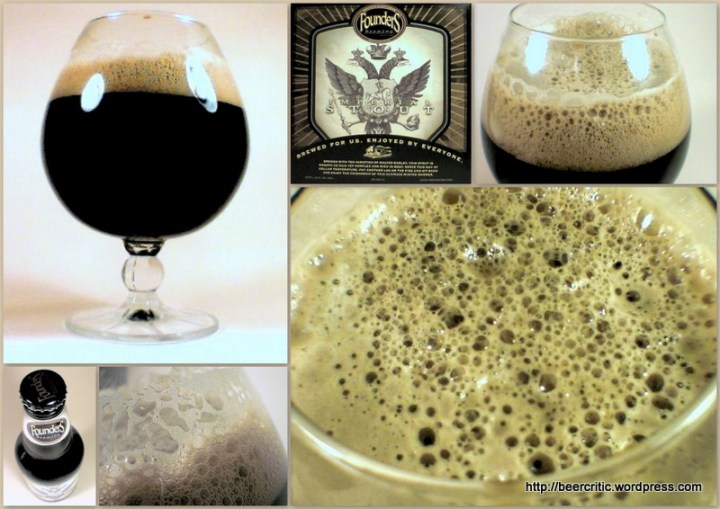
Breweries brew all kinds of beer, but only a few produce exceptional imperial stouts time and time again. Often, they use one base imperial stout in their aging and barreling programs, but other times they add ingredients to alter the flavor one way or another. These are the five best breweries at producing series of imperial stouts.
(Note – I considered including non-imperial stouts, but the list became too unwieldy and I tend to prefer imperial stouts this time of year. Had I gone with all stouts, Bells would have surely deserved a mention. Their imperial is excellent and their lineup of non-imp stouts is impressive.)
5. Mikkeller – Between the Black Hole series and all those Beer Geek Breakfast/Brunch beers, it’s hard to find a more intriguing set of imperial stouts. Add to that one of the better big beers I’ve had this year in Black, Mikkeller holds the title of best Danish/Gypsy brewer of imperial stouts all by himself.
4. Great Divide – Sometimes, it becomes easy to overlook the great beers that do regularly ship to one’s market. We get Great Divide here in Missouri which is a treat. Their Yeti series of imperial stouts is pretty impressive. They add chocolate, oak, Belgian yeast, etc. for a nice lineup of tasty imp stouts.
3. Three Floyds – I have had one Dark Lord in my lifetime and it was pretty great. If you look at any beer rating site, the top imperial stouts list is littered with variations of this one beer. This fact makes it hard to not rate it in my top-5, but the fact I’ve only personally had one bottle makes it even more difficult to rate it higher than the next two breweries.
2. Goose Island – GI is famous for a couple of things. One is the fact that they were bought out by ABI. The second is that they brew Bourbon County Stout. On it’s own, BCS is an incredible beer. However, GI does several versions that are hard to get, but if you do, it’s totally worth it. On top of that, they sell the base imperial stout used to age in those bourbon barrels known as Big John. Let’s hope the first fact mentioned here doesn’t interfere with the second.
1. Founders – Even beyond all the hype built for the release of Canadian Breakfast Stout in bottles this year, Founders brews a mean lineup of imperial stouts. The breakfast stout is the only beer with coffee (aside from some of the Mikkeller beers) that I will regularly buy. Then, there’s Kentucky Bourbon Stout and their “regular” imperial stout. Plus, there are periodically versions of these beers popping up here and there in kegs all over the Midwest. All of this make Founders the king of the imperial stout, IMO.
Also…
Southern Tier – The Darkwater Series is hard to deny. Check out Chokolat, Creme Brullee, Mocha, and Java for four of the tastiest dessert beers you’ll ever find.
Hoppin’ Frog – I haven’t gotten far into the Frog’s BORIS series, but what I’ve had is pretty good. It would help if they had a wider distribution in Missouri, but I can wait for periodic shipments from Ohio now and again. Rumor has it that a DORIS is coming my way.
Alesmith – Alesmith’s Speedway stout is a pretty grand imperial, but I just haven’t had enough of it or any of its variations to be able to report on it. Plus, although well-hyped in its own right, it just doesn’t hold the cachet of a Three Floyds yet.
Top 10 Albums of 2011
OK. I’ve waited long enough. Here are my top-10 albums of the year. Most should come as no surprise, if you’ve been reading this blog all year. To start things off, we have the #10 album that I picked from a list of albums just outside the top-10…
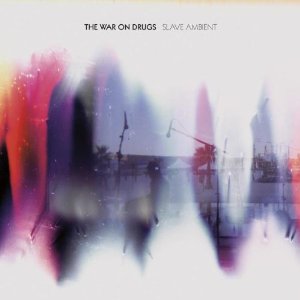 10. War on Drugs – Slave Ambient
I currently do not own this record. I missed their show in town. Finally, at some point in November, I gave the record a listen on Spotify and was blown away. Ever since, I’ve been playing the shit out of this record. I don’t think it cracks the top-9 as they have stayed constant all year or at least since they’ve been released. Either way, this is a strong, strong record. It has that lazy garage rock mumble former member Kurt Vile does so well, but there’s an aura of shoegaze and shitgaze all in one album. It’s cool and hauting, even beautiful in some parts. I still regret not seeing this band when they came to town. Oh well. I’ll make up for it by propping their album up as one of the best of 2011, a year that has turned out a surprising amount of good-to-great music.
 9. Bon Iver – Bon Iver
Although “boring”, there is nothing wrong with this album and that should count for something. After falling instantly in love, I soon decided that it was my mission to hate it. I couldn’t. Somehow, Justin Vernon achieves epic soundscapes, big noise, soul, urgency, and bitter cold in the most subtle of ways. I want to hate this record, but I can’t. It just feels right. Gone are the quiet, hushed log cabin recordings of yesteryear, but the intimacy is still there. This album is a major achievement and should be recognized as such.
 8. Eleanor Friedberger – Last Summer
I missed this album’s release somehow. Insound was having a sale on Merge albums and I grabbed it since I’ve enjoyed quite a bit of Friedberger’s material with Fiery Furnaces. Anyway, this record is incredibly more approachable than the FF’s stuff. It doesn’t hurt that she was so cool hanging out the night she played St. Louis. I have a soft spot for artists who are nice people. Anyway, the album held up that night and I haven’t stopped listening since. Equal parts Patti Smith, Stephen Malkmus, and Joni Mitchell. It’s a really strong album from beginning to end. I can’t wait to hear what Friedberger does next.
 7. Thao & Mirah – Thao & Mirah
I loved Thao Nguyen’s We Brave Bee Stings and All and saw she and Mirah perform some covers online. That was all I needed to purchase this largely overlooked yet timely album. Aggressive, percussive, completely danceable, and very fun, Thao & Mirah was a strong contender for this list from the first time I listened to it. This is a powerful record by two accomplished female artists about which I want my daughter to know. If this album somehow missed your awareness this year, go buy it and have some fun.
 6. Cults – Cults
I don’t know what it is with all the nostalgia for Phil Spector these days, but Cults captured that and more with this solid effort, turning in the song of the summer in “Go Outside”. The album was a breath of fresh air since its release last spring. There was a time when I considered it an outside shot at album of the year. It captured my imagination that much. I worry that the band will struggle to put out anything as good as their first, but this isn’t a bad legacy to leave either.
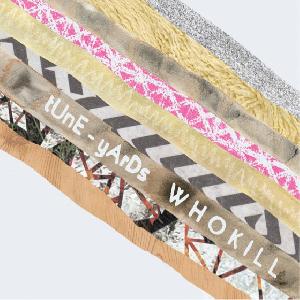 5. Tune-Yards – W H O K I L L
Something about Tune-Yards was rubbing me the wrong way. Not sure what it was, but it didn’t last long. Everywhere I went, this record was playing. In fact, my favorite hangout often had this record spinning. I couldn’t resist. It’s infectious, raucous, fresh. I love the mixture of a lo-fi, nineties, guitar thing mixed with this dance-centric, percussive aesthetic all the kids are going for these days. I could listen to this album over and over, something I could say for any of these records, but especially for this one.
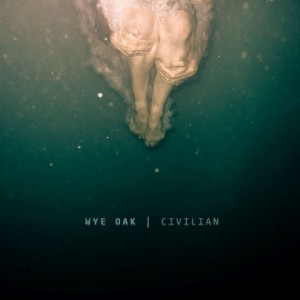 4. Wye Oak – Civilian
Wye Oak’s earlier material did next to nothing for me. Then, they did a couple of those AV Club things where they played cover songs. Then, they released a video and I was taken back to some mid-nineties indie. Stuff like Throwing Muses or Madder Rose when all these female voices began to emerge above the feedbacked fray of that era. This album is pure retromania for me and it’s plain good from first track to last. Jenn Wasner’s deep voice over a cacophonous racket fills my nineties nostalgic needs, much like the following albums on the list…
 3. Yuck – Yuck
I have gushed enough about the nostalgic love I hold for this band and this release, but I have to say more so as to justify its placement in my top-10. And this is coming from a guy who doesn’t actually like the bonus material on the deluxe version of the record. Not everything these youngsters touch is gold. So, with this in mind, one has to consider that it’s impressive how right they got it when they put together an album that should have come out 15-20 years ago. Feedback, angsty lyrics, more feedback… It’s as if they invented the 90’s indie aesthetic and not Pavement or Sebadoh. I love this record. It’s nothing new or groundbreaking, but it perfectly captures what will be some pretty perfect moments in the development of my musical tastes.
 2. Wild Flag – Wild Flag
When I heard this group was getting together, my head nearly exploded at the thought of all the possibilities. Then, they toured and my head blew up again re-imagining the ruckus Sleater-Kinney used to cause back in the day. Then, the music began to trickle out. Early on, the urgency detected in “Future Crimes” made me realize that this band was going to blow away all expectations. Wild Flag’s self-titled (a lot of these lately) debut is the perfect mix of S-K riot grrrl, Helium-style classic rock, garage punk, Runaways barnstorming, and indie sensibility. This album may be an all-time top-10 pick forever, assuming their follow-up isn’t more awesome. The guitar and vocals interplay between front women Mary Timony and Carrie Brownstein is only surpassed by the work Rebecca Cole and Janet Weiss are doing with backing vocals and holding down the low end. This is the super group to end all super groups.
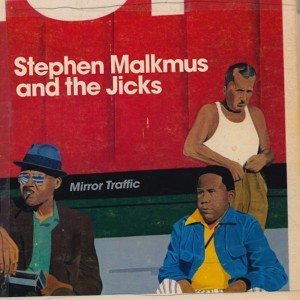 1. Stephen Malkmus & The Jicks – Mirror Traffic
Yes, I’m biased, but how is this album not on every end-of-year list. I either missed the memo or have yet to change out of my Pavement-tinted glasses. I’ve never thought a Stephen Malkmus solo album to be a top-10 record much less a #1, but Mirror Traffic is different. The prog wizardry and blues riffs have been taken down a notch with the perplexing and sly wit of Malkmus’ songwriting coming to the front. Plus, the accumulation of talent in this band is pretty insane considering the ramshackle band Malk fronted for a decade made some of the most memorable music of my lifetime. This is the first album he’s done that doesn’t feel like the continuation of Terror Twilight, a complete break from his former trajectory and an album that sounds like another band wrote and recorded it. Then, there’s the production which is quintessential Beck Hanson all over. This is the easiest Malk album to which to listen since those halcyon days of Slanted & Enchanted and Crooked Rain, Crooked Rain. In fact, I’d say Mirror Traffic falls somewhere between those two great albums and Wowee Zowee. Yeah, I said it. So what?
I’m rambling a bit now, but that’s the list and I stand by it. (BTW, it’s no accident Janet Weiss is part of the top-2 records of the year.)


 Beer and Pavement
14 comments