That thing I posted elsewhere on poor news coverage of a strange coincidence or something like that
I posted this over at the CoMo Collective. It’s something I’m somewhat proud of and feel this audience should read it and comment as well. It’s related to the kinds of things I support on this blog but I’m not 100% how. Any comments are welcomed. I’d love to continue this conversation with people who don’t necessarily live here and know any of the parties involved. Sorry for the non-beer post. Look for a Session piece on Friday (I hope.)

KOMU ran this story about connecting a rock show flyer to this past weekend’s Brookside Apartment complex fire near downtown. The rock show in question happened over three weeks ago at the Blue Note and featured local bands Enemy Airship and Believers plus Daryle Bascom’s Videology. The poster in-question was printed by our own Ben Chlapek, an accomplished poster maker here in town.
The disappointing part of the story is that KOMU reported that the poster was being considered in the Fire Marshal’s investigation, insinuating that Ben and the other artists involved in the show were somehow at fault for the fire. Sure, KOMU didn’t directly say that Ben et al. were responsible for the incident, but their irresponsible reporting is going a long way toward dragging the artists’ good names through the mud.
The damage was done in two ways. One problem lies in how KOMU reported the story in the first place, leaving the audience with very little context to see the full picture. The second issue arises when they post these kinds of stories on Facebook and allow the uninformed to run wild with hyperbole and sensationalism.
KOMU reported only part of the story, leaving assumptions to be drawn by their audience. There’s the implication that the drawing is of the Brookside Apartment complex. However, there is no identifier aside from the fact that the building on the poster LOOKS LIKE EVERY OTHER APARTMENT COMPLEX IN COMO. It says “Brookside” nowhere, nor does the image include street names “Walnut” and “College”, where the fire took place.
There is little attempt by KOMU to present Ben as anything more than an “artist” or band member. Keeping him faceless allows the audience to make all sorts of judgments on his character (depending on their views of artists). Obviously, I know Ben and have some idea as to how much he cares for this community. Aside from Ben’s released statement, KOMU did very little to paint an accurate picture of who Ben is. Doing so would have left them with virtually no story.
A little Googling would have revealed a pattern of flaming buildings in Ben’s work. Said work is not only engaging but making some noise in the poster art world. Still, flames are present in other examples of his prints. Check the two prints below. Should we also blame Ben for the end of the world in 2012 as well as the destruction of Inuit homes? The point is that there’s a pattern that suggests the show’s flyer had little-to-nothing to do with the apartment fire. He draws buildings on fire from time to time. It’s merely a coincidence that someone thought the poster portrayed Brookside.

Now, there’s the Facebook post. KOMU has made a concerted effort to engage their viewers through social media. While this sounds great to someone like me who values the community dialogue social media encourages, the combination of a lack of context and someone to monitor these discussions leads to a misinformed public jumping to conclusions, something a news organization is supposed to combat.

The above comments are only the tip of the iceberg when it comes to the discourse that often results in KOMU Facebook posts. Some of the most bigoted and vile statements I have ever seen in COMO happen on these threads. To be honest, these reactions are tamer than most KOMU stories. Still, people were quick to jump to the conclusion that Ben and the bands were somehow involved in the fire.
KOMU failed to present the full story as well as monitor their own discussion. I help run this blog as well as other blogs and several Facebook pages and groups. If someone posts something that stinks of libel and/or intolerance, I at least will call them out on it or even remove their comments. While I get that KOMU wants to allow their viewers the liberty of speaking their minds, this sort of “discourse” only spirals down a rabbit hole of ugliness.
The full story would have not only included Ben’s profile but a list of other avenues the fire marshal was investigating. There have been rumors of poor treatment toward laborers floating around the project. What about the many residents angered by the continued development of downtown and the surrounding neighborhoods? How about the fact that it’s dry in Mid-Missouri this time of year and these sorts of things happen in new construction projects? Instead, the KOMU story only gives one possibility for the investigation. The audience is led to believe that this is the only angle officials are investigating. I find that hard to believe. Including these other possible causes would have not only provided more context but would have lessened the negative effect on the artists. Again, this would have led to a less-sensational story.
One thing KOMU did mention in their story was Ben’s official statement (emphasis mine):
As a resident of the downtown neighborhood, I am terribly saddened to hear about the fire at Brookside apartments. The poster I created is, in hindsight, an irony and coincidence which I cannot erase. Out of respect for the owners of the property and the future residents of the complex, I have taken the image off of the internet and will no longer display it in any form.
Sadly, the same cannot be said for KOMU. The station displays the image of the flyer in their original story and has posted it on Facebook (from where the above comments originated). I even have an image of the original flyer, yet have chosen not to display it here out respect for Ben’s wishes. Oh, and I’m sure you noticed the screen grab above on KOMU’s Facebook page. It seems Ben et al. should be singled-out for their artistic imagining of a building on fire, but KOMU can capitalize on the Brookside fire all they want.
What would be great is if KOMU actually covered the art and music scenes in a way that would have painted a much more balanced picture of Ben, Enemy Airship, Believers, and Videology. These components of our community are a vibrant part of what makes COMO great. I’ve mentioned and linked to Ben’s accomplishments, but what would the audience think if they knew about the label associated with Enemy Airship that often gives its music away online? Would there have been more familiarity with Believers had the news station already been reporting their debut release and all the buzz it’s creating around town and the rest of Missouri (and beyond)? Do they even know that Daryle Bascom has a long history in the music biz and that his Videology parties are among the most popular and unique of their kind? KOMU’s missing a large part of this story that would have surely painted a much more balanced picture of the situation instead of a sensationalized non-story.
That might be what’s most disappointing. KOMU is affiliated with our beloved MU Journalism School, home of the “Missouri Method.” Shouldn’t they have a higher standard to uphold?
In the end, this will all blow over. The fire marshal will quickly clear Ben and his mates of any wrong-doing. The investigation will focus on actual suspects and evidence, and the Brookside apartments will be ready a little later than expected. However, I wonder whether or not KOMU will update their story. Will they clear Ben’s name as well as everyone else involved with the show? It’s doubtful. That’s just not a story. It won’t bring in ratings. I’d love to be wrong, but I won’t keep my hopes up.
On Cans and Vinyl

Last weekend was Memorial Day weekend, the first of the three summer holidays most noted for BBQ and beer. (Well, and remembering those who died in war, our country’s “independence”, and labor’s many accomplishments.) Much of the beer I consumed came from a can; a little bit of beer nostalgia delivered the good stuff to my gullet.
In recent years, BPA-coated, aluminum cans have become the container-du jour for craft beer fans and brewers. Cans keep out more sun than bottles and arguably more oxygen. While some only see cans as a hipster novelty, most of us realize the importance of these vessels to the portability and preservation of our favorite brews.
I, like most beer geeks, prefer not to drink my beer from cans (nor bottles). I often say that one would never attempt to smell a flower through a straw. So, pour that beer into a glass, let it open up. However, for the holiday, I succumbed to drinking my beer straight from the can without shame.
There are certain contexts for which such pretensions over drinking beer not from the prescribed glass are called. Poolside, floating lazily down a river, camping, and bicycling are a few of these moments. Considering the conditions of the holiday, I enjoyed my Tallgrass beers from the cans, coozy included.
Context dictates how we should consume beer and even the kinds of beer we drink. I don’t feel guilty for drinking from the can. I was in the midst of a 60-mile bike trip with a night of camping in between. Cans were were a practical drinking option. Even bottles were unwieldy and potentially dangerous. The can is much like its close relative which is used to house such camping delicacies as beans or corned beef hash. Enjoyment of the moment was wrapped in an aluminum cylinder. I was not about to soil the moment with a glass and make the beer more important than the enjoyment of the event and those around me.

Vinyl records, like cans, have their own ideal contexts when their less-than-ideal delivery trump advancements in technology and actually add to enjoyment. The context in which a vinyl record is preferable to more digital formats are times when devouring an entire album in the confines of your home is paramount. When I am relaxing in my finished basement with a record, very purposefully spending time with the music, a record that requires me to drop the needle and flip sides now and again is better than simply pushing a button. Vinyl engages the listener physically while delivering a soft, familiar sound.
Unlike cans, vinyl is less portable and arguably auditorily inferior to its digital counterparts. It’s not easy to take a record with you. Digital music is so much more portable, like canned beer. The sound debate is a good one, but I won’t get into that here. Simply, for sharper, more precise sound, go with digital. However, vinyl feels different. It’s softer, warmer, and preferable for those of us who just prefer a more analogical existence.
Both cans and vinyl had good runs that ended too quickly. Newer and better technology arrived. These creature comforts of our fathers became obsolete. Then, retromania hit. People found ways to improve upon old technologies while recapturing lost nostalgia. The can never really left, but craft beer’s adoption has bumped its cred. New can lining technology hasn’t hurt either. Vinyl is better produced than ever and many new records come with digital downloads, giving you both the high quality sounds and artifact in one, neat package.
The comfort and sentimentality of beer cans and vinyl records just feel right in the right context. It’s hard to put a finger on it (as you can probably tell from the rambling above), but they just feel right in the right situations. I don’t always go can or vinyl. However, it’s nice to know that they’re there and are ready for the perfect situation.
Speaking of vinyl, if you’re anywhere near Middle Missouri, come out to Uprise on Monday to see/hear me play some records. The set list will be posted here, but you should come and have a beer with me while I play the “hits.” Also, both images were totally lifted from the great Tumblr better known as Dads Are The Original Hipsters. Go read it now.
Indie-Craft Interview #14: Katlyn Conroy
My role at my other blog sometimes means that I get emails from artists passing through, hoping for some coverage. I try to do my best to preview their shows or even attend now and again with a review to follow. One such opportunity entered my inbox this week.
Katlyn Conroy, AKA La Guerre, was the latest touring artist to do so. As is usual, I checked out her material in order to see if I could help her. Well, after seeing what Katlyn is doing there in Lawrence, KS, I knew that she’d be a perfect fit for this series. Katlyn is currently touring as La Guere, her solo project, but appears to be busy with several other music projects. Since I felt like I was short on females for the interviews, I asked Katlyn to submit some answers. She did and the excellent results are below.

1. Describe your craft(s).
Singer, Songwriter, and Pianist for La Guerre (myself), Cowboy Indian Bear, and Hospital Ships
2. What’s the importance or benefit of remaining indie?
Remaining true to who I am as an artist, mostly. Also, it’s nice to kind of be forced into being my own manager, promoter, etc. because it helps shape me and instills in me a larger overall sense of the music “business”, whatever that means. Tomorrow it will mean something completely different. There’s a lot of beauty in creating something completely your own, kind of untouched by corporate hands. There’s a lot of freedom in it, too. I can have 100% control in what direction I’m going and how fast I’m going at all times, and you can’t really say that for a lot of mainstream artists.
3. How does your craft contribute to society?
I try to participate in as many fundraisers/benefits as possible. I also do a lot of guest work on other musician’s albums and have contributed to many compilations. Just being able to spread out my music as broadly as possible to potentially increase awareness for certain issues always feels productive.
4. What other indie-craft products inspire you?
I grew up listening to primarily Bright Eyes, Neutral Milk Hotel, Grandaddy, and a lot of artists who really built their own empire. I’ve always been inspired by young, unconventional talent that doesn’t give up and stays true to their vision. I have a lot of friends in that position who push me to continue doing what I love every day. It isn’t easy being broke, or feeling left out of the typical “growing up” experience, so anything that encourages you is so meaningful. I’m also inspired by a lot of my painter friends. I’ve never been able to put onto paper the images I see in my head, other than in writing form, so it’s really baffling to see them create this colorful, detailed scene out of nothing.
5. What is your dream of success?
Ideally, to inspire or bring out emotions in my listeners, and even potentially help their mental state at the time, like so many of my favorite artists have done for me. There are times when I’m on tour listening to music and watching my surroundings and the song I’m hearing just brings me out of the boredom of riding 7 hours in a van and transports me to this incredible state of emotion. If my music can do that for anyone, I’m happy.
Realistically, it would be fantastic to make music my only job while being able to afford to live. I don’t need fame, or a big house, I just want to be able to concentrate on creating music for the rest of my life.
You can find Katlyn’s song “23” on her bandcamp page here as well as the link to a song she performed in anticipation of this year’s Middle of the Map Festival. Cowboy Indian Bear are here. Katlyn plays as La Guerre at Columbia’s Candyland on June 8th for all my Middle Missouri readers.
Indie-Craft Interview #13: Stone’s Greg Koch
When Stone finally arrived in Missouri, so did Greg Koch, the brewing company’s co-founder and CEO comes correct, preaching the craft beer gospel through a bull horn. His message is the only thing louder than said bullhorn. It’s a message that speaks to the coalition. It’s a message that promotes artisanal products, particularly his own Stone beers.
Unfortunately, Greg did not make it to Columbia during that release. He did however take the time to respond to my blog post on the events of that week. He even responded to each and every footnote. Regardless of your stance on Stone, craft beer hype, or the circus that surrounds Greg, it was pretty cool that he took the time to leave comments on my 100-views-a-day blog. It was even cooler that he took the time to answer my questions for this series.

Imagine this image with a beard… Image lifted from OC Beer Blog.
1. Describe your craft(s).
Our craft at Stone Brewing Company as you might guess is craft beer. We started in 1996 and since then helped introduce the world big character, hoppy, aggressive beers that don’t compromise. Also, our craft is in the Stone Brewing World Bistro Gardens where we have become the largest restaurant purchaser of local, small, farm, organic produce in Sand Diego County – a stat that I am particularly proud of. In addition we have our own small organic farm which only produces a small percentage of our produce needs is about eight miles north of our brewery.
2. What’s the importance or benefit of remaining indie?
It’s substantial. When you’re independent- that is not owned by a large conglomerate or industrial producer or also not publicly traded or held – you can make decisions that aren’t based upon a bottom-line, financial black and white spreadsheet. Now I’m one that argues that actually making “impractical” or “nonstandard” decisions is a very good business model, but it’s extraordinarily hard to do that hundred any circumstances, to trust your gut, to go direction really feel you should go. But if you’re in part of a larger conglomerate or a publicly held company, then the chances that you’re going to do that are almost nil. Being indie allows the creativity to come out and now to go directions that may seem on the surface to many impractical or uncertain but ultimately can allow you to create things that are special and unique and hopefully, ultimately successful.
3. How does your craft contribute to society?
At Stone, our biggest contribution is to do our part to show the world that there are better, more interesting things out there. There are things that have a better connection to the community, a better connection to our local region [through] our eclectic menu, our aggressive and unique beers…that people don’t have only the same old same old to choose from. They also have the ability to choose and learn about things that are of a special and unique quality. We’ve also tried to do our best to display a model that is highly connected to our community as far as community involvement. We participate in more than 500 charitable events each year. We’ve donated more than $2 million in cash and beer to charities for charitable fundraising events over our lives at Stone Brewing Company. We’re an active part of the community. Stone Brewing World Bistro Gardens is a community gathering place. It’s a place where people go to congregate, discuss issues like the old-time pubs and meeting places. Our place – which has no TV’s, a complete ban on high-fructose corn syrup, no commodity beers, no commodity pre-processed foods – is a place that sort of breaks free from the convention that’s all around us, allowing people to more creative in their own direction and their own lives.
4. What other indie-craft products inspire you?
I’m actually stoked to say that there’s quite a number. Maybe coffee would be at the top of the list but coffee would have to share the top of the list with artisanal cheese producers. Pretty much all artisinal and artistic food and drink: local bakeries, kombucha producers – creating great, flavorful, healthy drinks – , and restaurants and pubs… You know, like the gastropub movement to use a broad term. These businesses that are working hard to make sure they’re connected to the community and our environment by carefully curating what they serve, understanding the policies, practices, philosophies behind the items that they bring in the backdoor, prepare, and serve to their guests. All places that approach their business from that perspective I have a high level of respect for and appreciation for because it makes my life as a consumer richer and more rewarding. I get to experience the best that life has to offer. In today’s world, there’s kind of no reason no to enjoy all of these things. Sometimes in certain areas you have to seek it out a little bit more, but overall the level of availability of specialty and artisanal products has continued to grow. I appreciate that.
5. What is your dream of success?
Success to me means the world has changed or is dramatically changing for the better; yhat we are continuing to understand the importance of organic and local produce; that we [consume] actual, real food as opposed to pre-prepared foods or processed foods and all that. They’re better for our society. They’re better for us individually. They’re better for the environment. They’re better for the animals in the case of eating meat. We can live happier, healthier lives. This is a beautiful thing. It’s what I believe in. While it may not look like on the surface from our work that we’re working towards that, but I really feel that we are part of this movement to steer away from commodity, conglomerate, and lowest-common-denominator stuff towards artisinal quality, characterful, and well-crafted items.
Cheers and thanks for including me in the article! I appreciate it.
Greg has a new book out that you should read. Some of it is redundant for those of you who know the story of beer well or even the story of Stone. However, there are some great beer and food recipes included along with a good model for starting a small business the way you want to do it. In the meantime, drink a Stone in honor of this interview.
Click here for the previous twelve indie-craft interviews. If you know of someone I should interview for the series, make a suggestion below.
Mash Tun Reject
I submitted a piece for the new craft beer journal Mash Tun and was all-but-assured that it would be included. Apparently, it was rejected. I say this because there’s no way for me to actually see the journal, but my name is nowhere on the announced list of authors. Plus, the editor quit replying to my emails. Oh well. I don’t have time to be a writer anyway. Below is what I thought would be a first draft, one that would develop after some suggestions from said editor. No hard feelings, just disappointment.
Update – The editor got back to me and explained that the piece didn’t fit with a few of the historical pieces included in the journal. Some assistant was supposed to respond to my emails but never did. Maybe I’ll try again.
Building International Coalitions Through Beer and Pavement
We live in a world of turmoil and uncertainty. Economies are tanking. Tensions are rising with threats of terror and violence at every corner of the earth. Folks arbitrarily take sides. It’s a distressing time to be a human.
So, we look for escape. We take up hobbies to pass the time or alter our minds with chemicals in order to forget all of our troubles. Our daily lives are consumed with activities and interests that help us ignore the unrest all around us.
I have taken up a few hobbies in the interest of helping me avoid dealing with the chaos of our times. One such hobby involves beer, that of the hand-crafted, artisanal variety as well as the kind I brew in my kitchen. The other hobby has to do with my obsession over independent music, better known as indie rock, although no one really calls it that anymore.
On the surface, these two interests have very little in common, aside from the fact that they’re both my interests. However, I have found that one interest tells me more about the other every day and vice versa. Here we have two industries that defy the current downward trajectory of our economy through continuing expansion, improving distribution, and breaking into mainstream markets. Plus, they bring people together. All this is done by breaking from the status quo, suggesting that whatever is mainstream is maybe doing more harm than good.
There’s a coalition here to be built, a coalition between the craft beer world and indie rock community. You see, these two industries have more in common than they realize. It all comes down to the descriptors I and many of you use to describe beer and music. Craft beer is hard to maintain and develop without its independence while indie rock is nothing without a musician’s craft. This is where indie and craft meet.
I have explored the intersections between craft beer and indie rock for some time now. One aspect is simply the fact that we all love beer and rock music. The other aspect is the intersection between those descriptors “craft” and “indie”. For me it’s obvious, but for others, it’s a stretch.
Craft is generally considered a type of skilled work. Historically, craft has been judged not only on quality but also quantity. In order to maintain a high level proficiency, production had to remain small, manageable. Larger production tends to remove the craft, creating product with increased simplicity and often more defects. As more artisans or workers were needed, the craft was diluted. When craft is increased, volume tends to shrink, but the quality of the output grows exponentially. Independence from corporate interests can insure that the craft remains paramount over profits.
Indie is short for “independent.” To be independent, one must be self-sufficient, free from the tyranny and limitations of corporate decision-makers more intent on making a buck than putting out a good product. Independent rock music and music labels are considered such as they are not a part of corporate owned music factories. There are only 3-4 of these major labels left, but they are huge and deeply connected in corporate industries that have nothing to do with art or music. Still, as these major labels deal with the handcuffs of corporate profit margins, indie labels are free to let their artists create and hone their craft.
Craft and indie need one another, feed on one another. Indie labels happen to demonstrate a fair amount of craft among its artists. This focus is lost in the craft at the majors as the shift is toward making music that satisfies corporate bottom lines takes precedence. And craft brewers are the most independent of beer industry as they provide a higher quality alternative to the three or so corporate beer producers. One could really call them craft rock or indie beer if it was desired and neither would lose meaning.
Now, don’t get me wrong, both indie rock and craft beer have intentions to make money. How else would they exist in a capitalist society? The difference between crafty and independent heroes and their corporate counterparts is that they won’t put profit ahead of the craft or their independence. Sure, some indies and crafties have sold their souls to corporations, but they are the exception not the rule. The indie and craft movements are about small scale and high quality. Corporations don’t know how to do this.
And we’ll gladly pay for whatever indie labels and craft breweries are selling despite higher prices. Even during this recession, indie labels (as well as the stores who sell them) and breweries have seen steady growth. Craft beer especially is growing at an incredible rate. Even during economically hard times, we’ll find the money to support independent, craft producers of our favorite goods because we know that their products are worth it. This is no truer than it is for indie rock and craft beer.
Despite the success indie/craft producers are enjoying, our corporate overlords still rule the markets, but their share is shrinking. The large, corporate breweries are watching their sales drop as is the industry as a whole. However, craft beer continues to grow. The music industry is suffering as well. Yet, more and more indies are popping up all the time and they continue to put out music. If there’s room for these smaller players in their respective industries, then they must be doing something right.
So, the indie and craft markets are what’s king these days. They may not own high percentages of their markets, but they have found sustainable business methods that feature slow, controlled growth and a focus on the craft. They maintain their independence through their success. This is where they intersect. I think there’s a lot we can learn from indie rock and craft beer. That’s where the coalition comes in. Here’s to building international coalitions through beer and Pavement and here’s to indie beer and craft rock.
Now, how did I ever come to this place? How have I made a connection that seems trivial at best and absurd at worst?
There are stories to tell that explain my epiphany. The stories are numerous and varied. Few occurred where I felt this deep connection between both craft beer and indie rock. However, the accumulation of these experiences have led me to this great cause of my life: building international coalitions through beer and Pavement.
Honestly, my first epiphanies happened in the 1990’s and they involved music more often than beer. There was a giddiness I remember feeling waiting for my first Pavement show in the Algora Ballroom in Cleveland, OH. A few weeks prior, I experienced an electrical sensation getting pummeled by Archers of Loaf in the old Columbus venue known as Stache’s. There were the hours pouring over records in my favorite record store, Columbus’ own Used Kids. These moments are etched in my mind forever.
Why did this music mean so much to me? There was an urgency, a hunger, a passion missing in the corporate sludge clogging the airways. These musicians were working stiffs like I am. They were doing something I could have done and they did most of it on their own with what little cash they could scrape together. It was accessible. It was authentic. It was ours.
Craft beer came much later. I suppose I had as much experience with music when I discovered Pavement and Guided By Voices as when I gave up corporate, rice adjunct lager for a Stone Ruination for good. I still remember that night I grabbed a sixer of something bland and a bomber of that epically bitter brew with the menacing gargoyle staring back at me. The night I cracked open that beer, it all changed for me.
There were other beer epiphanies. My first Russian Imperial Stout challenging my ability to finish a single beer in one sitting. The beers from Jolly Pumpkin and Russian River awakening parts of my taste buds I had long since neglected, never once thinking I’d rediscover them in a beer. Then there was the first time I tasted my own brew, realizing that I never learned to play guitar at the same level I learned how to properly dry-hop a beer.
Through all of these discoveries and sensations, the value of craft and independence stood out. From the ashes of DIY movements past rose artisans who create beer and art unlike anything corporate money could ever hope to emulate. Craft beer and indie rock share these values. In this, I find comfort in the human condition that encompasses an authentic even intellectual appreciation for a good beer or ear-shattering album.
So, as you enjoy your next finely-crafted double IPA, dry-hopped on unimaginable amounts of Simcoe or tongue-splitting sour ale, aged in Chardonnay barrels and infected with yeast strains formerly considered unacceptable for human consumption, drop the needle on that Guided By Voices record from your college days. Or when you attend the next Pitchfork-endorsed rock show among the PBR-wielding hipster set, order that imperial stout hidden in the back of the cooler. A coalition is being built through beer and Pavement, a coalition dedicated to craft and independence. It’s time to join us.
Indie-Craft Interview #12: Ben Chlapek
Ben Chlapek prints posters and plays in bands. Of course, this only skims the surface of his creativity and drive. Ben’s Never Sleeping Design posters can be found everywhere. Half the bands covered in this blog have used a Never Sleeping poster to advertise a gig. Then, there are his music projects. The layers and textures Ben builds from scratch are pretty unforgettable and just as striking as his printed work. Luckily for me, as with many of the subjects of the series, Ben lives here in Columbia and agreed to answer my questions about his indie-craft.
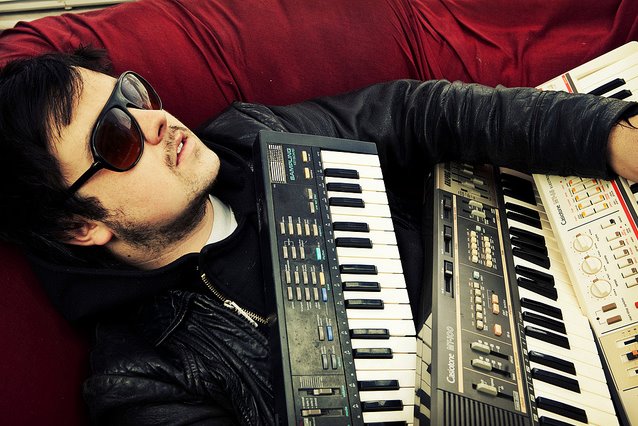
Photo by Corey Hale Ransberg.
1. Describe your craft(s).
Freelance artist (illustrator, screen printer, painter) – neversleeping.com
Musician (guitar, keys, vox) – Enemy Airship, Neatly Knotted.
2. What’s the importance or benefit of remaining indie?
Well, I suppose having a little control over what I do is the big reason. Though I’m totally broke, so maybe if a halfway decent corporation said “jump” I might ask how high. I don’t know though, I’ve always been a do-it-yourself type. I want to take broken things apart and fix them, and print my own drawings, record my own songs, etc. It’s really frustrating that I can’t do everything I want by myself, and that I have to get others involved to get a certain desired result. Not enough hours in the day to learn everything I suppose.
3. How does your craft contribute to society?
It’s all entertainment, which is good and bad. People need entertainment like art and music to feel like they are people and not some sort of hamster in a wheel. At the same time, it’s totally disposable. No one has to care about it. No one is going to die if I don’t make drawings of weird little houses or play my guitar or synthesizer with the perfect tone that took hours to get just right. That being said, music and art affect me daily. Hourly. I can pour over an album or series of artwork and analyze every single detail…just totally get lost in it. Maybe one day someone will do that with something I make.
4. What other indie-craft products inspire you?
I’d like to make a line of effects pedals. I’ve always been fascinated by that, and I think I might be good at it with a little practice. Fixing/building old mopeds from the 70’s and 80’s is something I sort of got into, just because I had no idea about it. I still can’t do a lot with the engines, but I know how to swap out parts and clean carbs and a few other things. More than I knew when I started. I obsess over sound and trying to get a good recording on my 4 track tape machine. I’d like to make a short film. Like, write the soundtrack and plan out every shot and be the only person in it. Or something along those lines.
5. What is your dream of success?
I know it shouldn’t have to do with money necessarily (or at least that’s what people say), but I won’t truly feel successful until I can stop living hand to mouth. It would be nice to get more exposure from any of my art or music endeavors, but it seems like you have to be in the right place at the right time. If I stay in Columbia, I’m not sure the “right time” will ever come around. I’d like to think if I make work that’s good enough then people will notice, though.
Follow Ben Chlapek on Twitter or Tumblr. Then go buy his craft in his etsy store. After that, be prepared to see Ben’s visage and his work everywhere.
Indie-Craft Interview #11: Zach Biri
Zach Biri is the man behind local record coop Yards and Gods. His bands Nonreturner (RIP) and Enemy Airship wreak of Canadian indie a la Broken Social Scene and Wolf Parade’s many offshoots. That’s a good thing. There aren’t enough Broken Social Scenes or Wolf Parades in this world, particularly in Middle Missouri. What also makes Zach similar to these bands is how seriously he takes his craft without taking himself too seriously at the same time. He’s thoughtful and has a lot to say, as you will see below…

Credit: Carrie Wade
1. Describe your craft(s).
Musician, audio engineer
2. What’s the importance or benefit of remaining indie?
As I have no experience in the indie beer community, my answer will be about music.
The stock answer is, of course, maintaining creative control and not contributing to toxic corporate culture. I’m not sure this is true across the board. Plenty of toxic corporate culture (selling an image, getting people to buy shit to attain some manufactured aesthetic, etc) is facilitated by the indies and the all-but-corporate-whores on them, and not every band or chairman on a major label is evil or even makes (much) money.
I also don’t buy into the notion that there isn’t some old greasy dude at the top of the food chain on the indie label that makes a bunch of money off of the blood sweat and tears of the doe eyed naive kids in the bands. Business is business, big or small. Obviously this isn’t the case for people who just cut out all the middle men, and it’s nice to see that becoming a viable option. I guess some people pat themselves on the back for it, but I always kind of thought remaining on an indie label (when it was even a choice in the first place, as it often is not) was – in the best case – a matter of good intentions.
Second best case: a self celebrating distinction of circumstance – some people are in love with the idea when it was basically forced upon them in the first place. Third best case: an excuse to half-ass things and sell it as an endearing quirk or something “you just don’t get because blah blah blah conceptual blah blah blah lo-fi blah blah blah” (DISCLAIMER: I do not dislike lo-fi, but it’s an example of something people clearly try to pass as intentional sometimes when a little bit of effort and planning just wasn’t in the playbook).
There are shitty people and practices on either side of that line, and as much as I don’t want to come off as a total misanthrope, there’s always someone out there trying to use you to make a buck or feel good about themselves. Maybe there have historically been more nightmare people on the major side – I love Albini’s rundown in Some Of Your Friends May Already Be This Fucked. I think, though, that in 2012, even more of these proverbial friends “may already be this fucked” as well and not realize it because they think they are safe not signed to a major – you think they paid you proportionally from the door? Do you think you are not being used in some way by someone even if you etched the vinyl yourself with an Exacto knife? I’m not saying there is or isn’t an assumed importance or benefit of remaining indie. There’s a lot about the concept of indie that is pretty great, and also a lot of the culture that I find to be sickeningly precious and/or self righteous, and I don’t buy it 100%. It’s a complicated rats nest, but it’s good that it’s on the table for discussion. I think what’s important is however you get there, don’t be a fucking prick about it.
3. How does your craft contribute to society?
Does it? Millions of people pick up guitars, learn a couple of chords, and consider themselves musicians, and every kid who pirates Cubase and Komplete considers himself an engineer. Would it be fair to say that adding another voice to the cacophony is contributing to society at all? Is that elitist in some way? I don’t know. Some would argue that this culture where everyone is in a band and access is easy is just confusing the cultural narrative when it’s already ass-to-ankles full of “content creators”, and vapid and soulless to boot.
The rebuttal is that a level playing field makes it fair and facilitates variety or something. That’s a concept in genetics (diversity = a stronger, better organism) and I think it carries over to a lot of other things. I mean, I guess adding more “art” to the world is contributing something to society. Then again, how many bands (or artists) can you name that (if you could) you would pay money to NOT make music (or art) ever again? I’m sure I’m that person to someone, and the opposite of that person to someone else.
I guess I enjoy playing devils advocate on these last two questions because I think they are not the givens that a lot of people need to believe they are. I wonder if everyone would agree that I contribute anything to society at all. I’m not sure. I’m sorry, that’s a really obtuse parenthetical answer and I didn’t mean for it to be at all.
4. What other indie-craft products inspire you?
Jarrett Crader opened my eyes to the world of homebrewing a few years ago, and that shit is endlessly fascinating to me – the history and the craft of it. I’ll probably never attempt that kind of thing though, at least not soon. My apartment has two doors: the entrance to the apartment, and a bathroom door that doesn’t lock. I’m sure the landlord would freak out if he saw me sparging on my 5×5′ “patio” one day. I don’t see myself living in a larger place any time in the near future…
People who build and sell effects pedals on the small scale are incredibly inspiring to me. Ben (Chlapek) and I are hoping to break into this once we do a little bit of research – partially to design our sounds in Enemy Airship and other musical outlets from the ground up, and partially because we need new hobbies that don’t involve drinking coffee and talking shit. Looking into Earthquaker Devices after geeking out over their “Dispatch Master” pedal kind of spawned this fascination for me at least. It turns out there are a bunch of little companies like ED that are actually just one or two people making and distributing hand made pedals from their little studio apartments. A lot of times, they make only 100 or so of a certain pedal – many with unique custom design work screen printed or etched onto them – and then they are never made again.
I’m guilty of it as much as any guitarist/gearhead: there’s always the guy at the show who is craning his neck to see what pedals his favorite musician uses so that he can go home and order them and ape that sound. Try to pull that shit when it’s a board of limited run Blackout Effectors and Dr. Scientist gear. I don’t necessarily become indignant and cry foul when someone sounds like someone else intentionally or otherwise – art is part theft and everybody knows it and anyone who denies it is a liar or delusional – but adding some rare variables to that theft couldn’t hurt the crucial diversity.
5. What is your dream of success?
I don’t know. Finding a bag of money? Paying my mom back somehow for putting up with the heartache of watching her son work entry level jobs for the rest of his life because he wanted to drop out of a private university to play music with his friends? Some recognition would be nice, but I doubt I’ll find it in this town. Everyone wants to get paid to do what they love. I guess the tricky part is not compromising the integrity of that thing in order to get paid for it.
Pay attention to Enemy Airship. The band seems to have lit a creative fire under Zach’s ass. It’s more cohesive and purposeful than Nonreturner with some rather strong parts in place. If they really are able to build their sound from scratch (the ultimate in DIY achievement and Sonic Youth worship), the sounds coming out of Columbia, MO should be able to create a niche for Enemy Airship such that Zach will quit those entry level jobs and do what he obsesses over loves.
Note: I’m still waiting on a few “big” names to submit their answers to the interview questions, but be on the lookout for Zach’s partner-in-crime tomorrow and who knows beyond that. If you have suggestions for people that should contribute to this series, feel free to submit names in the comments.
Indie-Craft Interview #10: Justin Nardy
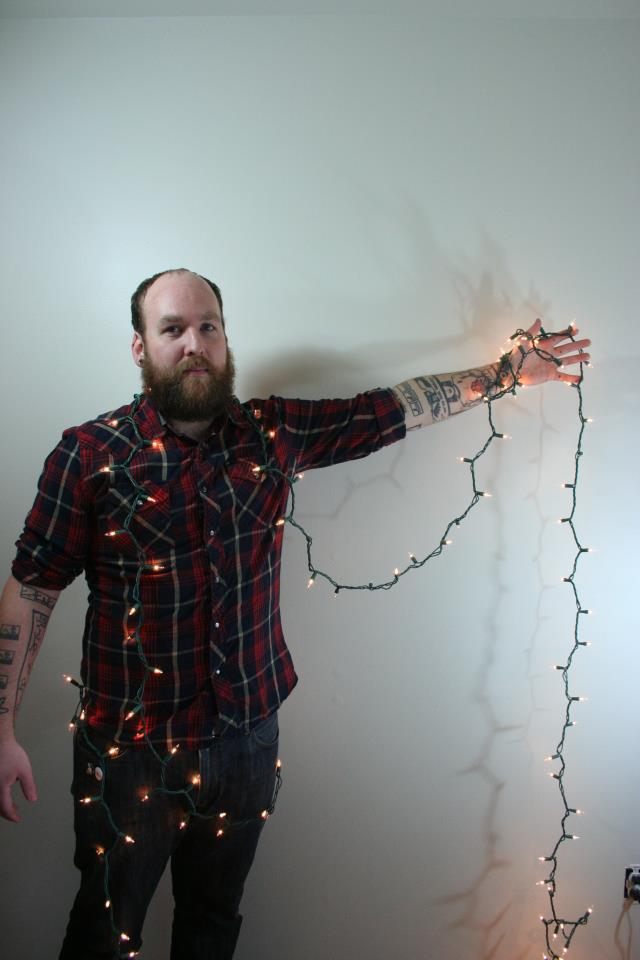
I met Justin Nardy on a trip to St. Louis to see Caribou. An artist on his label (Ahmed Gallab, AKA Sinkane) was playing drums for Caribou and Justin was driving so that he and his partners could conduct some label business. I found that Justin was a likable, well-grounded artist, a rare thing these days or so I thought at the time. Since then, we’ve had some beers and BBQ as well as traded some vinyl. He’s a part of the small group of people I turn to in this town for information regarding the music and art scenes. He’s always good for inspiration as several of his pieces hang in my home. Here’s what he had to say regarding Indie-Craft…
1. Describe your craft(s).
Well I tend to dabble in a bunch of different things. I have been an active musician and part of the CoMo music scene for about 17 years now. I have played in numerous bands such as, Sooprize Package, Quatermast Wind, Amputee Set, Subscribe, Carryon Killaway, Bald Eagle, The Foundry Field Recordings, and I currently sing and play bass in New Tongues. Besides playing music, I was a co-owner of local record label Emergency Umbrella. I also work full time as a screen printer for two locally owned shops, and screen print posters out of my basement when I have free time, or a burst of creative energy. I have also provided bands, local business, and random cool people with 1” buttons for the last 10 years or so. I illustrate, and do random graphic design projects, and have always been the “art/design guy” in all of the bands that I have played in. So yeah I feel like I am jack of all trades, but maybe more successful in some areas more than others. Music has definitely been my main focus and craft for some time.
2. What’s the importance or benefit of remaining indie?
That’s tough, but I think remaining indie really comes down to never having to answer to anyone but yourself. To always be able to have totally creative freedom in what you are doing, and by doing that I think you stay happy and sane (or I would like to think you stay happy and sane).
Though I feel like anymore it is really hard to stay indie, and not depend on a larger group or some money at hand. Most indie bands aren’t indie anymore, most indie labels aren’t 100% indie, there is money coming from somewhere, whether it is selling music to movies or commercials etc, but that’s what allows those bands and labels to keep going. So maybe the definition of indie has changed. I think it is fine to make money off of your art or passion, but remaining indie all depends on what you do with that money once you have it, do you completely change everything or do you carry on like always with a little more funds to help you along the way? I don’t know if any of that makes sense, but in the end remaining indie to me means I am happy and I don’t have to answer to anyone or change what my creative outlook is to please some asshole and make them money.
3. How does your craft contribute to society?
Well I don’t know if I have ever personally created any art or music that has changed people’s lives or improved them, but overall I think music and art are two of the most important things people can have in their lives. I know that I would not be the person I am today without music and art. They improve the quality of life.
By being a musician in Columbia for such a long time I think I, with the help of many others have built a scene and a community of awesome people with many talents and that we have overall improved Columbia as a town. By creating music, art, putting out records, and bringing numerous bands to Columbia we have made it a better town to live in. We not only provided entertainment and things to do in a town that sometimes lacks entertainment and things to do, we have also created some pretty amazing bands and music. The musicians in this town are definitely a great group of people that are super talented and I feel like most of the bands here support each other and have each other’s back. And that is a great feeling to have, that we all have a support group and a tight knit of people that are always there for you and help push you to be creative. I am still blown away that places like The Hairhole and Rag Tag exist in this town, where you can go and constantly be surrounded by talented like minded people.
4. What other indie-craft products inspire you?
Other local bands, indie labels, lots of things on etsy, vinyl nerds, screen printers, people who book local shows, True/False, my wonderfully talented and supportive girlfriend Julie Hayes, indie record stores, craft beer etc. etc. etc.
5. What is your dream of success?
To wake up every day and be happy doing what I am doing and to be completely comfortable in my own skin.
I am not there, in fact there is much of my everyday life that is pretty opposite of that. I wake up and go to a job that I hate and make someone else a ton of money while I struggle to get by. Which is tough because I am doing a form of art that I love (screen printing), but instead of doing it under my own terms and conditions and remaining “indie” I am working for people that I generally hate and despise. I have been in tons of bands and l have loved everything I have done in those bands, yet none of them have been a complete success. When I turned 30 I thought I might completely stop playing music, and yet I still struggle with it and to be happy doing it. The record label that I was part of, that I loved and that put out a bunch of great records by friends and amazing bands went under. The part of me that loves to draw, screen print, and do design work constantly struggles to find motivation to do anything. So I feel like success is a long long way from becoming a reality. I am successful and happy that I get to wake up every day with a person that drives and pushes me to be creative, and that I am still actively playing music and creating art at age 31 but I definitely struggle with it at times. My ultimate goal of success would to be able to open a venue/bar/record store/screen printing/art gallery/musician practice space and employee all my wonderfully talented friends and make it the best thing in the world and have it support all of us and our families while providing an amazing place for people to hang out.
You can find Justin’s work at his old blog or his new blog. Buy his art here and you might be able to score a Bald Eagle record at Insound. In the meantime, don’t forget to peruse all the Indie-Craft interviews. There are still more to come…
Indie-Craft Interview #9: Julie Hayes
Julie Hayes bombed the shit out of this town.
What I mean is that she knit-bombed the shit out of this town. Once I learned of her shenanigans, I promptly made sure that my other blog featured her and her other crafty creations. Those creations (and finds) can be obtained for a reasonable fee at her Etsy shop – possibly world headquarters for indie-craft wares – where one can ascertain a pretty good feel for Julie’s aesthetic and a bit of her personality, making it clear why she’s so cool.
I feel lucky to know someone so cool. So I’m introducing her to the Coalition now…

photo by Tony Irons
1. Describe your craft(s).
Well, I went to school for fine arts and ever since I graduated I have done nothing conceptual. I do what’s called “low” art in the art world. And I am an avid dabbler. I knit, sew, embroider, make jewelry, build things from reclaimed wood, you name it! I find that if it has a function, I’m drawn to making it. I think that was my biggest problem with “fine” art, it had no function to me.
2. What’s the importance or benefit of remaining indie?
I have worked with lots of people on lots of projects, but I could never imagine working with someone who I did not know. Being independent allows you to keep control of what you’re making and how you’re making it. I couldn’t imagine someone from the public trying to tell me what to make.
3. How does your craft contribute to society?
In the most basic sense, it makes me a better person. For a long time after I graduated I wanted to make things to sell to people. I think that mind set is changing for me. I think I’m starting to savor making things for myself again; holding back a little what I’ve been giving all those years. It makes me happy to be able to produce a piece that I’m proud of and that makes me a better person. I have done public art pieces in Columbia and I’m happy with the response that I’ve gotten to them. I hope that they make people think and react to them, though I cannot say exactly what those reactions are. I’ve been interviewed for pieces I’ve done and the reaction seems positive.
4. What other indie-craft products inspire you?
EVERYTHING. Literally. It’s hard to not be inspired in todays world. So much is at our fingertips. I remember being in school and having to trudge to the library to look at books put out by artists who have been dead for 20, 30, 40, 100 years. Today, you can sit down, turn on your computer and be hit by inspiration. There isn’t a day that goes by that I’m not inspired by a color, or a project or a scene. It’s incredible.
5. What is your dream of success?
Happiness. Whatever that looks like to me is what I imagine success to be. Right now I am happy. I have a lot of time to myself to make things and to create and that makes me happy. In the future, that may change, but I don’t know. Being an artist is a very personal thing and to me, success has always been a very personal thing too. It’s never been about money or fame. It’s always been about my state of mind and how I feel about my work. My work has changed so much since I started making things so many years ago, and I can only guess that my idea of success will change as well.
You can learn more about Julie at her blog, Yonder. And don’t forget the rest of the Indie-Craft interviews.
Indie-Craft Interview #8: New Albanian’s Roger Baylor
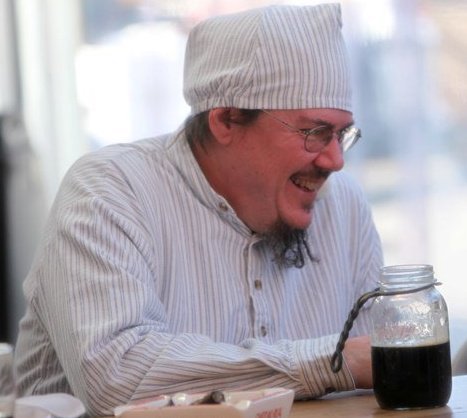
I first learned of the New Albanian Brewing Company when they brewed a tasty collaboration with Missouri breweries Schlafly and O’Fallon a while back. Then, I saw their t-shirts touting various brewing equipment as machines for killing facists, a la Woody Guthrie. Finally, I discovered the outspoken NABC owner Roger Baylor on Twitter and knew the Coalition had found another unsuspecting member.
Roger’s stirred up some discussion on Twitter, especially over the expansion east of several larger craft brewers and Goose Island’s AB-InBev move. He never holds back and appears to stay true to the indie-craft ethos. This makes him an ideal subject for the series. Luckily, he agreed to contribute some thought-provoking answers to the interview. Check it…
1. Describe your craft(s).
This may come as a surprise, but actually there exists scant evidence to indicate that I practice any known craft. I’m surely unemployable outside the narrow job description created by me (and exclusively for me) as a restaurant/pub/brewery owner, although many years ago the late beer writer Michael Jackson referred to me as a polemicist, so there it is: Polemicist. Good beer is my preferred metaphor for all other human endeavors, and for advocating the revolution, while at the same time not
sparing the revolution from constructive criticism – and make no mistake, craft beer is in desperate need of self-criticism right about now.
2. What’s the importance or benefit of remaining indie?
The craft beer business has long since entered the phase in which imagery is freely co-opted by conglomerates, and the odd part is that onlookers persist in ignoring the differences between authentic and corporate. The classic, textbook example is Goose Island, still adored by supposed indie-thinking fans, whose cognitive dissonance precludes them from grasping that they’re merely enriching AB-InBev’s coffers whenever they choose to buy Goose. Consequently, remaining indie is important precisely because by doing so, persons and entities remain connected to reality, retain integrity, and restrain the flight of money out of communities, both big and small.
3. How does your craft contribute to society?
There always needs to be a gadfly who reminds us that our sacred cows are mere lumps of clay, tastefully re-arranged to look fetching. Questions need to be asked, and people need to be made accountable and uncomfortable. Is it really good for society to subsidize exurban sprawl, to shop at Wal-Mart, and to tolerate Churchill Downs declaring Stella Artois the official beer of the Kentucky Derby? If someone really drove 1,000 miles for a Dorito Taco from Taco Bell, shouldn’t eugenics be making a comeback?
4. What other indie-craft products inspire you?
The answer comes in the form of questions: What are you good at doing? What explains your ability to do it well? I enjoy listening to, and learning from, those who are good at something/anything, and even when the topic lies outside my immediate range of personal interest, there’s an aspect of one’s experience and abilities that illuminates my own: Orchestra musicians playing as one; Repairing the gears on a bicycle; Milking a goat and transforming the yield into cheese. I never tire of learning, especially when beer drinking can be squeezed into the tutorial.
5. What is your dream of success?
On a day to day basis, success is the ability to earn an honest living, while concurrently, neither compromising one’s ideals nor hurting other people. Long term, after you’re dead, success is when someone thinks about you and smiles at the memory.
Read more from the man’s own blog, The Potable Curmudgeon, and be sure to find New Albanian the next time you’re in Indiana or Kentucky. (Maybe Missouri will be added soon?) Also, read the previous seven interviews here.


 Beer and Pavement
4 comments