A New, Looser Interpretation of Terroir

Terroir comes from the word terre “land”. It was originally a French term in wine, coffee and tea used to denote the special characteristics that the geography, geology and climate of a certain place bestowed upon particular varieties.
Or so says some guy on Wikipedia. Terroir is one of those things the wine world tries desperately to claim as all their own. However, I’d argue that a more nuanced, progressive interpretation of the concept allows room for many other things. Even the Wikipedia entry hints at the possibility of terroir in things such as coffee or tea. I’d argue there’s terroir in everything, but for the purposes of this blog, I’ll focus on the terroir in craft beer and music.
Honestly, I’m not really sure how wine can claim terroir and beer can’t. In fact, local agricultural and environmental factors may play a larger role in the character of a beer than wine since beer requires so many more ingredients. Sure, in modern production, wine more often than beer sticks to regional factors in creating flavor, but there are breweries who use only local products to produce their beverage that can’t be discounted.
That said, the original concept was to divide regions by the flavor profiles they produced in wine. A newer, more global take on this idea may look at the characteristics of various locales on the same product. For example, a beer produced in Colorado might use hops from the Pacific Northwest, Belgain yeast, barley from Canada, and local water to create something that recalls all of these regions. Sure, to the traditionalist, this might not be a case of terroir. However, I’d argue that the unique characteristics of each ingredient combines to make something hard to duplicate.
Maybe that doesn’t work for your understanding of terroir. What about the ability of humans to import all the ingredients of a region to create something that tastes and smells just as it would had it been brewed closer to its origin? In earlier discussions on this blog, I mentioned how engineering and brewing know-how can often allow a brewery to easily recreate an illusion of terroir with little regard to location.
Lost in all of this is the idea that humans can be a part of terroir. Literally, terroir refers to the land. However, this has been generally understood to include the water, climate, and other local factors. So, why not the people? They too are influenced by local factors and bring cultural perspectives to craft that can be unique to a particular terroir. People have to be considered whether you have a strict understanding or terroir or not.
At this point, I get that my interpretation may be too loose, too deconstructed, post-modern for your tastes, but I make similar arguments for many traditions and constructs beyond brewing (and music). For example, English is an evolving language that reinvents itself constantly, inventing new words, spellings, and conventions at every turn. The ideas or art, marriage, race, or the role of government are changing constantly. So, why can’t we adjust our idea of terroir to match the global times in which we live?
Now that I’ve cleared that up, I’d like to move on to terroir in music. Terroir, IMO, manifests itself in two ways when it comes to popular music. First, there’s the scene. There was a reason all the major labels flocked to Seattle 20 years ago. They all wanted a piece of that grungy terroir. Second, bands take on the terroir of a place when they write and/or record in a particular place. Why else would bands opt to record in Memphis or Chicago?
The music scene is an indie thing. Corporate leaches try as they may to capture the excitement of a thriving rock scene, but they’re often three or four years too late. Bands in scenes feed off each other, encourage one another, and often influence each other’s sound. There’s a reason most bands in Brooklyn sound like the Walkmen. Those aforementioned gunge bands all had a similar aesthetic even if they were decidedly different bands. I still get confused when I hear the opening bars to any Chicago band from just before the turn of the century. These scenes represent a very human, inorganically organic terroir like one can never find in wine.
Eventually, bands look to capture a sound that’s influenced them or turned them on. Beirut is a perfect example of a “band” that takes the influences of the road with it. Whether it be Gypsy music, French pop, or Mexican mariachi, Beirut has adopted each of these sounds as its own. (Although, it sounds as if the new one breaks from this. Stay tuned.) Another example is when a band like Pavement (among many, many others from the era) headed down to Memphis to recorded at the venerable Easley Studios, providing a certain amount of smoked BBQ and southern comfort not usually attained in northern cities.
Anything contains a certain amount of terroir. For me, terroir is a flavor or sound that can only be produced by the necessary ingredients from various locales. I don’t really care if it’s all from one location or whether it comes from all over. The end result is what matters. And within that beer or between the notes of a record, you can sense the regional influence. It’s that funk from Belgian yeast strands or the steel guitar from a month in Bluegrass country. Terroir is the undeniable piney character of a Northwestern hop or the grittiness of an album recorded in Manhattan.
I prefer not to be held down by tradition. Building International Coalitions Through Beer and Pavement is about redefining the world to better grasp humanity and the enjoyment of such things as craft beer and indie rock. If this blog has a bit of terroir, that might be it. Now, you should add your terroir to the mix and give me your take. Have I bastardized a concept that should remain unchanged or have I challenged constructs that needed challenging.
Or should I write about something else? Expect another top-5 on Monday. Cheers!
Top 5 for August 22, 2011
I feel like there topics that slip through the cracks now and again that I don’t always have time to post. I might address them in my Twitter feed or some other social media outlet, but they fail to get proper treatment here at the coalition. This is where the top-5 list comes in. The easiest kind of post for a blogger to write is the list and this new semi-regular feature will allow me to hit those things that were passed up for this sort of thing.
That said, consider this to be the first in the series of top-5’s. Don’t expect this to be a list of five records that or five brewers who kinds of lists. This is more like those lame lists editors stick in magazines to fill space. None of the items have much to do with the other except that they all appear here, in the same list. If any of these topics need further development, comment and I’ll try to get back to them, but no promises.
1. The California IPA
This is old news, but few people still discuss the merits of the West Coast IPA over other IPA’s and DIPA’s. I have enjoyed several straight-up IPA’s from the west coast and have enjoyed what they have to offer. There isn’t the booze of the typical DIPA or the syrup-ness of the Midwestern IPA or the overly hoppy characteristic of the East Coast IPA. No, the West Coast IPA is crisp, clear, dry…It may be one of the most beautiful beers there is. It’s often lost as it’s not that big and boozy, but IPA’s from the left coast were many of the beers that turned so many of us on to craft beer in the first place.
2. Stephen Malkmus
With Malk’s fifth album, Mirror Traffic, coming out this week, I have been devouring interviews and his entire discography for the past week. There’s a lot to digest before this record arrives at my front door and I let you all know what I think. What I’m rediscovering is that Malk’s work since Pavement has continued to develop. There’s more to the man than his role as father of indie rock.
3. Discoveries in Richmond, VA
I was in Richmond, VA this past week and made several unexpected discoveries. First, I found a Vietnamese restaurant called Mekong that specializes in craft beer. I showed up for some Pho and found that Mekong was celebrating their 16th year in business with a tap-takeover by Stillwater. For the second time this summer, I was able to hang out with Stillwater’s Brian Strumke. There, I was able to try several Stillwater brews, particularly the barrel-aged Stateside Saison and the Cellar Door from a cask. It was a chance reunion, but I nice way to spend an evening in a strange town with a new friend. (Admittedly, “friend” might be too strong a word, but acquaintance isn’t quite accurate either. Facebook friend? Two-time drinking partner? Stalker and stalkee?)
Other things I stumbled upon by chance included a few nice records in Richmond record stores, a brewery that will be up and running in the next month, and a nice little restaurant featuring a decent craft beer list as well as some expertly prepared eats. Be sure to check out Deep Groove Records, Hardywood Park Craft Brewery, and Magpie the next time you’re in Richmond. Deep Groove is the ideal record shop with loads of quality finds, record players for testing the vinyl, and a knowledgeable owner. Hardywood doesn’t even have beer to sell just yet, but from the looks of their website and the brief chat I had with one of their owners, I can tell they’ll do craft beer right. A guy at Hardywood sent me Magpie’s way and I’m glad he did. Magpie is a nice place on the corner that served me this phenomenally-prepared fish (can’t remember the variety) over a bed of bok-choy and gnocchi. Best meal I’ve had since returning from Spain.
4. I just read the greatest single review of an album and it was a novel.
It took me a while, but I finished Camden Joy’s semi-schizophrenic first novel, The Last Rock Star Book Or Liz Phair, A Rant. It’s not really a novel at all. Rather, I consider this book to be the most complete and obtuse record review of all-time. The man wrote a story about a fictional self who stalks Liz Phair (and/or his ex-girlfriend), blows up things in his boring hometown in Iowa that’s best known for the airliners that constantly encircle the town, and deals with the fact that his girlfriend may be the illegitimate daughter of the Rolling Stones’ Brian Jones. Through all this, Joy gives the best reading of Exile in Guyville I’ve ever read or considered. He nails the cultural importance of that album and places it into its proper context of rock history.
5. Terroir.
I read this article about terroir which is a French word that suggests things like wine or tea carry with them characteristics of the land from which they come. The article was in a beer magazine that makes the argument that beer also possesses terroir and I believe this to be true. There’s even the possibility that the people who produce such things also provide a bit of terroir to their concoctions. This idea made me think long and hard about how terroir plays out in music. Oh, there will be more to say about this in a forthcoming post, but know for now that the idea of terrior is on my mind and in my top-5.
What’s your current top-5 look like? Do you want to hear more about any of these? Do you think it’s okay to stalk Liz Phair? Does this explain her notoriously inconsistent stage fright? Should this post have garnered some footnotes?
Grab Bag
I thought I was going to have many new posts for you, but time is running out and some of these topics won’t be as good if they’re not fresh. So, I’ll summarize some topics I was considering. They may turn into full-fledged posts on their own, but for now, they’re here. I guess.
I don’t really listen to much hip hop, nor do I listen to a ton of Shellac, but this story really intrigued me. Basically, Steve Albini (yes, that Steve Albini) called out underground hip hop up-and-comers Odd Future for being rude. More interesting than the simple fact that rock/rap stars were being assholes is the fact that they were in Barcelona (days before I arrived), a foreign country. I don’t know what this is getting at, but there’s something there. Maybe this should turn into a post on American exceptionalism. I mean, I do tend to gravitate toward American craft beer and American indie rock. Moving on…
Stephen Malkmus likes to hang out in record stores. I do as well. However, I live in a town without a good record store in which to hang. I’m not sure it’s a good idea to start up a record store in this economy or in such a climate that doesn’t seem to support independent music. So, I’m thinking there needs to be a beer shop that does what the record store used to do. Enter my next project: a beer store. I’m a long way from anything happening, but there are discussions. I may take some community classes this fall and start asking around. I already have some leads to distributors, an idea for a concept (Bottles and Cans), and a model based on a wine shop that also features a bar. There will be updates, assuming the beer bubble doesn’t burst.
Then, there’s this…
The whole idea of expecting so much more from our heroes has me intrigued. I’m thinking of music fans that expect bands to keep releasing records and tour their town every year, much like Jay Smooth’s point about Lauryn Hill. The beer community isn’t excluded from this phenomena. In fact, craft beer is worse. Beer nerds are incensed that we don’t get certain breweries distributed. When new releases come out, some are pissed that someone beat them to the final bottles in town or that the distributor didn’t send an extra case to their market. There’s a certain amount of entitlement we seem to have and it sort of ruins the enjoyment or takes away the potential of the hunt.
Still, there’s more worthy topics…
I’m still mulling over the beer blog vs. music blog post. There’s definitely a totally different beer blog scene than that of music blogs. In fact, I recently posted for the Sour Session and received a lot of feedback. Plus, any time I post on beer, there’s a spike in my numbers. It even lasts a day or two. This idea, like the others above, is only half-baked and will take some time to figure out…assuming something else doesn’t come up.
This article was shared with me and the ideas within basically encapsulate my entire record collection and/or aesthetic preference. Of all these, this one will deserve the closest look, but I may have to buy the book first.
And finally, I will be doing some sort of post for the 20th(!) anniversary of Nevermind. My entire worldview may have changed at that moment. Of course, I was 16 and doesn’t everyone’s worldview change somewhat at 16? Speaking of teenagers, Francis Bean Cobain is 19.
Oh, and grrrls covering Pavement is always a nice find. This should be worked into an addendum for that girls and Pavement post I did a while back.
Stay tuned…
The Sour Session
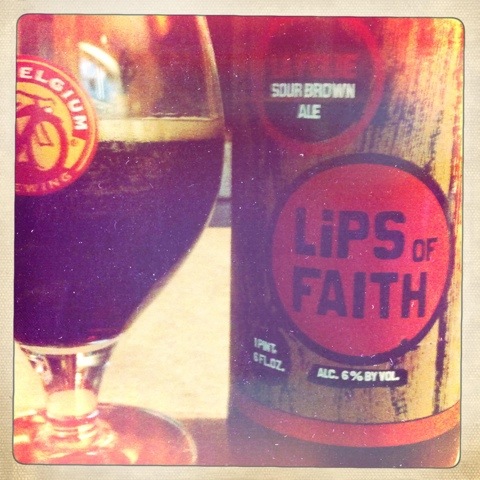
The sour beer never made sense to me. I understood sweet. Bitter came later, but I got it, that and everything in between. However, the idea of a sour beer seemed wrong.
I started running with a beer-centric crowd just as sours were beginning to take off. I tried this and that, but none of it made sense to me. What was the big deal? The beers were either not that sour (Ommegang Bière de Mars[1]) or were frankly too sophisticated for my naive palate (anything from Russian River[2]). In a world of bitter hop bombs and syrupy imperial stouts, the sour was at least a respite from such abrasive flavors, not their equal.
As time went by, I began to appreciate sour beers, though. Of course, “sour” as a style barely began to describe these beers. Some were tart from processes in the mash. Others were soured with the addition of fruits or unique yeast strains. Still, others were soured in the barrels of beer’s sworn enemy: wine. The variations and multitude of supplemental flavors opened up my senses to a whole other world of craft beer enthusiasm.
However, something was missing. There wasn’t the equivalent of a Mikkeller 1000 IBU, Southern Tier Crème Brûlée, or Dogfish Head 120 Minute. Somehow, the imperial and extreme approach passed over sour beers. Sours are known for their subtlety. The goal with sour beer is not to make you pucker until your lips fall off. Instead, a sour is meant to tease the senses with a complex variety of flavors that recall tart berries, oak barrels, and ye olde farm house[3]. Although I really enjoy the ethereal qualities of a sour beer, sometimes I want the extreme to contrast the typical.
For me, the sour beer that best fills this want is New Belgium’s La Folie.
La Folie is a controversial beer. People either love it or they hate it. It’s straight sour. You can pretend to sense other flavors with your nuanced taster, all you really get is Sour Patch x 100 without the sugar.
The beer is flat, nearly dead with it’s thin ring of foam that circles the brown pucker juice within your glass. Maybe New Belgium couldn’t figure out how to carbonate this beast or maybe they didn’t want to. One can only imagine the fury this truly arrogant bastard[4]. would unleash on your tongue if there was even a few more bubbles to carry the sour further.
And if this truly is the extreme sour beer I crave, it’s remarkable that alcohol only accounts for 6% of its volume. Typically, beers with extreme flavors come correct with an extreme ABV. New Belgium knew what they had when they first poured La Folie down their gullets. Booze would only taint the sour with sweetness, a la those aforementioned Sour Patch Kids.
Of course, aside from supplementing flavors with some wooziness, alcohol is mainly there to slow your roll. It makes you sip a beer that’s meant for sipping, not chugging. Let the flavors linger. La Folie doesn’t need ABV. The sour slows you down on it’s own.
For this little sour session[5], I pulled out a La Folie on which I’ve been sitting. I really wasn’t aging it. It’s just that no one really wants to take that beer on and suffer the consequences.
It’s an intimidating beer. I’d be lying if I pretended that I wasn’t…I’m not still intimidated. The current packaging is way less ominous with its annual redesign[6]. When I first tried this beer a couple years ago, it came in the big 750 mL bottles, corked and baring only a tag and a little red stamp of the New Belgium bicycle logo. It took me two days sharing it with another dude to swallow it down.
This recent La Folie was less daunting. Maybe it was the smaller, cuter packaging. Maybe it was the last two or so years exploring Jolly Pumpkin, Boulevard, Captain Lawrence, Russian River, Stillwater, Odell’s, and more New Belgium[7]. Whatever it was, I enjoyed sipping that La Folie over pizza and while I brewed an imperial stout of my own design.
Love it. Hate it. Fuck it. It may or may not be a sour to you. It may or may not be drinkable. Whatever. La Folie is a benchmark for me when it comes to sour beer. Maybe it’s extreme, maybe it isn’t. All I know is that it’s more interesting, more controversial, more sour than whatever’s in your glass right now[8].
Notes:
1Is this even considered sour? That may be my first problem.
2Well, anything not named Pliny.
3Or a wet horse blanket, maybe even vagina.
4Yes, that is a tiny jab at friend of the blog Greg Koch whose Stone Brewery hosts an infamous sour beer event despite no sour beers of their own. It’s time Stone got on this, Greg.
5Or is it session of sours?
6my bottle looked like a wood barrel. Anyone know when those were bottled?
7Lips of Faith indeed. I could mention a long list of old Begians, but I never commit those beers to memory…aside from the Duchess. Sweet and sour, succulent Duchesse.
8This footnote is here just to let you know that I composed most of this post – footnotes and all – on my iPhone in a bar without a beer in hand and while local punk bands played on stage.
Why We Hate Geeks, Nerds, and Snobs
That’s right. I’m in-favor of the Oxford comma and I’m back from the dead.
I could have easily added connoisseur to the title, but that’s been covered already. Regardless, we hate them all, even if we are geeks, nerds, or snobs ourselves about beer, indie rock, or whatever. There are things we…er….they do and say that cause us to reject their ideas of beer and music. Although they are extremely knowledgeable in whatever special interest, we tune them out as to listen to them sucks all the fun out of something that should be enjoyed by all. Some acknowledge their own snobbery and are more accepting of others. However, most of us don’t like being told how to enjoy a good beer or an album.
Below are the ten things geeks, nerds, snobs, and connoisseurs do that makes it hard to take their advice and opinions on beer and indie rock seriously.
10. It was always better way-back-when.
Pavement was so much better on their Slanted and Enchanted tour than their reunion tour last summer. OR The ’08 120 Minute IPA was far superior to this year’s batch…For those who have discovered a band or beer just recently, there’s no way we can know what it was like to experience either when in their prime. It’s an unfair detail to mention in conversation. Age does not mean one has experienced all that is worth experiencing, particularly if you’re still in-search of white whales.
9. “Yeah, that’s nice, but have you experienced…”
It doesn’t matter what cool story you can bring to the table, the “expert” will always have one to top yours. I loved the Yo La Tengo show last month, but there are lots of people who thought the variation they saw on the spinning wheel was superior. Maybe. Why can’t both experiences be great? Why is a beer on tap automatically a better tasting experience than from the bottle?
8. No dialogue, just references.
This one is an epidemic for my generation. We don’t have conversations these days. We make pop culture references as way to make some meaning or connection in our lives. This practice is particularly bad when beer nerds and indie geeks “discuss” their tastes. Sea and Cake. Joan of Arc. Coctails. Rachels… La Folie. Russian River Supplication. Pliny. Dreadnaught.
7. Name-dropping when you’re not on a first name basis with anyone of note.
I love the guys who refer to their heroes on a first-name basis because they spoke to a guy at the merch booth or told a brewer how much you loved his beer. I met Brian Strumke of Stillwater Artisanal Ales at a bar in D.C. earlier this week. We chatted for while, we friended each other Facebook, but I don’t know that I’ll talk about “Brian” as if we’re close. He was a cool guy and I couldn’t resist mentioning him in this post, but our conversation doesn’t give me any more insight into craft beer than you may have.
6. Although that was great, I know how it could have been better, epic even.
You’re out, enjoying one of your favorite bands when your connoisseur buddy turns and says something like “This would have been waaaay better had they just played ‘South Carolina.'” Maybe, but they didn’t. Why ruin a good time by focusing on what didn’t happen?
5. “What do you think? I hate it.”
Ever been asked by a friend or acquaintance whether you liked a beer or were digging a band on stage and when you say you do like it, your partner proceeds to explain why this beer is infected or the band is completely off. Instead of offering his opinion first, he tests you to see whether you’re worthy or not and then details how wrong and ignorant you are.
4. “Have I told you this before?”
Snobs love to hear themselves talk and a big part of that talk is the one story he tells you over and over like it’s so amazing that you grow more impressed with every new telling. I don’t care that you saw Elliott Smith during his Either/Or days. Wow, great. You’ve been to Russian River and tried every beer on the sampler tray. It gets so bad that you start to think that this is the only thing your snobby friend has ever done and does that really qualify him as a snob?
3. Picking apart every last detail until enjoyment is impossible.
You’re sitting there, sipping on this excellent IPA, and watching the hottest band on Pitchfork. In one ear, you have your buddy explaining why the hop profile is out of balance with the malt bill. In the other ear, another friend is pointing out how the bassist is so drunk, he’s missing every cue. Who gives a fuck? Just enjoy the beers and show.
2. Once you come around, let’s throw out something shocking.
OK. So, you’ve figured out your discussion mate. He loves the sourest beers. He only listens to vinyl. Then, he drops the bombshell just to prove that he thinks about these things on a different level than you can comprehend or that he just knows more about everything… He loves the hop presence in a Miller Lite more than Pliny the Elder and still listens to his cassette tape of Hall & Oates’ Big Bam Boom, possibly the best album of the 80’s or so he claims. Really? Aren’t you just being ironic? Bad taste is bad taste, especially when one should know better.
1. The lecture.
Much of what’s been described above could be part of the snob’s lecture. The lecture is when your friend insists on dominating the conversation, constantly steering it to the one or two areas in which he assumes he is the most knowledgeable. There’s no listening on his part, just talking. And talking. And talking. Sure, he knows his shit, but there are other perspectives and opinions to consider in a discussion. Your opinion isn’t the only one that counts!
Of course, I resemble every one of these characteristics. I’ve done them all, but I feel I’ve been subjected to my fair share of each. Either way, I think it’s important we recognize these characteristics in anything in which we are knowledgeable experts and/or pathetic obsessives. And once we recognize the signs, we should try to avoid them and listen to others. When we see it in others, we should recognize that there’s good knowledge in arrogance and pretension.
Still, the backlash directed at beer nerds and indie geeks seems to resemble anti-intellectualism or anti-elitism that runs rampant through our political climate at the moment. These experts are valuable parts of our communities. They can connect dots and provide insight when it’s lacking. The trick is to not let that abundance of knowledge overwhelm or drown out enjoyment.
Update: Due to some developments elsewhere, I am adding an eleventh point. Since I didn’t rank the ones above, it doesn’t really matter where I stick this addendum. Once again, it should be acknowledged that I have committed many if not all of the above offenses. #11 is no different. In fact, if you follow the link at the beginning of this update, you’d see what I mean.
11. When someone doesn’t know when to stop…A new rule of thumb will be to limit myself to three comments in proving a point. In f2f situations, this could be a rule to make three points, then agree to disagree. The hated beer nerd/indie geek will not let something go. He has to have the last word, picking your argument apart, often diverting from the original statement. Normally, when I find myself in such a situation, I try to make a joke and move on. However, I recently engaged in an argument over the points made in this very post at another blog. I should have let it go, but I didn’t. In the end, I look like the ass. Of course, maybe it’s some strange consolation that my antagonist also comes off as an ass. Either way, two beer nerds arguing on a comment thread is a perfect way for said nerds to be ignored from here on out.
Special thanks goes out to Stan of Appellation Beer for linking back to this post and demonstrating an immense amount of patience and understanding. For a good read on beer and beer culture, I suggest you check out his blog immediately.
In Defense of BrewDog
One of the most amazing achievements of the American craft beer scene is its overwhelming influence on foreign brewers, particularly those from lands with their own brewing traditions. The movement toward traditional brewing techniques with “extreme” ingredients has greatly influenced craft beer all around the world. One such brewery who has taken what American breweries have done and run with it is Scotland’s BrewDog.
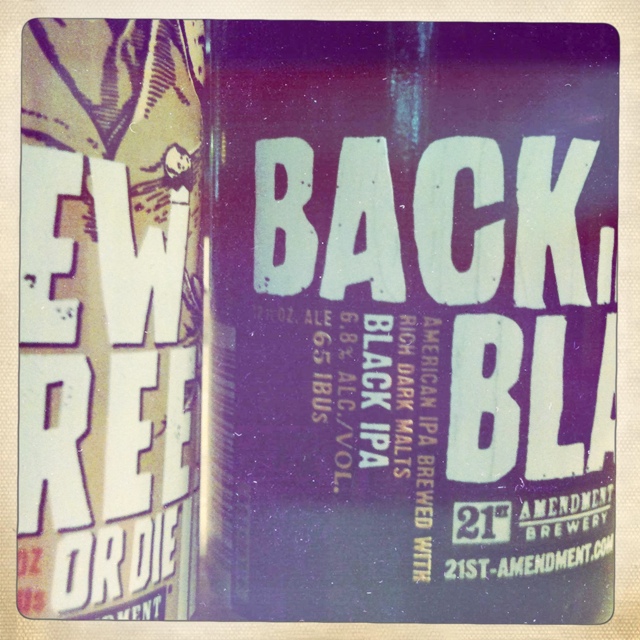
Some like to criticize BrewDog for being putting more hype than hops in their beers. The attitude displayed in their copy and graphic design suggest a similar arrogance found in that of Stone but without the great product to back it up. BrewDog often goes for the gimmick with their insanely high ABV beers like Tactical Nuclear Penguin (32%), Sink the Bismark (41%), or The End of History (55%). There’s also the insanely low ABV brew Nanny State that comes in at a whopping 1.1% ABV. Such stunts cause the skeptical beer nerd to be…well…skeptical.
While the perceived gimmicks above don’t bother me, the fact that I had tried few BrewDog beers that I actually liked said more about the brewery than any marketing strategies. The Tate Modern Saison was nice. Their collaboration with Stone was interesting but not mind-blowingly good. And the IPA’s and stouts I had were okay, I guess. In my opinion, BrewDog did very little to earn my beer money.
Then, I had their collaboration with Mikkeller, the I Beat U. I’m a sucker for insanely hoppy, American craft-style IPA’s and DIPA’s. This one certainly did the trick. I figured that maybe BrewDog had figured out how to brew a proper American-style IPA or that, at the very least, Mikkeller had a positive influence on the brewers from Scotland. I was intrigued enough to keep an eye open for BrewDog’s beers. However, due to some changes in distribution, BrewDog is no longer available here in Missouri.
Enter my trip to Spain.
I have more to say about the trip and the beer there, but BrewDog deserves their own post, review. After several fruitless searches for good beer bars and stores, I finally discovered a gourmet food store on the Rambla de Catalunya in Barcelona. While there were many interesting beers from which to choose, I had to think strategically. My day pack didn’t allow much room for beer (nor did my back want to lug that much extra weight). Plus, we were leaving the next day for Granada. Carrying a load of beer on a plane with no checked luggage did not appeal to me. So, I went with six 11.2 oz BrewDog beers. Let’s review…
IPA Is Dead Sorachi Ace and Citra
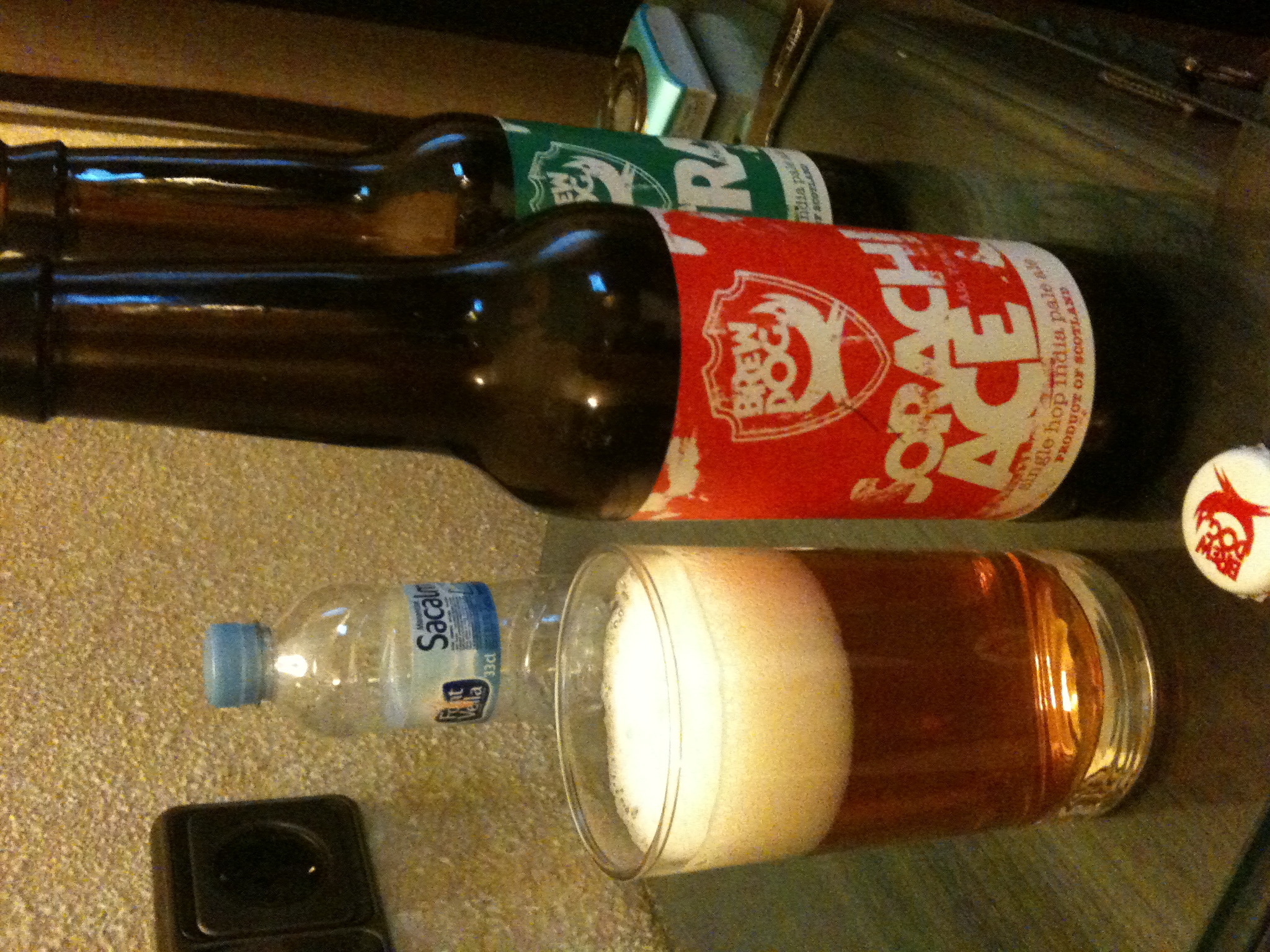
Both IPA’s were single-hopped with identical malt profiles, 7.5% ABV, and 75 IBU’s. The idea was to single out popular hop varieties in order to discover the virtues of each. Mikkeller has done the same, but rarely have their versions been as intense as these two beers. First, I tried the Sorachi Ace, if you recall, the centerpiece hop in my own New Slang Saison. The flavor and aroma were huge on this one, but Sorachi Ace really should be used sparingly or in combination with other hops. The hop at 75 IBU’s just comes off like lemon-scented cleaning supplies. Still, it was an interesting experience as I watched The Simpsons dubbed in German on the airport hotel TV.
Next came the Citra-hopped beer. Wow. I can see why this hop is quickly replacing Simcoe as the hop-du-jour among professional and amateur brewers alike. It’s so citrusy and not harsh at all. Excellent beer.
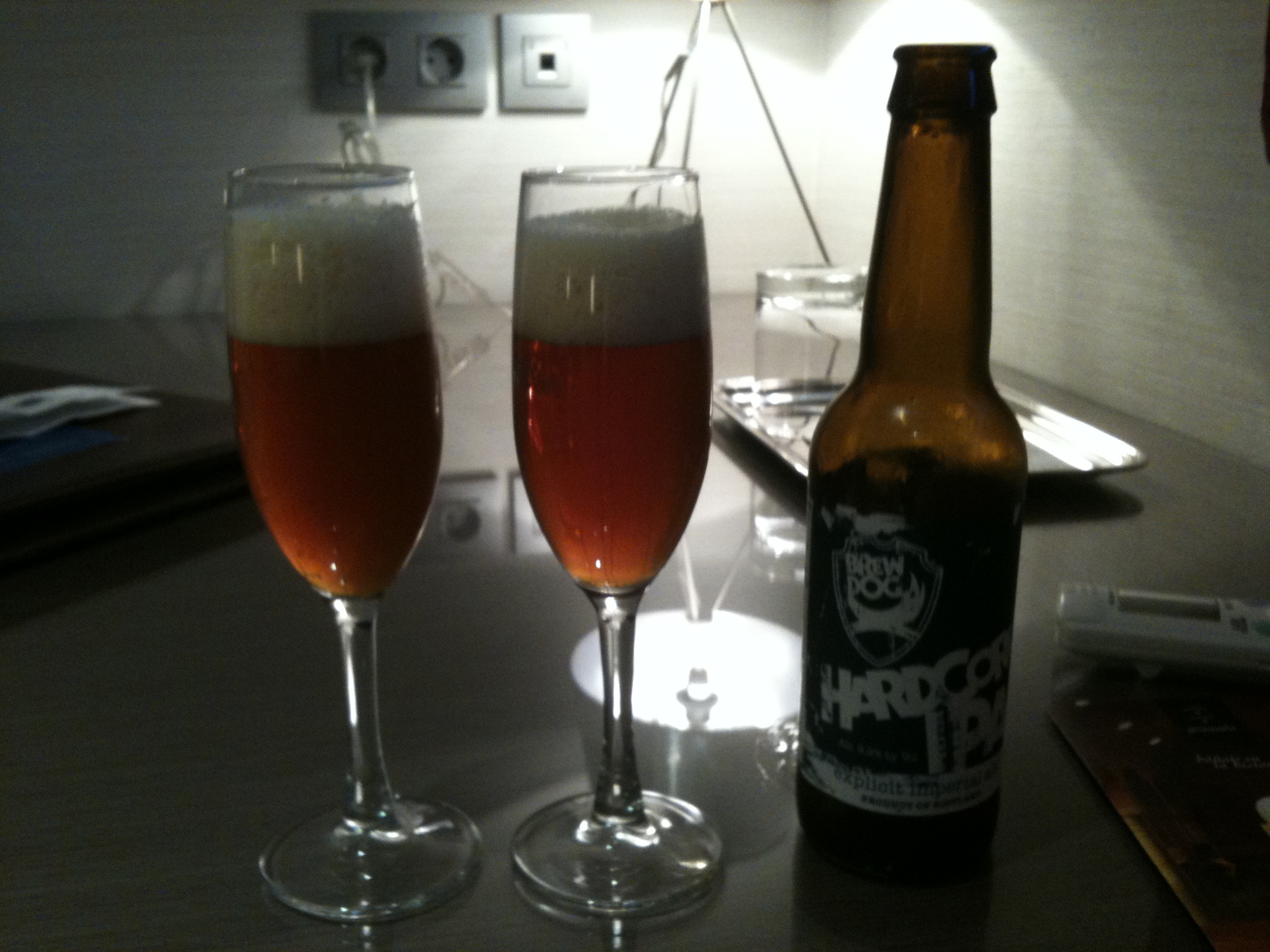
Hardcore IPA
Before heading out for the evening, a friend and I decided to break open this DIPA. Hoppy with the proper malt backbone to balance…This was nothing like any BrewDog IPA/DIPA I had consumed previously. Aside from the single-hop beers, this beer easily proves BrewDog’s worthiness among American craft beers.
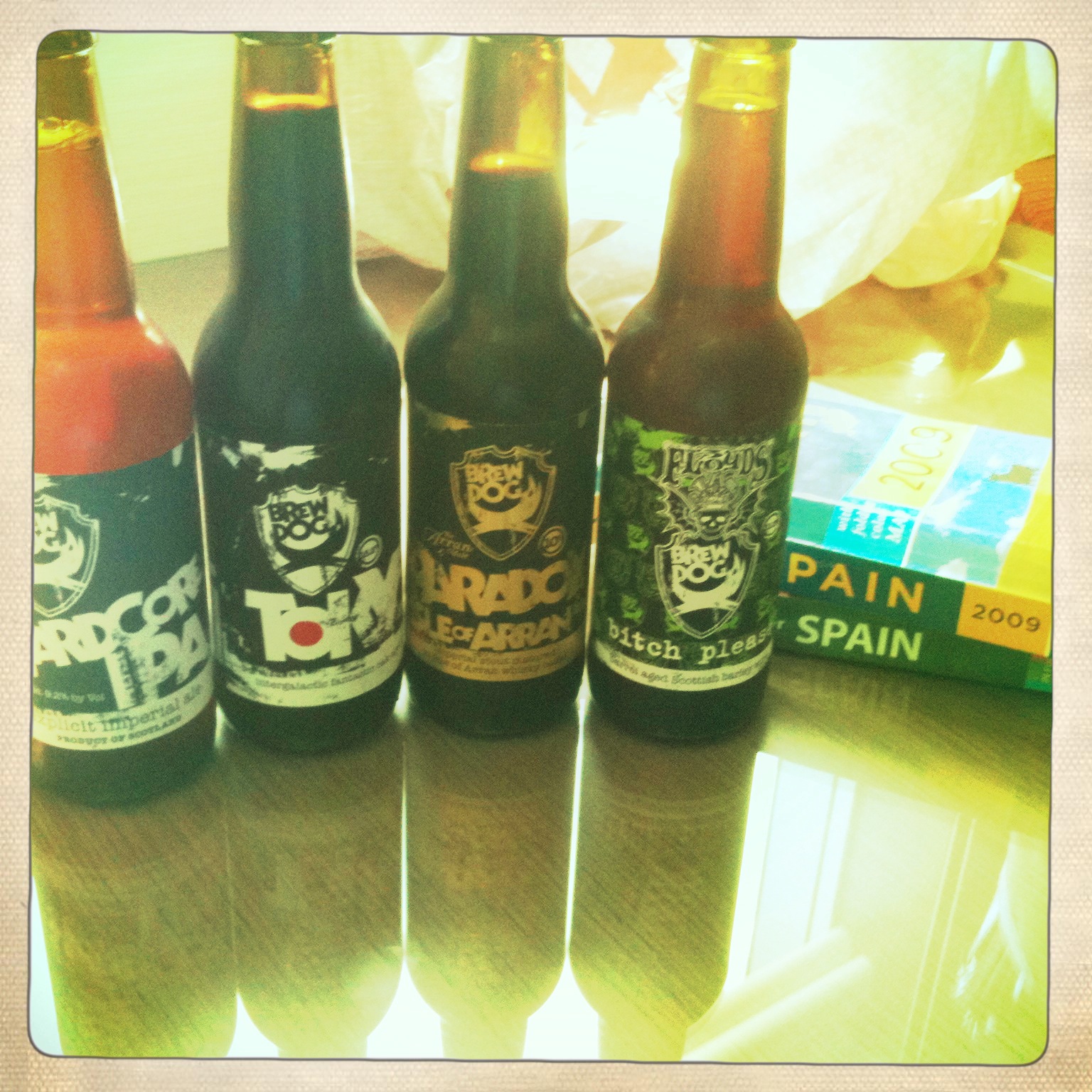
Bitch Please, Paradox, and Tokyo
After the Hardcore IPA, we had a dinner with friends in their mountain-side village home. I brought these beers as a contribution to the meal. We saved them for after dinner, which was the right thing to do. I opted to start with the Bitch Please barley wine, a collaboration with Three Floyds. Fucking A. I figured the barley wine wouldn’t stand up after the two big imperial stouts, but that was a silly thing about which to worry. It was the peatiest thing I’ve had not in a Scotch bottle. Unreal how peaty this beer was. Luckily, I was sharing.
Second was the Paradox…oak, bourbon, molasses…This was the quintessential Americanized imperial stout for which we all crave. This beer came correct and stood up to the peat in the previous beer. At this point, I was clearly sold on the BrewDog’s legitimacy, but the ability to brew an imperial stout such as this one cinched it.
Finally, we opened and slowly sipped on Tokyo. I am a huge fan of Dogfish Head’s World Wide Stout and this beer is its equivalent. Sweet, syrupy, black coffee, and bourbon…Oh, and tons and tons of booze. They aren’t joking when they claim this beer to be 18% ABV. It kicked our ass for good, but it was totally worth it.
After trying these six beers while on holiday, I am a huge BrewDog fan and believe in their ability to brew big beers. I know that between their hype machine and forays into mediocre brewing, they have lost some of you. However, it’s never too late to come back and try BrewDog again. Now, if only they shipped to Missouri…
New Slang Saison, pt. 3: Bottled Up
After somewhere between three and four weeks in the secondary, the Saison is now bottled. Below is what happened.
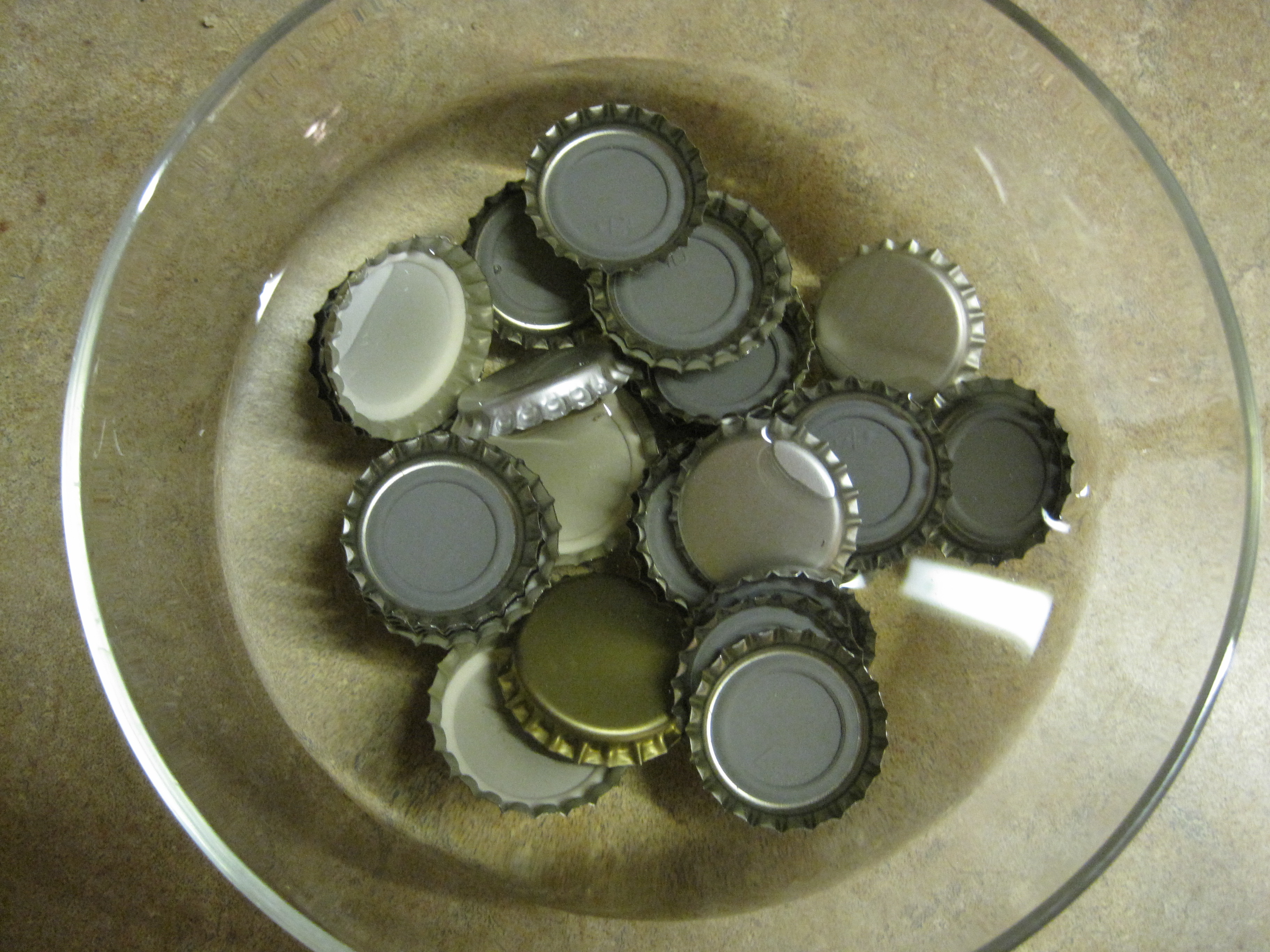
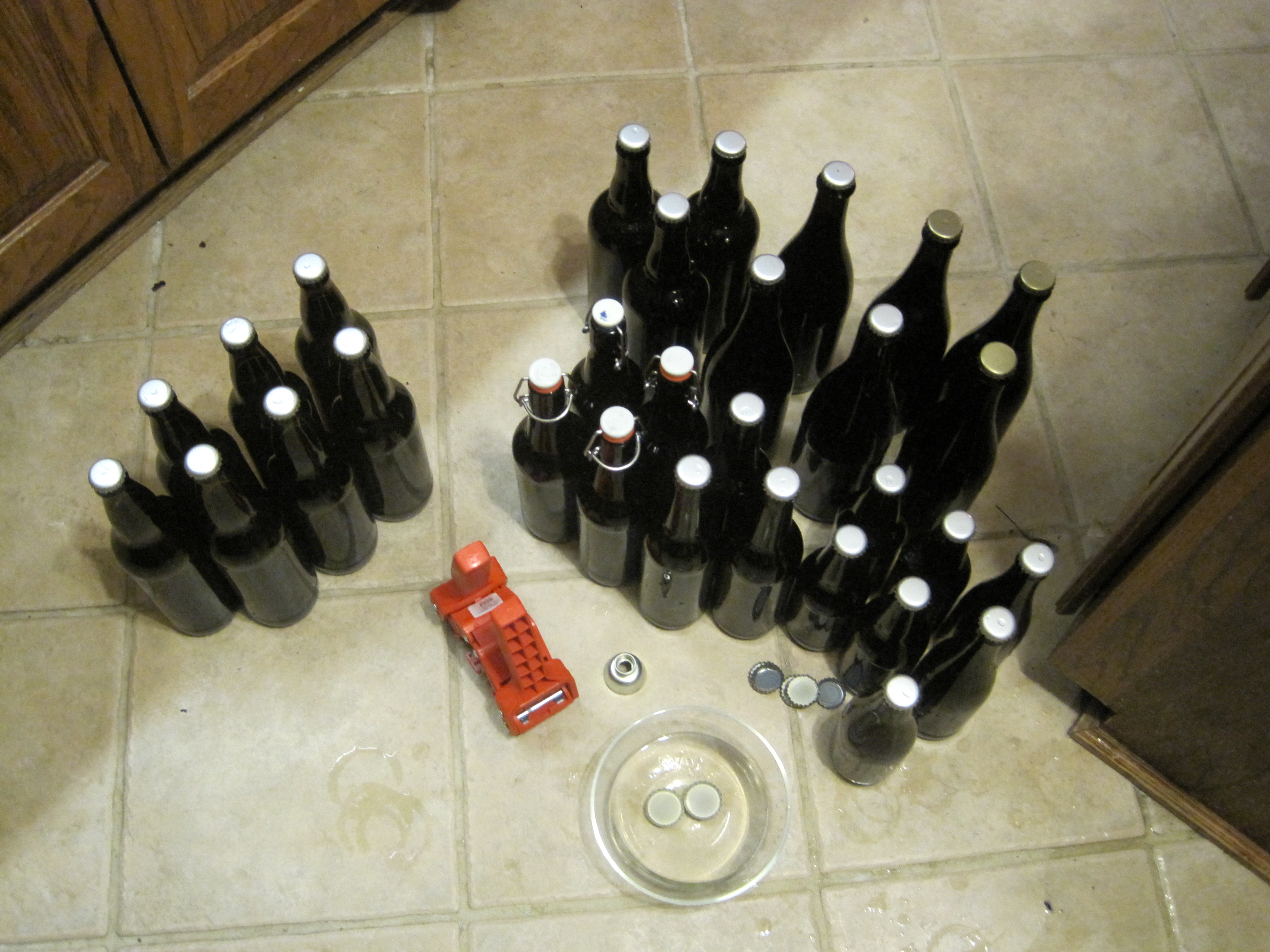
I had to gather a variety of caps as I was unsure which would fit the few 750 mL bottles I had gathered. My only worry is that some of the bottles wouldn’t let me affix either size cap on straight.
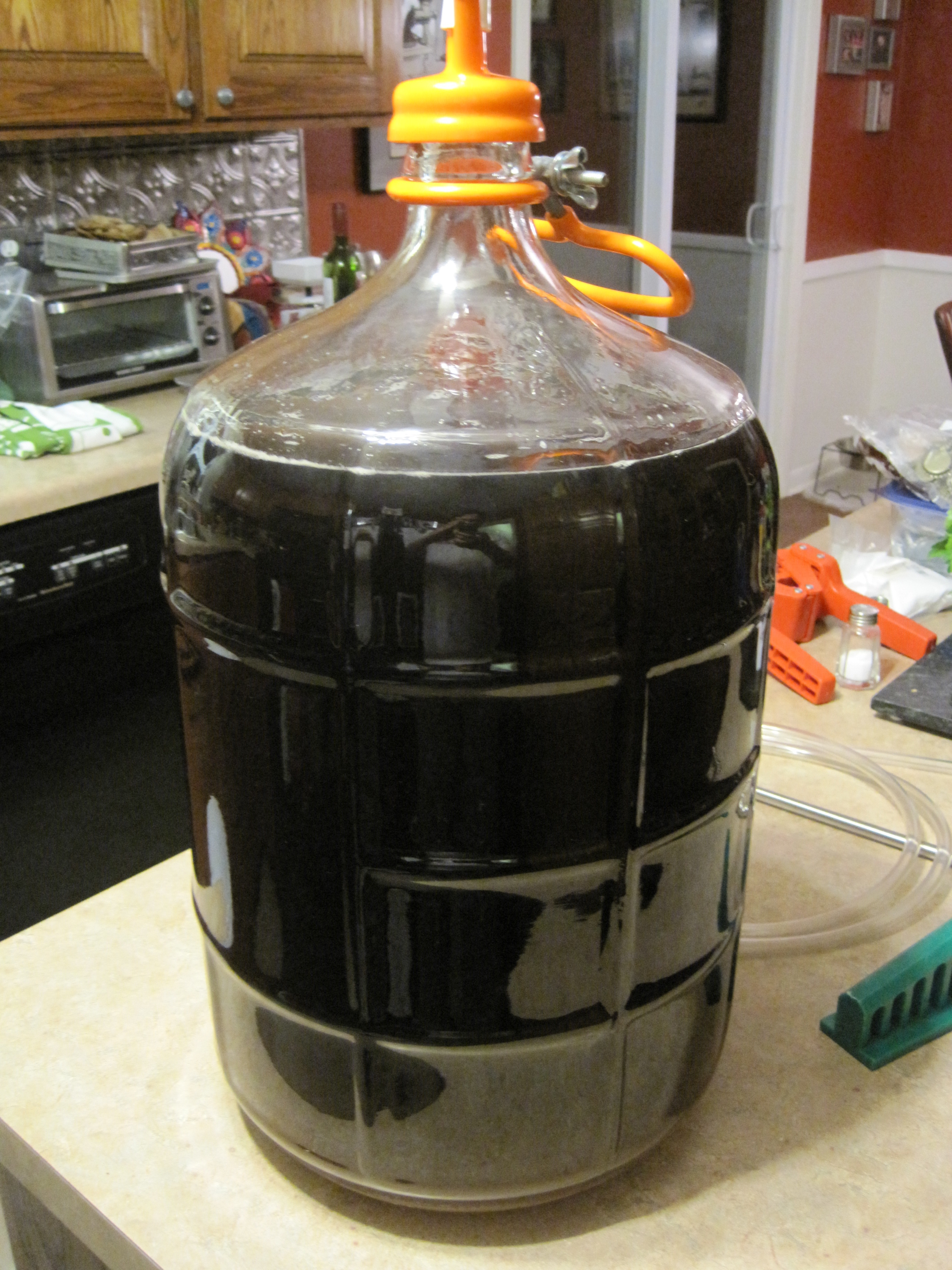
I’m not sure why this beer looks so dark. It’s more of an amber color, which doesn’t really match the style.
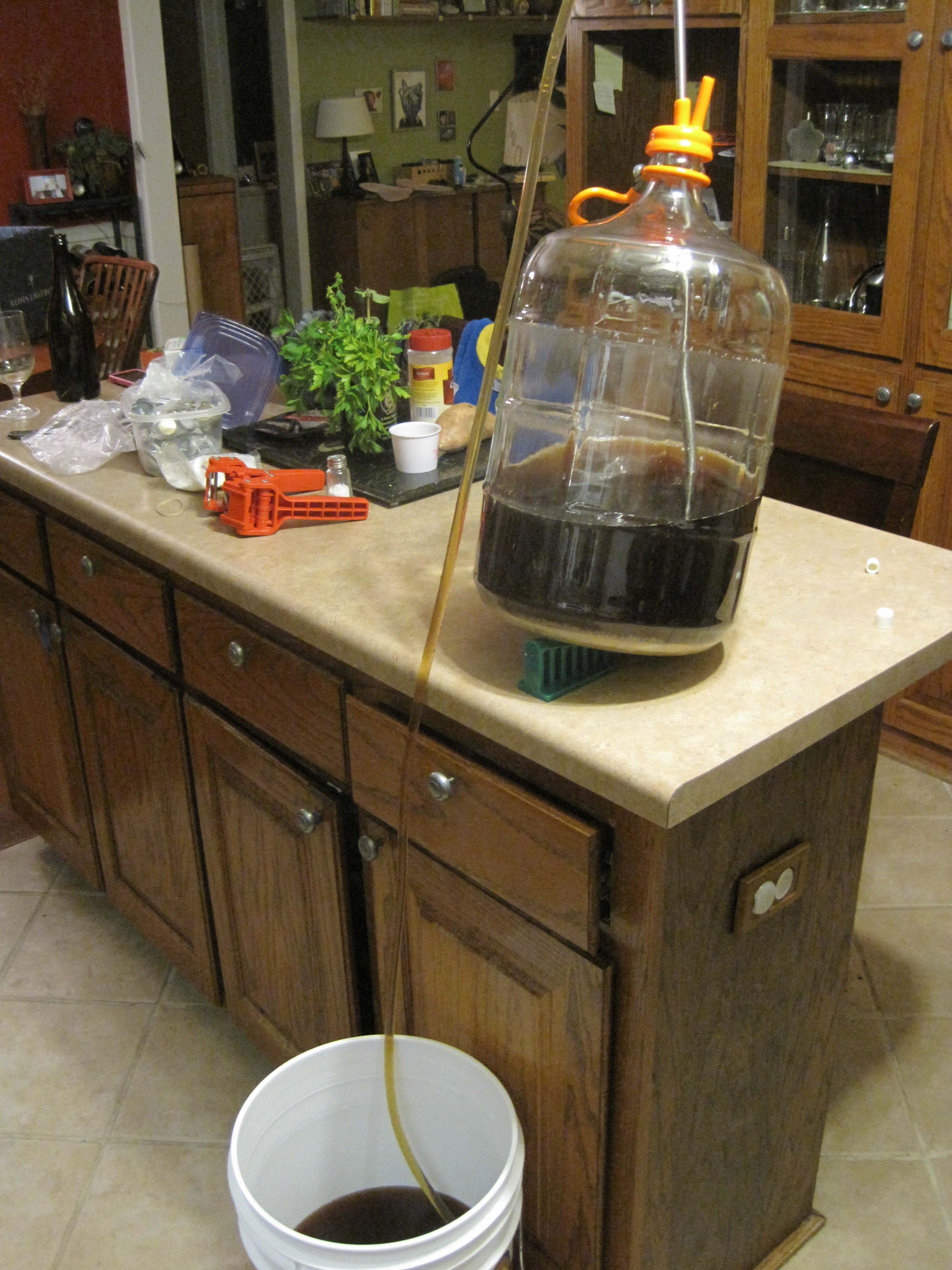
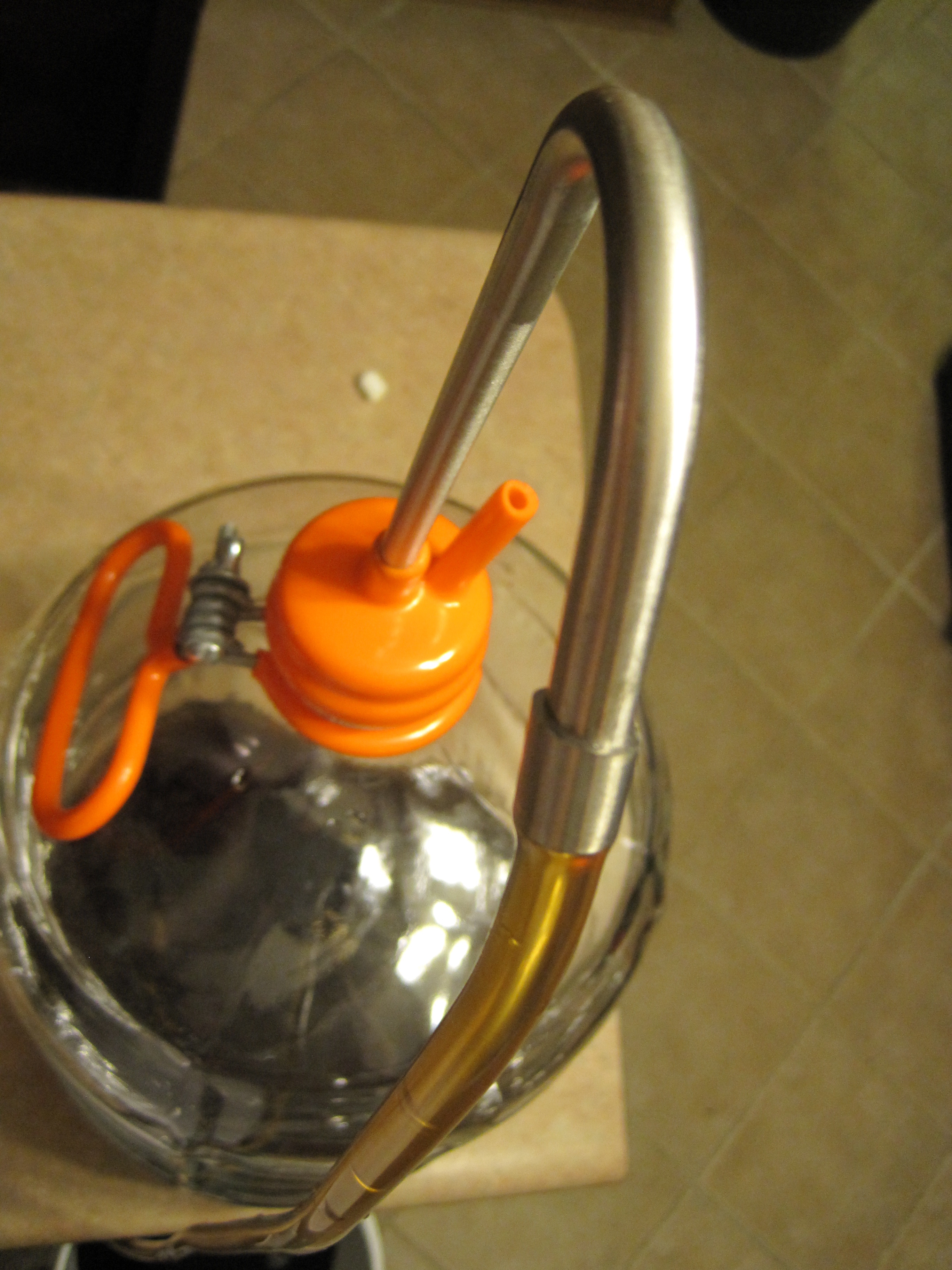
Secondary to Ale Pail. Pail to bottle.
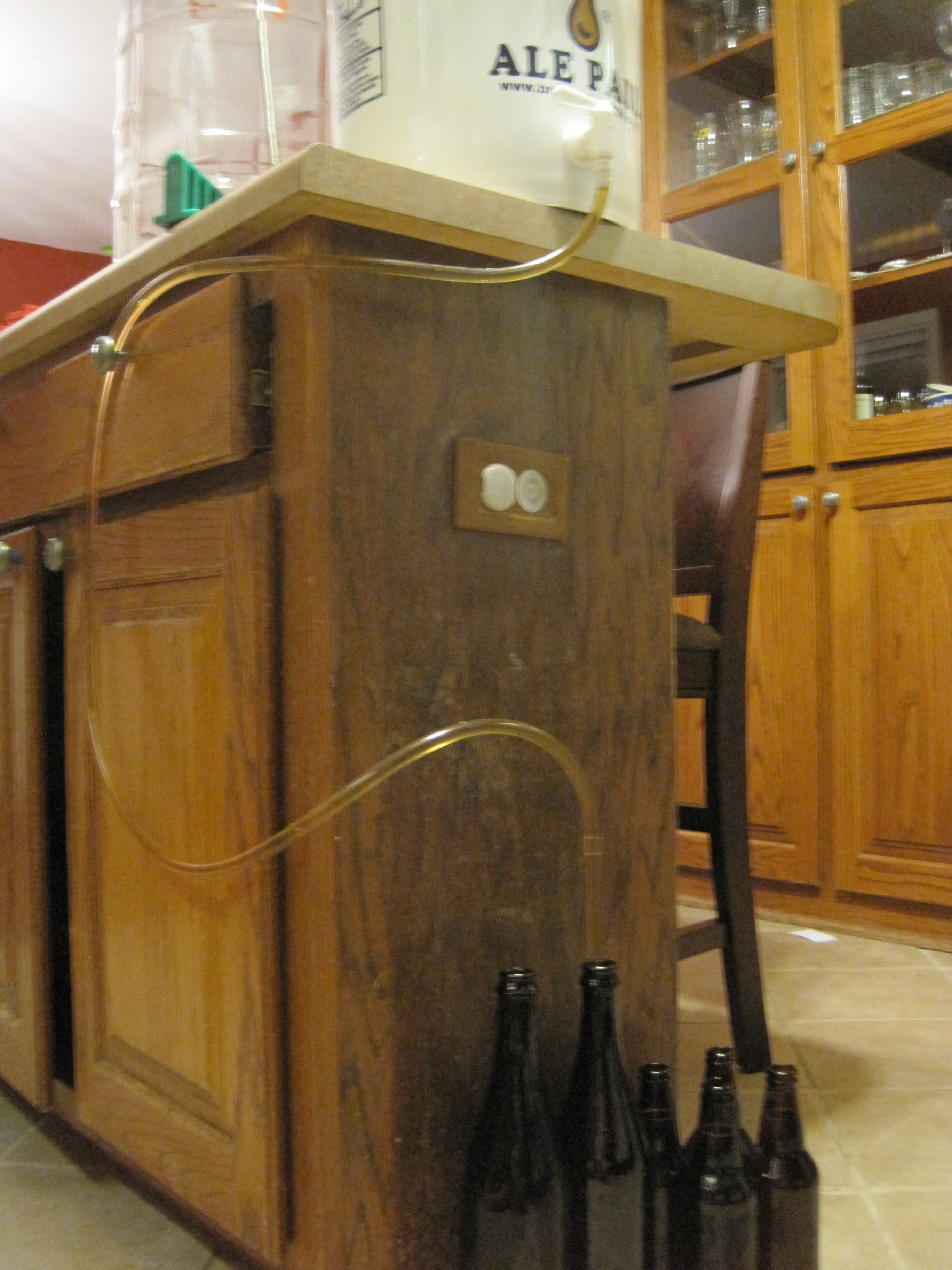
I’m trying out several different bottle sizes to see which suits me best. I also tried some of the beer and can’t wait to see what a little carbonation does to it.
Still In Spain, Still Alive
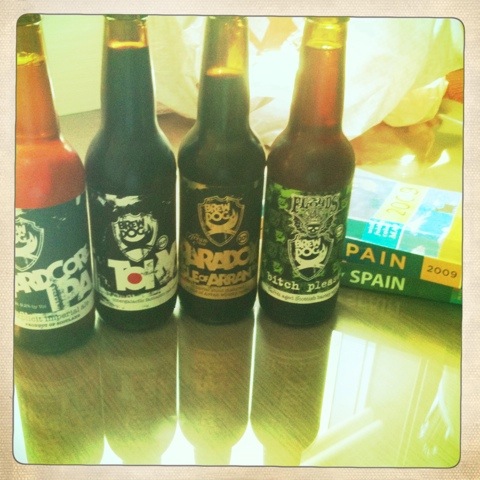
We’re still here and I’m making due. Trust me, the selection above is not what I’ve typically had here with my tapas. Still, it’s been interesting. I’ll get back to full-on blogging within a week.


 Beer and Pavement
26 comments