Indie-Craft Interview #12: Ben Chlapek
Ben Chlapek prints posters and plays in bands. Of course, this only skims the surface of his creativity and drive. Ben’s Never Sleeping Design posters can be found everywhere. Half the bands covered in this blog have used a Never Sleeping poster to advertise a gig. Then, there are his music projects. The layers and textures Ben builds from scratch are pretty unforgettable and just as striking as his printed work. Luckily for me, as with many of the subjects of the series, Ben lives here in Columbia and agreed to answer my questions about his indie-craft.
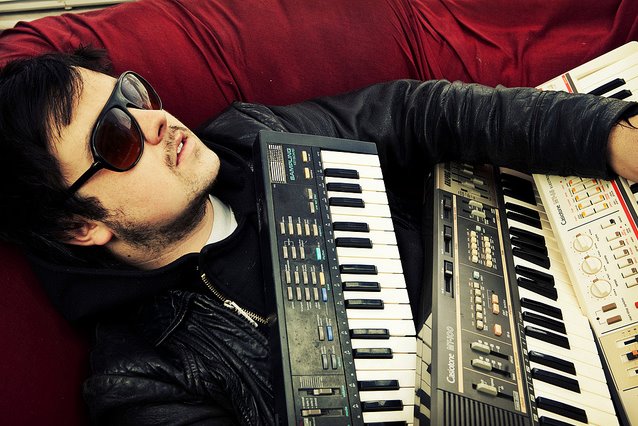
Photo by Corey Hale Ransberg.
1. Describe your craft(s).
Freelance artist (illustrator, screen printer, painter) – neversleeping.com
Musician (guitar, keys, vox) – Enemy Airship, Neatly Knotted.
2. What’s the importance or benefit of remaining indie?
Well, I suppose having a little control over what I do is the big reason. Though I’m totally broke, so maybe if a halfway decent corporation said “jump” I might ask how high. I don’t know though, I’ve always been a do-it-yourself type. I want to take broken things apart and fix them, and print my own drawings, record my own songs, etc. It’s really frustrating that I can’t do everything I want by myself, and that I have to get others involved to get a certain desired result. Not enough hours in the day to learn everything I suppose.
3. How does your craft contribute to society?
It’s all entertainment, which is good and bad. People need entertainment like art and music to feel like they are people and not some sort of hamster in a wheel. At the same time, it’s totally disposable. No one has to care about it. No one is going to die if I don’t make drawings of weird little houses or play my guitar or synthesizer with the perfect tone that took hours to get just right. That being said, music and art affect me daily. Hourly. I can pour over an album or series of artwork and analyze every single detail…just totally get lost in it. Maybe one day someone will do that with something I make.
4. What other indie-craft products inspire you?
I’d like to make a line of effects pedals. I’ve always been fascinated by that, and I think I might be good at it with a little practice. Fixing/building old mopeds from the 70’s and 80’s is something I sort of got into, just because I had no idea about it. I still can’t do a lot with the engines, but I know how to swap out parts and clean carbs and a few other things. More than I knew when I started. I obsess over sound and trying to get a good recording on my 4 track tape machine. I’d like to make a short film. Like, write the soundtrack and plan out every shot and be the only person in it. Or something along those lines.
5. What is your dream of success?
I know it shouldn’t have to do with money necessarily (or at least that’s what people say), but I won’t truly feel successful until I can stop living hand to mouth. It would be nice to get more exposure from any of my art or music endeavors, but it seems like you have to be in the right place at the right time. If I stay in Columbia, I’m not sure the “right time” will ever come around. I’d like to think if I make work that’s good enough then people will notice, though.
Follow Ben Chlapek on Twitter or Tumblr. Then go buy his craft in his etsy store. After that, be prepared to see Ben’s visage and his work everywhere.
Indie-Craft Interview #11: Zach Biri
Zach Biri is the man behind local record coop Yards and Gods. His bands Nonreturner (RIP) and Enemy Airship wreak of Canadian indie a la Broken Social Scene and Wolf Parade’s many offshoots. That’s a good thing. There aren’t enough Broken Social Scenes or Wolf Parades in this world, particularly in Middle Missouri. What also makes Zach similar to these bands is how seriously he takes his craft without taking himself too seriously at the same time. He’s thoughtful and has a lot to say, as you will see below…

Credit: Carrie Wade
1. Describe your craft(s).
Musician, audio engineer
2. What’s the importance or benefit of remaining indie?
As I have no experience in the indie beer community, my answer will be about music.
The stock answer is, of course, maintaining creative control and not contributing to toxic corporate culture. I’m not sure this is true across the board. Plenty of toxic corporate culture (selling an image, getting people to buy shit to attain some manufactured aesthetic, etc) is facilitated by the indies and the all-but-corporate-whores on them, and not every band or chairman on a major label is evil or even makes (much) money.
I also don’t buy into the notion that there isn’t some old greasy dude at the top of the food chain on the indie label that makes a bunch of money off of the blood sweat and tears of the doe eyed naive kids in the bands. Business is business, big or small. Obviously this isn’t the case for people who just cut out all the middle men, and it’s nice to see that becoming a viable option. I guess some people pat themselves on the back for it, but I always kind of thought remaining on an indie label (when it was even a choice in the first place, as it often is not) was – in the best case – a matter of good intentions.
Second best case: a self celebrating distinction of circumstance – some people are in love with the idea when it was basically forced upon them in the first place. Third best case: an excuse to half-ass things and sell it as an endearing quirk or something “you just don’t get because blah blah blah conceptual blah blah blah lo-fi blah blah blah” (DISCLAIMER: I do not dislike lo-fi, but it’s an example of something people clearly try to pass as intentional sometimes when a little bit of effort and planning just wasn’t in the playbook).
There are shitty people and practices on either side of that line, and as much as I don’t want to come off as a total misanthrope, there’s always someone out there trying to use you to make a buck or feel good about themselves. Maybe there have historically been more nightmare people on the major side – I love Albini’s rundown in Some Of Your Friends May Already Be This Fucked. I think, though, that in 2012, even more of these proverbial friends “may already be this fucked” as well and not realize it because they think they are safe not signed to a major – you think they paid you proportionally from the door? Do you think you are not being used in some way by someone even if you etched the vinyl yourself with an Exacto knife? I’m not saying there is or isn’t an assumed importance or benefit of remaining indie. There’s a lot about the concept of indie that is pretty great, and also a lot of the culture that I find to be sickeningly precious and/or self righteous, and I don’t buy it 100%. It’s a complicated rats nest, but it’s good that it’s on the table for discussion. I think what’s important is however you get there, don’t be a fucking prick about it.
3. How does your craft contribute to society?
Does it? Millions of people pick up guitars, learn a couple of chords, and consider themselves musicians, and every kid who pirates Cubase and Komplete considers himself an engineer. Would it be fair to say that adding another voice to the cacophony is contributing to society at all? Is that elitist in some way? I don’t know. Some would argue that this culture where everyone is in a band and access is easy is just confusing the cultural narrative when it’s already ass-to-ankles full of “content creators”, and vapid and soulless to boot.
The rebuttal is that a level playing field makes it fair and facilitates variety or something. That’s a concept in genetics (diversity = a stronger, better organism) and I think it carries over to a lot of other things. I mean, I guess adding more “art” to the world is contributing something to society. Then again, how many bands (or artists) can you name that (if you could) you would pay money to NOT make music (or art) ever again? I’m sure I’m that person to someone, and the opposite of that person to someone else.
I guess I enjoy playing devils advocate on these last two questions because I think they are not the givens that a lot of people need to believe they are. I wonder if everyone would agree that I contribute anything to society at all. I’m not sure. I’m sorry, that’s a really obtuse parenthetical answer and I didn’t mean for it to be at all.
4. What other indie-craft products inspire you?
Jarrett Crader opened my eyes to the world of homebrewing a few years ago, and that shit is endlessly fascinating to me – the history and the craft of it. I’ll probably never attempt that kind of thing though, at least not soon. My apartment has two doors: the entrance to the apartment, and a bathroom door that doesn’t lock. I’m sure the landlord would freak out if he saw me sparging on my 5×5′ “patio” one day. I don’t see myself living in a larger place any time in the near future…
People who build and sell effects pedals on the small scale are incredibly inspiring to me. Ben (Chlapek) and I are hoping to break into this once we do a little bit of research – partially to design our sounds in Enemy Airship and other musical outlets from the ground up, and partially because we need new hobbies that don’t involve drinking coffee and talking shit. Looking into Earthquaker Devices after geeking out over their “Dispatch Master” pedal kind of spawned this fascination for me at least. It turns out there are a bunch of little companies like ED that are actually just one or two people making and distributing hand made pedals from their little studio apartments. A lot of times, they make only 100 or so of a certain pedal – many with unique custom design work screen printed or etched onto them – and then they are never made again.
I’m guilty of it as much as any guitarist/gearhead: there’s always the guy at the show who is craning his neck to see what pedals his favorite musician uses so that he can go home and order them and ape that sound. Try to pull that shit when it’s a board of limited run Blackout Effectors and Dr. Scientist gear. I don’t necessarily become indignant and cry foul when someone sounds like someone else intentionally or otherwise – art is part theft and everybody knows it and anyone who denies it is a liar or delusional – but adding some rare variables to that theft couldn’t hurt the crucial diversity.
5. What is your dream of success?
I don’t know. Finding a bag of money? Paying my mom back somehow for putting up with the heartache of watching her son work entry level jobs for the rest of his life because he wanted to drop out of a private university to play music with his friends? Some recognition would be nice, but I doubt I’ll find it in this town. Everyone wants to get paid to do what they love. I guess the tricky part is not compromising the integrity of that thing in order to get paid for it.
Pay attention to Enemy Airship. The band seems to have lit a creative fire under Zach’s ass. It’s more cohesive and purposeful than Nonreturner with some rather strong parts in place. If they really are able to build their sound from scratch (the ultimate in DIY achievement and Sonic Youth worship), the sounds coming out of Columbia, MO should be able to create a niche for Enemy Airship such that Zach will quit those entry level jobs and do what he obsesses over loves.
Note: I’m still waiting on a few “big” names to submit their answers to the interview questions, but be on the lookout for Zach’s partner-in-crime tomorrow and who knows beyond that. If you have suggestions for people that should contribute to this series, feel free to submit names in the comments.
Indie-Craft Interview #10: Justin Nardy
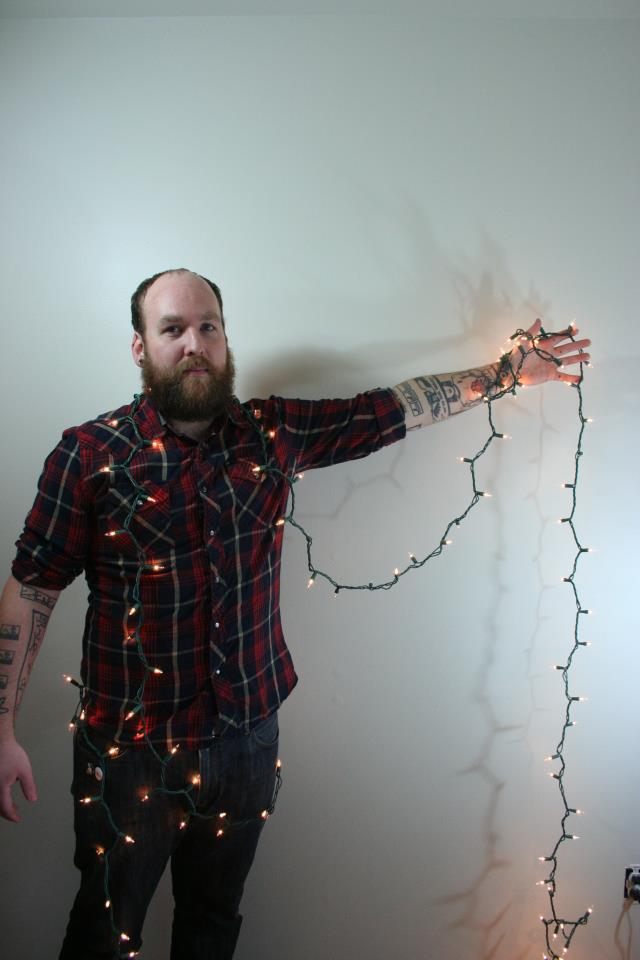
I met Justin Nardy on a trip to St. Louis to see Caribou. An artist on his label (Ahmed Gallab, AKA Sinkane) was playing drums for Caribou and Justin was driving so that he and his partners could conduct some label business. I found that Justin was a likable, well-grounded artist, a rare thing these days or so I thought at the time. Since then, we’ve had some beers and BBQ as well as traded some vinyl. He’s a part of the small group of people I turn to in this town for information regarding the music and art scenes. He’s always good for inspiration as several of his pieces hang in my home. Here’s what he had to say regarding Indie-Craft…
1. Describe your craft(s).
Well I tend to dabble in a bunch of different things. I have been an active musician and part of the CoMo music scene for about 17 years now. I have played in numerous bands such as, Sooprize Package, Quatermast Wind, Amputee Set, Subscribe, Carryon Killaway, Bald Eagle, The Foundry Field Recordings, and I currently sing and play bass in New Tongues. Besides playing music, I was a co-owner of local record label Emergency Umbrella. I also work full time as a screen printer for two locally owned shops, and screen print posters out of my basement when I have free time, or a burst of creative energy. I have also provided bands, local business, and random cool people with 1” buttons for the last 10 years or so. I illustrate, and do random graphic design projects, and have always been the “art/design guy” in all of the bands that I have played in. So yeah I feel like I am jack of all trades, but maybe more successful in some areas more than others. Music has definitely been my main focus and craft for some time.
2. What’s the importance or benefit of remaining indie?
That’s tough, but I think remaining indie really comes down to never having to answer to anyone but yourself. To always be able to have totally creative freedom in what you are doing, and by doing that I think you stay happy and sane (or I would like to think you stay happy and sane).
Though I feel like anymore it is really hard to stay indie, and not depend on a larger group or some money at hand. Most indie bands aren’t indie anymore, most indie labels aren’t 100% indie, there is money coming from somewhere, whether it is selling music to movies or commercials etc, but that’s what allows those bands and labels to keep going. So maybe the definition of indie has changed. I think it is fine to make money off of your art or passion, but remaining indie all depends on what you do with that money once you have it, do you completely change everything or do you carry on like always with a little more funds to help you along the way? I don’t know if any of that makes sense, but in the end remaining indie to me means I am happy and I don’t have to answer to anyone or change what my creative outlook is to please some asshole and make them money.
3. How does your craft contribute to society?
Well I don’t know if I have ever personally created any art or music that has changed people’s lives or improved them, but overall I think music and art are two of the most important things people can have in their lives. I know that I would not be the person I am today without music and art. They improve the quality of life.
By being a musician in Columbia for such a long time I think I, with the help of many others have built a scene and a community of awesome people with many talents and that we have overall improved Columbia as a town. By creating music, art, putting out records, and bringing numerous bands to Columbia we have made it a better town to live in. We not only provided entertainment and things to do in a town that sometimes lacks entertainment and things to do, we have also created some pretty amazing bands and music. The musicians in this town are definitely a great group of people that are super talented and I feel like most of the bands here support each other and have each other’s back. And that is a great feeling to have, that we all have a support group and a tight knit of people that are always there for you and help push you to be creative. I am still blown away that places like The Hairhole and Rag Tag exist in this town, where you can go and constantly be surrounded by talented like minded people.
4. What other indie-craft products inspire you?
Other local bands, indie labels, lots of things on etsy, vinyl nerds, screen printers, people who book local shows, True/False, my wonderfully talented and supportive girlfriend Julie Hayes, indie record stores, craft beer etc. etc. etc.
5. What is your dream of success?
To wake up every day and be happy doing what I am doing and to be completely comfortable in my own skin.
I am not there, in fact there is much of my everyday life that is pretty opposite of that. I wake up and go to a job that I hate and make someone else a ton of money while I struggle to get by. Which is tough because I am doing a form of art that I love (screen printing), but instead of doing it under my own terms and conditions and remaining “indie” I am working for people that I generally hate and despise. I have been in tons of bands and l have loved everything I have done in those bands, yet none of them have been a complete success. When I turned 30 I thought I might completely stop playing music, and yet I still struggle with it and to be happy doing it. The record label that I was part of, that I loved and that put out a bunch of great records by friends and amazing bands went under. The part of me that loves to draw, screen print, and do design work constantly struggles to find motivation to do anything. So I feel like success is a long long way from becoming a reality. I am successful and happy that I get to wake up every day with a person that drives and pushes me to be creative, and that I am still actively playing music and creating art at age 31 but I definitely struggle with it at times. My ultimate goal of success would to be able to open a venue/bar/record store/screen printing/art gallery/musician practice space and employee all my wonderfully talented friends and make it the best thing in the world and have it support all of us and our families while providing an amazing place for people to hang out.
You can find Justin’s work at his old blog or his new blog. Buy his art here and you might be able to score a Bald Eagle record at Insound. In the meantime, don’t forget to peruse all the Indie-Craft interviews. There are still more to come…
Indie-Craft Interview #9: Julie Hayes
Julie Hayes bombed the shit out of this town.
What I mean is that she knit-bombed the shit out of this town. Once I learned of her shenanigans, I promptly made sure that my other blog featured her and her other crafty creations. Those creations (and finds) can be obtained for a reasonable fee at her Etsy shop – possibly world headquarters for indie-craft wares – where one can ascertain a pretty good feel for Julie’s aesthetic and a bit of her personality, making it clear why she’s so cool.
I feel lucky to know someone so cool. So I’m introducing her to the Coalition now…

photo by Tony Irons
1. Describe your craft(s).
Well, I went to school for fine arts and ever since I graduated I have done nothing conceptual. I do what’s called “low” art in the art world. And I am an avid dabbler. I knit, sew, embroider, make jewelry, build things from reclaimed wood, you name it! I find that if it has a function, I’m drawn to making it. I think that was my biggest problem with “fine” art, it had no function to me.
2. What’s the importance or benefit of remaining indie?
I have worked with lots of people on lots of projects, but I could never imagine working with someone who I did not know. Being independent allows you to keep control of what you’re making and how you’re making it. I couldn’t imagine someone from the public trying to tell me what to make.
3. How does your craft contribute to society?
In the most basic sense, it makes me a better person. For a long time after I graduated I wanted to make things to sell to people. I think that mind set is changing for me. I think I’m starting to savor making things for myself again; holding back a little what I’ve been giving all those years. It makes me happy to be able to produce a piece that I’m proud of and that makes me a better person. I have done public art pieces in Columbia and I’m happy with the response that I’ve gotten to them. I hope that they make people think and react to them, though I cannot say exactly what those reactions are. I’ve been interviewed for pieces I’ve done and the reaction seems positive.
4. What other indie-craft products inspire you?
EVERYTHING. Literally. It’s hard to not be inspired in todays world. So much is at our fingertips. I remember being in school and having to trudge to the library to look at books put out by artists who have been dead for 20, 30, 40, 100 years. Today, you can sit down, turn on your computer and be hit by inspiration. There isn’t a day that goes by that I’m not inspired by a color, or a project or a scene. It’s incredible.
5. What is your dream of success?
Happiness. Whatever that looks like to me is what I imagine success to be. Right now I am happy. I have a lot of time to myself to make things and to create and that makes me happy. In the future, that may change, but I don’t know. Being an artist is a very personal thing and to me, success has always been a very personal thing too. It’s never been about money or fame. It’s always been about my state of mind and how I feel about my work. My work has changed so much since I started making things so many years ago, and I can only guess that my idea of success will change as well.
You can learn more about Julie at her blog, Yonder. And don’t forget the rest of the Indie-Craft interviews.
Indie-Craft Interview #8: New Albanian’s Roger Baylor
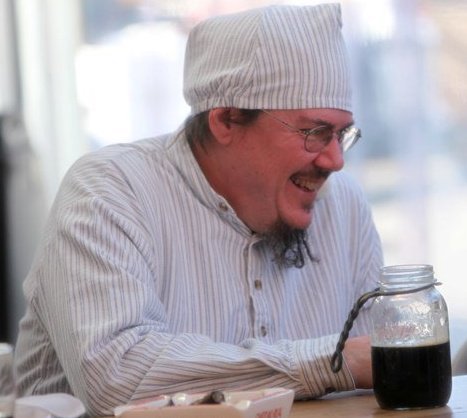
I first learned of the New Albanian Brewing Company when they brewed a tasty collaboration with Missouri breweries Schlafly and O’Fallon a while back. Then, I saw their t-shirts touting various brewing equipment as machines for killing facists, a la Woody Guthrie. Finally, I discovered the outspoken NABC owner Roger Baylor on Twitter and knew the Coalition had found another unsuspecting member.
Roger’s stirred up some discussion on Twitter, especially over the expansion east of several larger craft brewers and Goose Island’s AB-InBev move. He never holds back and appears to stay true to the indie-craft ethos. This makes him an ideal subject for the series. Luckily, he agreed to contribute some thought-provoking answers to the interview. Check it…
1. Describe your craft(s).
This may come as a surprise, but actually there exists scant evidence to indicate that I practice any known craft. I’m surely unemployable outside the narrow job description created by me (and exclusively for me) as a restaurant/pub/brewery owner, although many years ago the late beer writer Michael Jackson referred to me as a polemicist, so there it is: Polemicist. Good beer is my preferred metaphor for all other human endeavors, and for advocating the revolution, while at the same time not
sparing the revolution from constructive criticism – and make no mistake, craft beer is in desperate need of self-criticism right about now.
2. What’s the importance or benefit of remaining indie?
The craft beer business has long since entered the phase in which imagery is freely co-opted by conglomerates, and the odd part is that onlookers persist in ignoring the differences between authentic and corporate. The classic, textbook example is Goose Island, still adored by supposed indie-thinking fans, whose cognitive dissonance precludes them from grasping that they’re merely enriching AB-InBev’s coffers whenever they choose to buy Goose. Consequently, remaining indie is important precisely because by doing so, persons and entities remain connected to reality, retain integrity, and restrain the flight of money out of communities, both big and small.
3. How does your craft contribute to society?
There always needs to be a gadfly who reminds us that our sacred cows are mere lumps of clay, tastefully re-arranged to look fetching. Questions need to be asked, and people need to be made accountable and uncomfortable. Is it really good for society to subsidize exurban sprawl, to shop at Wal-Mart, and to tolerate Churchill Downs declaring Stella Artois the official beer of the Kentucky Derby? If someone really drove 1,000 miles for a Dorito Taco from Taco Bell, shouldn’t eugenics be making a comeback?
4. What other indie-craft products inspire you?
The answer comes in the form of questions: What are you good at doing? What explains your ability to do it well? I enjoy listening to, and learning from, those who are good at something/anything, and even when the topic lies outside my immediate range of personal interest, there’s an aspect of one’s experience and abilities that illuminates my own: Orchestra musicians playing as one; Repairing the gears on a bicycle; Milking a goat and transforming the yield into cheese. I never tire of learning, especially when beer drinking can be squeezed into the tutorial.
5. What is your dream of success?
On a day to day basis, success is the ability to earn an honest living, while concurrently, neither compromising one’s ideals nor hurting other people. Long term, after you’re dead, success is when someone thinks about you and smiles at the memory.
Read more from the man’s own blog, The Potable Curmudgeon, and be sure to find New Albanian the next time you’re in Indiana or Kentucky. (Maybe Missouri will be added soon?) Also, read the previous seven interviews here.
Indie-Craft Interview #7: Paul Sturtz
Paul Sturtz is one-half the brain power (not counting hundreds of volunteers and a handful of employees) behind the establishment and planning for the Ragtag Cinema and the True/False Film Fest. He, al0ng with fellow founder David Wilson, have brought high-brow film to the unlikeliest of places, AKA the middle of Missouri. Additonally, Paul has dabbled in his own filmaking projects as well as a short stint as a city councilman here in Columbia. Like many of the featured individuals in this series, Paul has his hands in many projects that represent the indie-craft ethic well.
Note: Paul didn’t have a picture for me to use. He asked me to have my child draw his portrait. As is my daughter’s prerogative, she turned down the opportunity to draw Paul’s portrait. So I did the next best thing and drew Paul using Microsoft paint.

Artist rendition of Paul Sturtz’s face.
1. Describe your craft(s).
Helping to organize T/F involves the craft of saying no to a lot of things. Film festivals tend to be self-important, pretentious, empty affairs that are all about congratulating each other about how wonderful everyone is. Based in a small, Midwestern city, we’ve been able to develop our own culture without paying too much attention to what’s “normal.” The atmosphere of Columbia fuels this kind of can-do, grassroots ethos because people here aren’t as cynical about a glut of choices. And the documentary world tends to keep our feet on the ground. Also, our populist, iconoclastic, and sometimes misanthropic tendencies have made us steer clear of some essential trappings such as award ceremonies, red carpet, and stars.
2. What’s the importance or benefit of remaining indie?
I don’t really know what “indie” means anymore. We said this years ago, but we’re pathetically dependent on all sorts of people and institutions. If we can get folks to buy into our vision of the festival, then we’re all for them coming on board as sponsors and partners. Of course, we’d have to think twice about burnishing the reputation of companies like Exxon/Mobil and WalMart and most multi-national corporations that have more allegiance to shareholders than the common good.
3. How does your craft contribute to society?
We provide a platform for nonfiction filmmakers that has integrity. And we demonstrate that a small town can do big things and have fun at the same time.
4. What other indie-craft products inspire you?
I am really inspired by food trucks that have become a sensation in the last few years. I like that they open up a sense of possibility in the city. There have been loads of places that have inspired me such as the Middle East Restaurant in Cambridge, the X-Ray Cafe in Portland, Oregon (formerly the UFO), the Space Gallery in Portland, Maine and the old Red Vic in San Francisco. I really admire the work that the Rabid Hands collective is doing. I like the Japanese architect Terunobu Fujimori, Sleeping Bear Dunes, Buster Keaton, “Eagle Rock Rag” by Leadbelly, “Obeah Man” by Exuma, SunRay tempeh, Luna & Larry’s coconut cream, Polina Malikin’s raw sauerkraut. I like the idea of micro-distilleries and butteries. I am playing this song by Brigitte Fontaine constantly. “My Uncle Used to Love Me But She Died” by Roger Miller is the greatest song ever. And my son Leo’s drawings the last two weeks have been amazing.
5. What is your dream of success?
To live more and more in an actively creative way. To make silly things just for myself while still working on behalf of the world.
Paul, like previous Indie-Craft subjects, is from Columbia, MO but has a national, even international reach. Check out the other interviews in the series and stay tuned for more.
Session #63: The Beer Moment
Pete Brown charged the beer blogosphere with this month’s session. We have been asked to write about our beer moments, whatever that is. Mr. Brown left it up for interpretation, but it’s not that easy.
Just as there are many kinds of beers and contexts in which we drink beer, there are many different moments for which one finds a love for beer. To only write about one moment would ignore the many others that make beer so enjoyable. There are moments when the anticipation of a rare beer comes to a head, a discovery or epiphany is reached, or a moment in context with something else, only circumstantially connected to beer. All of these moments are valuable to the beer enthusiast.
So, I’ve opted to describe a few of my favorite beer moments. There are more than I can include in this one post, but I’ll pick a few favorites that keep me coming back to beer, particularly of the craft variety. And since I do the whole beer/music thing here, I may even give a musical metaphor for what I’m describing.
Beer Moment #1: Pshh… A bottle opening is maybe the greatest sound I know. It’s akin to dropping the needle on a record. What’s being released is more than some CO2. That single “pshh” is unleashing the anticipation for what’s inside. Especially when a beer has been bottle conditioned, that sound represents magic. The only thing left is to pour the contents once contained by that now-slightly-mangled cap into your glass.
Beer Moment #2: The smell of whole hops or even those wafting from an IPA or DIPA is all the intoxication most hop-heads need. In that moment when we hover our noses just above the glass, we discover citrus fruits, pine needles, even cat pee (and we like it!). This is the smell that turns most beer drinkers into beer thinkers. Who knew that beer could taste or smell this way? It’s the same as that moment the B3 organ enters a song or the silence is broken with the pounding of drums. It cuts the air, destined to destroy your tongue. Even those who don’t care for hops acknowledge its power.
Beer Moment #3: This is one for the beer hunter. There’s that moment when we enter a store, hoping to find what they’ve come so far to obtain. Sometimes, it’s a Tweet or Facebook post that prompts us to drop everything and run to the store. On several occasions, I’ve hit the store in a narrow window in order to score my Hopslam, CBS, or some other rarity only known to a few of us (or so we think). We nervously cradle our bottles to the check-out, pay, and dash to the store, only to stop once securely in our cars to admire our booty. I feel the same rush when I find a record that has long eluded me only to finally become mine when I least expect it.
Beer Moment #4: Sometimes I go to a rock show expecting almost nothing. It may occur during an unknown opener or while a band I came to see but am not so sure about starts to play.Then, it happens. What they’re playing is good, brilliant even. What have I stumbled upon? Does anyone else know about this? The same goes for that one beer I bought on a whim while on vacation or at the local watering hole. That moment of discovery is hard to top.
Beer Moment #5: While released anticipation, hop bombs, the hunt, and discoveries make beer enthusiasm a fun and worthy hobby, it’s hard to beat the moment when we reach pure satisfaction. I’m talking about the cold Oberan chilling your throat on the first hot day of the spring; the time you drank your beer while floating down the river straight from the can, despite beer snobbish pretensions; the warmth of an unholy imperial stout filling your being with booze and sweetness; or the first beer you’re served at happy hour after a long week of work. These are the times when a beer makes you smile. It satisfies like no other indulgence. It’s perfect for every situation, but especially the one you’re in at that moment the beer touches your lips. For me, this also happens when my favorite band hits their stride playing that song or I barely realize I’ve been driving for an hour until one of my prized albums comes to an end, requiring me to search the iPod for another long-player.
Beer fills many moments, but these are five moments I think of often. It reminds us we have souls and feelings. These are moments we feel alive. One doesn’t have to have a beer to have his/her own moments, but I’ve found that it helps. What is your beer moment? Are any of yours like these? Is there something else to fills these moments for you that isn’t beer?
Indie-Craft Interview #5: Jim Galligan
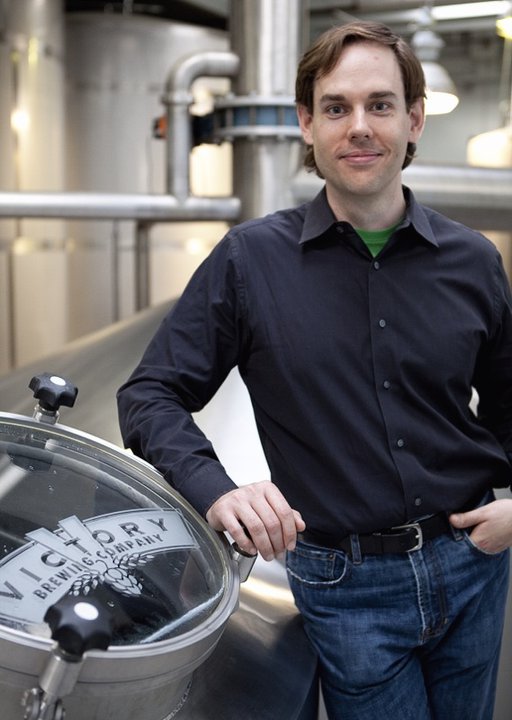
Jim Galligan is the less bear-like half of the Beer and Whiskey Brothers, a semi-popular beer blog that likes to keep things light, aside from their beer and whiskey. The brothers have flirted with a TV series and now Jim writes beery thoughts for one of those awful morning network “news” shows. He’s self-effacing and generally a good guy, plus his favorite brewery is in my backyard (STL).
Jim and his brother Don have made a pretty good go at this beer blogging thing. They actually respond to every comment. It seems their ultimate goal is to sell out, but I just like to refer to that as “making a living doing what you like to do.” It doesn’t lessen the independence or craftiness of their site for me. Wanting to make a living doing what you love is as indie-craft as one can get.
1. Describe your craft(s).
My main craft is creating content, either by writing, designing, making a video, whatever. I like to entertain people and stir things up a bit. I mostly write about craft beer, which is something I love to turn people on to.
2. What’s the importance or benefit of remaining indie?
I find honesty refreshing, especially these days when everyone is afraid they’ll be crucified for saying the wrong thing. Say what’s in your heart, and if it’s wrong, who cares? For me, being “indie” is all about keeping it real. Authenticity is something I cherish.
I’ve found that writing about beer has given me a space where I’m comfortable being 100% honest about what I think, regardless of whether or not anyone else agrees with me. It’s liberating, and I find it has made me more confident sharing my opinions in places where there’s more at stake, like at work.
3. How does your craft contribute to society?
That’s a good question. Most craft brewers are more interested in making something great than getting rich (otherwise they’d work for Budweiser), and by celebrating what they do, I feel that my brother Don and I help whet peoples’ appetites for things that are authentic and special. I know since I’ve gotten into craft beer, I’ve also become much more interested in supporting indie restaurants and local shops, even if they cost more than the chains. I think once you get an appreciation for the good stuff the “little guy” can do, it bleeds into other parts of your life. So in essence we’re saving America – how about that?!
4. What other indie-craft products inspire you?
I like anything that shows how excellent people can be or even that people aren’t perfect. So I guess any product that has a real human element to it – artwork, a great meal, a Pixies song – will catch my interest.
5. What is your dream of success?
My dream of success is making a living doing something I love. I recently got paid for writing about beer for the first time ever – I have a weekly craft beer column for the Today Show’s website – and it was very cool to hold that first check in my hands. It’s far from enough to live on, but it’s a start, and that’s something.
Speaking of checks, I should note that even though I’m getting paid a bit here and there by MSNBC, it hasn’t changed my approach to writing honest stuff from the heart. It HAS impacted my topic selection and the tone of what I write – the sloppy sarcasm we sling on our blog doesn’t play well there – but I’m not out to please anyone more than the truth. I’ve seen you point to Sonic Youth as an indie band that moved to a big label but kept their integrity, and I’d like to think I can pull it off as well, but in a bloggy kind of way. To me “selling out” isn’t about who is writing the checks, it’s about who is pulling the strings.
Well, if there’s a way to sell out, Jim’s doing it the right way. Keep it real, Jimmy.
Indie-Craft Interview #4: Bob Hartzell
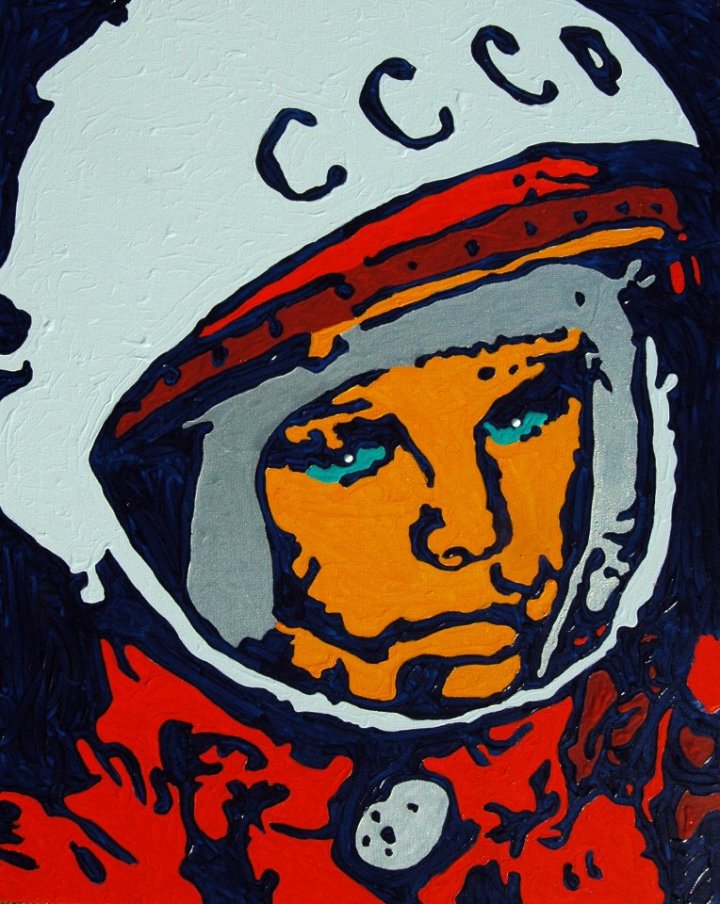
Bob Hartzell found me over a year ago, offering me an Archers of Loaf poster he printed back in the nineties. Since those halcyon days of yester-decades, he’s made quite a nice niche for himself in the Midwestern art scene with his Augratin Press. It’s nice to see the posters he creates for shows here, but his other projects are cool as well. Bob agreed to share some thoughts for yet another edition of the Indie-Craft interview series…
1. Describe your craft(s).
I make things. I am mostly a silkscreener but I have been doing more light sculptures now that people are buying them. I also do as much community based work as I can because it is the most rewarding.
2. What’s the importance or benefit of remaining indie?
It helps hold of the eventual moment when I start to suck.
3. How does your craft contribute to society?
I think my community-based work encourages people to do creative things outside self-ordained, artistic environments. Other than that, my craft contributes nothing to society.
4. What other indie-craft products inspire you?
Furniture and Architecture as well as broken things.
5. What is your dream of success?
I am lucky to have done what I have. If it all goes down from here, I should still consider my self fortunate, but I will probably complain anyway.
Indie-Craft Interview #3: Kim Sherman
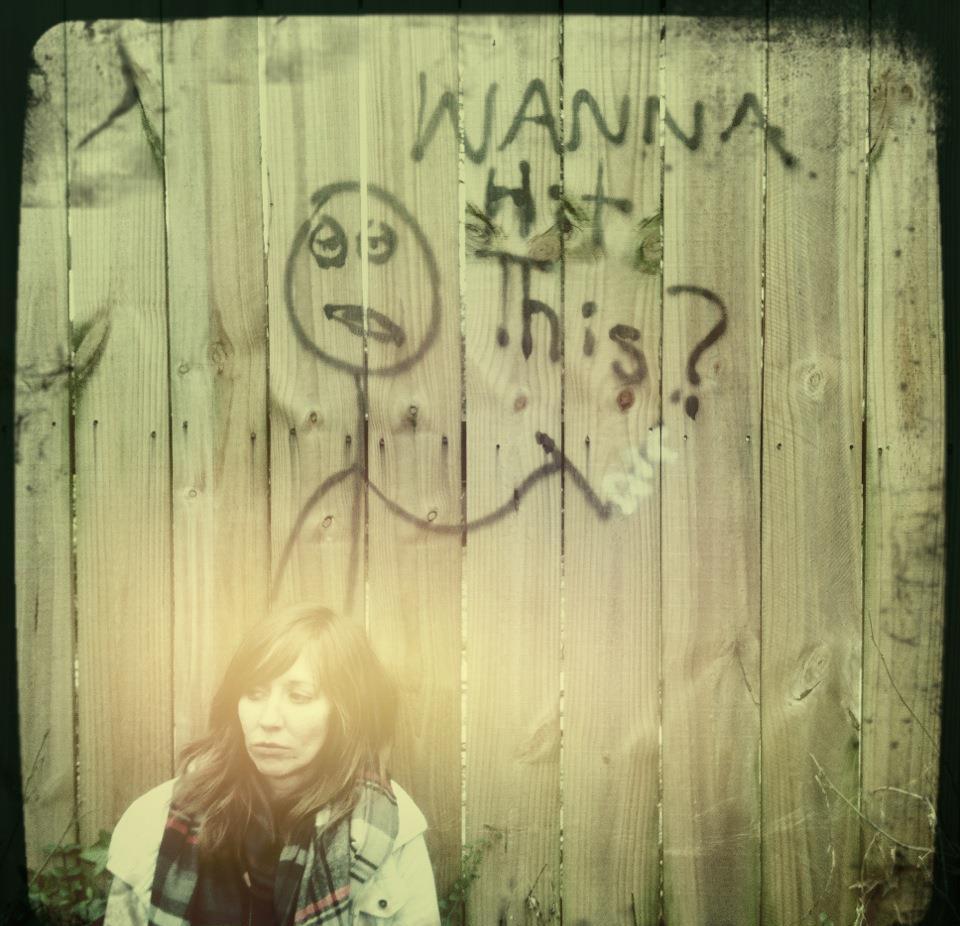
Kim Sherman is a really busy person. So busy that I thought for sure she’d never get around to this “interview.” Not only did Kim prove me wrong, but she went above and beyond the call of duty by contributing the many interesting bits of information you find below the picture I lifted from her Facebook profile. There’s indie filmmaking and indie rock-making she does, filling every open slot on her calendar. She used to head the music scheduling at True/False before returning this year with both a film to screen (V/H/S) and busking gigs for her band, Jerusalem and the Starbaskets, to fulfill.
Speaking of True/False, it was suggested that Kim was the real story of this year’s fest. How often does someone go from volunteering/working for a major film festival to a contributing filmmaker? This doesn’t even mention Jerusalem and the Starbaskets’ thrilling set at one of the fest’s showcases following a year where the band found some well-deserved acclaim for their album, Dost. In other words, Kim is a big part of the best thing that happens in Middle Missouri.
All of this makes Kim Sherman an ideal subject for the Indie-Craft Interview series…
1. Describe your craft(s).
I am an independent filmmaker and the drummer for Jerusalem and the Starbaskets. My day job is producing for feature films. In independent cinema, this usually involves being pretty hands on in all aspects of the creation of a film. My role and job shape shift a bit, depending on the project and my relationship with the project’s director. For some director’s, I deal more with the practical aspects of the project. Things like hiring cast and crew, working with unions, securing permission for locations. Really, the things no one likes to do on a film set. For other director’s, I work in a more collaborative sense, and help guide the story with them. In either case, I work very hard to make sure the director has everything they need to tell the story, and that they have the space and freedom to insert their voice in that story. If the audience takes something away from the film, hopefully a strong emotional or academic response, and the director feels like people really understand what they were trying to convey, I feel like I did a good job. Though, it helps when the film sells and everyone involved makes money.
2. What’s the importance or benefit of remaining indie?
Choosing Independent Filmmaking was really easy for me, being from the Midwest. I wasn’t exposed to studios, early on, and I never really dreamed of working for a studio. Though, I respect that the industry needs both halves to survive. Some of my favorite films came out of studios. I know that “independent film” meant something different in the 90’s, when that meant a film cost less than $3 million. Now there is a much wider range for independent financing, so films are made for under 10K pretty regularly and with great success. Technology and talent are available in abundance at all levels of that financial spectrum. So for me, the biggest reason for staying in the Independent realm, is simply being able to work on stories that I find interesting, that I feel are important, and that maybe break the rules a bit.
I still want all the world to see my work, and that is certainly easier to achieve in the studio system. But the more overhead a film is associated with, the more money it has to make just to break even. The more money a film has to make, the more creative decisions are made solely on that point. The more a film compromises just to make money, the more contained the vision becomes. Its hard to do something different when you are only thinking about the people that are happy to see the same story over and over again. As a filmmaker and an audience member, I want to see stories that are maybe dirtier, darker, and that challenge the way life is portrayed on television and in theaters.
3. How does your craft contribute to society?
Independent Filmmaking, as I stated, can allow for more freedom of storytelling. The actual filmmaking process has become more accessible to more people, which opens the medium up for interpretations by various cultures. The idea is that independent film and audiences will gravitate towards stories that haven’t been told and recycled a million times over.
Until recently, I had been working mostly in horror films. I was fortunate to work with a few friends that know the genre very deeply, and wanted to see the old conventions given new life. They developed stories with a woman as the central protagonists. The women in these films survive where others would break. I really loved this element. I recognize that Horror is an inherently sexist genre, but I do see more and more audiences growing tired of watching women mercilessly tortured. There is a trend towards women overcoming the demons, serial killers, mutant rapists, and abusive spouses from another planet, and not just because they are pure and virginal. Horror, like sci-fi and other genre work, is a great way to point out the evils of society and hopefully make a path to the solution of these evils.
More recently, I have been involved with dramas that feature women on the verge of falling out of society. Caught between their crimes and the reality of the punishment, I ran towards these stories for their polarizing central characters. This is an idea that had been reserved for male characters, with women playing sidekick and savior. I love being a part of something that provides strong and challenging roles for women.
Beyond just women too, I hope to always work on films that push forward groups that would otherwise be marginalized in film, on and off the screen. Hopefully these stories won’t seem so fringe, in the very near future. In this way, I feel like my craft contributes to society.
4. What other indie-craft products inspire you?
Several times a year, I record and tour with my bandmates, Jeremy Freeze and John Garland, as the drummer for Jerusalem and the Starbaskets. My bandmates are like family, and I very sincerely love the music we make. I’ll sometimes blush when I hear it playing in Uprise or other public spaces, but I really do love listening to our albums always. Jeremy Freeze is one of my favorite songwriters, and I never get sick of listening to his voice and lyrics.
When I work on films, I spend a lot of time on my computer. I have a hard time concentrating if I’m not listening to music. It’s better for my brain than coffee even.
Recently, Jeremy and John contributed music to a film I produced. For me, it was the start of something I have been working up to. I want to combine my two loves, film and music. I am currently co-writing a film with Jeremy, that we are hoping to make late in 2013.
5. What is your dream of success?
I have more immediate goals for success, that include sustainability. It’s hard for people in my profession to balance time and money. It’s especially hard when you work in micro-budget independent films. Long term, I am starting to get back to directing, and it is my hope that I can find a successful balance between directing, producing, and drumming. If I can do this, live comfortably off of the things I have dedicated my life to, and still be there for my friends and community, I will feel like a huge success.
If you get a chance, check out Kim’s work. V/H/S hits On Demand and theaters this fall. Dost is available in exchange for your dollars. And I’m sure Kim has something else up her sleeve in the meantime.
[Full disclosure: Kim is the only person to ever call me a journalist. This can be both good and bad. Make of it what you will.]


 Beer and Pavement
1 comment