Top 5 for August 29, 2011
Here we are again. Another week. Another top-5 list.
1. College Kids
I don’t know if they make the list because I’m glad they’ve come back or that I wish they’d all go home. Living in a college town means that the winds of change happen every year in mid-May and mid-August. Students cause overcrowding, dangerous situations on the street, and a lot of unnecessary noise. Conversely, they also bring with them energy, inspiration, and a sense of hope. There’s good and bad. Luckily, they don’t know enough about craft beer to drink it all up. Sadly, they don’t know enough about (good) indie rock to raise demand for such things in retail and entertainment. They are just what they are.
2. College Football
The season begins later this week. I will be happy to actually watch games instead of reading about a new scandal every week, especially for my Buckeyes. This season could be surprisingly great for Ohio State. They have more talent than any team on their schedule, they have been the best program in the nation the past few years statistically, and it’s the first year for a new era. That said, they will likely suffer a few setbacks as replacing your coach and starting quarterback in the same year is just too much, especially with a significantly upgraded schedule. However, if they find a way to grind out a 5-0 start, find an answer under center, and gain a boost from players coming off suspension, it could be a special year.
3.The Flaming Lips + Lightning Bolt, “I’m Working at NASA on Acid”
This track is from the collab the Lips did with Lightning Bolt, one of the most raucous and insane live bands you’ll ever see. The beginning and end do nothing to capture Lightning Bolt’s energey, but the cool, retro aesthetic is nice. In between, there’s a burst of what you’d expect from LB and about 45 seconds of noise with classic Lips imagery. Overall, it’s an entertaining clip.
4. Drink with the Wench Beer Blogger Interviews
The Wench is a pretty well-known beer blogger who is willing to share her sizable audience with struggling beer bloggers like myself. Late last week, she posted my interview. A few questions were left off (totally my fault). As a special treat for you, my dear readers, I have those missing questions here:
#. What is one of the coolest things that happened to you as a result of being a beer blogger? The week after Stone arrived in Missouri, I wrote a post on the event that is a Stone state-wide release. Greg Koch responded to my post as well as all eleven footnotes. He was super cool and gracious.#. What are you top 3 favorite beer blogs/beer websites?It’s a Fucking Beer! (Great reviews with a potty mouth.), Hot Knives (Vegan hipsters with a penchant for matching brews with cheese and indie rock.), and Make Mine Potato (No reviews just existential ramblings about craft beer and lots and lots of beer porn you want to get with.)
(Plus, there was this mention from Appelation Beer.)
5. One more video…Here’s an unreleased track from Malk, “Independence Street.”
Bonus!
My beer club had a “Members Only” tasting in which we all wore Members Only jackets and drank a shit-ton of fantastic beers. Below is a picture of that lineup and you can always check my Untappd posts for the order of beers sampled.
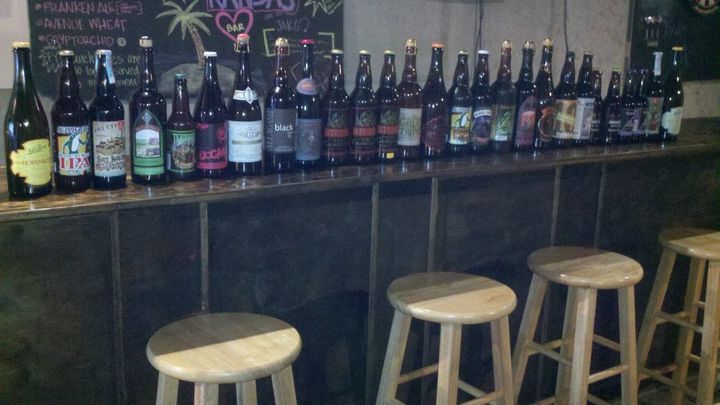
The beers were from left to right: The Bruery Hottenroth, Hoppin Frog Hoppin to Heaven, Pretty Things St. Botolph’s, The Lost Abbey Devotion, Terrapin Hopsecutioner, Brew Dog Dogma, Boulevard/Deschutes Collaboration #2, Allagash Black, Dogfish Head Hellhound, 08-10 Stone Old Guardian (vertical), Brewer’s Art Green Peppercorn Tripel, The Bruery Mischief, Hoppin Frog Mean Manalishi Double IPA, Nectar Black Xantus , The Lost Abbey Judgement Day, Brooklyn #1, Full Sail Old Boardhead Barleywine 2011, Smuttynose Baltic Porter, Green Flash and Pizza Port Carlsbad Highway 78 Scotch Ale, Weyerbacher Heresy, Pretty Things Baby Tree, and The Bruery Trade Winds
Not pictured: Boulevard/Deschutes Collaboration #2 (the Deschutes version, aka Conflux 2), Stone Japanese Green Tea IPA, Trappist Westvleteren 12(!), Cascade Sang Royal, and Weyerbacher Double Simcoe
A New, Looser Interpretation of Terroir

Terroir comes from the word terre “land”. It was originally a French term in wine, coffee and tea used to denote the special characteristics that the geography, geology and climate of a certain place bestowed upon particular varieties.
Or so says some guy on Wikipedia. Terroir is one of those things the wine world tries desperately to claim as all their own. However, I’d argue that a more nuanced, progressive interpretation of the concept allows room for many other things. Even the Wikipedia entry hints at the possibility of terroir in things such as coffee or tea. I’d argue there’s terroir in everything, but for the purposes of this blog, I’ll focus on the terroir in craft beer and music.
Honestly, I’m not really sure how wine can claim terroir and beer can’t. In fact, local agricultural and environmental factors may play a larger role in the character of a beer than wine since beer requires so many more ingredients. Sure, in modern production, wine more often than beer sticks to regional factors in creating flavor, but there are breweries who use only local products to produce their beverage that can’t be discounted.
That said, the original concept was to divide regions by the flavor profiles they produced in wine. A newer, more global take on this idea may look at the characteristics of various locales on the same product. For example, a beer produced in Colorado might use hops from the Pacific Northwest, Belgain yeast, barley from Canada, and local water to create something that recalls all of these regions. Sure, to the traditionalist, this might not be a case of terroir. However, I’d argue that the unique characteristics of each ingredient combines to make something hard to duplicate.
Maybe that doesn’t work for your understanding of terroir. What about the ability of humans to import all the ingredients of a region to create something that tastes and smells just as it would had it been brewed closer to its origin? In earlier discussions on this blog, I mentioned how engineering and brewing know-how can often allow a brewery to easily recreate an illusion of terroir with little regard to location.
Lost in all of this is the idea that humans can be a part of terroir. Literally, terroir refers to the land. However, this has been generally understood to include the water, climate, and other local factors. So, why not the people? They too are influenced by local factors and bring cultural perspectives to craft that can be unique to a particular terroir. People have to be considered whether you have a strict understanding or terroir or not.
At this point, I get that my interpretation may be too loose, too deconstructed, post-modern for your tastes, but I make similar arguments for many traditions and constructs beyond brewing (and music). For example, English is an evolving language that reinvents itself constantly, inventing new words, spellings, and conventions at every turn. The ideas or art, marriage, race, or the role of government are changing constantly. So, why can’t we adjust our idea of terroir to match the global times in which we live?
Now that I’ve cleared that up, I’d like to move on to terroir in music. Terroir, IMO, manifests itself in two ways when it comes to popular music. First, there’s the scene. There was a reason all the major labels flocked to Seattle 20 years ago. They all wanted a piece of that grungy terroir. Second, bands take on the terroir of a place when they write and/or record in a particular place. Why else would bands opt to record in Memphis or Chicago?
The music scene is an indie thing. Corporate leaches try as they may to capture the excitement of a thriving rock scene, but they’re often three or four years too late. Bands in scenes feed off each other, encourage one another, and often influence each other’s sound. There’s a reason most bands in Brooklyn sound like the Walkmen. Those aforementioned gunge bands all had a similar aesthetic even if they were decidedly different bands. I still get confused when I hear the opening bars to any Chicago band from just before the turn of the century. These scenes represent a very human, inorganically organic terroir like one can never find in wine.
Eventually, bands look to capture a sound that’s influenced them or turned them on. Beirut is a perfect example of a “band” that takes the influences of the road with it. Whether it be Gypsy music, French pop, or Mexican mariachi, Beirut has adopted each of these sounds as its own. (Although, it sounds as if the new one breaks from this. Stay tuned.) Another example is when a band like Pavement (among many, many others from the era) headed down to Memphis to recorded at the venerable Easley Studios, providing a certain amount of smoked BBQ and southern comfort not usually attained in northern cities.
Anything contains a certain amount of terroir. For me, terroir is a flavor or sound that can only be produced by the necessary ingredients from various locales. I don’t really care if it’s all from one location or whether it comes from all over. The end result is what matters. And within that beer or between the notes of a record, you can sense the regional influence. It’s that funk from Belgian yeast strands or the steel guitar from a month in Bluegrass country. Terroir is the undeniable piney character of a Northwestern hop or the grittiness of an album recorded in Manhattan.
I prefer not to be held down by tradition. Building International Coalitions Through Beer and Pavement is about redefining the world to better grasp humanity and the enjoyment of such things as craft beer and indie rock. If this blog has a bit of terroir, that might be it. Now, you should add your terroir to the mix and give me your take. Have I bastardized a concept that should remain unchanged or have I challenged constructs that needed challenging.
Or should I write about something else? Expect another top-5 on Monday. Cheers!
Stephen Malkmus & the Jicks – Mirror Traffic
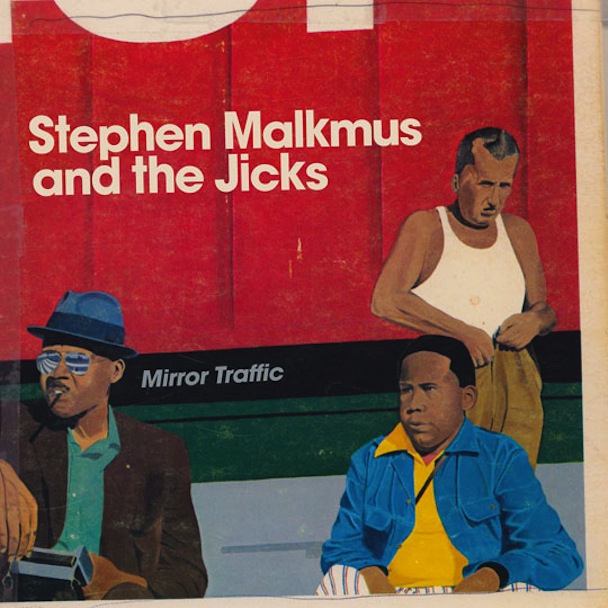
Stephen Malkmus will never live up to what he did in the nineties. Of course, he shouldn’t have to. He said enough with the Pavement output that he has nothing left to prove, for me anyway. What’s most amazing about that material is that Pavement was actually not that great of a band. Sure the whole was greater than the sum of the parts and they had a certain chemistry, but the band was not technically that talented. Well, aside from Malk’s songwriting. Eventually, his overall musicianship surpassed those of his band mates, the band was unceremoniously dumped, and the Jicks were born.
The Jicks have been for the most part hired guns. Granted, they’re hired to help write and record and really be a part of the band, but they’re often still involved with their own projects. Also, in contrast to the ambiguity that was Pavement’s structure in the early days, there is no doubt from the beginning whose band this is. Still, SM finally has a group of musicians that can match his vision. Long gone are the days of Malk taking over the drum kit to show Westy how his part should be played. The parts of the Jicks make a pretty formidable band of professional musicians who can make whatever is going on in Stephen Malkmus’ brain a reality.
What also has changed is the necessity for Malk to fill holes all on his own. With Pavement (and to some extent early on in the Jicks era), SM would deliver his lyrics with a jazz musician’s impulsive stroke. He would bend and contort his words to fill space and make an otherwise forgettable sequence memorable. One has to assume that he also dumbed down song structures to better match the band’s capabilities. This second point is hard to detect, but after watching Malk’s songcraft development over the last few Jicks albums, it’s hard to make an argument that Pavement was a better band of musicians.
Never had I fully realized how much further ahead Malkmus was from his band mates in Pavement until I saw them reunite last summer. During guitar solos, bridges, and moments of improvisation, Malk was lazily tearing away at his guitar, almost playing around. His playing was effortless and extremely tight. The gap between Stephen Mallmus and Pavement had grown over the decade. I always thought the gap was there, but it was way more apparent last summer.
I don’t mean to pick on Pavement. They are still my favorite band who produced my favorite records and some of the more memorable moments I’ve seen on a live stage. They hold a special place in my heart and will never be replaced. Of course, I sometimes wonder how much of that was Stephen Malkmus and how much was the entire band. I suspect a little bit of both. I also think it worked really well for a decade and went as far as it was meant to go before it ended.
In the meantime, Stephen Malkmus continued to grow past Pavement. His self-titled debut was just the next record. However, he was now writing for people who would be able to play what he wrote. The record is loaded with hits, but it never truly received the attention it deserved commercially. The break from Pavement continued as Malk became more comfortable with his somewhat regular/irregular lineup and produced Pig Lib, an album that nearly sounded identical to an SM & the Jicks live show rather than a studio album consisting of mostly Stephen Malkmus and the jicks (lower-case j).
Face the Truth sounded like the next Pavement album, building off Terror Twilight‘s ominous laziness. However, as suggested above, the band was much more capable in carrying out Malk’s song ideas and the album quickly takes you beyond Pavement. Then, Face the Truth explores Malk’s bluesier side as his guitar heroism grew by leaps and bounds. It’s as if the time he spent playing with capable musicians finally allowed him to just play and explore. With Pavement, he often started the songs and the rest of the band received their cues from him. The Jicks are self-sufficient and don’t need the same amount of direction. This has allowed Malk to just play and even sing it straight.
Stephen Malkmus & the Jicks finally felt like a realized entity once Real Emotional Trash hit the market. Pseudo-blues and jazz jams from their live show combined with Malk’s lyrical wit made this a highlight in 2008. Songs meandered. Shit got weird, but it felt like this new band was fully realized and ready for something more.*
All of this comes together in the form of the excellently produced, written, and executed Mirror Traffic.
Loopy “Tigers” opens with a sing-along rock edge that hints at the seventies-esque production that continues. The second track, “No One (Is As I Are Be)”, is your lazy Sunday, AM radio piece of gold soundz that even brings the French horn and piano to the party.
“Senator” is your customary third track that doubles as the album’s single. For my money, this is the most complete, best Stephen Malkmus & the Jicks song ever. Malk’s bizarre lyrical content, topical-ish subject matter, and cool delivery is matched by a rather rocking track that hits epic proportions without trying too hard. If it were not for all that blow job business, this would be the late summer’s college dorm , radio hit.
“Brain Gallop” takes things back down a notch with an easy, breezy tone that brings forward more of that subtle seventies production value. In case you hadn’t heard, Beck Hansen produced this album. Channeling the ghosts of John Lennon and Harry Nilsson and whatever rock/pop rockers he’s been listening to, Beck subtly adds nuance that was missing from previous Jicks records. He doesn’t do much. There’s reverb here. Echoes there. More organ over there. It’s a masterful work, really. It’s as if he was there but wasn’t really there.
Side 2 kicks off with “Jumblegloss” which recalls some spacier, janglier moments in the Pavement discography, but just intro’s the second half of the first disc. This cut-off works well to set the table for “Asking Price”, a Pavement-esqe mid-tempo, quiet track that tempts chaos without every really losing structure. Again, the careful playing of the Jicks backs SM’s signature lyrical delivery without him having to fill the holes with bends and turns.
“Stick Figures In Love” is a fun song a la SM’s debut. Plenty of seventies’ jangle and guitar heroism carries the track. It moves and causes toe-tapping one can’t help. Malk’s voice is almost too quiet, but you can make it out, suggesting a near-perfect mix and setting up the moment Malk hollers and echoes the song’s climax. The writing is almost Shins-like, something I’d rarely suspect from a Malkmus-penned song. Additionally, I love the groove coming through Joanna Bolme’s bass. It moves me.
“Spazz” reminds me a ton of earlier Pavement songs that fused punk, jazz, jangle, and the weird. Its herky-jerky movement is only accentuated by Beck’s expert dial-work and the Jicks’ collective musicianship. “Long Hard Book” is the (almost) country track a la “Heaven Is a Truck” or “Father to a Sister of Thought.” “Share The Red” closes the first disc with a steady ballad, Malk-style and lovely and comes to some parental truths and the rare moment of perceived emotion.
“Tune Grief” is the glam rocker to kick off what is a jam-packed side 3. (There is no side 4, just a bizarre etching. I suspect Malk’s kids were messing around with his records.) Malkmus makes a case for himself to play the lead in the sequel to the Velvet Goldmine that should never happen.
“Forever 28” is this record’s “Jenny and the Ess-Dog” without all the Volvos, toe rings, and discarded guitars. The following track “All Over Gently” moves and grooves as only seventies pseudo-blues rock often tried to do while maintaining something more upbeat and relatively poppy. I could totally imagine Malk doing this song on an early episode of The Muppet Show with Gonzo doing something indescribable to his harem of chickens backstage.
“Fall Away” is as soft and pretty a Stephen Malkmus song you’ll find. Even so, it contains a bit of urgency wanting to break out that never quite arrives. “Gorgeous Georgie” closes things out Mirror Traffic with a shaky bit of finality and even a touch of the storytelling that’s become ever-present in Malk songs, post-Pavement. The song does what a good closer should do and just makes the listener want to hear more. So, you remove the record and return side 1 to the turntable.
As I’ve mentioned before, Beck’s fingerprints are all over this record, but you’ll need Vince Masuka to find them. The mixing is expertly done. The production takes nothing from Stephen Malkmus’ aesthetic. If anything, it supplements it well, even pushing it to some modest heights.
As for the Jicks, they are as professional as tight a band as you’ll find. Other than Malk and the already mentioned Bolme, keyboardist Mike Clark and drummer Janet Weiss (now moved on to Wild Flag, FTW!) round up what is a great, great band. Clark took subtlety classes from Beck and augments what would have been excellent songs anyway. Janet Weiss proves once again that she’s one of the best drummers alive. The woman just knows how to treat her skins.
There have been times I’ve been down on Stephen Malkmus & the Jicks. I just wanted them to be another Pavement, but they are obviously not. And after revisiting Malk’s entire discography and spending a lot of time with Mirror Traffic over the last week, I am really getting to like what Malk’s done since 2k started. Now, he’s equaled the number of Pavement records he recorded and doesn’t show signs of stopping. What also won’t stop is his growth and I can’t wait to see how big he grows.
*Somehow, I forgot to write up Real Emotional Trash. I’m not sure how as the title track runs through my head all the time. Still, hat tip to Justin for pointing out my transgression.
Top 5 for August 22, 2011
I feel like there topics that slip through the cracks now and again that I don’t always have time to post. I might address them in my Twitter feed or some other social media outlet, but they fail to get proper treatment here at the coalition. This is where the top-5 list comes in. The easiest kind of post for a blogger to write is the list and this new semi-regular feature will allow me to hit those things that were passed up for this sort of thing.
That said, consider this to be the first in the series of top-5’s. Don’t expect this to be a list of five records that or five brewers who kinds of lists. This is more like those lame lists editors stick in magazines to fill space. None of the items have much to do with the other except that they all appear here, in the same list. If any of these topics need further development, comment and I’ll try to get back to them, but no promises.
1. The California IPA
This is old news, but few people still discuss the merits of the West Coast IPA over other IPA’s and DIPA’s. I have enjoyed several straight-up IPA’s from the west coast and have enjoyed what they have to offer. There isn’t the booze of the typical DIPA or the syrup-ness of the Midwestern IPA or the overly hoppy characteristic of the East Coast IPA. No, the West Coast IPA is crisp, clear, dry…It may be one of the most beautiful beers there is. It’s often lost as it’s not that big and boozy, but IPA’s from the left coast were many of the beers that turned so many of us on to craft beer in the first place.
2. Stephen Malkmus
With Malk’s fifth album, Mirror Traffic, coming out this week, I have been devouring interviews and his entire discography for the past week. There’s a lot to digest before this record arrives at my front door and I let you all know what I think. What I’m rediscovering is that Malk’s work since Pavement has continued to develop. There’s more to the man than his role as father of indie rock.
3. Discoveries in Richmond, VA
I was in Richmond, VA this past week and made several unexpected discoveries. First, I found a Vietnamese restaurant called Mekong that specializes in craft beer. I showed up for some Pho and found that Mekong was celebrating their 16th year in business with a tap-takeover by Stillwater. For the second time this summer, I was able to hang out with Stillwater’s Brian Strumke. There, I was able to try several Stillwater brews, particularly the barrel-aged Stateside Saison and the Cellar Door from a cask. It was a chance reunion, but I nice way to spend an evening in a strange town with a new friend. (Admittedly, “friend” might be too strong a word, but acquaintance isn’t quite accurate either. Facebook friend? Two-time drinking partner? Stalker and stalkee?)
Other things I stumbled upon by chance included a few nice records in Richmond record stores, a brewery that will be up and running in the next month, and a nice little restaurant featuring a decent craft beer list as well as some expertly prepared eats. Be sure to check out Deep Groove Records, Hardywood Park Craft Brewery, and Magpie the next time you’re in Richmond. Deep Groove is the ideal record shop with loads of quality finds, record players for testing the vinyl, and a knowledgeable owner. Hardywood doesn’t even have beer to sell just yet, but from the looks of their website and the brief chat I had with one of their owners, I can tell they’ll do craft beer right. A guy at Hardywood sent me Magpie’s way and I’m glad he did. Magpie is a nice place on the corner that served me this phenomenally-prepared fish (can’t remember the variety) over a bed of bok-choy and gnocchi. Best meal I’ve had since returning from Spain.
4. I just read the greatest single review of an album and it was a novel.
It took me a while, but I finished Camden Joy’s semi-schizophrenic first novel, The Last Rock Star Book Or Liz Phair, A Rant. It’s not really a novel at all. Rather, I consider this book to be the most complete and obtuse record review of all-time. The man wrote a story about a fictional self who stalks Liz Phair (and/or his ex-girlfriend), blows up things in his boring hometown in Iowa that’s best known for the airliners that constantly encircle the town, and deals with the fact that his girlfriend may be the illegitimate daughter of the Rolling Stones’ Brian Jones. Through all this, Joy gives the best reading of Exile in Guyville I’ve ever read or considered. He nails the cultural importance of that album and places it into its proper context of rock history.
5. Terroir.
I read this article about terroir which is a French word that suggests things like wine or tea carry with them characteristics of the land from which they come. The article was in a beer magazine that makes the argument that beer also possesses terroir and I believe this to be true. There’s even the possibility that the people who produce such things also provide a bit of terroir to their concoctions. This idea made me think long and hard about how terroir plays out in music. Oh, there will be more to say about this in a forthcoming post, but know for now that the idea of terrior is on my mind and in my top-5.
What’s your current top-5 look like? Do you want to hear more about any of these? Do you think it’s okay to stalk Liz Phair? Does this explain her notoriously inconsistent stage fright? Should this post have garnered some footnotes?
Um
There are things to post, but I just don’t have time. I have a top-5 (or 10) list, a couple Stephen Malkmus posts, and another post on some crazy chance meetings I’ve had. Stay tuned.
On Entitlement
“Entitlement” is a charged term in today’s political climate[1]. So, I’ll avoid the political angle and discuss the more important craft beer and indie rock sorts of entitlement we may encounter. I’ll also refrain from re-posting the video that prompted such a post, but you can find it here if you’re really interested.
Entitlement as a god-given right is an American ideal that won’t die. Even Tea-Baggers feel entitled to all their money and guns[2]. We all feel we deserve whatever we get…as long as it’s what we want for ourselves as well as the evil wishes for our enemies. This entitlement isn’t always even that related to the American dream. Nope, sometimes it just has to do with stupid shit like expecting the President won’t preempt your stories or Dairy Queen won’t run out of sprinkles on your birthday.
Despite the fact that liquor and beer distribution laws in each state widely differ, beer enthusiasts expect every brewery to ship to their product to their podunk, little village way out in North DaIdaho. Sorry. Craft breweries are small and wouldn’t be as good if they were large enough to distribute to every 7-Eleven from here to Eternity, New Mexico. There are too many obstacles for breweries to distribute anywhere.
Even when a brewery does find its way into a market, whatever they send is never enough. We only received four cases of that. Or We never saw any of that super rare brew you put out last year in gold casks. For one, be happy with whatever you get from your favorite breweries. For two, they’re not called “white whales” for nothing. Sometimes we have to put forth some effort for rarer beers. That or we need to be fine without a rare beer now and again.
For the most part, if you want better beer distribution, you have to work for it. Write letters and blog posts urging breweries to come your way or up their stock making its way into your state. Then, once it’s on the shelves, buy the shit out of it. Drink every keg and cask dry. Otherwise, there’s no incentive for breweries to fulfill your entitlement.
Music brings a slightly different set of entitlements. We’ve been able to get music just about any way possible over the past couple of decades. I always complain about the fact that there are no good record stores in this town (more on that later), but I can generally get whatever I want via the intertubes, specifically through Insound. No, music fans feel entitled to see their favorite musicians and bands live, in the flesh. It doesn’t matter that their market can’t possibly support such an act or that a 75-city tour every year just isn’t feasible. We want our rock stars and we want them now. Or something.
Even when our favorite bands make the trek to our little burgs with tiny clubs housing shitty sound systems, it’s not enough to just play an hour set and move on to the next city. Oh no. We want witty banter. We want our favorite song from your first album TWICE. We want to chit-chat after the show at the merch booth. We want the set list and a drum stick. And hey, if you get lucky…
We forget that touring musicians are working stiffs like the rest of us[3].They have to tour to sell records and often just to make a living. They owe us their allotted time on stage. Expect anywhere from 45 minutes to a couple hours of music. Banter and antics are extra.
That said, there are a few entitlements to which we are all…er…entitled. This is where the “life” and “pursuit of happiness” promised by our founding fathers comes into play.
- Every town deserves a decent record store. This means that we all should be within a 20 minute drive of a record store that stocks new and used vinyl and CD’s[4] for our perusal. Currently, my town does not have one of these. I once considered making one happen, but I don’t know that this would be the wisest of business decisions.
- If we are entitled to a record store, then we definitely are entitled to at least one bar with multiple revolving taps and a well-stocked bottle list. Luckily, my town does come through in this area. We have one really strong performer as well as several other, suitable options. We are not, however, entitled to one of those monstrous 40+ tap establishments. Those kinds of bars have to be earned.
- Clubs should feature an adequate sound system along with someone who knows how to work it. I won’t name names, but certain clubs seem to think it’s okay to set up the sound for a heavy metal act every night. Sorry, but Neko Case and Glenn Danzig probably don’t require the same set up.
- It’s really not so much to ask that half your taps and most of your bottle selection be craft beer. I get that there are certain industrial rice-adjunct lager-makers that compel ($) you to stock their beer-like products, but there should be room for some variety, especially local and regional favorites. Oh, and Blue Moon does not count.
Notes:
1That first line is for all those English professors in my life (particularly the one with which I live) as they return to their other jobs as teachers of America’s (and South Korea’s) future in the art of writing arguments and such.
2That’s the last time I get political. I promise. Maybe.
3OK. Not all of them.
4It goes without saying that this would include a substantial amount of indie, but every music/record store has that nowadays.
My Goodness
I have other posts in the works, but here’s a review of a show from the weekend. It originally posted last night at The CoMo Collective. If you are from Columbia, MO or used to be from here, you should check it out. Even if you’re not, please click over once in a while. We have ads and my next tattoo, MacBook Pro, and beer shop won’t pay for themselves.

My Goodness
A smattering of folk sauntered into Sideshow Saturday night to catch a band or two. While most of the kids stayed just outside to get a smoke, a few of us wandered to the back of the venue, just past the bar to see and hear something awe-inspiring: My Goodness. For whatever reason, not many people showed for what is supposed to be an up-and-coming act out of Seattle and they missed out.
Let me start out by going the lazy rock journalist/blogger route by comparing My Goodness to other bands based solely on the most superficial of attributes. Like many an indie rock upstart over the past 15 or so years, My Goodness feature two members, three components: drums, guitar, and voice. Like the Black Keys, My Goodness plays their own brand of the blues. However, their tempo and urgency better resemble that of the Vancouver twosome Japandroids. I’d even say that their act reminds me of something closer to early White Strips, but drummer Ethan Jacobsen mops the floor with Meg White’s flock of black hair as he punishes the skins with reckless abandon. Another alt-twosome from Seattle that comes to mind is 764-HERO, but despite all their angst, they left open space where My Goodness guitarist Joel Schneider leaves dead bodies.
(Also, they sound absolutely nothing like Quasi, Matt & Kim, nor Mates of State for obvious reasons.)
My Goodness’ set was absolutely brutal. They laid into their instruments, punishing them, breaking strings, and testing the limits of Sideshow’s sound system. It amazes me the amount of noise that can come out of just two musicians, but My Goodness put on an ear-assaulting set that won’t soon be forgotten by the 10-15 of us who decided not to hang outside.
And that might be the most amazing part. My Goodness played for virtually no one but themselves and they tore up the stage. They even offered free t-shirts to any women wanting them, losing a third of their audience to free merch. When they asked how much time they had, I wondered if they were done playing for so few people, but they actually were excited upon learning they had another 15 minutes to play. It didn’t matter that you didn’t show your face Saturday night. My Goodness played anyway.
Grab Bag
I thought I was going to have many new posts for you, but time is running out and some of these topics won’t be as good if they’re not fresh. So, I’ll summarize some topics I was considering. They may turn into full-fledged posts on their own, but for now, they’re here. I guess.
I don’t really listen to much hip hop, nor do I listen to a ton of Shellac, but this story really intrigued me. Basically, Steve Albini (yes, that Steve Albini) called out underground hip hop up-and-comers Odd Future for being rude. More interesting than the simple fact that rock/rap stars were being assholes is the fact that they were in Barcelona (days before I arrived), a foreign country. I don’t know what this is getting at, but there’s something there. Maybe this should turn into a post on American exceptionalism. I mean, I do tend to gravitate toward American craft beer and American indie rock. Moving on…
Stephen Malkmus likes to hang out in record stores. I do as well. However, I live in a town without a good record store in which to hang. I’m not sure it’s a good idea to start up a record store in this economy or in such a climate that doesn’t seem to support independent music. So, I’m thinking there needs to be a beer shop that does what the record store used to do. Enter my next project: a beer store. I’m a long way from anything happening, but there are discussions. I may take some community classes this fall and start asking around. I already have some leads to distributors, an idea for a concept (Bottles and Cans), and a model based on a wine shop that also features a bar. There will be updates, assuming the beer bubble doesn’t burst.
Then, there’s this…
The whole idea of expecting so much more from our heroes has me intrigued. I’m thinking of music fans that expect bands to keep releasing records and tour their town every year, much like Jay Smooth’s point about Lauryn Hill. The beer community isn’t excluded from this phenomena. In fact, craft beer is worse. Beer nerds are incensed that we don’t get certain breweries distributed. When new releases come out, some are pissed that someone beat them to the final bottles in town or that the distributor didn’t send an extra case to their market. There’s a certain amount of entitlement we seem to have and it sort of ruins the enjoyment or takes away the potential of the hunt.
Still, there’s more worthy topics…
I’m still mulling over the beer blog vs. music blog post. There’s definitely a totally different beer blog scene than that of music blogs. In fact, I recently posted for the Sour Session and received a lot of feedback. Plus, any time I post on beer, there’s a spike in my numbers. It even lasts a day or two. This idea, like the others above, is only half-baked and will take some time to figure out…assuming something else doesn’t come up.
This article was shared with me and the ideas within basically encapsulate my entire record collection and/or aesthetic preference. Of all these, this one will deserve the closest look, but I may have to buy the book first.
And finally, I will be doing some sort of post for the 20th(!) anniversary of Nevermind. My entire worldview may have changed at that moment. Of course, I was 16 and doesn’t everyone’s worldview change somewhat at 16? Speaking of teenagers, Francis Bean Cobain is 19.
Oh, and grrrls covering Pavement is always a nice find. This should be worked into an addendum for that girls and Pavement post I did a while back.
Stay tuned…
Creature Comforts

Creature comforts are the things we turn to in order to help us feel at home or at ease. When we’re not into the game of chance that comes with experimentation, we turn to these experiences to help us feel grounded, whole, or just like ourselves.
Two recent conversations reminded me of this importance.
The first happened at a local punk show last week. I was sitting with a guy and all we could talk about was music from the nineties, especially music from southwestern Ohio where we both originated. Earlier that same day, I had listened to The Afghan Whigs’ Gentleman and Liz Phair’s Exile in Guyville, two all-time favorites I often turn to when nothing new suits my mood.
This music qualifies as a creature comfort. Time and time again, we turn to “comfort music” to satisfy that need to feel at home. If I’m feeling ill at ease, I’ll put on Pavement, Yo La Tengo, or Swearing at Motorists (among others). This music relaxes me or settles anxieties within. Inventions like iPods has made this easier, but I’ve always carried around at least a few old standbys just in case. Sometimes we call this being “stuck in a rut,” but I prefer to look at it as turning to old standbys for inspiration instead wasting large amounts of energy searching for the next big thing.
Like music, beer offers us comforts we shouldn’t forget. It’s Just Booze Dancing… did a review on Stone IPA and called it a “comfort beer.” A comfort beer is that beer you turn to when no other option seems tempting. You go with a comfort beer because you know it will be good.
My list of comfort beers is long. There’s Bell’s Two-Hearted Ale, Boulevard Tank 7, Boulevard Single-Wide, Schlafly APA, Arrogant Bastard, or that same Stone IPA IJBD… also cited. It can depend on the context as well. I’ll go for a Two-Hearted anywhere, but I know Tank 7 is always available at one bar and Single-Wide at a burger joint I frequent. APA is everywhere. Punk and rock clubs are now featuring lots of Stone. I suppose they like the gargoyle imagery, but I’m thankful either way.
Whatever the context or beer, comfort beers are nice to find, because you know what you’re getting and with what they’ll pair best. You don’t have to worry about a beer not meeting expectations or being something you didn’t want. The comfort beer is good every time.
While these creature comforts are good for relieving our anxieties and making us feel at home, they can be limiting. If I listen to nothing but Pavement, I might miss out on something new. Ditto if I drink nothing but Two-Hearted Ale. This is where the “rut” phrase comes in. You don’t want to be stuck in a rut and never venture out beyond your comfort zone. That’s when we miss out on life.
So, the creature comforts must be used wisely. I haven’t heard a new record in weeks that I really love, but the reissue of Archers of Loaf’s Icky Mettle just arrived in the mail and I’m pretty stoked to listen to that great record again. I just had an Oberon with my dinner, another comfort beer of mine. There’s time for this, but when something new comes along, I’m ready.
Bright Eyes, Conduits
Bright Eyes last go around is happening right now. Conor Oberst’s primary project is set to retire at the conclusion of this tour. His last two efforts under the Bright Eyes moniker have been less than stellar, particularly considering his much fresher work with the Mystic Valley Band and the Monsters of Folk.
I’ve been attending Bright Eyes shows for quite a while. One thing I can always look forward to is a quality opener, usually from Omaha. Saturday night was no different as Conduits opened with an impressive set.

Conduits sound like the National, fronted by Hope Sandoval channeling Patsy Cline. Drones from keyboards and Hammond organs provide balance with vocalist Jenna Morrison as the rest of the band lightly fiddled and strummed the in-between. The last two songs of the set really proved Conduits’ sonic value and convinced me to buy some music. I look forward to hearing more from Conduits soon.
As mentioned earlier, I’ve seen Bright Eyes several times and figured this would be a nice farewell. I treat anything Oberst does as a guilty pleasure. I mean, he seems to mostly appeal to 14-year-old girls. Then, I listen to his songwriting and dissect the instrumentation of his compositions and recognize his talent as well-beyond the Bieber set. You don’t have to love Conor Oberst, but you can’t deny the man’s musical ability.
The set didn’t feel like a farewell. Oberst mainly packed the list with songs from the last seven years and not the last 12 or 15. For me, farewells and reunions feature gems from an entire catalog, not just the most recent material. The songs were well-chosen and sequenced. I even vowed to give this year’s The People’s Key another listen as a few of the tracks translated well live. Still, a last go as Bright Eyes suggested that we’d hear “The City Has Sex”, “Neely O’Hara”, or “The Calendar Hung Itself…”, but none of those were heard Saturday night (assuming they didn’t play another song during the encore – I left three songs in when it was clear I’d hear nothing old).
The other way in which this did not feel like a Bright Eyes farewell was Oberst’s demeanor. Sure, he’s a passionate and captivating performer, but something felt…well…let me explain.
Conor Oberst owned the stage Saturday. However, he used to own it through a sense of urgency, drunken youthful exuberance, and the music seeping from every pore of his body. Now, his music, his persona are out there. He’s no longer selling us his soul. Now, he’s selling entertainment and possibly a few records along the way. His antics on stage were the typical – dramatic hand gestures, shaking his luscious locks, spitting, making political gestures, and pulling an onstage stunt (burning a religious leaflet and calling it his “review”), but one got the sense he had done this before. It almost felt as if he had written on the setlist “complain about how the war has been going on for like eight years or something.” He’s been doing this for a while. This is what Bright Eyes does.
Now, I’m not saying it all was contrived. Someone more cynical would take it that way. I’m just saying Oberst’s actions on stage felt less spontaneous than they did so many years ago. That’s okay. That’s what happens to rock stars, even the indie kind. This might be why he’s dropping Bright Eyes after this tour.
I remember hearing of this brash young man, opening for Stephen Malkmus by playing “Summer Babe” on accordion and leaping off the bass drum at the Hard Rock Cafe in New Orleans. Or what about the time I saw him play the first three songs with a George W Bush mask on, even refusing to take it off when he took swigs from a bottle of red wine? There are stories about his first time in Columbia, sneaking off to get wine before a KCOU gig despite being underage. Another story has Oberst playing kickball (or whiffle ball) with some locals and members of The Faint. I remember seeing him continue to play for fans in the alley behind a venue who had cut the power in order to stay compliant with an arbitrary curfew.
The man has a history for doing the dramatic and unexpected. That’s why it was somewhat disappointing to see Bright Eyes the stage show. The musicians were uber-professional. Oberst played it up to the crowd, even reaching to shake hands or recite his lyrics as if rapping with Jay-Z. Bright Eyes is no longer bedroom tapes brought live by a skinny kid drunk on red wine. Of course, it hasn’t been that way for a while.
Still, that’s not Conor Oberst’s fault. He’s still really talented. His voice and musicianship have improved over the years as has his stage presence – it’s just more conscious now. I can’t say that it was a bad show. It wasn’t life-altering, but it was good. Bright Eyes put on a great set, worthy of the Blue Note’s 31st birthday celebration for sure.
I could go on and on about what it means that Conor Oberst and Bright Eyes have grown up and what that means to me. It still doesn’t change that a lot of people had a great time seeing Bright Eyes. I too enjoyed what I saw. It was sad to think that I won’t see the same Bright Eyes I used to see. It’s disappointing that his records don’t have the same effect Fevers and Mirrors had on me the first time I heard it. But that isn’t Conor Oberst’s fault and it shouldn’t take away anything from Saturday’s show. Those are my hangups. Like Oberst closing the book on Bright Eyes, I should close the book on this pseudo-rant and be glad I saw them one more time.


 Beer and Pavement
7 comments