The One Where He Blogs About College Football
Every building same height
Every street a straight line
Team colour’s yellow and blue
Cheerleaders single file
Perfect smiles unaffected
And you won’t forget
Our colour’s blue
No you won’t forget it
Twenty miles westwards
Home of the Redbirds
Team colour’s crimson blue
Open up your purses
For the boys to reimburse us
With a goal line stand on 4th and 2
And so goes Pavement’s “Lions (Linden)” off of the EP Watery, Domestic.
One thing I always appreciated about Pavement was their open fandom for the sports ball. They played basketball and table tennis backstage at Lollapalooza. Bob’s been betting on horses forever. Even now, Malk, a long-time fantasy sports junkie, came out in a Jamaal Charles[1] for the band’s Kansas City gig. All this made me feel OK about my own love for organized team sports growing up alongside my love of indie rock and anything alt.
One of those sports is football, particularly college football. Growing up in Ohio, you learned to love The Ohio State University Buckeyes. Their storied history of championships, legendary coaches, and great players were practically taught in the schools. I remember watching games at home or attending a few in person at the mammoth Ohio Stadium. While Ohio and its culture is in my blood, Ohio State football is a part of that experience and therefor will always be a part of who I am.
The trouble with liking a sport like college football, is that many of one’s more artistic, intellectual, leftist friends don’t get it. In fact, they look down upon it. My lifelong fandom is relegated to guilty pleasure status as these friends and acquaintances look down upon such a brutish sport that only represents the worst in American culture.
The way in which these friends criticize my favorite sport is quite insulting, really, but I recognize that everyone’s entitled to his/her opinion. They don’t have to like college football. That’s fine. However, the sport (like most sports) has cultural and societal value. Plus, college football has no worse an effect on culture and society than other, supposedly more prestigious entertainment options.
Take this past weekend for instance. The University of Missouri celebrated its annual homecoming weekend here, including a high-stakes, nationally significant college football game. The hype was insane for most of the week as ESPN’s College Gameday (as well as other ESPN programming) was scheduled to take place on Missouri’s campus. All this led up to a marquee match-up of two undefeated teams: the hometown Tigers versus the #1 Oklahoma Sooners. Missouri won and all hell broke loose.
Several things happened or were discussed over the weekend that perturbed me.
First, with the activity around campus reaching a fever pitch, academics in my circle[2] began complaining about all the hoopla. For this, I can’t blame them. Their workplace was being transformed into a TV set, students were skipping class with excitement, and the bane of any academic’s existence (the football team) was at the root of it all. Admittedly, I avoided campus as well as I did not want to be held up by the growing crowds of gold and black clad students and alumnae.
That said, the best thing some of these professors could do would have been to simply ignore the proceedings or even acknowledge them without judgement (which many did in all fairness). Instead, the contempt was often expressed in classes toward students, most likely alienating them for the remainder of the semester. How do you bash their school pride like that? There have to be worse things than students being excited about the school in which they attend. Teachers and professors don’t have to cancel class, but they could at least support their students a bit.
And don’t pretend that the football team has no value to the university. The University of Missouri, like countless other universities with major college football programs, benefitted greatly from their 2007 team in the form of increased enrollment. The excitement created by that team has carried over the past several years and the campus holds more students than ever before. More students means the need for all those professors who need justification for their employment (aside from their research, of course).
The second thing that bothered me was the general response by local progressives to the football game and the surrounding excitement. It was the talk of the town the next morning at one of our favorite breakfast spots. Sarcastic questions of “Did you go to the game?” followed by eye-rolling. I posted pictures of the ESPN Gameday broadcast, featuring a record crowd for the program and a herculean effort of sign creation. The response was that it was somehow “creepy”. Let’s take a look at one of those creepy images…

For comparison, look at this image from a Flaming Lips concert…

Or this one of Justin Bieber fans…

OR this one of Burning Man…

Or this one of protesters…

What makes the first image creepy and the rest perfectly acceptable? A friend responded with the following[3]:
- Uncritical conformity to group norms.
- De-Individuation of the Self
- Blind obedience to authority
- Dehumanization of the opposing team
- Allegiance based on arbitrary factors
- Inculcating the idea that zero-sum games are the only ones worth playing
Let’s break that down a bit…
Calling the crowd uncritical is a bit of an assumption. We don’t know what discussions were going on. I followed much of the event on Twitter and while a significant amount of discussion focused on how great the festivities were, there were also some critical and witty exchanges. Regardless, it’s difficult to assume the entire crowd of 18,000 fans was uncritical. If anything, football fans can be a highly critical lot and ESPN College Gameday is one of the more critical college athletic shows, in regards to football anyway. So, calling them uncritical is a stretch.
As far as the conformity of group norms, I’m not sure that’s so creepy either. In all of the images above, people are conforming to norms. In fact, like all the examples above, there are also moments of participants demonstrating some sort of individuality. In fact, the goal of the College Gameday crowds is often to create the most unique signs. How is that conforming?
The “de-individuation of the self” is laughable as all or most of the participants are doing whatever they can to stand out in the crowd. For someone who knows the inside jokes (i.e. the program’s intended audience), many of the signs displayed Saturday were quite clever. So, there is still room for individuality of self in such an event.
Besides, who’s to say that being a part of a group of like-minded folk is “creepy”? What happens at a rock concert or political protest? A bunch of people with similar thinking all gathering to feel a sense of community with like-minded peers. How is that creepy? How is that any different than getting together with my beer club or attending a Flaming Lips concert in full furry regalia?
The blind obedience to authority really has me perplexed. First of all, who is the authority? Gary Pinkel, coach of the Missouri Tigers? Kirk Herbstreit, co-host of College Gameday? No one required those kids to skip sleep in order to camp out for a good spot in the university’s quad in order to get on the TV show. In fact, I bet the powers-that-be would have preferred the students sleep in their beds, only waking to sneak in a little extra studying, but that’s not the authority we’re talking about here, I guess.
And, again, who’s to say that this so-called authority isn’t worth following? We blindly follow politicians, musicians, craft brewers, etc. because we believe in what they stand for. Sure, I love a good Noam Chomsky quote as much as the next guy, but I don’t think it creepy when said quote is posted on Facebook and forty other people click “Like”.
I would argue that “dehumanization of the opposing team” isn’t the only thing that is occurring in some of the signs berating Missouri’s opponent, Oklahoma. In fact, a lot of what is going on is an attempt to humanize these athletes who are often seen as invincible beasts, not able to be bested on the field of play. It’s part of the football culture to talk a little good-natured trash. Do some fans take it too far? Sure, but don’t some fans dehumanize the opening act by booing them off stage? Protestors dehumanize politicians despite the fact that they often have families and lives outside of politics that prove them not to be the monsters protesters (or Facebook posters) make them out to be.
“Allegiance based on arbitrary factors.” Really? Define arbitrary. Could it be similar to the fact that I like hoppy beers? I dislike the Grateful Dead, but love Yo La Tengo. British beer just taste…I don’t know…British. I don’t like olives. Are none of these opinions valid? Besides, the fans in the photo at the top are fans because they go to school or have gone to Missouri or have family and friends participating in the big game. I don’t think that’s arbitrary. I think that’s belonging to something, supporting your team.
Finally, there is another assumption that every football fan believes that zero-sum games are the only ones worth playing. In general, that’s a huge leap, but I can explain how even football is not zero-sum. One of the best traditions of football at any level is the wish that neither team sustains injury. A clean, injury-free game is a good game, no matter who your team is.
The city of Columbia greatly benefitted from the Oklahoma fans who made the trip to Columbia, and the good folk of Norman will hope for the same next season. That’s not zero-sum.
Football contains many games within the game. How do these players match up? Who won that quarter? Who has the edge in passing yards? What’s the national ranking? What’s the status of the conference? Did our team improve from last year?
As you can see, the only thing creepy or wrong with college football is misconception. Is college football perfect? No. Are there things I wish were different, better? Yes. But to look down upon a huge number of people who wear their school colors and cheer for their team every Saturday in the fall is hypocritical and elitist[4]. For once, consider the passion of college football fans as if it were the passion you hold for something dear to you. Consider that fandom is part of the human condition. It contributes to our individualism. It’s part of what makes many of us who we are. Then, you might understand the feelings of euphoria that caused half of Columbia to rush the field upon the Tigers victory last night.
Please, comment. I understand if you don’t like college football or you’ve had a bad experience with it. However, you must recognize that people have a right to celebrate their passions as much as you do.
Notes:
Not many notes for this post. It took me long enough to post this. If a good point is made or some explanation is needed, I’ll add them as necessary.
1Charles is a fantasy beast, like most top-notch NFL running backs.
2While this does include my partner, she is at least tolerant of football fandom. She doesn’t get it, but she accepts its place and therefore allows me this indulgence.
3I’m using a friend’s words here mostly because I had trouble articulating why this image would be creepy. He provided rather clear and articulate reasoning, me thinks. So clear, that I felt it necessary in using his words to refute his argument. It should make for good discussion at the bar.
4And not the good kind of elitist, like “We want the smart guy to be president.” Or “That dude is an elite guitar player.” I’m talking about the “I am better than you” kind of elitism here.
Matador and Dogfish Head


When I first started this blog 52 posts ago, I had this idea that indie record labels and craft breweries were very closely related. There’s an independent way that these two industries operate in the face of gigantic corporate overlords. However, despite the odds and the crappy economy, they are succeeding. It goes to show that good products that aren’t mass produced and actually still represent some quality, a little pride are worthy of folks’ dollars no matter how bad things are economically.
So, to demonstrate this relationship between labels and breweries, I worked out in my head parallels in both industries. I go back and forth on a few, but a few others have stayed constant. I debated a long time ago laying out all my correlations in one post, but have decided that a post to feature each label/brewery relationship would be best. For my first installment in what I hope to be a regular series, I’ve chosen Matador Records, just coming off their 21st anniversary, and Dogfish Head, makers of off-centered beer for off-centered people.
Founders: Chris Lombardi (later joined by Gerard Cosloy) and Sam Calagione
Matador was started by Lombardi in 1989, while Dogfish Head got its start in 1995. Both of these time periods are significant in each industry’s history. While 1989 for indie labels and 1995 for microbreweries were not the genesis for each industry, they were the moments when something big was about to happen. In 1989, the buzz from the underground was just starting to be heard by the mainstream. Indie bands were starting to garner attention from corporate labels and the timing in the culture was ripe for a bunch of kids to pick up guitars. The groundwork had been laid by seminal labels and bands of the eighties for this moment in time. Matador was founded at just the right moment to be part of a movement in the record industry.
The same can be said for 1995 in the craft beer scene. The early to mid-90’s saw an influx of brewers breaking out on their own. Dogfish Head was part of this boom, steadily growing through the end of the century until they saw a boom in growth the following decade (400% between 2003 and 2006). Calagione led the way with a unique take on beer-making. He’d design the conventional as well as the not-so-conventional brews for folks to devour. Some of his beers enjoy near-mass-market production and distribution, while others a featured in limited runs.
Calagione is a star of the craft brewing world. Although Lombardi started Matador, his eventual partner became almost the indie rock equivalent of Calagione. Gerard Cosloy has made some noise over the years due to his stints as DJ, zine writer, and manager for Homestead Records. His connections to the underground were what built those early Matador lineups that have made them such and integral part of indie rock. In Calagione’s case, his efforts to write books, do special beer-food events, and brew beers that challenge conventional brewer thinking have made him the star of craft brewing. Without this strong and unique leadership, neither enterprise would have gotten off the ground.
The Lineups
This is where it gets fun. I look at the bands in a labels lineup as the equivalent of the beers in a brewer’s roster. Various albums or incarnations of the bands are like variations or vintages of certain beers. So, I’ve selected a few from each roster (current and former) to demonstrate how Matador is the Dogfish Head of indie rock and vice versa.
Guided By Voices and 60 Minute IPA
GBV could be compared to nothing else than a flagship “session” beer. Sure, Bob Pollard and company have been known to throw back can after bottle of the cheap stuff, but 60 Minute is the closest thing DfH makes to a mass-produced session beer. 60 Minute IPA packs as much punch as possible into the 60 minute boil of continual hop additions as GBV can pack into a 60-minute album. Hell, 60 minutes on record for Guided By Voices is an opus. Anyway, both band and beer are the most sessional and readily available members of their respective rosters.
Yo La Tengo and 90 Minute IPA
There’s a rivalry between GBV and YLT, much the same way some folks debate the attributes of the 60 versus the 90 Minute IPA. However, I’m not here to compare bands to bands and beers to beers. Yo La Tengo is more like the 90 Minute IPA in that while filled with moments of sheer joy and genius, both will often challenge the most novice consumer. YLT makes music for and by critics. 90 Minute does the same as it answers the giant hop-bomb bell rung by hopheads everywhere. Plus, YLT packs a ton of layers into a 90 minute set or album, featuring overwhelming power as well as a delicacy not often found in similar bands. 90 Minute IPA does the same as it can both make you pucker from hop fatigue and pair nicely with artisan cheese.
Pavement and 120 Minute IPA
Rounding out the holy trinities of both Matador and Dogfish Head are Pavement and 120 Minute IPA. Both made comebacks this year after long hiatuses. Both can be difficult to grasp as both redefined their markets. Both are highly sought-after as gateway white whales on many a record and beer collecting geek’s respective lists. What’s also interesting is that each batch of 120 Minute receives a ton of scrutiny, but is often appreciated only after it has aged a while. The same is said of Pavement records as we all hated each one upon its release to only come to terms with its greatness down the road.
Chavez and Oyster Stout
They were here and now they’re gone. Both were loved, but few got to know them. Hopefully, the Oyster Stout will return – even if for a short time – as Chavez did.
Cat Power and Palo Santo Marron
People either love them or they hate them. There’s very little room in between. Cat Power’s Chan Marshall used to record these hauntingly intense albums only to disappoint as she fell apart on stage. That doesn’t seem to be a problem anymore. In much the same way, Palo Santo Marron is an intense beer that’s hard to swallow. However, it has so many characteristics we love about beer. It’s boozy (also like Chan Marshall), sweet, roasty, and it goes great with blueberry pie.
What do you think? For those of you who know the beers, describe one and I’ll try to match it to a Matador band. If you know the bands but not the beer, I can pair a beer with the band of your choosing. What do you think of my comparison overall? Can you come up with your own?
Look for more indie label/craft brewer pairings in future posts.
The Six Degrees of Thurston Moore: Challenge #1
 You may recall that my last post proposed a theory that any indie or alt musician could be connected to Sonic Youth’s Thurston Moore in six steps or less. I demonstrated this to be true with the likes of Ani Difranco, Deerhunter, and Justin Bieber. Then, I invited my readership to come up with some musicians of their own for me to connect to Thurston.
My loyal followers did not disappoint. The first three suggestions included a little-known Australian indie outfit, a local band from right here in Middle-Missouri, and a hard-rocking, bow-toting guitar hero. None are obvious at first, but all prove my theory.
First up: The Go-Betweens – This Australian band enjoyed some minor success throughout the 80’s with songs like “Streets of Your Town” and “Was There Anything I Could Do?”, but are they within six degrees of Thurston Moore?
- The Go-Betweens featured Amanda Brown on violin.
- Amanda Brown played violin for R.E.M. in several tracks and even appeared in their tour documentary, Road Movie.
- R.E.M. recorded “Crush with Eyeliner” with Thurston Moore on background vocals (and possibly guitar?).
Another route I could have taken is as follows…
- The Go-Betweens once collaborated with Nick Cave on a project known as the Tuff Monks.
- Nick Cave curated an All Tomorrow’s Parties in Australia.
- ATP has also been curated by Thurston Moore on two occasions.
Next up: The Foundry Field Recordings – This is a local band here in Columbia and if it works in five steps, I too will be six degrees from Thurston Moore (whom I’ve actually met in-person…wait…)
- The Foundry Field Recordings are on Emergency Umbrella Records.
- EU features Sinkane, AKA Ahmed Gallab, on its lineup.
- Ahmed Gallab is also a current member of Yeasayer.
- Yeasayer appeared on the compilation Dark Was the Night.
- Dark Was the Night featured Matador bands Spoon (formerly), Yo La Tengo, and Cat Power.
- Matador is the current label for Sonic Youth.
Yeasayer also opened for Beck on tour and that’s just a hop, skip, and a jump to Sonic Youth, but you get the picture.
Finally, stepping away from indie bands, my cousin suggested Ted Nugent. This might stretch the theory, but here goes nothing. I mean, how in the hell is a NRA, right-winged, hair metal nut-job only six degrees from one of my heroes? Watch and learn…
- Ted Nugent was in Damn Yankees whose label was Warner Brothers.
- Warner Brothers’ lineup includes The Flaming Lips.
- The Lips once famously opened for and backed Beck while he toured to support Sea Change.
- Sea Change was released on Geffen Records.
- Geffen started the rush for indie and punk bands in the late 80’s/early 90’s by signing (yes, you guessed it) Sonic Youth.
So, there you have it. The theory of the Six Degrees of Thurston Moore lives on! If you have quicker or more interesting connections than the ones I provided, please share. If you have musicians I can’t possibly connect to Thurston Moore, share those as well.
The Six Degrees of Thurston Moore
 So, I got to thinking about the Six Degrees of Kevin Bacon and whether there was an indie rock version. I don’t know that anyone has created one, but I thought I’d like to try. Would I use David Bowie? What about Mike Watt? Nope. The man I believe I can connect to every indie rock artist (maybe even several non-indie rockers) is Thruston Moore.
Why Thurston Moore? Besides being the frontman of the seminal and legendary Sonic Youth, Thurston also has a long history of mentoring young bands. He buys every 7″. There is a connection between Thurston Moore and every band I’ve ever loved. I’m sure of it.
What defines a connection?
Well, with the Kevin Bacon game, people are connected via films and TV shows in which they’ve appeared. So, albums would be the logical place to go with music. However, that is only a part of the equation in defining how artists are connected in this industry. There are tours, video appearances, collaborations, shared producers, etc. So, I’ve attempted to rank the sort of connections one could have that would lead them to Thurston Moore in six steps or less.
- Recorded an album together as a band member, producer, recording engineer, etc. is the most direct connection.
- Collaborated on or curated a project together might include an ATP event or a special one-time performance as a tribute.
- Toured together, especially in a package deal is a bit difficult to pin down as often bands play gigs together without really have much to do with one another. Plus, it’s sometimes difficult to find these connections. However, if the musicians in question played a seminal show together, it should definitely count.
- Friends of friends is even a shakier place to find connections, but indie rock is more of a community than anything. Also at this level, I’d consider labelmates as some bands on labels practically live in incest while other hate each others’ guts.
- Even sketchier is if the musicians are simply lumped together in a scene or genre. I will avoid using these connections, but I reserve my right to use the weakest of connections to prove my theory.
Those are the connections. I feel I can trace any indie rock hero to Thurston Moore in six steps or less. I will first demonstrate below and then open a challenge to you in the comments. If my first tries seem too obvious, that was not done purposely as I really believe this will be easy with any indie rocker. Also, if you think you can connect them in less steps, that’s fine as well. The real goal is to connect Thurston Moore to anyone in indie or alt circles in six steps or less.
First up: Ani DeFranco – Part-time lesbian and independent label owner who beats the hell out of a guitar and growls all feministy at ya.
- Ani Difranco runs Righteous Babe Records whose lineup included Andrew Bird.
- Andrew Bird appeared on Thao with the Get Down Stay Down’s Know Better Learn Faster.
- Know Better Learn Faster was released by Kill Rock Stars.
- Kill Rock Stars’ lineup famously included Bikini Kill who was fronted by Katleen Hanna.
- Kathleen Hanna appeared in Sonic Youth’s “Bull in the Heather” video.
OK. That was easier than I thought. Let’s try another.
Up next: Deerhunter – The sonically lofi P4k darlings fronted by the remarkable Bradford Cox sounds like Sonic Youth, but are they too young to be connected to Thurston Moore? Let’s find out.
- Deerhunter’s latest LP was released on 4AD.
- 4AD was the former home of the Breeders, featuring Kim Deal.
- Kim Deal was not only Kim Gordon and Thruston Moore’s babysitter whenever they passed through Ohio, but she also appeared on Sonic Youth’s “Little Trouble Girl” off Washing Machine.
That was even easier. I realized it as soon as I moved to 4AD. Maybe I should move outside indie rock to see if my theory can hold up outside of Thurston Moore’s circle of influence.
Super Bonus Challenge: Justin Bieber – Yes, the “musician” with a lesbian haircut and hordes of adoring female fans couldn’t possibly connect to Thurston Moore in six steps. Or could he?
- Justin Bieber signed with Usher’s management group.
- Usher was part-owner of the Cleveland Cavaliers whose marquee player before this summer was LeBron James.
- LeBron James is close friends with Jay-Z.
- Jay-Z’s video for “99 Problems” featured Vincent Gallo.
- Vincent Gallo played bass for Jim O’Rourke.
- Jim O’Rourke not only produced albums for Sonic Youth, but he was considered the fifth member for quite some time.
That last one was iffy, but it works. I could have probably connected Usher to someone different or used Rick Rubin, but I successfully connected Thurston Moore within six steps.
Now it’s your turn to come up with musicians that may or may not connect to Thurston Moore in six or less steps. The only rule is that the musician or band in question has to be famous enough that their name appears somewhere on Wikipedia. I can take it from there.
Three Records Reviewed
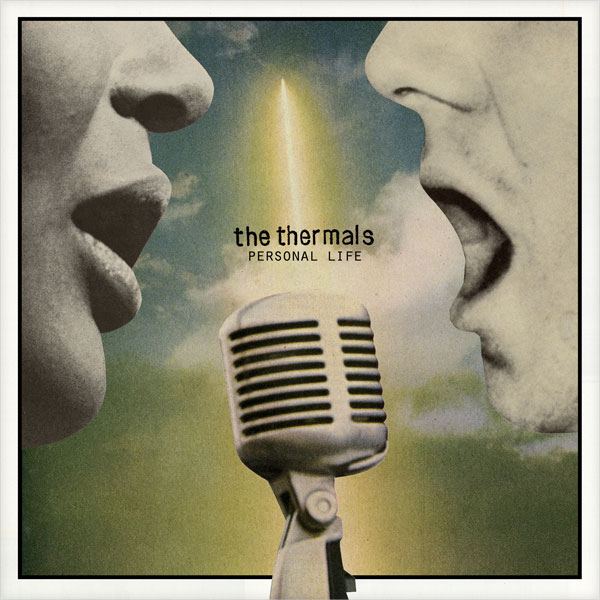 The Thermals recorded a record about relationships. There. I said it. And you know what? This record isn’t as bad as that might sound.
Personal Life is a record that lies closer to Guided By Voices[1]
and Weezer than it is to Billy Bragg or Fugazi. Sure, there’s politic in the personal, but this record deals with relationships in a real way, a way we can all relate. Melodrama is left behind as real emotion comes through in what must be the most mid-tempo record The Thermals have ever set to tape. It’s not completely poppy, but it’s approaching a pop sensibility not normally associated with a KRS act. Still, I like it. It’s relationship music at its finest. I’m a sucker for this and The Thermals did it right.
The biggest difference in this album and previous Thermals records is the aesthetic. Nothing creates more criticism or praise for an album than aesthetic. Which is too bad as the songwriting and musicianship usually remains relatively the same or improves over time. In The Thermals’ case, it’s a cleaner, ready-for-radio sound that mirrors a Weezer or a Ocasek-era GBV[2]. Still, Kathy Foster’s heavy bass lines are more in-front than I’ve ever noticed. All this is good in a lofi era that prefers more bedroom and less digital. The key is that The Thermals did not tweak their aesthetic too much. Personal Life is still unmistakably a Thermals’record. The production and new themes demonstrate a band who knows what they are and are simply growing. I mean, you can’t play punk rock forever, can you Billie Joe[3]?
In much the same way The Thermals have slightly altered their aesthetic, The Walkmen continue to play with their own aesthetic that won them a Saturn commercial and our collective indie rock hearts so long ago. Lisbon is yet another boozy, late-summer gem[4] that not only furthers The Walkmen mystique but also plays with the formula a bit.
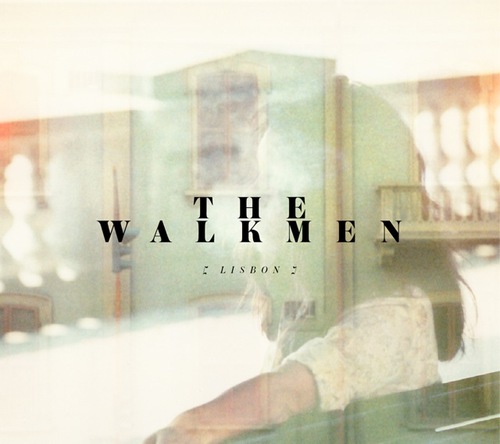 I’m a huge fan of The Walkmen. I’ve made no secret of this fact. They play a post-punk soul like no one since The Afghan Whigs fucked it up back in the mid-nineties[5]. The Walkmen have a recipe that works. They look good. They keep it simple. And they just put out good records.
Lisbon starts off a bit slow, but upon repeated listen, opening track “Juveniles” grows on the listener with nuance and feeling. This is how the rest of the record rolls. The band knows how to use their retro sound and sparse production to create one of the most engaging and sonic aesthetics in music. No one makes records like these. Soul, punk, sonics, feedback, nods to the past, booze, soft-loud dynamics, etc. This just works every time.
Most interesting in the transformation of The Walkmen sound is Hamilton Leithauser’s voice. It’s actually improved. I’m sure it’s from tour after tour of screaming himself hoarse every night or not. And the development feels authentic. This is not a classically trained singer by any means. I always appreciated his imperfections, but the steady improvement of his vocals are noticeable and welcomed.
This post is heavy on aesthetic. All three albums I’m reviewing here represent my tastes as far as aesthetics are concerned[6]. The Thermals represent a youthful punk exuberance. The Walkmen channel ghosts of rock n roll past as played over a sonic wall few can achieve. All three take advantage of some level of lofi, feedback heavy aesthetic, but Deerhunter comes to this most purposefully. Few bands represent the current trend in indie aesthetic more than Deerhunter. This is not to downgrade their material, it’s just how they represent on a superficial level. Of course, their music is anything but superficial or merely for aesthetics alone. This is just how they sound on first listen, without much investigation.
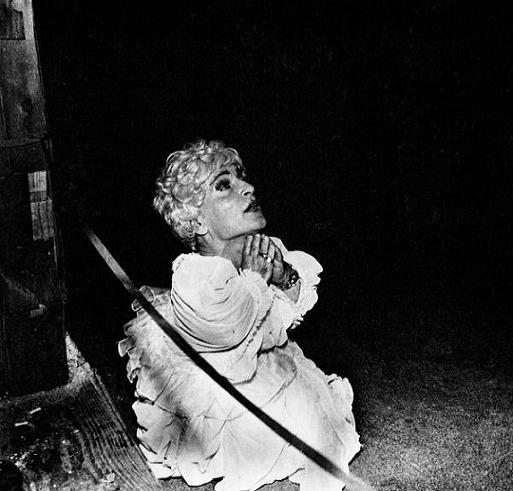 First, Halcyon Digest will never be confused for Microcastle. Or any other heavy-handed previous Deerhunter release[7]. Still, somehow, the band maintains its aesthetic of guitar jangle, muffled bedroom vocals, noise, malleable lyrics, etc. Aesthetic preserved.
Halcyon Digest is not at all what I expected, but it works for the most part. It’s loopy, laid back, and sloppy. There’s plenty of angst in the lyrics. It’s compact and whatever the opposite of sprawling is. It’s a ghost of an album and sometimes that’s all you need. The quieter moments in this record are the strongest and most satisfying for sure[8].
That said, I am having trouble finding some cohesion[9] in this record. At times, it challenges, then it invites air time on your favorite Clear Channel alt radio station. It lulls you to sleep and jerks you awake. I’d say the sequence is uneven, but I can’t figure out where…
OK. I’m nit-picking. There isn’t much wrong with Halcyon Digest, but I am having trouble grasping its brilliance and its folly. The trouble with this indecision is that I don’t think it’s a grower. Some albums tell you that over the course of the first three or so listens. This one doesn’t indicate to me that it will grow on me, but I don’t know that it’s supposed to.
Whatever. Deerhunter still records a better record than 99.9% of the bands earning 9+ on P4k. That should be worth something, maybe a little faith in their recipe. Like I said, at least the aesthetics are there[10].
So, there’s the three record reviews promised in the title. It’s as schizophrenic a post as I’ve done in a while, but the important thing to remember is that aesthetic tells us as much about the music we love as almost anything else. All three records present a different aesthetic, but all are worth your time and hard-earned dollars.
Please comment and make sense of what I just told you.
Notes:
1More Tobin Sprout than Bob Pollard.
2Blinkerton Weezer. Also, Ocasek-era GBV is not the best era and did not involve Tobin Sprout. Yes, I contradict myself.
3Seriously, Billie Joe, hang it up.
4Although Lisbon and You & Me are the only two that have actually been released at the end of the summer, all their records sound that way.
5Seriously. The Afghan Whigs had something going with Gentlemen and even Black Love (to a lesser extent) until they sort of forgot what they were doing. Kids today don’t realize how good that band was.
6This post also represents my tendency to being repetitive. Repeatedly. Again.
7Honestly, I’m not that familiar with Deerhunter’s discography. I’m going by what I’ve heard and read.
8The sonic levels reached are quite enjoyable as well, but they don’t reach as high as the last time out.
9This is the point where this post loses its own cohesion.
10What a copout.
Seeing Puppies, Unicorns, and Rainbows
Being a critic[1] is a hard gig[2]. People have a hard time with a little criticism[3]. When you don’t see things through rose-colored lenses, you’re a Debby Downer or a glass-half-empty or whatever. The trouble is that we don’t live in a black and white world where things are simply good or bad. There’s a ton of gray in between that needs to be acknowledged. Of course, if you’re the one who does the acknowledging, you’re a wet blanket, stick in the mud…You get the picture[4].
Life and art are not all puppies, unicorns, and rainbows[5]. Critique is a part of experience. Just because we try to ignore the blemishes doesn’t mean they’re not there. Ignoring the imperfect makes it tough on those of us who can’t ignore it. We are ostracized for not seeing double rainbows and made to feel guilty for ruining everyone else’s buzz. However, what critics are doing is trying to make sense of an insane world and hopefully connect with those who feel the same[6].
I’m not here to piss on your parade[7]. I just like to discuss the pros and cons of food, drink, locations, people, art, etc. It’s all beautiful in its imperfections. I thrive on this. Imperfection is real, concrete, authentic. Let me have my reality.
From where is this coming?
I used to write a blog called living in misery. You may have heard of it[8]. The name came from a pun I created in fifth grade to remember my states and capitals. It has little to do with my feelings for Missouri and, specifically Columbia, but there are connections. I won’t lie. It was difficult moving here and when I complained, no one would allow me to express my…well…misery. All I wanted to do was work through these experiences in order to make some sense of it. Could it have hurt my friends and acquaintances to wallow a bit with me, to not make me feel like such an outsider? The answer you’re looking for is “no.” Join me in my sorrow and I’ll have your back when it’s your turn.
The crazy part is that I often try balance the positive with the negative. A brewer might drive me crazy when he plasters Comic Sans all over his labels, but I will still proclaim his beers to be among the best in all of craft beer. An album may have a terrible closing track, but the rest of it could still be stellar. Our town has this great documentary film festival, but sometimes it’s a little overcrowded or it tries too hard to come off as apolitical. I love all of these things and just want parts of them to be better. Unfortunately, my detractors only see the negatives. They wonder why I hate that beer, won’t listen to the album, and refuse to attend the film festival. It’s as if they can’t imagine someone liking something without thinking that it’s perfect.
What’s really difficult to deal with is when I am in agreement that something is great or good, but when I mention that one chink in the armor, I’m suddenly seen as a traitor. Take the town in which I live. Columbia is your typical midwestern college town, a bastion of liberalism[9] tucked away amongst a sea of conservatism. However, it’s got issues. There’s uncontrolled suburban sprawl; city government just made a turn for the conservative; it’s rather segregated[10], etc. These things are not unique to Columbia, but whenever I acknowledge COMO’s shortcomings, people are all over me. I get the “It’s a great place to raise kids” when the schools are broke and lack of diversity is stifling. Upon pointing this out, I am automatically thrown in the same pot as Nazis, pedophiles, and Jayhawks[11]. It’s not like I don’t like some things about COMO; it’s just that I don’t think it’s Nirvana and actually prefer larger, more diverse cities. The fact that I disagree doesn’t mean you’re wrong. It just means that we have different opinions and values. It’s OK.
The point is that just because I see more than puppies, unicorns, and rainbows (if I see them at all), doesn’t mean that your [favorite thing] is bad or has no value. Conversely, just because I don’t agree 100% with your assessment doesn’t mean that my critique has no value either.
The reason I blog is to be a part of a conversation. You can join or not, but realize that I won’t always love the same things you do. And just because I critique doesn’t mean I think it’s all bad.
Now that that’s out in the open, it’s time to get back to some bloggin’. There is a record review in my near future (among many that I’ve somehow skipped), but I’ll conclude with some thoughts on two shows about which I have mixed feelings.
Last week, I saw The National in STL. Despite proclaiming their album among the year’s best months ago, I sort of expected this show to be boring. While the material is strong, the images conjured of a live show were not promising. I was wrong about this as The National put on a solid show, playing all the songs we wanted to hear[12]. While it was good, it was not great. I was probably in the minority on this opinion, but I stand by it. They’re not a really excitable band and they don’t play the most excitable music. In fact, The National are a bit brooding. They’re an excellent band, but they don’t put on a punk rock show. In fact, it seems the most excitement happened as frontman Matt Berninger walked out into the crowd. It was a bit premeditated, but it certainly did the trick for most in the audience. Still, it was a nice show[13].
Just last night, I decided to check out the Mountain Goats at the urging of friends. Let me just say that I get why people love the Mountain Goats. John Darnielle is an engaging, emotive singer/songwriter. People knew his songs by heart and he certainly enjoyed performing for his audience. That said, it was a little too earnest for my taste. There’s a reason I don’t attend singer/songwriter shows or play the shit out of the Indigo Girls. Maybe I missed something, but the Mountain Goats are not what I thought they would be.
OK. That felt better. Tear me up in the comments.
Notes:
1I use this term lightly, but it seems to be the most accurate term to use when describing what I do with blogs.
2I use this term even more loosely as this blog is certainly not a “gig” in any way. It’s a hobby and should be treated as such. It has no influence or bearing on your experiences.
3I recognize that I too struggle with the criticism, but I look at this more as a way to stand up for myself. I catch a lot of shit for the blogs I write and most of it is never published in the comments. I typically get bombarded on Facebook or in-person. I don’t deny your right to criticize; I’m just refuting your claims.
4There are many interesting metaphors for being critical/negative.
5Although, I suppose art could be.
6This is similar to the idea that many of us prefer sad songs because they comfort us in letting us know that we’re not the only people who feel that way.
7I prefer using “piss” over “rain” in this analogy. It’s more potent. Rain feels passive.
8Most of you followed me from that old blog to this one. So, you don’t need to respond to this point.
9This is debatable in that it’s relative. COMO is as liberal as possible in middle Missouri. It’s not San Francisco liberal. Hell, it’s not Orange County liberal.
10This is an interesting point. Many COMO-lovers will admit this but claim rich diversity in the same breath. Sorry. If your community is segregated, diversity is not your strong-suit.
11There isn’t much difference between these three in COMO. In fact, the latter might be the least desirable.
12I will say that the show gave me a reason to revisit The National’s entire catalog, one I’ve admittedly neglected for the most part.
13I forgot to mention that Owen Pallett opened and did not disappoint. He’s like a good, stripped-down version of Andrew Bird.


 Beer and Pavement
10 comments