New Slang Saison, pt. 2
Here’s a quick update on the beer…
As suggested by Jamie in the comments, I didn’t provide enough yeast for the beer. Luckily, friends Jeff and Brian had some slurry laying around. For the non-brewer, slurry is just the yeast leftover from a batch of beer. We made a starter and pitched a second round. This worked and the final gravity hit somewhere just under 1.015, which is what I was looking for.
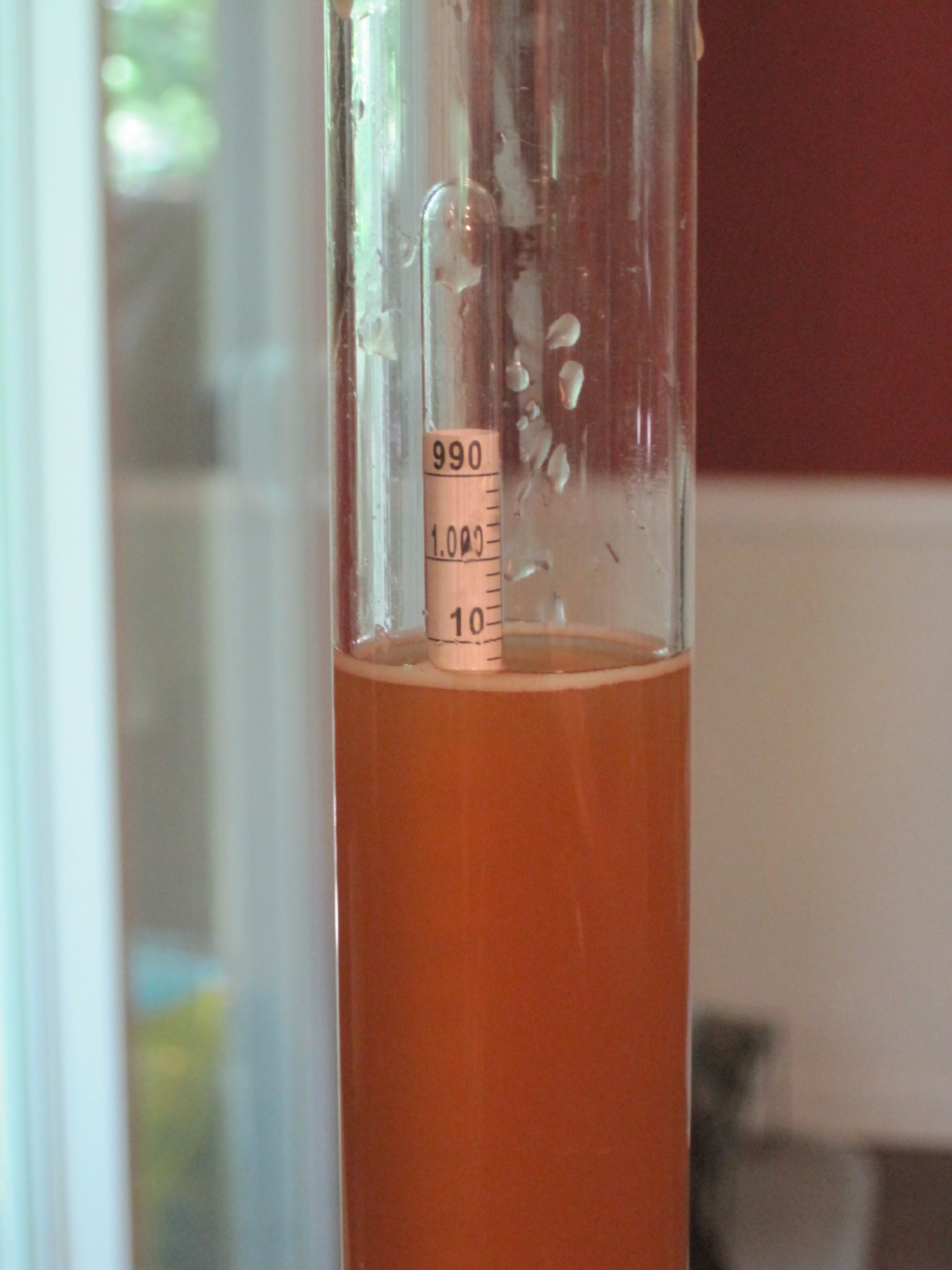
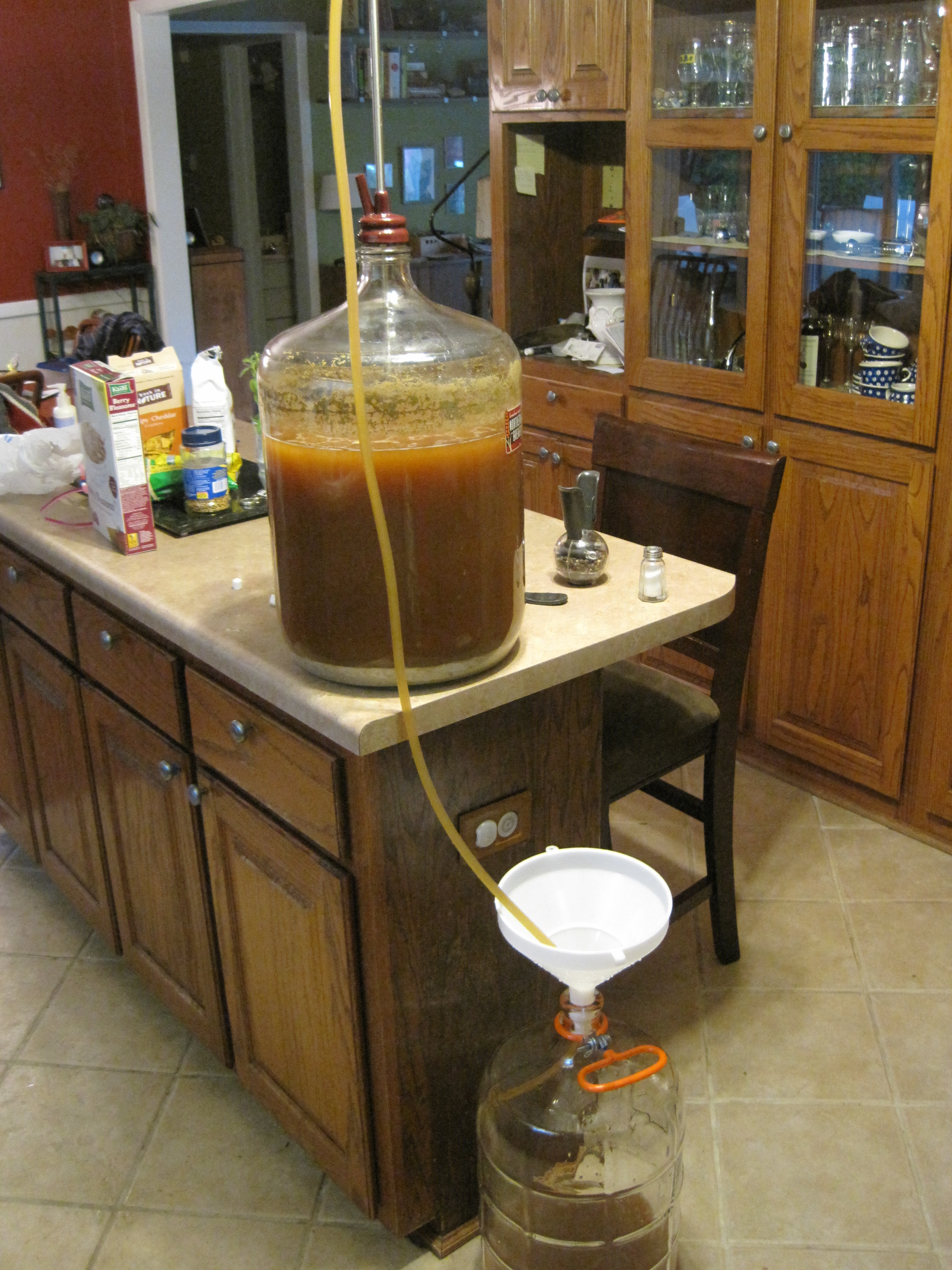
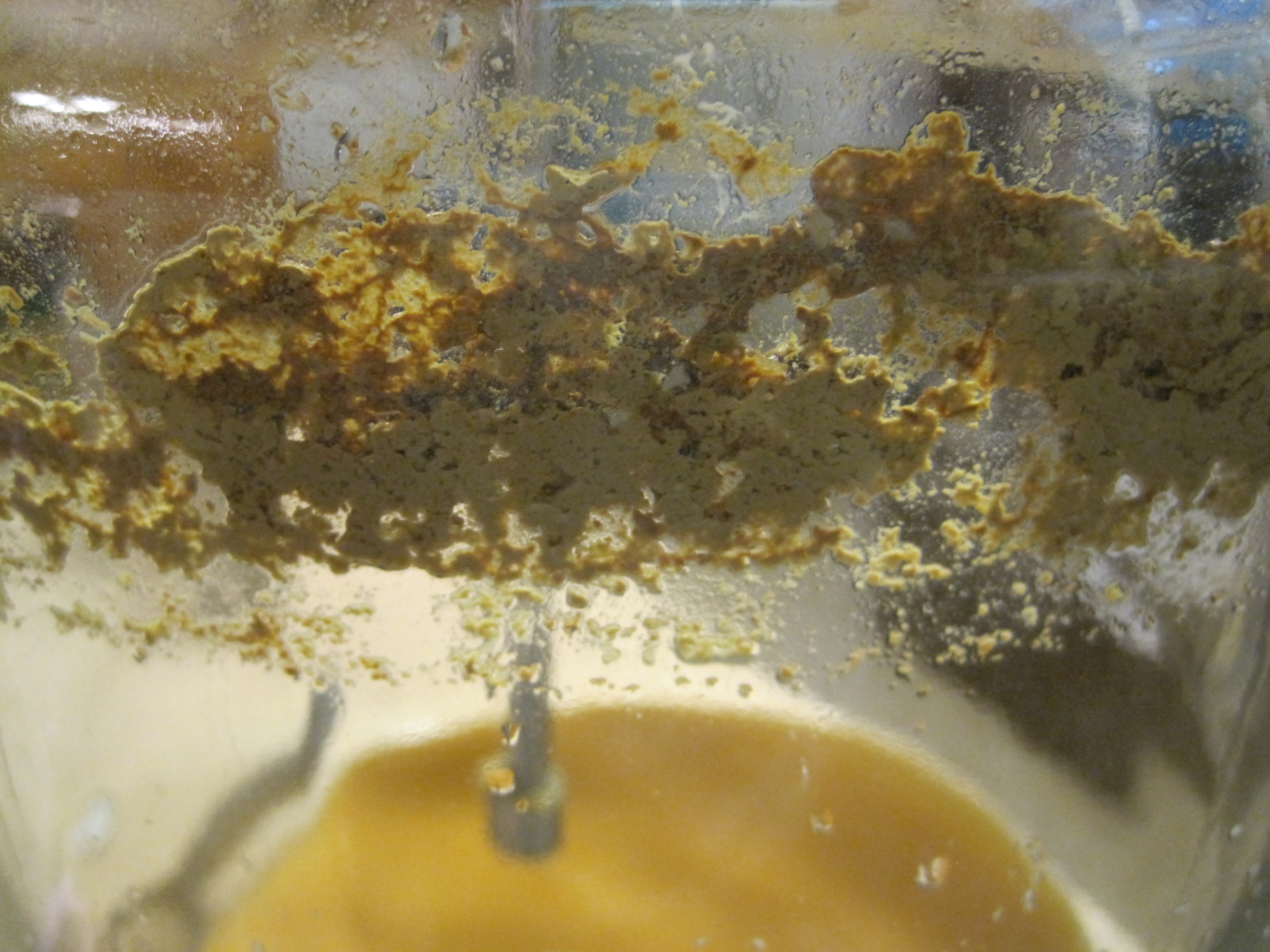
Stillwater Existent
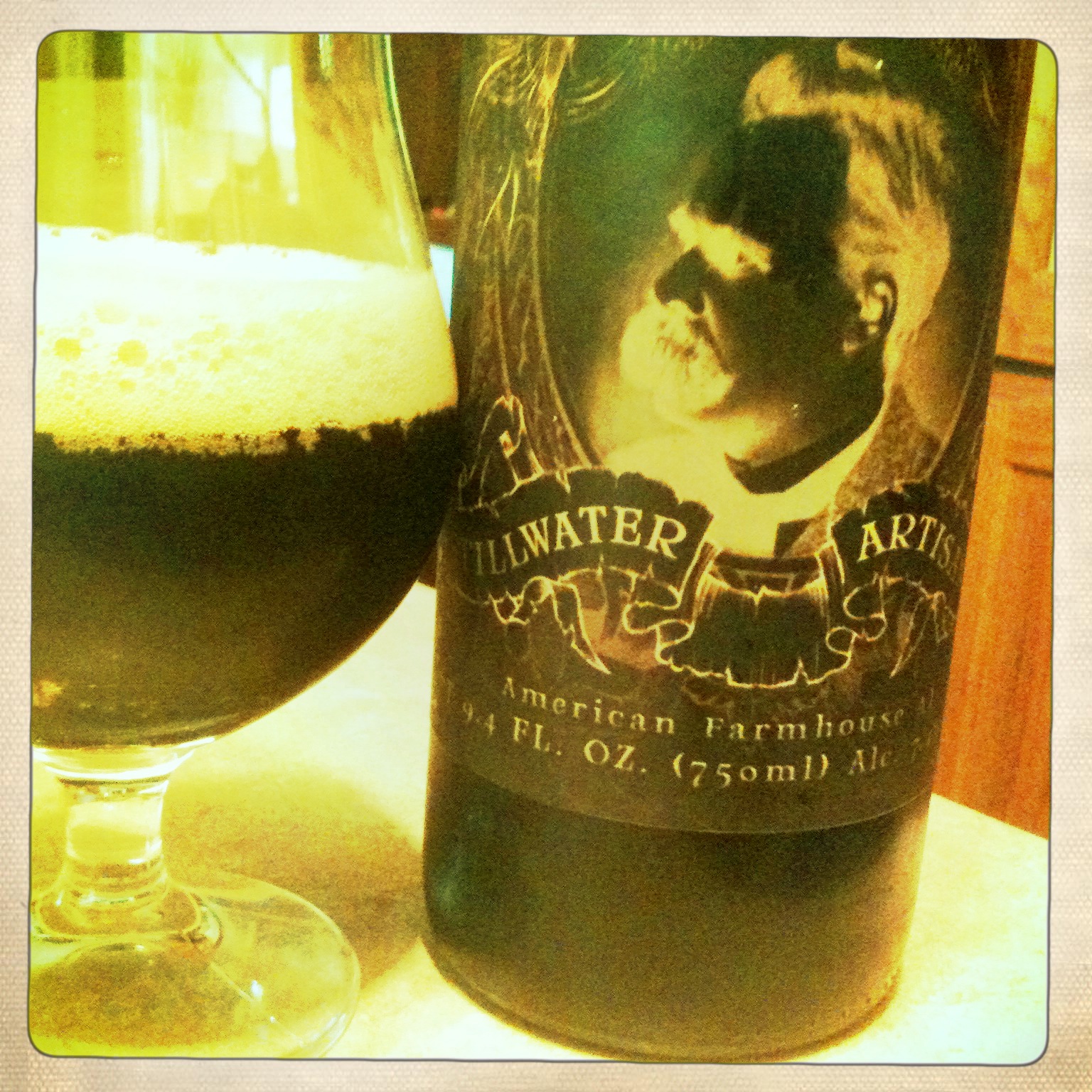
There are trends in craft beer like any other industry. Typically, anything that’s labeled “imperial” or “oak-aged” garners a lot of attention. Some have been pushing for “sessionable” beers to be a trend. Lately, turning something pale into something dark is a hip trend in beer styles. That and gypsy brewing are two trends I’m enjoying immensely for pushing the definition of a beer and its brewer.
The dark Saison or farmhouse ale is the ugly step-child of the Cascadian dark ale/black IPA in much the same way the Saison has been treated in comparison to the IPA/DIPA. However, as tastes grow to become more sophisticated, the Saison is gaining attention. It doesn’t hurt when brewers like Boulevard sour their Saisons with Brettanomyces or infected tanks to add character that bitter India pale ales just can’t obtain. Now, the black Saison is gaining ground on the black IPA in much the same way.
One brewery that does the Saison better than almost any is Stillwater Artisanal Ales. The Baltimore-based brewery recreates the farmhouse like few clans of Amish ever wished or hoped to raise on a Saturday afternoon. Wet horse blankets and all fill 750mL bottles topped with home-winery PVC caps and stickered labels that draw the envy of many an artist.
Besides the great beer and label artwork, the other aspect that sets Stillwater apart from most breweries is their status as a “gypsy brewery.” Much like the Coalition’s favorite Mikkeller, Stillwater pays breweries to use their facilities in creating their artisanal ales. The gypsy brewery is the nomad of the nano set, the free spirit of craft beer. And the results are pretty amazing.
Last night, I cracked open Stillwater’s Existent, a dark, almost black farmhouse ale that defines/defies the style like few others could. The only other black Saison I’ve had capitalized on the sweetness of the dark malt, but this beer brings the roastiness like Starbuck’s tenfold. Coffee and chocolate dominate the tongue, but that familiar pungency of the Belgian Saison fills your nasal passages with floridness that is pure farmhouse. Some of the reviews I read didn’t sense the Saison characters, but you have to breath in deep on this one and when you catch it, it takes over. The combination is all raisins and roasted chicken, possibly even coq au vin.
As with my last straight-up beer review, I have focused on a beer that defies convention brewed by a brewer who also defies convention. It’s hard to figure out a beer who’s style is supposed to be fruity, earthy, but is corrupted with roasted malt. Additionally, it’s hard to figure out brewers who don’t have a street address. The challenge lies in getting past this unconventional approach to the conventional and just judging the beer on its own merits. It’s roasty like the finest porter, but the floral aroma says nothing but French/Belgian countryside. This makes Existent a triumph at best and a good beer to have with your roasted chicken at worst.
Nice Package
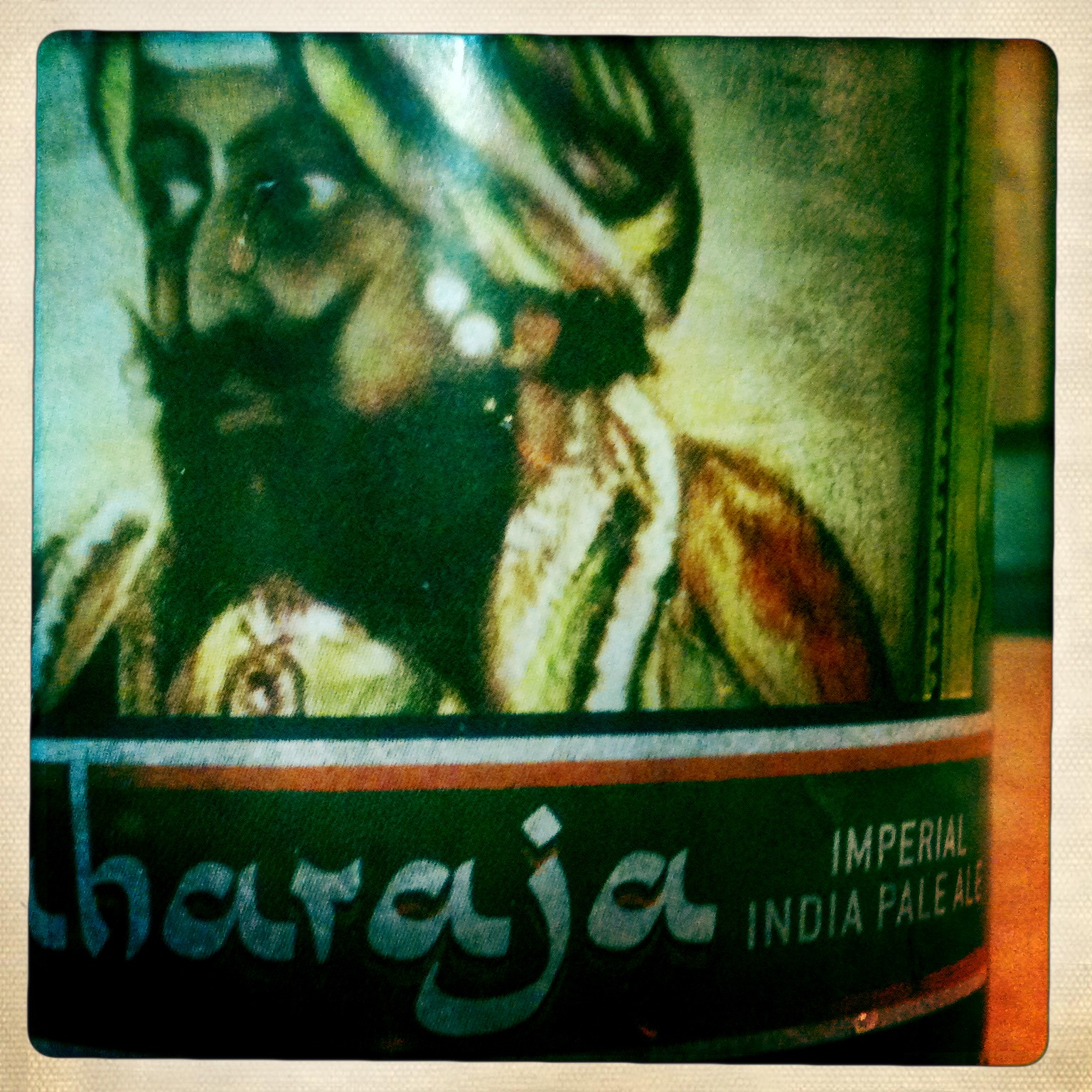
Although some are discovering the beer can and others obsess over it, the bottle is still the primary way we get our craft beer. Beer typically comes in 12 oz, 22 oz, 750 mL, and even the rare 7 oz bottle. Occasionally, one will encounter the seasonal release in a magnum bottle, but only if you plan on sharing it with a host of friends and family.
The biggest characteristic of every beer bottle is the size. Basically, how much beer do you want to drink? The traditional serving is 12 ounces, but sometimes we are faced with a 22 oz or 750 mL bomber. This either means you have a commitment to make (especially with a beer in the 9+% ABV range) or you need a friend or two. The sixer of 12 oz bottles requires another kind of commitment, one that can be spread out over time. So, there are decisions to be made when choosing a bottle size.
Take the Maharaja I opted to open the other night. I’ve been cutting back on the weeknight beer lately, but we ordered out and rented a movie on Thursday, so I figured what the hay. My sandwich included some blue cheese, meaning that I needed a big DIPA that bordered on barley wine territory to stand up to the blue cheese. Avery’s Maharaja did the trick with its mouthful of bitter and booze. However, 22 oz was more than I intended to drink. Luckily, there are tricks. I would have used a European flip-top bottle that holds 11.2 oz, but I delivered a friend some Hopslam and haven’t been able to get my bottle back. The other option I like to use is the champaign stopper. It holds in much of the carbonation and keeps enough air out to avoid oxidation. The key is to finish the beer soon, particularly an IPA/DIPA. These beers need to be consumed fresh, no matter what some think. I did so at the end of the following day.
I don’t like to do this with a bomber of beer. I’d rather open and drink a bomber in one night. Again, a fresh beer is a beer at its peak, aside from a few notable exceptions. To do this, most beer nerds know that sharing is caring. The bomber encourages this even better than a six-pack of 12 oz bottles. Sure, it’s easy to hand your buddy a 12 oz bottle from your pack, but there’s no thought put into that share. A bomber requires a careful pour. One either pours out a sampling as to allow others to try the sweet nectar inside or there is the careful aligning of glasses when there’s two or three of you. Either way, the bomber pour demonstrates a true willingness and intention to share your beer.
Besides the bottle (and the beer itself), a large part of the experience is actually the label art. Some view labels with an artistic eye. Home brewers (myself included), put their own creativity to work with their own labels. A label can entice you to try a beer or completely turn you off, even with a poor font choice. A lot of care in creating a label that grabs the consumer’s attention, paints a picture of the experience within, and promoting a brewery’s brand is taken in the design process. Sometimes, when done well enough, the label can influence opinion about what the drinker is consuming. Even the prose on a label can create a brand’s image that lasts long past a beer’s influence.
So, packaging matters.
Then, there’s the packaging in which our music comes. Granted, one should not judge a book, beer, or record by its cover, but sometimes that’s a factor. This is especially true for record covers as they often reflect the artistic vision within or are even an extended work by the artists making the music. Sadly, this is becoming less and less of a factor as uglier record covers are produced every year, possibly due to the rash of kids downloading their music and completely forgoing the package all together.
Being that I’m in my mid-thirties, I still buy records for the the purpose of owning an artifact. Ever since someone brilliantly decided to attach MP3 downloads (and even CD’s) to vinyl releases, I buy all vinyl for my collection these days. I have purchased one or two CD’s since 2009. Since then, it’s been all vinyl.
The format is for lounging, sharing. There’s the soft tones not found on tinny digital recordings. There’s a slight crackle to lend some authenticity. You have to get up and flip the record, making you physically involved in the playing process. For what it lacks in transportability, records more than make up with the more tactile aspects of music listening. It’s the full experience, not just music.
Beer offers the same in its various formats, but it generally works in the consumer’s favor whichever format is chosen. Having a beer on tap or from a cask is usually preferable, but bottle conditioning has come a long way since craft beer went extreme and home brewers became a dime a dozen. However, I’d argue the 22 ounce bomber is the vinyl of beer packaging as it promotes sharing without encouraging you to get shit-faced (too quickly)…
And this is where I lose momentum from trying to write this over a three week period. I should have left space to address specific packages I like, but I just didn’t as I got a little long-winded with this one. Surely, it’s a topic which I will explore some more in the future, but today is not my day. Any thoughts on the subject are welcome. Keep in mind that this is an unfinished post I’m trying to get out of the way so that I can write more important things about beer and Pavement.
So, for Monday, you get two lame posts in exchange for no real post. Your ignored workload thanks me.
Bottled Up
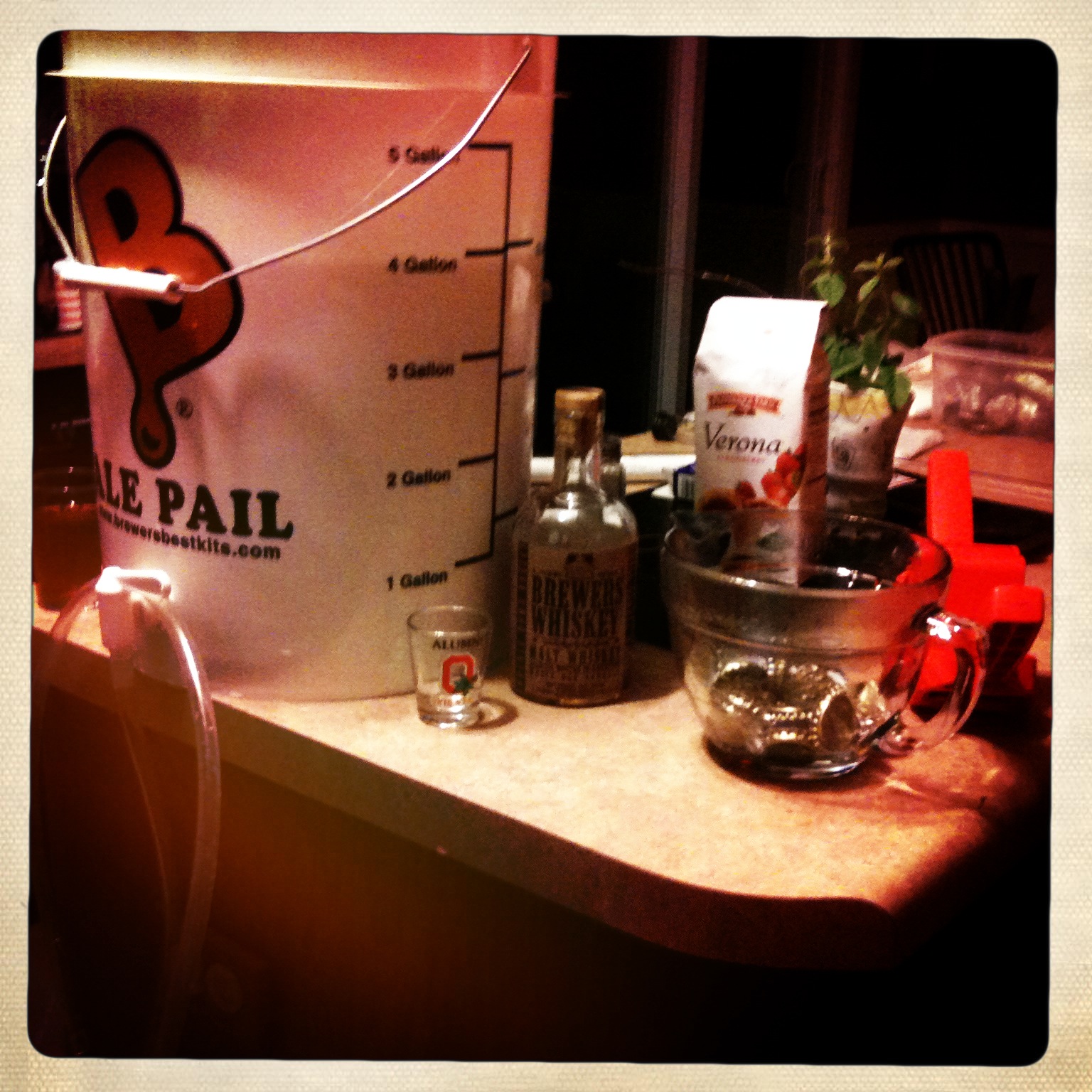
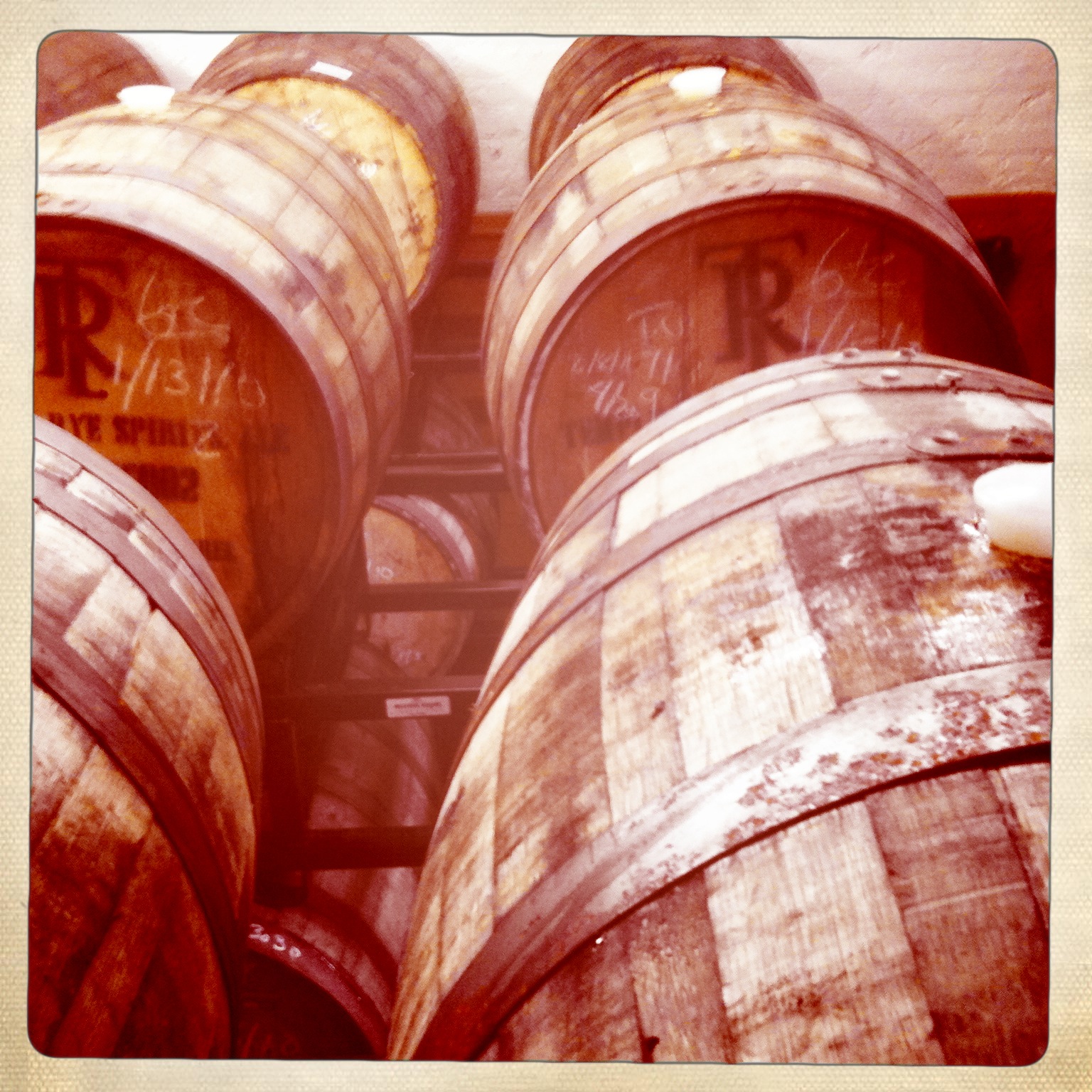
Sample, ale pail, OSU shot glass, Brewer's Whiskey by New Holland, caps, capper, etc.
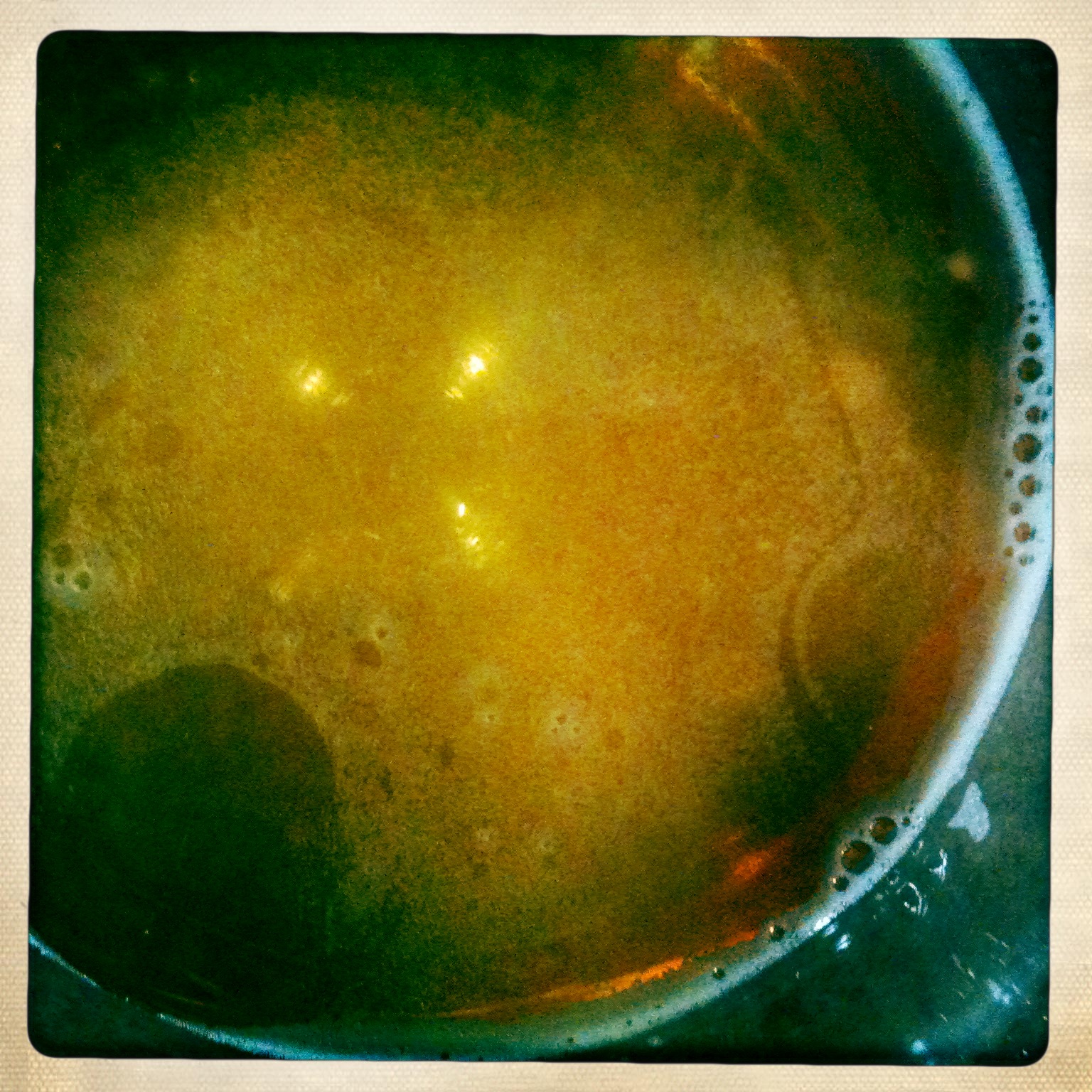
Sorry. I bottled my Harnessed in Slums IPA last night instead of writing a post. The beer hit exactly where I needed it to final gravity-wise. Thursday’s New Slang Saison started bubbling late morning on Friday and has gone steadily all weekend. I’m thinking there’s enough yeast in there to get me through.
There’s one post that’s like 1/3 done (1/2 written, footnotes left to write), but I just didn’t have the energy for it. So, just gander at another Hipstamatic photo above (because I’m not a real photog with a real camera) and watch the video made especially for this beer below.
New Slang Saison, pt. 1
I had a post started almost a week ago that I just haven’t had time to finish. Then, I decided to brew last night, leaving me with no time to write a proper post. So, what you get instead is part 1 of my brewing process. It’s only extract, so nothing super professional-looking will happen. Also, it’s a style that’s nothing like I’ve done before. I’ve gotten pretty good at the extract brew, but a Saison with herbs and whatnot is something new.
The recipe is here and what happened is below…
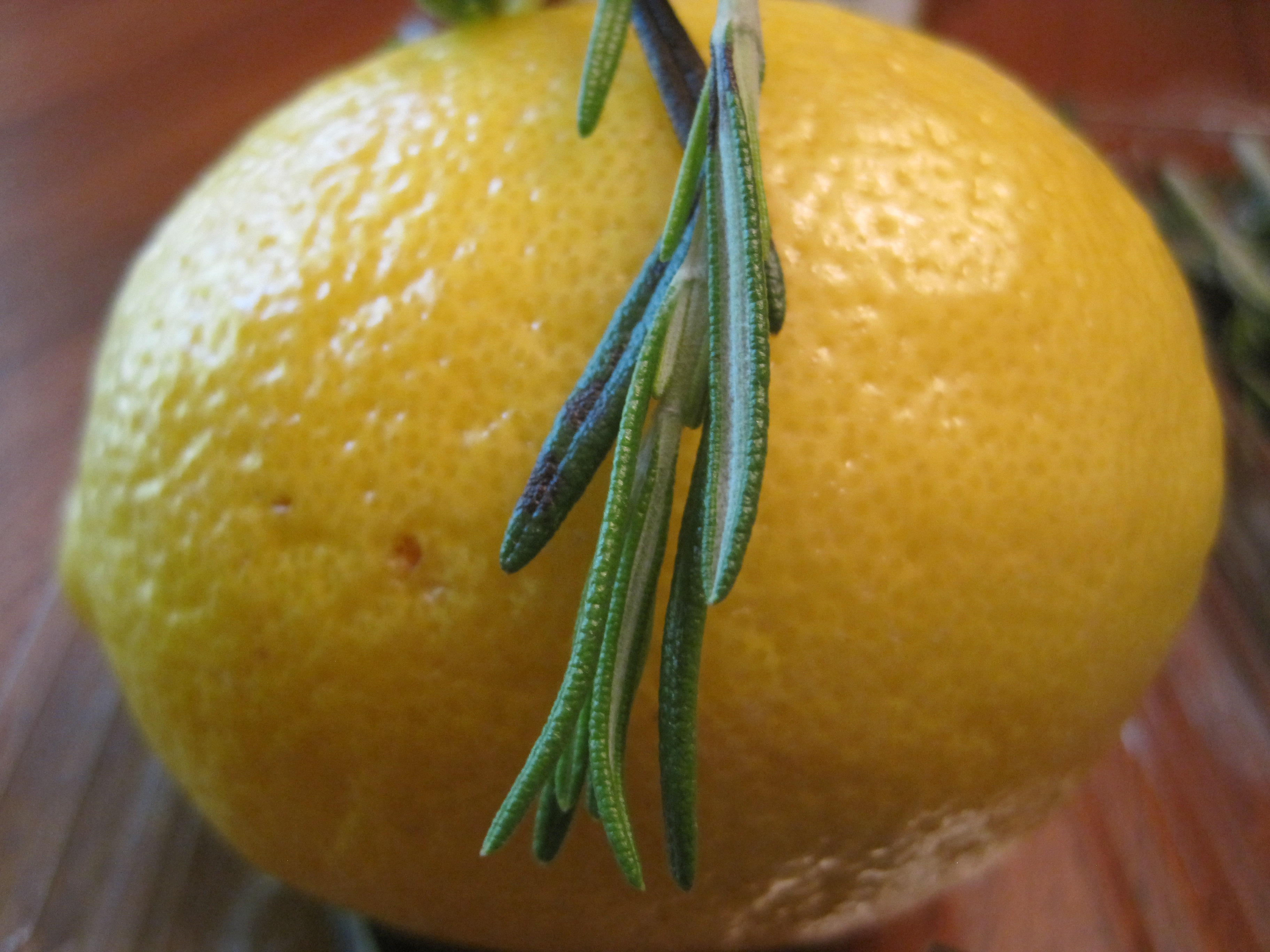
First, I assembled the ingredients: 0.5 lbs. Briess Caramel 20L (specialty grain), 7 lbs. light dry malt extract, 1 oz. Amarillo hop pellets, 1 oz. Sorachi Ace hop pellets, zest of one lemon, a sprig of rosemary, Wyeast Biere De Garde 3725 yeast
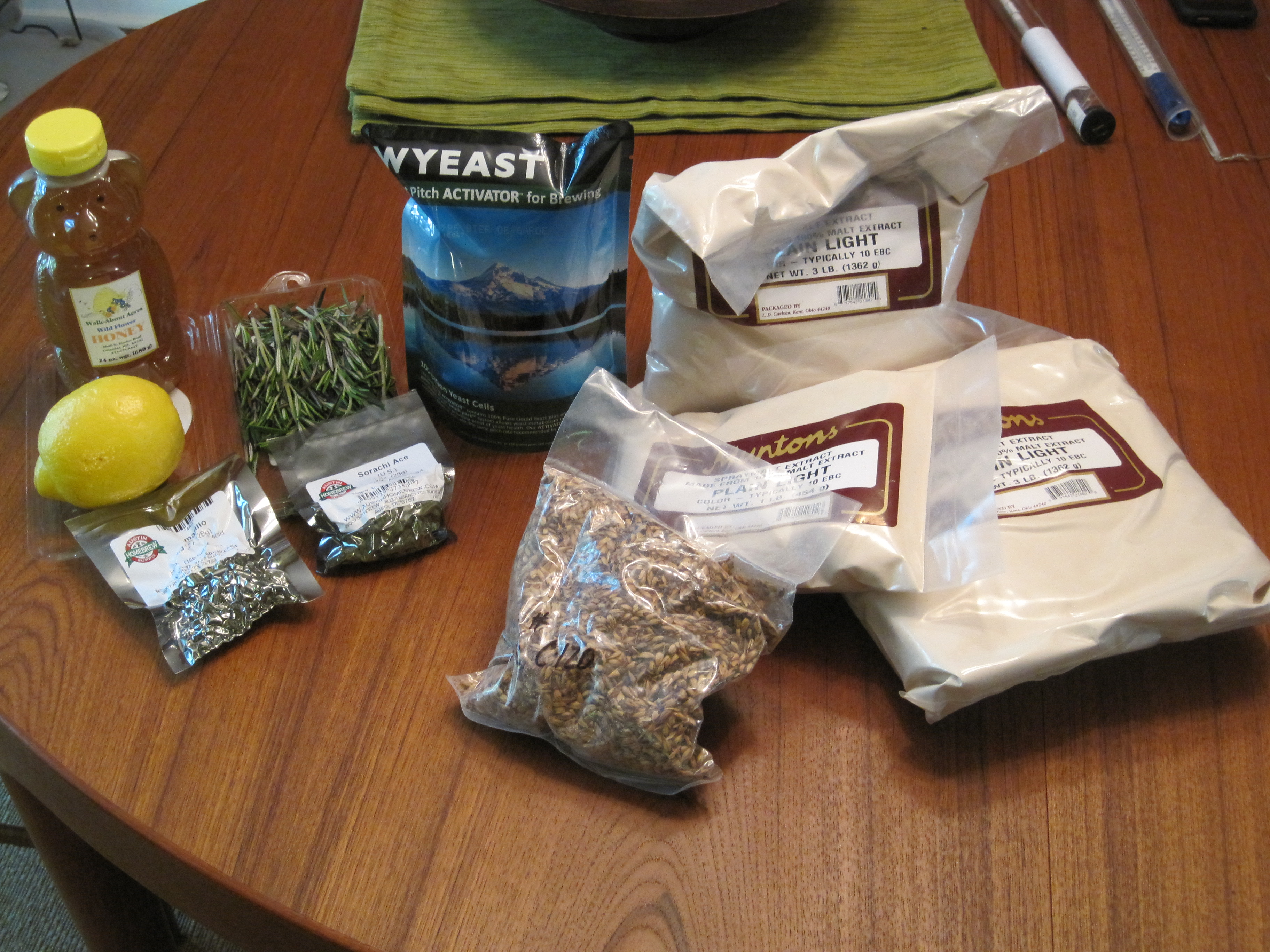
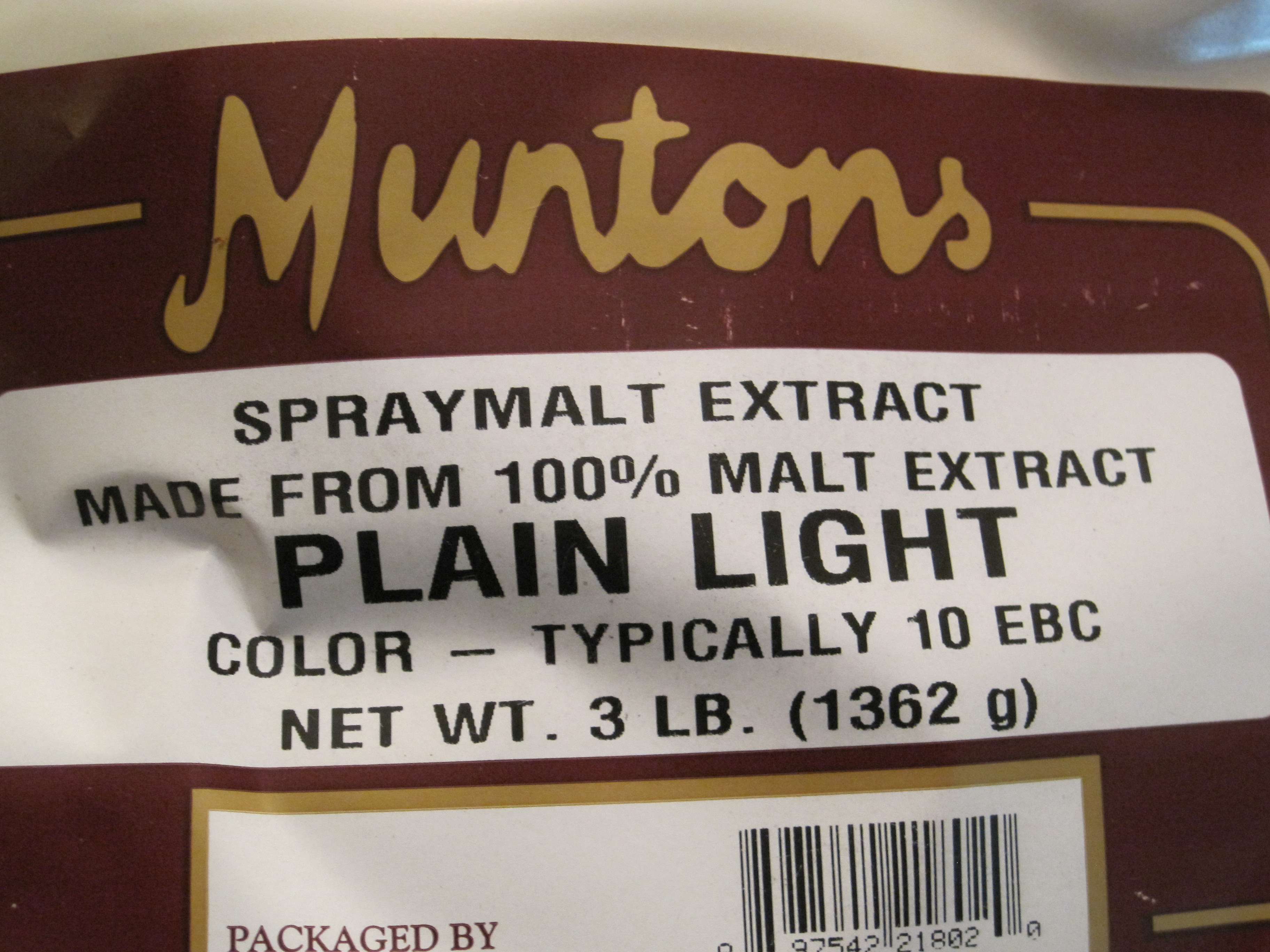
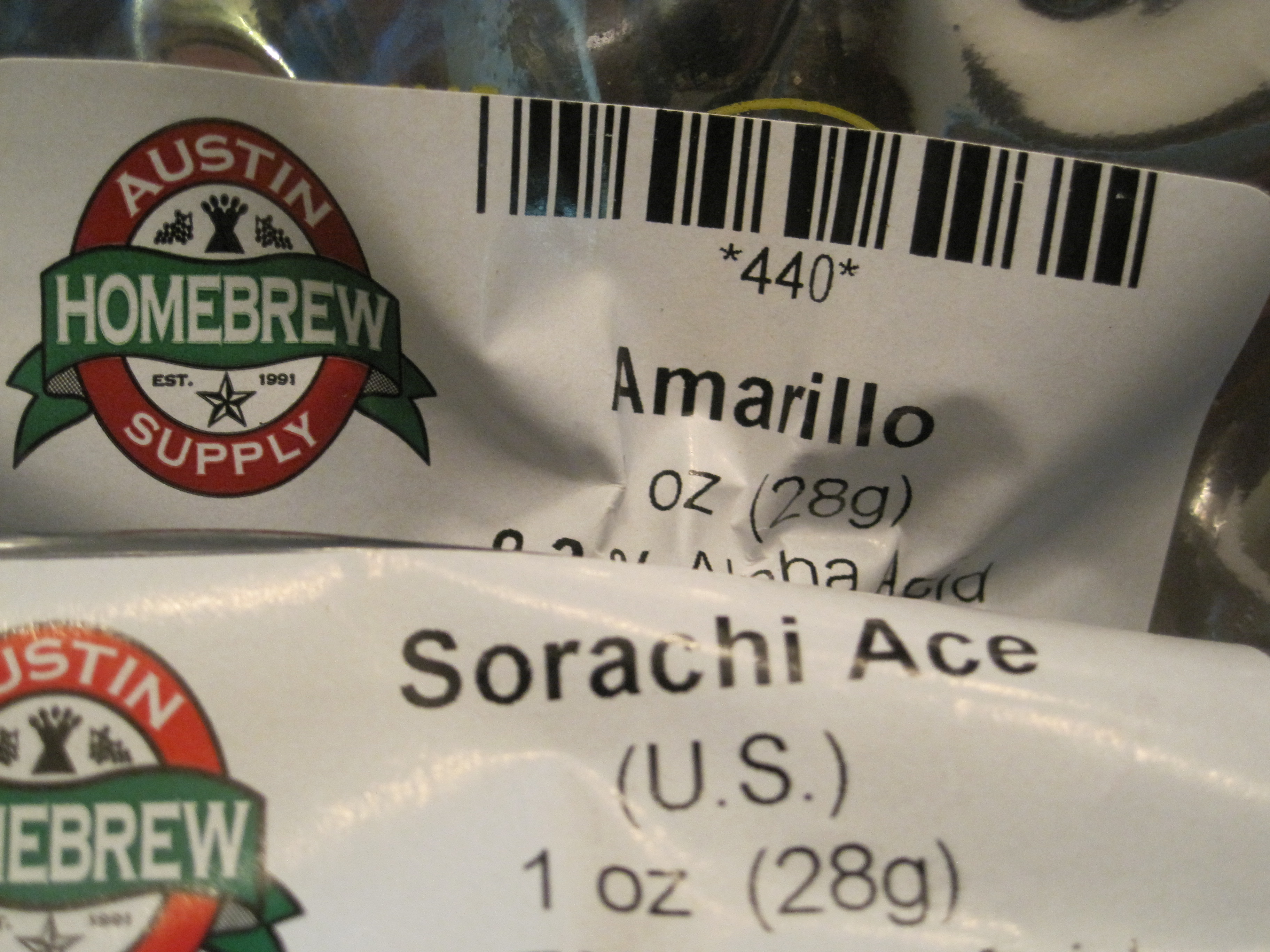
I steeped the specialty grain for about 20 minutes. It was actually when the water reached 170 degrees Farenheit. This usually adds some character – particularly in terms of color – to the beer.
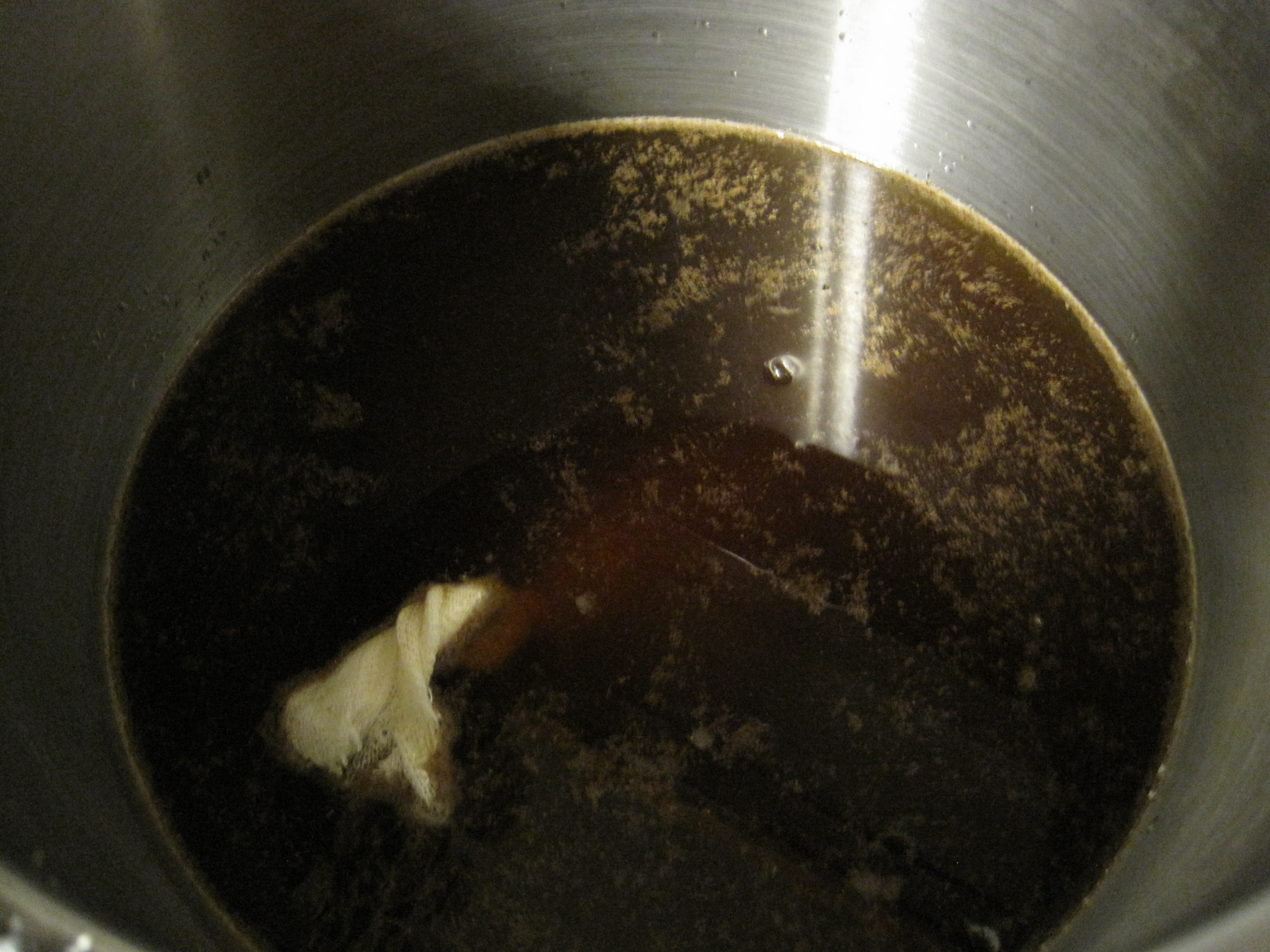
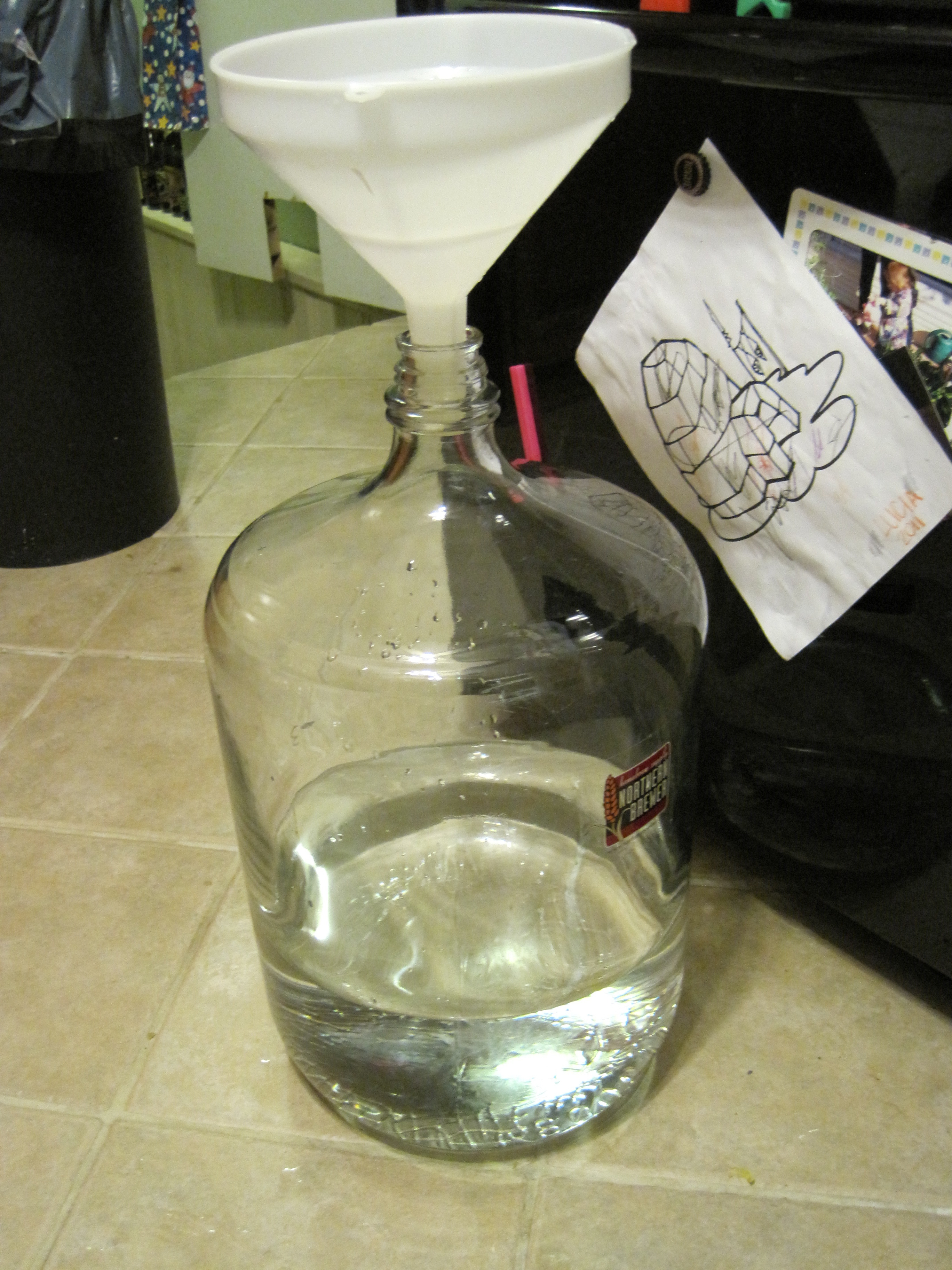
Once the specialty grains were removed, I brought the water to a boil, threw in the extract, removed it from the heat (so as not to boil over), stirred until the extract was dissolved, and returned it to boil. Once the boil started up again, I added the Amarillo. While waiting, I put some cold water in the carboy and made sure the rest of my equipment was properly sanitized.
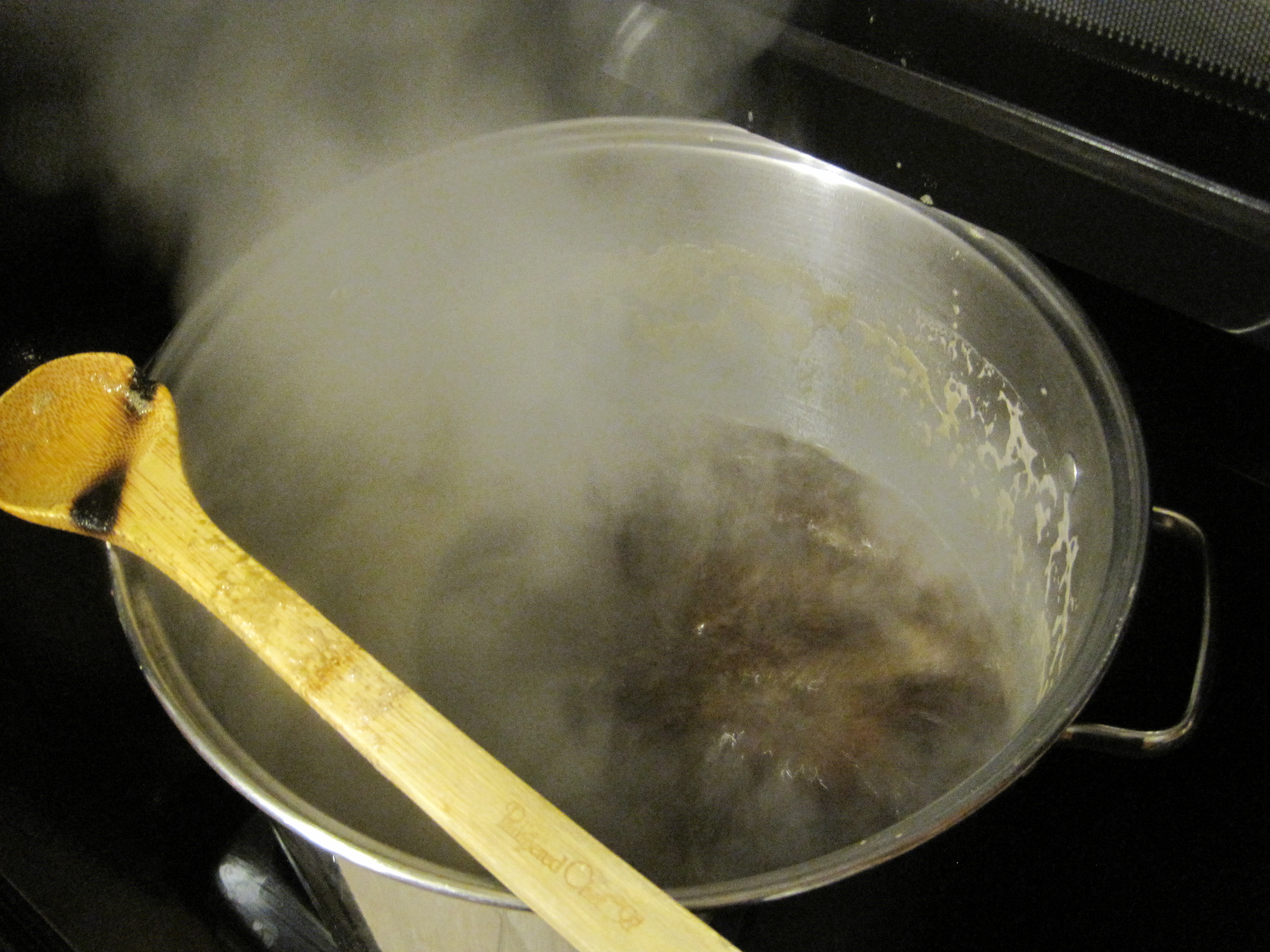
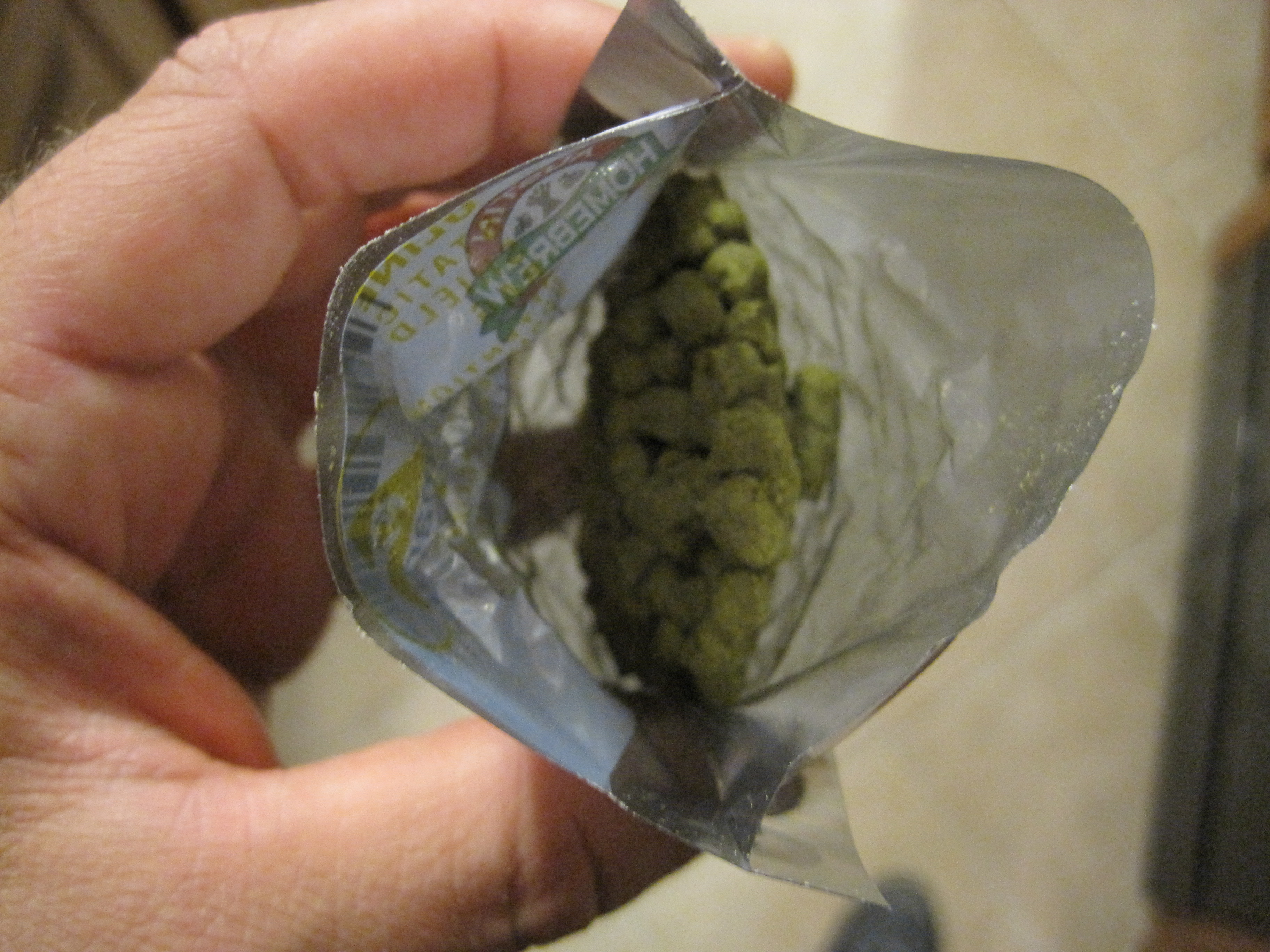
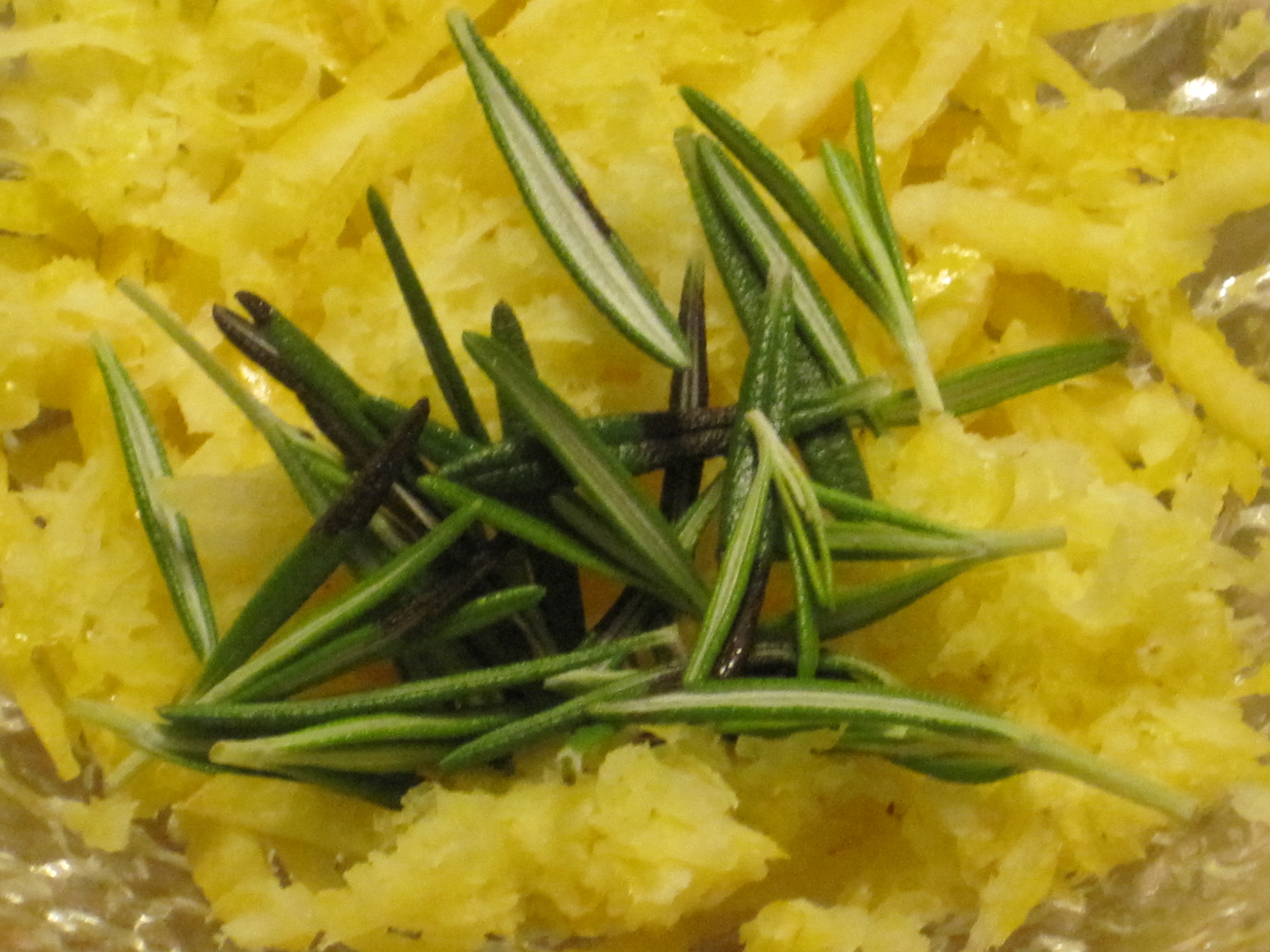
With 15 minutes to go, I added the Sorachi Ace hops. These hops are pretty new. They were developed by Sapporo and produce a lemony sent and flavor. I’ve had a beer by Brooklyn Brewery once that used the hop exclusively. It was a good beer and thought that this might add something unique to my Saison. Between that hop addition and the end of the boil, I prepped some honey by putting the bottle in warm water so as to liquify the stuff before dumping it into the wort. At the end of the boil, I tossed in the lemon zest and Rosemary, baby.
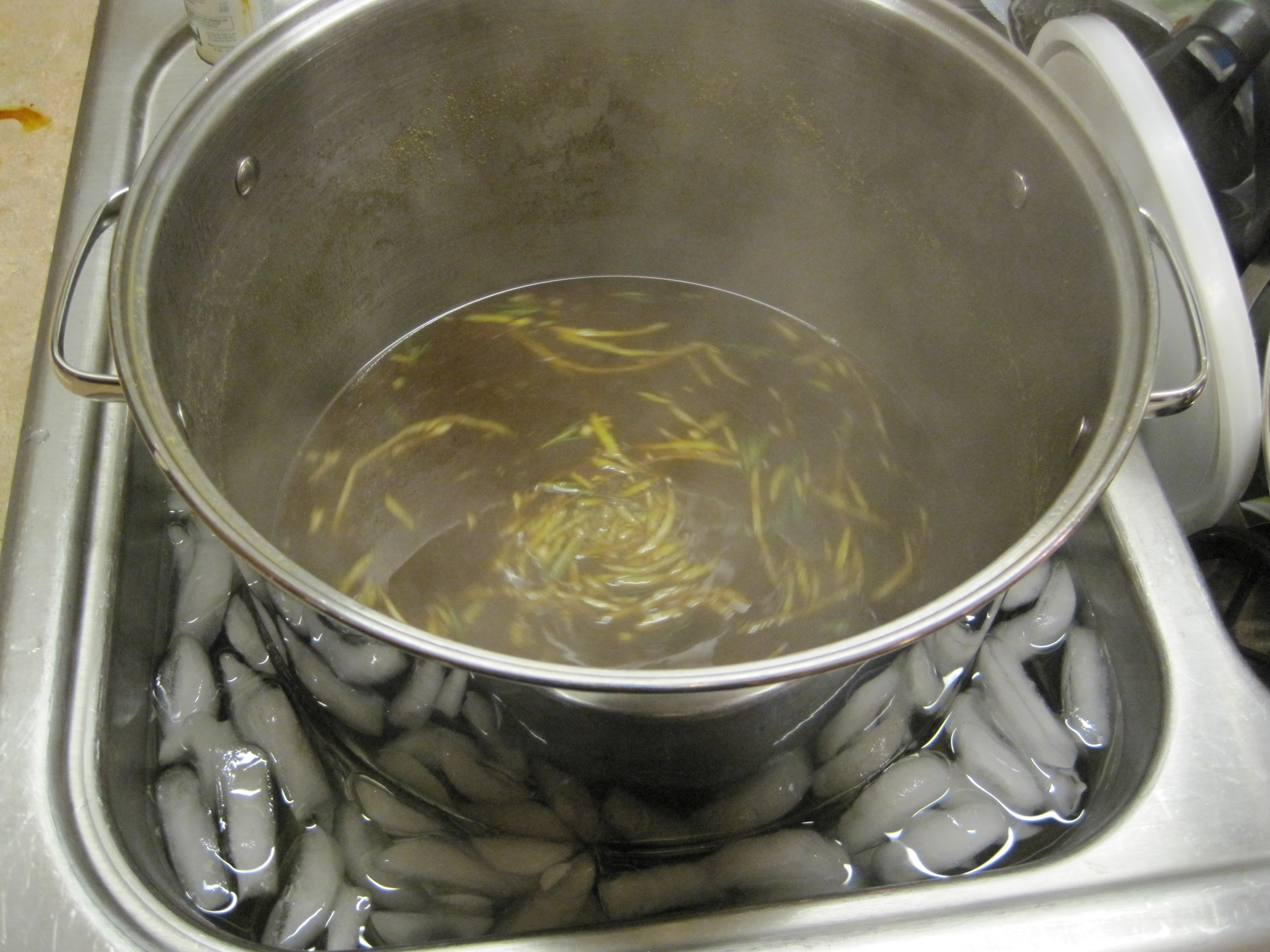
Now, comes the worst part of my process: cooling the wort. Since it was storming out, I didn’t have my typical option of chilling it outside, in this giant laundry tub, with cold water running constantly from my hose outside the pot. Instead, I had to resort to the old way of sticking it in an ice bath in the sink. Luckily, this doesn’t take that long if you consider that the ice bath is only part of the cooling process. After the ice bath, I add the wort to cold water in the carboy. That usually puts it over the top if the aeration doesn’t.
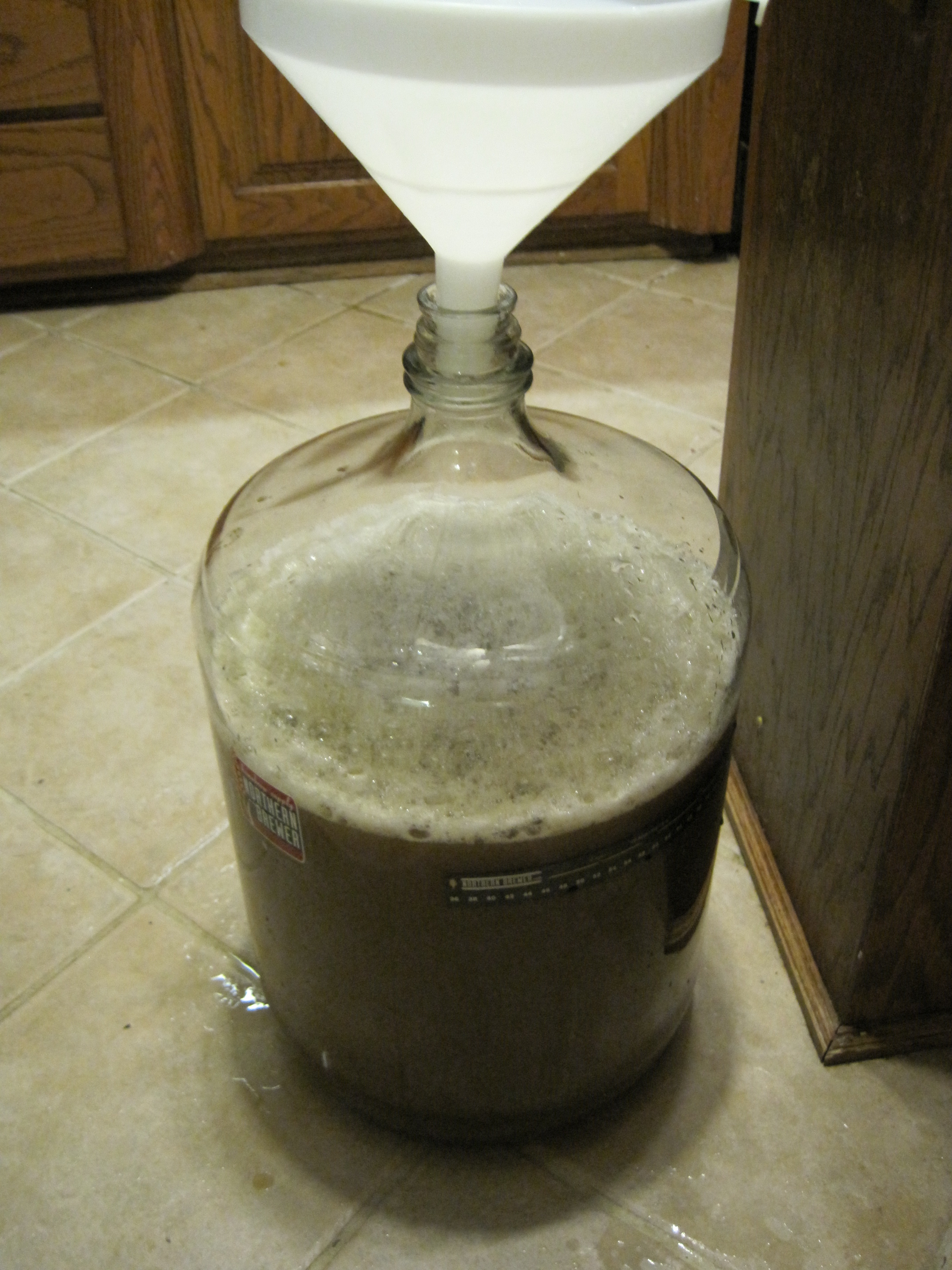
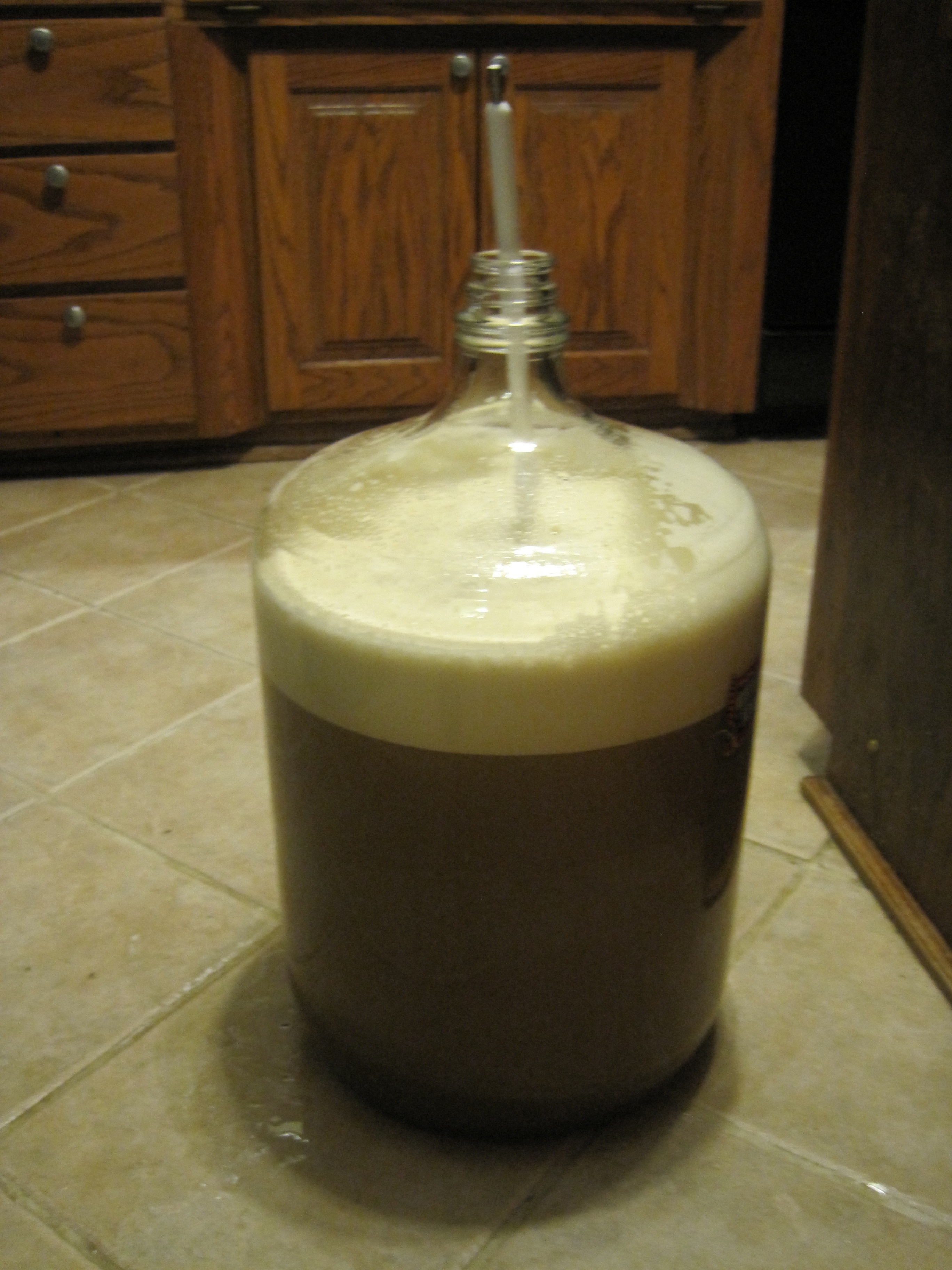
Now, the real wait begins. My hope is that the beer ferments in a week. That way I can rack it to the secondary for four or so weeks. Part of that time, we’ll be out of town. The beer will be ready to bottle shortly after I return from my travels. I’ll let you know how the rest goes in future posts.
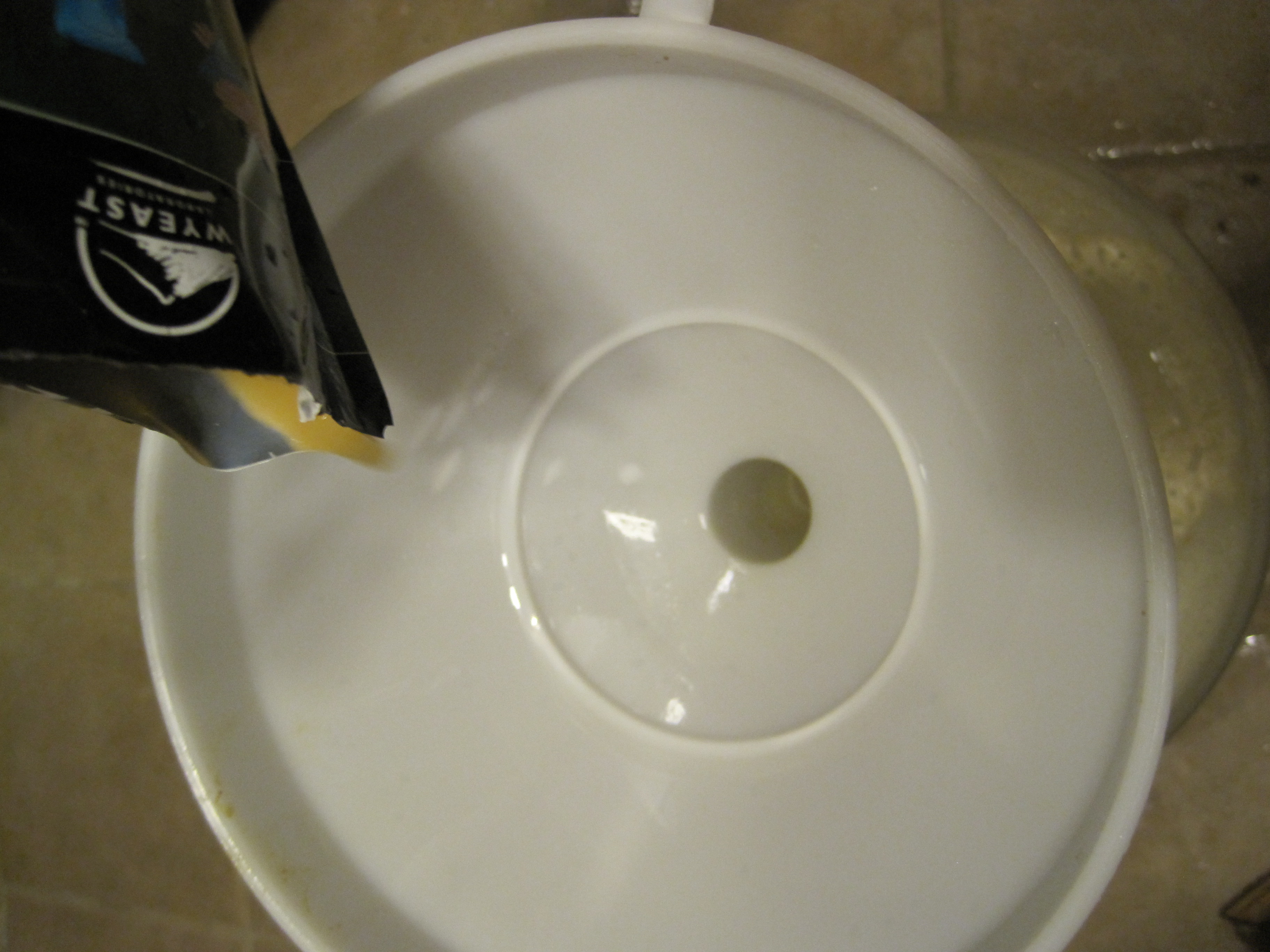
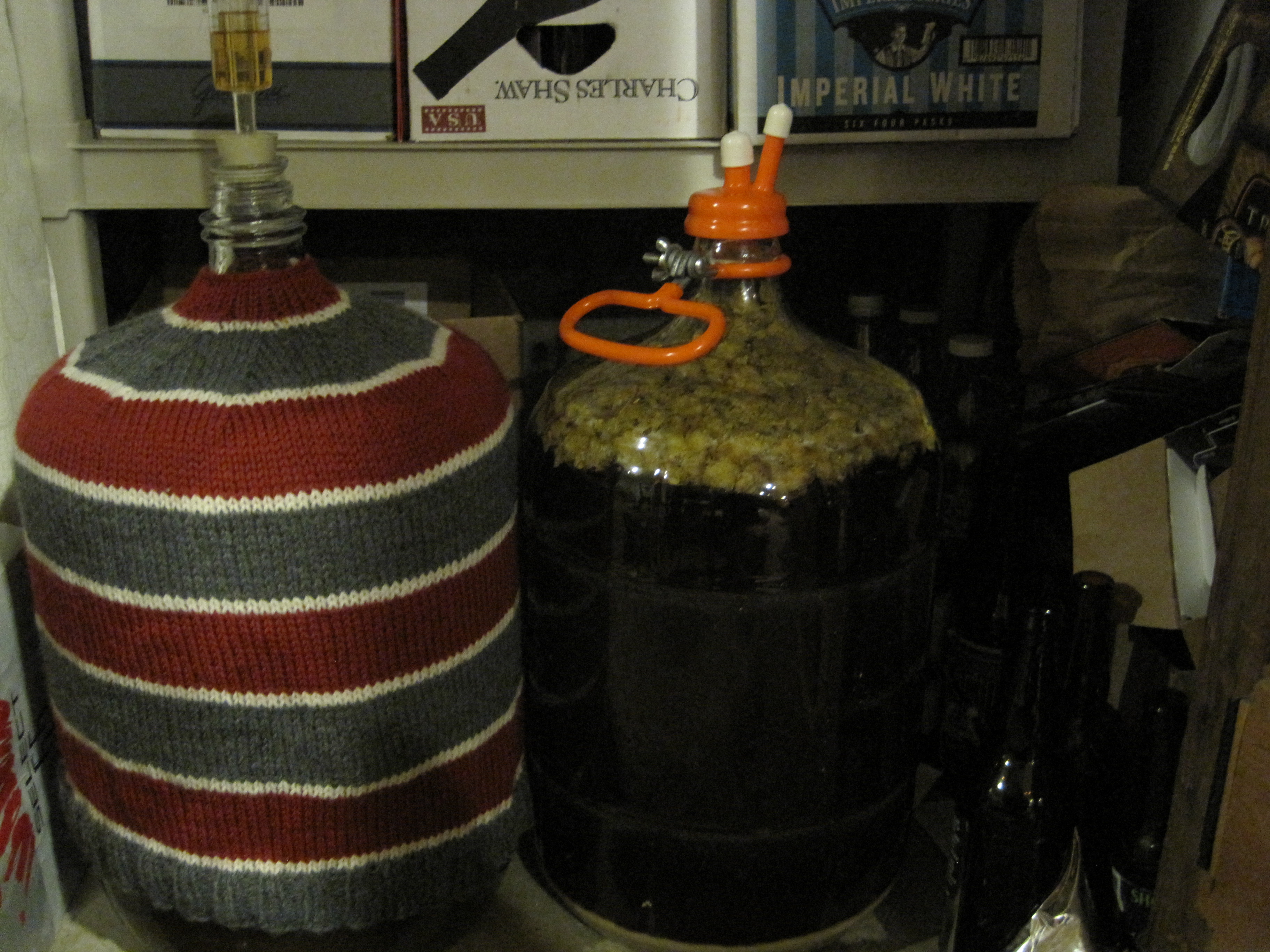
So far, preliminary smells suggest the lemon will be pretty prominent. In fact, before I pitched the yeast, the wort smelled like an Arnold Palmer. The drink. Arnold Palmer the golfer smelled of cigarettes, sweaty polyester, and women’s perfume. The wort smelled like the drink made out of lemonade and iced tea. Herbally, lemony goodness. However, I know a little Rosemary goes a long way. So, that may come out as things settle. It will be fun to see.
Update: There’s a little action going on. I’ve never used this yeast, but I seem to remember that everyone I’ve known who’s used Belgian strains have had slow starts. I should see more bubbling by tomorrow.
Update 2: Despite what I thought and some have suggested, fermentation has been active throughout the day. I’m thinking we’re in the clear, but I’ll wait for a final gravity in the 1.012 to 1.015 range before I make any bold predictions.
Update 3: So far, so good. The beer fermented all weekend long. It’s supposed to be done in a week. Since getting a proper hydrometer (long story), I will be able to take an accurate final gravity reading. If it comes up short, I might have to hunt down some champaign yeast to finish it off. I’ll post a part 3 to this story either Friday or Monday the 23rd.
Okkervil River’s ‘I Am Very Far’ vs. Schlafly’s AIPA
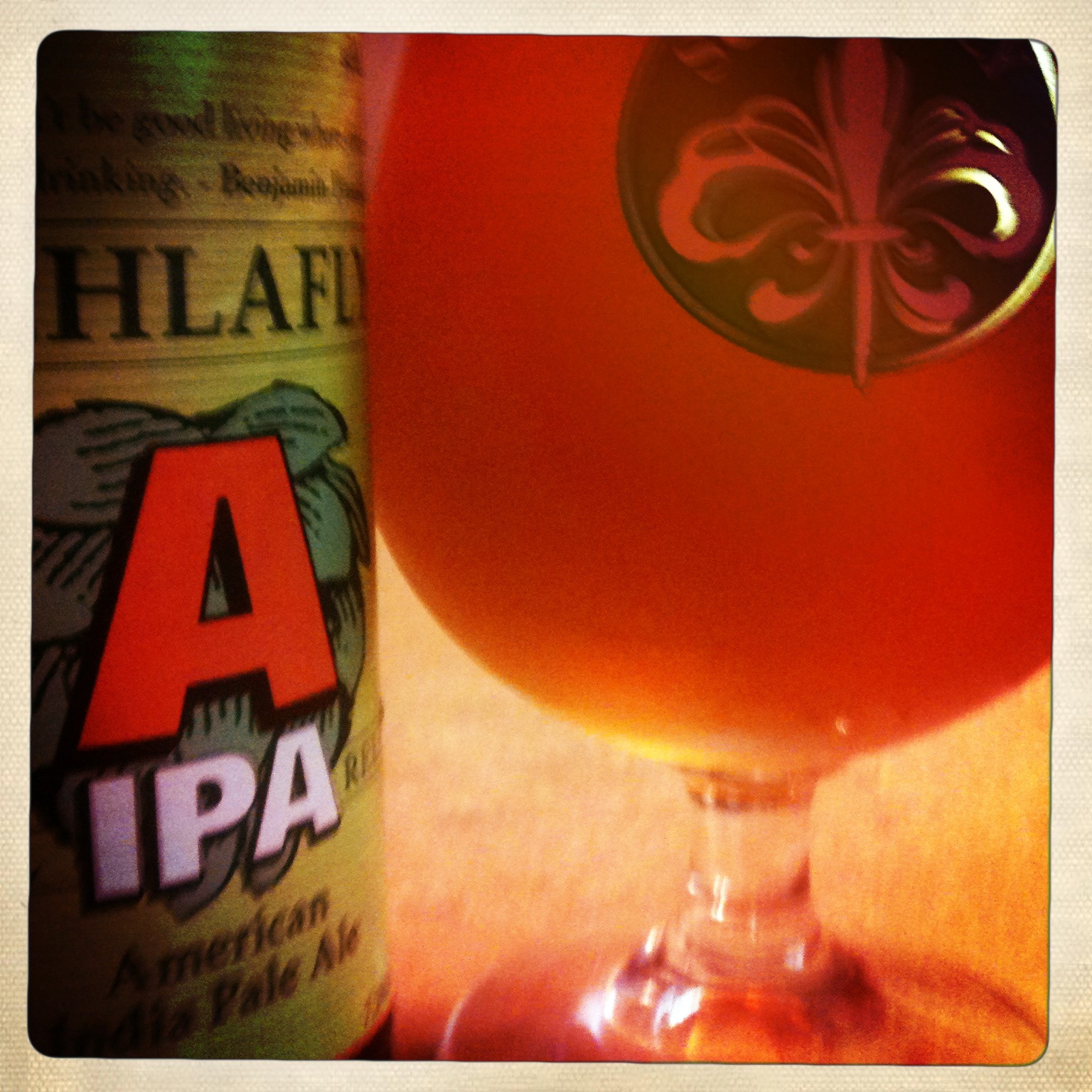
I haven’t done one of these reviews in a while. In fact, I once thought I’d do them all the time, but the timing just never worked. There have been a lot of records to review recently, but beer has been neglected. The recent arrival of Okkervil River’s new album and Schlafly’s AIPA came at the perfect time for me to throw down one of these ill-conceived reviews. I won’t bore you with the old template. Instead, I’ll bore you through my prose.
Why these two in this particular challenge? Well, aside from the timing of their releases, both record and beer share a decidedly American aesthetic. And in this time when America feels particularly good about itself, celebrating things that are very American just seems like the right thing to do. Okkervil River with its take on Americana and Schlafly’s attempt to make a big IPA like every other American craft brewer connect these two loves of mine, but which one wins out in the end?
I Am Very Far is not what we’d expect from Okkervil. It’s slick without losing heart. The emphasis is on the sound and production over the words, yet it’s impeccably written. Even the emotive qualities of a typical Okkervil record are absent without the album being dull and dry. It’s a great record without being a great Okkervil River record.
When I think of their progression, I think of a few other bands with similar trajectories. Bright Eyes’ Conor Oberst is a lot like Okkervil’s Will Sheff in that they are the primary piece in bands that feature the most confessional lyrics delivered in the most recognizable of voices. However, Sheff has placed more burden on a band that has not changed as much as Bright Eyes.
My Morning Jacket also comes to mind as a similarly positioned alt.country act that tried to step out with a new sound. In my opinion, MMJ flopped with Evil Urges, an album that saw the band take a major leap in aesthetic. It may or may not have sold well and did decently with the critics, but the project seemed to dash a lot of the momentum the band was building. Conversely, Okkervil River scores a huge success that both achieves a new direction without changing who Okkervil River is.
One cannot use the phrase “wall of sound” too often when describing this album. Will Sheff put his efforts into the production end rather than weaving intricately detailed narratives throughout his songs. The lyrical content is not lacking, but it’s not the typical, literary Sheff we’re used to. Where Fleet Foxes made the leap forward by saying something pointed and specific, Okkervil River made a similar leap by withholding some information. And this slick production is surprising for a band known more for folksiness and emotion-laced tales of woe. This is not your father’s confessional emo/alt.country.
Schlafly’s American India Pale Ale takes a similar path to enjoyment. It’s not the hop bomb so many us become accustomed to when there’s a yearly release featuring a hop-forward style. The American craft brew industry prides itself on upping the IBU ante with each new release, but this beer didn’t participate in such a hoppy arms race. Nope. The ABV in this year’s batch is actually lower than last year’s and the hop bill was also altered.
The AIPA has a few peers in these parts. There’s Bell’s notorious Two Hearted Ale with it’s Centennial-induced bitterness that packs quite the wallop when fresh. There’s also cross-state rival Boulevard Single-Wide IPA and its decidedly dry finish. Although all three are in the same category, none are exactly alike. Schlafly’s AIPA is sort of sweet at first taste. There’s certainly a bitter finish, but the middle is lacking that intense strain often associated with an American IPA. As the beer warms, however, a complexity is revealed. The aroma is straight-up hop pellets (so says the homebrewer) which is always pleasing to the nose.
Schlafly’s yearly stab at an American craft beer classic may not be the most overwhelming beer out there, but it’s balance is something sorely lacking in today’s market. Although not the hop bomb I expected upon first sip, the beer expands and satisfies as it warms. It’s not your everyday American India Pale Ale, but it’s a good one nonetheless.
Both the Okkervil River album and Schlafly AIPA surprised by not meeting my American expectations, but that might have been the most American thing to do. If there’s one thing people do in this country when perfecting their craft, it is doing the unexpected with said craft, pushing expectations. Sometimes those expectations are pushed to extremes where the product no longer resembles the original. In the case of this record and this beer, the product resembles the original in ways we did not expect. Okkervil River didn’t make another emo rock opera over folksy guitars and Will Sheff whines. Schlafly didn’t overdo it with the hops. Instead, both made calculated moves in creating balanced, enjoyable final products I will continue to enjoy.
Who wins this round? I call it a draw. The lesson I learned to not expect the expected from American craft means that we all win or something equally cheesy.
*Sorry for the lack of footnotes, footnote fans. Familial duties didn’t leave time for such supplements. Maybe next time. I also had no time to read this over. Make revision/editing comments below or just tell me what you generally think.
Saturdays with Beer Geeks
I work and have a family. So, a lot of beer geeking happens on the weekend[1]. This past weekend, some headed to Munster, IN while the rest of us slummed it in Kansas City. This is what we do. We fill an entire day (or weekend, vacation, lifetime, etc.) with beer.
My beer enthusiasts club hit Kansas City for a day trip which included a brewery tour, lunch at a place called “Beer Kitchen,” and a large chunk of the day spent at a beer festival. Yes, we really spent the entire day immersed in beer and no one got completely wasted…well, not in our group anyway[2].
The brewery we toured was Boulevard in Kansas City. It’s a huge facility that produces all the beer for the tenth largest craft brewery in the US. We saw barrels used for the brewery’s high-end Smokestack series, enough brewing equipment to almost fill a city block, and a bottling line that now stands on the brewery’s old basketball court[3].
For a group of seasoned home brewers and beer nerds, the process of making beer was not all that impressive[4], but it was pretty cool to see Boulevard’s setup which has to be one of the most unique in the industry. The room below the fermentation tanks was right out of a sci-fi flick with the stainless steal pipes and nothing but the bottoms of fermenters protruding from the ceiling. The building utilized the original architecture of the old warehouse as well as incorporating some newer wrinkles. All of it was super modern with exposed skeletal structures and polished concrete. It’s really a nice facility. Even nicer were the samples waiting for us at the end of the tour. Of particular interest was the dry-hopped wheat, suggesting that hoppy wheat beers might be the next big thing in craft brewing[5].
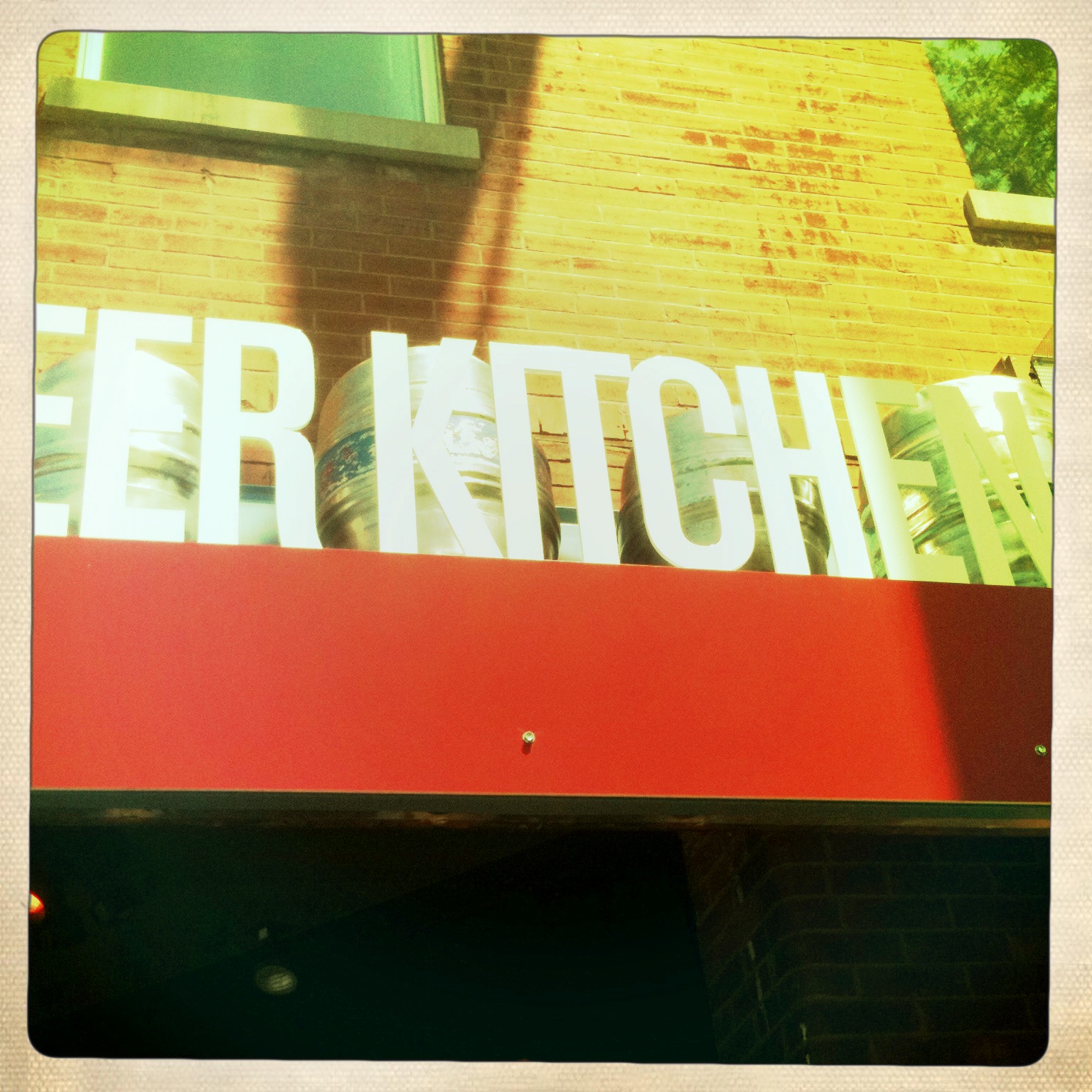
After a few samples, we all needed food in our bellies. Luckily, the Beer Kitchen was not too far away. Since I was driving, there wasn’t much for me to enjoy, except for the corned beef hash (off the brunch menu). Still, they offered six-ounce samplers of which I accepted and sipped on one of the nicer surprises of the year, New Belgium’s Le Terroir[6]. Someone bought a $15 Scandinavian IPA and we were off to the festival.
When I say “festival,” what I mean to say is a row of tents with lines of people extending about thirty feet of expectant beer drinkers. The breweries held down posts inside the tents and spent their day pouring. Breweries from Nebraska, Iowa, Kansas, and Missouri were present as well as regional favorite New Belgium and newly MO-accepted Stone. I wasn’t fooling myself. This was not a festival of breweries from the Pacific Northwest or Belgium[7]. A lot of the beer was just okay. Conversely, I didn’t have a beer I’d pour down the drain either. Our crew basically waited in line for beer, received said beer in our commemorative glasses, and proceeded to the next line where we would drink the beer until reaching the next brewer.
I honestly can’t remember which beers I liked best. It was good to try Nebraska Brewing Company, a brewery about which I had heard many good things. However, when I asked for the IPA, I got the Hop God, a blend of IPA and Belgian Tripel. Let’s just say that it was not what I wanted it to be[8], but someone let me sample their IPA and I was glad I did. I seem to remember that the Upstream IPA was good as was the refreshing Hopluia from Spilker. All of these breweries hailed from Nebraska, leading me to think that there’s something going on there besides corn.
We finished the day at a pizza place in a shopping center…which happened to possess forty or so taps. I kept it simple and sipped slowly on an Oaked Arrogant Bastard while washing down some pizza. It would take a venti iced latte to get me home, but I made it safe and sound.
This is what beer geeks do. Instead of traveling or attending festivals where there might be beer, we travel for the beer. Unfortunately for me, I’m the only one in my family who enjoys beer enough to do this[9]. So, I have to take my opportunities for beer travel when I can get it, even when it’s just a day. It might not sound like fun to talk, drink, and “eat” beer for an entire day or longer, but that’s what we do.
Notes:
1It’s not just on weekends, but weekends seem to be the easiest times to fit in some beer geeking.
2I saw many a bro suck down too many 3-4 oz. pours in the sun without eating or drinking water. Not cool, beer festival bro. Not cool.
3Interestingly, the old bottling line used to take up about the same amount of space the barrel room now occupies. The new bottling line takes up space in a pretty large room with high ceilings and yes, they used to play basketball in that room. The new line is so efficient, it doesn’t have to run on the weekends. Typically, it’s done by Friday of every week. The old line ran straight through the weekend.
4Most of the “action” occurred on video screens. There were mini-docs on the brewing process at each stop. It certainly gave the tour a Disney feel and relieved the volunteer tour guides form having to know everything.
5It seems these little trends in craft beer pop up now and again without warning. I finally feel like I’m aware of one as it happens. Of course, dry-hopped wheats, while refreshing and floral, are not as exciting as Black IPA’s and anything bourbon barrel aged.
6While dry-hopped sour ales are not really a trend as of yet, I do like the rash of well-balanced sours hitting the market here and there. Sure, I like a beer that only brings the sour, but a beer like Le Terrior is a welcome respite from beers that make you pucker.
7I think I just peed a little. The idea of attending a beer festival in the Pacific Northwest or Belgium excites me.
8I wanted hops. I got some muted hops behind Belgian sweet. Never does this work.
9Although, the 2.5-year-old often likes to tell me that she’ll gladly drink (and brew) beer with me when she’s bigger.
Stone Week
 This past week, Missouri welcomed Stone Brewing to the Show-Me State…Rather, Stone Brewing welcomed us to their distribution[1]. For most of the week, stories leaked and were told about Stone’s arrival. Of course, Stone’s Greg Koch[2] was on-hand to spread his arrogant gospel about rejecting “yellow fizzy beer” and instead choosing real flavor in the form of real beer, specifically Stone’s beer.
I say “week” when things actually kicked off Tuesday, the official release day of everything. It started with a slow rumble over social media of displays at stores all over town. During my lunch break, I stopped in at three different stores and all of them had gigantic stacks of Stone beer. I’ve never seen anything like it[3]. I remember when Founders arrived a couple years back and thought that was big. This was on another level[4]. There’s now more Stone here than the shelves allow. And it’s fresh. We didn’t get the leftovers…but I’m getting ahead of myself.
The beer nerds in town picked up their customary allotment and the stories from Kansas City and St. Louis started rolling in, including the videos below…
And basically the same talk[5] at another KC establishment near the 2:29 mark…
And while it’s humorous to watch a guy who makes and promotes craft beer for a living talk about “throwing off the chains of oppression[6],” the beer is serious stuff. I won’t be the first person to complain that Stone’s beer hasn’t lived up to their own hype machine[7], but it’s a pretty important player in the craft beer scene and it greatly upgrades the beer available in Missouri. Besides, I’m not entirely sure the beer has really suffered that much since they’ve expanded. It could be that my palate has expanded or I haven’t had fresh Stone in a long while. Whatever. Stone Brewing coming to Missouri was a big deal for us. It’s a big deal for me.
The week moved on and the day approached when the Stone reps would make their appearance in our little college town. I used the Columbia Beer Enthusiast Twitter account to promote the arrival, even going so far as to mention one of craft beer’s top-20 bachelors, Mr. Koch, as being present for the festivities. He quickly corrected me via Twitter…

This took some of the luster off the big Stone release events of the weekend, but I attended anyway[8].
After a CBE officers meeting at Broadway Brewery, people poured into Sycamore five minutes before they were open to hit the bar up for the first Stone many of us had on tap in Missouri[9]. I started with asking the bartender to fill my free take-away Stone glassware with a 2010 Russian Imperial Stout. Since we hadn’t received this year’s batch of RIS, I figured I’d just sip on this one beer before the next stop as bar crawls are always bad new for me. Trouble is, someone let me try their Sublimely Self-Righteous Ale and I wanted that. I had had this beer before, but this one was fresh with the sweet aroma of Simcoe.
After Sycamore, we stumbled down to Uprise for more Stone. The Double Bastard was the brew of choice. And when they call it “double” they’re not kidding. For the uninitiated, Arrogant Bastard is a load of a beer. The malt bill and hop presence is pretty huge, almost too much for the virgin palate, but the Double Bastard slams even the most seasoned beer geek in the face with loads of sweetness and alcohol[10]. It’s not an easy drink for anyone, but that didn’t stop us.
Originally, this was supposed to be the last stop, but we somehow rounded up some DD’s to take us out to 1839 Tap House. After a Cal-Belgique IPA and possibly something else, I had to head home. The Cal-Belgique was not the beer with which to end and I don’t feel like I can give it a true assessment after the RIS and Double Bastard. Luckily, there’s still a bottle in my cellar for an untainted tasting.
It’s been six years since I moved here, wonting of Stone. Now that it’s here, I feel our beer selection in Missouri upgraded ten-fold. Now, when faced with an uninspiring tap list at a bar, I know that I can simply order a Stone Arrogant Bastard or Ruination IPA and know that my beery needs are met.
Some have complained that the Stone brand is more hype and hyperbole than substance. I’d disagree. They’re like the indie band who signs a major label deal and blows up all over the world[11]. Maybe some of the product isn’t as good as it once was, but that might have more to do with context than it does whether or not the product is any good. Someone made the point that although Arrogant Bastard isn’t as impressive as its name would suggest, ten years ago, that beer would have blown your mind. Stone’s arrival in Missouri might not be the most earth-shattering development in craft beer, but it certainly is a welcome one.
Notes:
1Stone is practically everywhere, but part of their arrogance lies in the fact that we’re told that we’re not worthy for their beer. Only now is Missouri worthy. And with the growth of the craft beer scene as well as all the groveling in this state for some Stone, maybe we really are worthy.
2Koch is the Sam Calagione (Dogfish Head) of the west. He personifies both the good and the bad associated with Stone’s arrogance.
3Aside from the stacks of macros in our stores, I’ve never seen so much beer from one craft brewery in Columbia stores. The setups would make ABI and MillerCoors blush. I was lucky enough to see three stacks virtually untouched. I was amazed so much work had been done that morning.
4Founders was a sought after as Stone is, but their beer was absent from Missouri shelves within their first week or two. Even if people buy twice as much Stone, there’s no way we’ll run out for a month. I like that one of my favorite breweries is not only in Missouri, but it should be readily available.
5My suspicion is that Koch really has just one speech in his back pocket with a few catch phrases. Unfortunately for him, with the increasing exposure due to social media, his speeches will become cliched. Luckily for him, Stone only has a few more states left to invade.
6I do grow weary of this sort of rhetoric. Come on. You have never known oppression, white guy who sells beer to the masses. It’s a little insulting, but it’s probably benign enough by now that I shouldn’t be offended, which is maybe a problem in itself.
7Koch is part of that hype machine, but the brewery has done an impressive job of branding itself over the past decade. The ever-present gargoyles, the long-winded narratives on the back of the bottles, the use of terms like “arrogant,” “ruination,” “sublimely self-righteous”…You get the point. Stone hypes itself better than any other brewery outside of BrewDog and BD is just emulating Stone. I have to admit that I have been sucked in by the hype machine, but it doesn’t hurt that I enjoy most of their beers.
8Honestly, I came for the beer. It would have been nice to get some Greg face, but I’ll live. I’ve got my beer.
9Actually, I had some Ruination and Arrogant Bastard the night before at Uprise. We had a happy hour to celebrate my wife sending her final revisions of her book to the press and I couldn’t turn down an Arrogant Bastard.
10The regular AB is just under 8% ABV. Luckily, the Double is not fully double that, but at 11%, it packs a mighty wallop for which none of us were prepared.
11I remember no one who liked Nirvana before they hit it big liked them after. Although they haven’t technically signed with a major label, Arcade Fire gets all kinds of crap for their success. It’s hard for people to separate success from quality. Sometimes the criticism is just, but often we dislike a band just because their too big. Of course, the opposite can also be said when we love a band or musician just because they are so popular. I suspect that in beer, both happens simultaneously. Stone, for example, will win over a ton of new fans because they are filling up stores and tap handles just as they will lose beer fans because they’re everywhere.
In Defense of Mikkeller
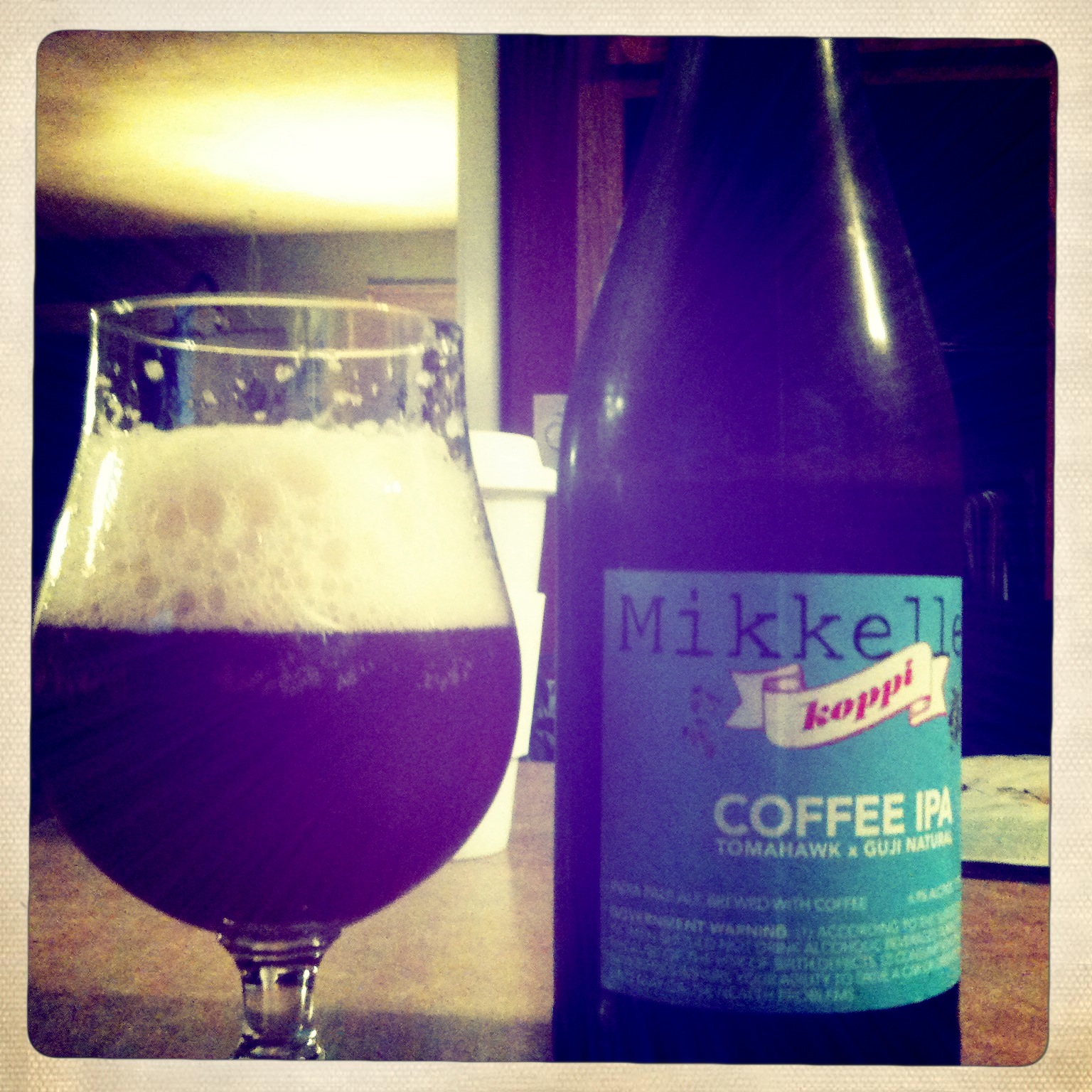
Yes. That is a coffee IPA you see before you. Typically, we expect coffee in our stouts and porters, not our IPA’s, but not this one. Nope. Mikkeller has stretched what we think we know about beer (and coffee) with their Koppi Coffee IPA.
Believe it or not, somehow, someway, this beer works. What comes across right away is the sharp bitterness in the back of your mouth. The coffee brings a bitter flavor that supplements the hops. As the beer warms, a fruity flavor reveals itself. It’s more berry than it is citrus, suggesting it comes from the coffee and not the hops. The beer finishes off super dry. A nice drink from beginning to end.
A lot of beer drinkers won’t get any of that from this beer. They’ll read “coffee” and wonder where their Starbucks is. If there’s one thing I’ve learned in the beer community, it’s that we expect to drink whatever you’re selling on your label or website. This probably explains why we hate macrobrews, but that’s another topic for another post. Beer enthusiasts will expect an IPA full of citrus fruits and pine trees. This beer won’t meet that expectation either.
Mikkeller Koppi IPA uses subtlety and balance in combining two very different flavor profiles to create one of the more interesting beers I’ve had in a while. However, when asked about the beer, I suggested that I wouldn’t buy it again. I get how this doesn’t jive with my assessment, but my reasoning will provide more evidence as to why people don’t get Mikkeller. You see, I bought this beer in St. Louis. Despite the fact that we receive a good number of their beers here in Columbia, many of their special releases are only available two hours away. And when we arrive from our journey down I-70, a Mikkeller beer is more expensive than most.
A difficult, hard-to-find, and expensive beer just won’t be readily accepted by the average beer drinker. This is the challenge Mikkeller has to face on a regular basis in winning over fans. These factors play into the average beer enthusiast’s dislike of Mikkeller. However, if one were to take the time, it becomes quite apparent that Mikkeller brews some of the best beers on the market.
Even at its worst, a Mikkeller brew is interesting. I once described their Black Tie Stout as “honeyed ash tray.” This wasn’t to say that the beer was bad. It was meant as a way to describe something I’ve never tasted before. The beers are difficult and challenging to consume or pinpoint. A Mikkeller beer is not an easy drink, but does everything we experience have to be easy in order to be enjoyable?
An easy parallel lies within music. Some of the most difficult albums and bands often become the most rewarding. A band like Joan of Arc or musician like Dan Bejar can stretch the boundaries of rock music enough to make you work to appreciate their art. You might not enjoy every song they record, but the journey you’ll take to get there is well worth it.
The same can be said for Mikkeller. We have to try a variety of their beers at different temperatures and different contexts in order to judge each beer on its own merits. The conversations and adventures that ensue are why many people get into craft beer. They want to challenge their palates and their perceptions of beer styles. Mikkeller is the brewer for the beer nerd who wants to be challenged again.
Koppi Coffee IPA does that. I’m glad I drank it. Writing this makes me want another.
Note: This was my second attempt at this post. The first was maybe the best piece of beer writing I’ve ever done. However, I had to unexpectedly close my browser without saving. I assumed that the auto-save preserved my masterpiece, but I was not so lucky. What you get in stead is this hastily scrawled post with no footnotes. Monday, I hope to tackle Stone week.
More On Beer
A little over three years ago, I took my first real steps from beer consumer to beer geek[1].
The holidays were upon us and I was looking for some nice beers to take back east. What I found were boxes encasing 750 mL bottles of barrel-aged beers from St Louis’ Schlafly[2]. There was the Bourbon Barrel Stout and Schlafly Reserve Barley Wine. These beers made the long journeys to Ohio and Michigan that winter and I’m glad they did. Each beer was probably the most intense experience I had had with beer to that date[3]. I was hooked on the biggest beers one could buy. Suddenly, a $10 bomber was not so scary[4].
While on that trip, a beer nerd who was trying to convert me put in an order for some beer. While gathering his loot, I found some nice things for myself. Two six-packs of Stone Ruination at about $15 apiece returned home with me that winter. I had never spent that much on such a relatively small amount of beer. I was in, but I didn’t know what to do once I left Michigan and returned to Missouri.
Columbia, Missouri is no hotbed for beer, especially three years ago. The beer nerd often suggested I go to St Louis for beer and buy from a gas station in town with a huge Belgian selection[5]. This idea of going out of my way just for beer seemed a bit much, but I was certainly intrigued. If Detroit could have such a nice selection why couldn’t we? What did a big beer community look like?
One place that showed me what beer culture could be like at its best was Seattle[6].
That was about the time my wife and I traveled to Seattle for a little R and R. Over the course of a week, I tried probably every west coast IPA and DIPA I could get my hands on[7]. In fact, our hosts had a sixer of Ruination[7] waiting for me in their fridge. At some point, a visit to Elysian Brewery was fit into the itinerary[8]. There was one particular day when, after a chocolate factory tour, we headed across the street for a drink at Brouwer’s Cafe. The list there was gigantic and I felt overwhelmed[9]. We eventually left, bellies full of craft beer goodness. As my wife did some shopping, our guide took me to a bar around the corner, whatever IPA I had there was just as ridiculously good as beers quaffed earlier in the trip. Eventually, we made our way to another part of town where Bottleworks held shop. I purchased beer for the rest of our stay as well as some to take home. That night, after beers and some Thai food, I hit yet another destination where the IPA’s were as hoppy as you’d hope. That Seattle trip solidified my commitment to traveling and transporting beer in order to try the best.
Upon returning, a new group was forming in Columbia. Eventually, we would become the Columbia Beer Enthusiasts. We would meet at least once a month to share beers from all over as well as those brewed on our own. This is where the beer geekery really took off as my palate was regularly exposed to beers by the likes of Russian River, Ninkasi, Dogfish Head, Three Floyds, etc., etc. This one-time interest quickly grew into an obsession.
Almost three years of hanging with these beer nerds has taught me a lot about beer and given me a newfound passion. I now have a closet full of beer which serves as my “beer cellar.” In that cellar are beers I’ve had for several years as well as beers not currently sold in Missouri. There are brews of my own making. The homebrews have done quite well among my beer geek friends and I enjoy them as well. I am currently an officer with said beer club. My weekends are now filled with one new beery experience after another. There really is nothing quite like craft beer and the community surrounding it[10].
To this point, craft beer has been the only thing for which I can obsess over as much as indie rock[11]. The new styles and breweries popping up every day make the hobby rather exciting. What will be interesting is to see where this all takes me next. That said, maybe I should get back to some reviews and show you my love for craft beer instead of telling you about it.
Notes:
1I use terms like “geek” and “nerd” interchangeably here. I mean no disrespect and claim the terms for myself on many occasions. It should also be noted that I don’t hesitate to use these terms when discussing indie rock fans. It’s a connection between the two worlds that may have to make it into my manifesto or list of beliefs at some point.
2Before Pizza puts it in the comments, Schlafly has nothing to do with crazy wingnut Phyllis Schlafly. They make beer; she makes problems for poor people and women.
3Yes, even moreso than the Ruination experience a few years earlier. Ruination was expected. I had no idea that stouts could be so full of molasses, vanilla, and bourbon. And the barley wine…I didn’t have any idea what a barley wine was. Again with the vanilla, but this had a thick, syrupy body and the sweetness to match. These are two of better beers in their style produced anywhere. While I have a certain fondness for Ruination and its ilk, the west coast IPA/DIPA has been a bit overdone and sometimes we need something else.
4Getting over the cost of craft beer is the biggest step for most consumers. We’ve been conditioned to think that beer should be cheap. However, the old adage “you get what you pay for” is especially true for beer. A $10 bottle is basically $5 per beer, but that beer is higher in alcohol and significantly more intense flavor-wise. The cost is worth it.
5Yes, the best Belgian beer selection is in a gas station. I don’t go there as often as I used to as I have either tasted most of the beers they stock or new options have since opened.
6It’s interesting to me that Seattle used to be my mecca for indie rock. Then, it was Portland. The same thing could be said for beer as Portland has earned the right to be called “Beervana.”
7If you’ve noticed, Ruination comes up over and over again. It has become a significant beer in my beer geekdom. I will be one of the first to welcome their arrival in Missouri in a little over a week. I’m thinking of asking Stone CEO and co-founder Greg Koch to sign a bottle of Ruination. I don’t know that the quality of the beer is as good as it once was since the brewery’s big expansion, but it’s a significant beer for me.
8Elysian was actually the first brewery where I feasted on northwest beers about 14 years ago. It’s a long story, but after a day of traveling with my tail between my legs, hot, sweaty, and dirty, Elysian was the oasis in the desert of my shitty life.
9I tried to order a Dogfish Head 120 IPA. Supposedly, the bartender said they were out. I suspect that he could sense I was a noob and simply pointed me toward something that wouldn’t knock me out for the day.
10Once again, this is a place where craft beer and indie rock meet. Community is incredibly important for both. It’s part of what has drawn me to my two obsessions. Nothing is better than enjoying craft beer or good indie rock than enjoying and/or talking about with friends.
11It should go without saying that I place my family above my hobbies, but I’ll say it anyway. These are just the things outside of the people I love that make each day worth experiencing.


 Beer and Pavement
1 comment