Aging
Half the time, I write about how old I’m getting. This is not one of those posts.

When brewing beer – particularly at home – aging beer to that perfect moment is as inexact a science as one can find. That’s usually why I go with IPA’s and the like that need to be consumed ASAP for fear of them losing their hoppy bite. Even this truism with brewing IPA’s doesn’t always work. I brewed an IPA last year and it needed the extra month in the bottle before it really tasted good.
Aging for pro brewers can be just as hard, but they have a lot more beer to work with, staff, meticulous notes, etc. My aging process is a crap-shoot. Luckily, it’s worked out well for me so far.
I have three(!) such experiments in aging going on right now. This is strange for me as I rarely have more than one beer in secondary at a time. And even when I have, It’s been one beer is going in while the other is going out. However, for various reasons, I am sitting on three beers aging in secondary.
The first is the one that’s been in for two months and may stay in for another 2-4. It’s my Belgian-syle Quad, better known as Guided By Voices. This beer, like all my beers lately has nailed both OG and FG. It was supposed to host some dried fruit, but I opted to let it age without so that the natural flavors would come out on its own. This beast is sitting at just under 11% ABV, easily my booziest effort yet. I don’t want to try it yet, preferring to be surprised, but it smells so good.
Why am I waiting four or more months to try this beer? A friend suggested six and most of the bigger Belgian beers sit around for a long time. It will age as long as I feel like aging it. I don’t think it will hurt the flavor whenever I decide to open it. I can always age it some more in the bottle. Either way, I have boxes of 750-mL bottles just waiting to be filled with this thick, rich concoction.
The other two beers – one a Saison and the other a scotch ale – are for a special occasion. My wife officially becomes an associate professor with tenure on September 1st. To celebrate, we’re throwing a party and I brewed these beers for the event. The Saison is a crowd-pleaser and the scotch ale is for her as it is one of the few styles she enjoys. I’m hoping that I timed both beers to be ready by the 1st. Right now, they both sit in secondary vessels, awaiting their bottled homes.
The Saison is a repeat with a few minor tweaks. First of all, I forgot to include honey. It was nowhere on the recipe for some odd reason. Also, I used the wrong caramel malt (80L opposed to 20L). It’s a long story as to why the mix-up happened, but the beer actually didn’t start out as dark as the last time. Finally, I actually got the yeast to cooperate this time around. The first time, I used a smack-pack that just didn’t really take off. It was in dire need of a starter. Since I’ve had so much luck with dry yeast packets. I just threw in an entire pack and mixed it with my aeration wand. FG was achieved in small part due to my patience but in large part due to the extra warmth I added with a warming belt.
In the secondary, the Saison is sharing space with some additional Sorachi Ace hops and Rosemary. I’m hoping that this will make the beer a bit more fragrant. It should at least make it good for beer can chicken.
The scotch ale was a complete experiment. I’m not even sure if it truly matched the recipe I wrote. Still, it fermented just fine. I’m a bit worried that an American yeast in a Scottish beer will not show the character a scotch ale should demonstrate. So, I added some oak chips soaked in cheap scotch whiskey for a little depth. Ideally, this beer would sit for two months on the chips, but I don’t have that long. Six weeks will have to do.
The second beer is called “Tenured Dingo”, a tribute to my wife whose last name is the same as the baby-eating, Australian dog. At best, the beer will be rich with flavor and really wow our guests. At worst, the beer’s namesake will tell that it would be good with a burger, something she says about every beer, regardless of style.
Aging happens in other ways. As my hair grays, my record and beer collections age along with these homebrews. As change happens in my life (wife’s mentioned tenure, a new job for me), change will occur in those carboys. I’ll do my best to keep you all updated on developments as they happen, but as you probably can tell, keeping a blog up-to-date is not always an easy thing to do.
Anniversaries
Man, it’s been quiet around here…
Last night was my seventh wedding anniversary. We opted to stay in and have a nice dinner, much to the chagrin of my three-year-old. After all, my partner is the best cook in this town (not counting chefs and even then it’s close). It was steak and loads of veggies from our CSA.
Normally, such an occasion calls for a ridiculously boozy imperial stout of sort or another, but I opted for the nice Port Brewing Anniversary Ale my friend Alex sent me. My wife had wine and the kid drank her milk and water dutifully.
Anniversaries are for reliving important moments in our lives. I attach conversations, food, drink, and music to these moments in time. I still remember the shot of Żubrówka I downed at the conclusion of the ceremony as well as the one I had after the pictures were all taken. Then there was that first homebrewed hefeweizen (courtesy of my FiL) and a blur of an evening. All these memories come rushing back every year on July 9th.
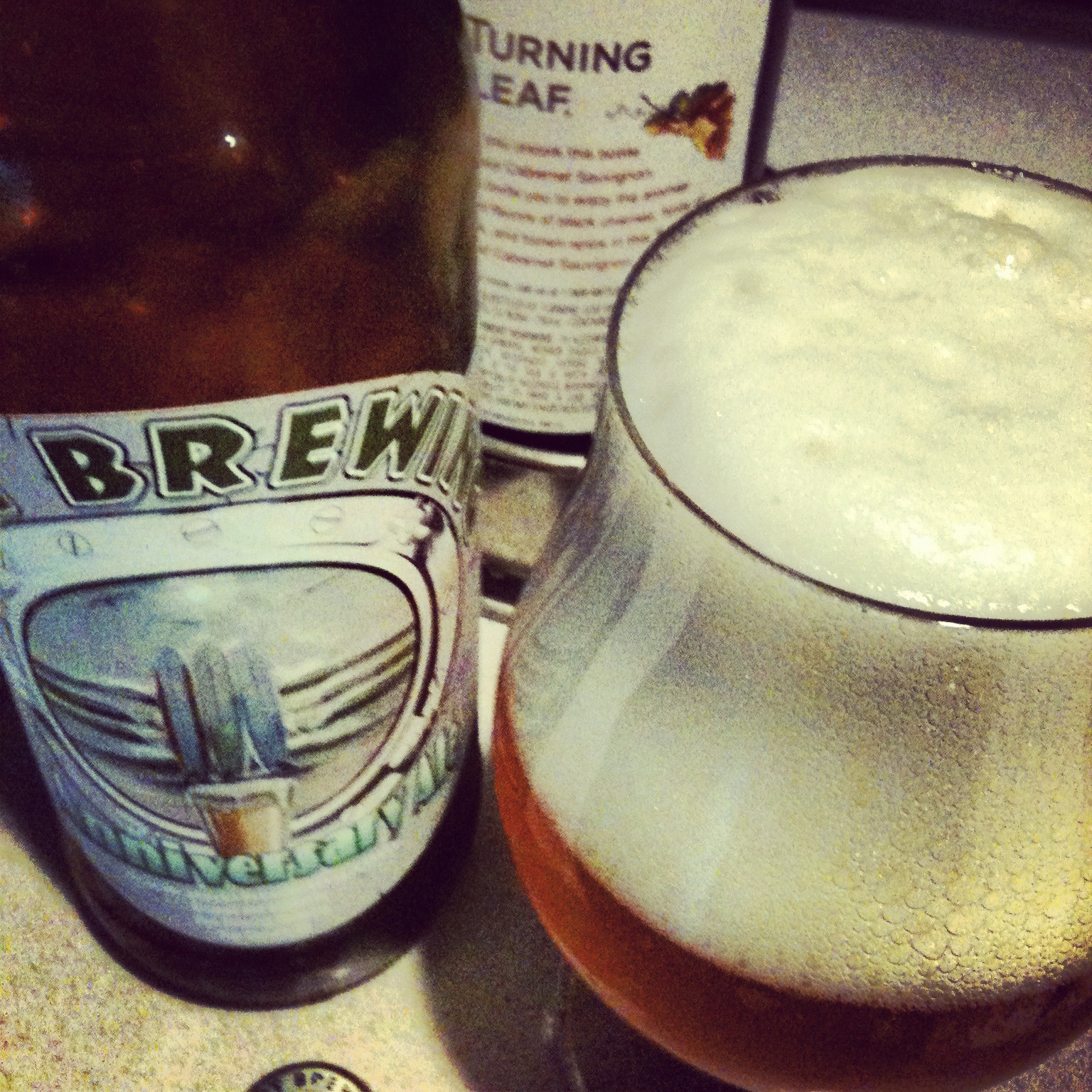
Breweries like to commemorate their anniversaries as well. As mentioned, my seventh was spent nursing one such beer from Port Brewing. With its fruitiness and boozy heft, the Imperial IPA stood up well to our top sirloin steaks. I may have held onto the beer too long to fully enjoy the hoppy nose I’m sure it offered when fresh, but the beer was so masterful in all other areas that it didn’t really matter. While it certainly was a proper brew for anniversaries – mine and theirs – I wouldn’t hold onto one until the next. Drink it now if you are lucky enough to find a bomber.
The music last night also hearkened back the days leading up to our wedding. My partner has particular tastes and isn’t always interested in what’s new. In those days, we wore out my copy of Broken Social Scene’s You Forgot It in People. So, it seemed apropos to put the album on.
I like anniversaries. They don’t have to be big events. Sometimes a nice, quiet dinner with my two favorite people and a good beer is all I need.
Attention Whores: Wayne Coyne and BrewDog
For a little context, watch the following two videos. Beware, however. Both are NSFW. The first due to imagery and the second due to language. Although, they both feature nudity…
From the Flaming Lips, featuring Erykah Badu[1]:

From Brew Dog:
First, let’s address the Flaming Lips/Erykah Badu video.
It seems that Wayne Coyne and the Lips upset Ms. Badu by releasing the the video for their collaboration on “The First Time Ever I Saw Your Face” before she was able to approve it. What was she so upset about? Well, the video features Badu as well as her sister in a bathtub (at different times, you perverts). In various shots, the tub is filled with water, glitter, what appears to be fake blood, and something white, milky and sticky (you can figure out what it represents). In addition, Badu and her sister’s bodies are on full display[2] including slow-motion shots of their rear ends getting smacked.
FWIW, the video is decidedly NSFW. There’s no debating that.
What is up for contention, however, is whether it counts as art or just a bit of soft porn, intended to shock. The slow, lingering shots of the women’s bodies certainly can be titilating for someone into that kind of thing[3]. Additionally, the various substances clinging to their bodies surely is a fetish for someone. Still, I’d argue the concept and portrayal is beautiful and adds dimensions of motherhood and birthing to the song that I never heard before. While the imagery is no doubt very graphic, it also contains a large amount of artistic merit.
The above was my take before I knew of Badu’s displeasure. Something doesn’t sit well with me when rich (yes, the Lips are moderately rich at this point), white men use sexualized images of women – particularly women of color – for their own gain[4]. Her complaints paint head Lip Wayne Coyne as a master manipulator who exploited the images of Badu and her sister for shock value[5], garnering more attention for his band.
Of course, I also see the other side of it. This video is a case of Wayne being Wayne[6]. When he’s not posting a video of a naked Badu in blood, he’s Tweeting pictures of his naked partner (NSFW), walking out of a giant vagina (you guessed, NSFW), or flashing his own twig and berries in a video (REALLY NSFW or bicyclists). The man is not afraid of using the naked form in his art. So, Badu should have had some idea that Coyne would do something like this. It doesn’t excuse Coyne for not running it by Badu first, but one has to wonder what she expected from a man who is constantly surrounding himself with imagery of naked women[7].
In the end, the Lips apoplogized after Badu and Coyne had some back-and-forth Tweeting. The video was pulled with an edited version due Monday. Coyne apologized. Both parties received a fair amount of attention. Life goes on.
The second video features BrewDog’s attempt at pitching a reality series. Others in craft beer have tried this, but few have produced anything as compelling or aggressive as BrewDog. That said, many simply chalk it up as the Scottish craft brewers looking to create a little publicity with yet another stunt.
For the most part, the show looks like something one would find on almost any cable network. You have engaging subjects in James Watt and Martin Dickie doing crazy things like finding multiple ways to destroy corporate beers[8] or cooking in the nude[9]. They have a travel feature where they visit some of the best brewers in the world. Basically, all the things they normally do have been captured and pieced together in video.
As I suggested above, some grow weary of BrewDog’s never-ending efforts to garner attention for their little brewery, even when it isn’t their fault. They brew beers both ridiculoulsy high in alcohol and low. They package beers in dead animals. And they generally do whatever they can to upset the beer traditions and corporate overlords of the United Kingdom[10].
Personally, I don’t care. Aside from a few early bottles I did not enjoy, BrewDog has consistently wowed me with some fantastic beers. I even find some of the stunts they put on to be entertaining as I’m sure Watt and Dickie intended[11]. Besides, their message isn’t for the converted American craft beer nut. It’s for unitiated[12] of their own homeland.
What these two stories have in common is that they were created by attention whores. I don’t mean this in a derogitory way. The men in question just long for loads of attention. They stir up controversy so as to enter the conversation. In the end, it garners attention for their craft as well which means income.
I’m okay with this. Corporations do silly things all the time to get your business. Why can’t indie-crafters?
The biggest difference between corporations and indie-crafters lies in the resources they have to throw at such controversies. So, corporations can blanket us with one stupid, attention-getting stunt after another without ever really committing to big-time cotnroversy. However, if you’re a craft brewer or indie rocker, you have fewer opportunities to make a splash with far-reaching marketing campaigns. So, you have to get more bang for you buck by drumming up a little controversy. I get that.
What I don’t get is the blatant disregard for their audience and/or fellow collaborators. Why did Coyne have to exploit Badu’s willingness to appease his artistic vision by posting a video she obviously would not have approved? Why does BrewDog spend so much time even addressing their corporate competitors when their beer should speak for itself[13]? I don’t know the answer to this, but this aspect of the attention-grabbing is disappointing.
There are more positive ways to grab that attention. Sufjan Stevens has made a living off of completing just 4% of a project when he claimed to be working on a 50-state project[14]. Sam Calagione changed liquor laws in Delaware and crossed the Potomac (or was it the Delaware?) with a keg of beer to open his brewery[15]. These stunts hurt non one, garner attention, and generally keep the focus on the product.
Either way, it’s clear that Wayne Coyne and BrewDog need attention. I don’t mind that they need it. I just wish we could get back to the music and beer.
Notes:
1Sorry. It’s been taken down. You’ll have to bear with my descriptions or use your memory if you were able to catch it.
2FWIW, this is not the first time Badu has been naked in a music video. Check it (NSFW, obviously).
3Let’s be real. I enjoyed it. The women are beautiful and I thought it was tastefully shot and edited.
4How would this debate be different if we were talking about Larry Flynt or Dov Charney or Terry Richardson? Would it be any different?
5Is anything Wayne Coyne does shocking anymore?
6I recognize the irony of using this phrase. It sounds an awful lot like “boys will be boys.” So, I’m already uneasy with this argument. However, it is a layer of the onion that must be peeled.<-I'm way better with this metaphor.
7In part of Badu’s online rant, she mentions that she loves the Lis’ show. If you’ve ever been to a Flaming Lips’ concert in the last 12 or so years, you’re pretty acutely aware of the nudity involved. Also, they’re called The Flaming Lips. What do you think that means? Wayne Coyne ate some habinero peppers one day?
8Waste of money.
9Gross.
10This is pretty easy to do. I enjoy it when beer bloggers from the UK visit the Coalition. They have a different perspective to provide. However, they are a protective lot when it comes to beer tradition.
11Surely, you all realize this. Everytime you bring up BrewDog, they get more attention and then more money. Ditto for Wayne Coyne.
12The message isn’t for you, Real Ale Guy. They don’t want your money. Go back to your pint.
13Stone does this as well, but their arguments are not so mean-spirited. When Greg Koch talks about “fizzy yellow beer”, I get the sense that he is promoting his beer more than shooting down the big boys. BrewDog come off less nuanced.
14However, I suspect he will put out a flurry of 5-10 more state-themed albums at some point. Oregon’s next, I predict.
15I think I have totally butchered this story. Possibly none of it is true.
Session #64: Pale in Comparison

The Beer Babe had the following mission to propose for this month’s session:
Your mission – if you choose to accept it – it so seek out and taste two different pale ales. Tell us what makes them special, what makes them forgettable, what makes them the same or what makes them different…
I have to admit that the pale ale is not currently my favorite style of beer. Extreme beer has me roped in, but I also like other, more diverse styles of beer. The pale ale is just so plain, so run of the mill these days. Everyone brews a pale.
It hasn’t always been that way. I used to exclusively order pale ales, particularly Columbus Pale Ale back in the day. It was so bitter and fulfilling compared to the macro lagers of my youth that I couldn’t imagine anything more flavorful. When I was lucky enough to try a flight at a brewery, the pale ale was what I used to judge a brewery’s quality. The pale was king until it’s Indian cousin (and his imperialist friend) came along and changed my life forever.
Still, I wanted to participate in this month’s session. With a summer holiday arriving just before, I figured that I had ample opportunity to try some pale ales and put together a post. The two pales I landed on were Deschutes Red Chair NWPA and Tallgrass 8-Bit Pale Ale.
Now, before some beer purists get their boxers in a bunch, I recognize that these beers are technically considered American pale ales (APA). This was purposeful. I prefer the sharp bite of hops over biscuit-y sweetness more prevalent in the British version. So, most pale ales don’t typically do it for me. Now, I don’t need to be knocked upside the head at all times by hop bombs, but some fruity, piney aromas and bitterness provided by American hops is one of the things that dragged me into the craft beer world. So, this is as close as I’ll get to trying two pale ales so closely together*.
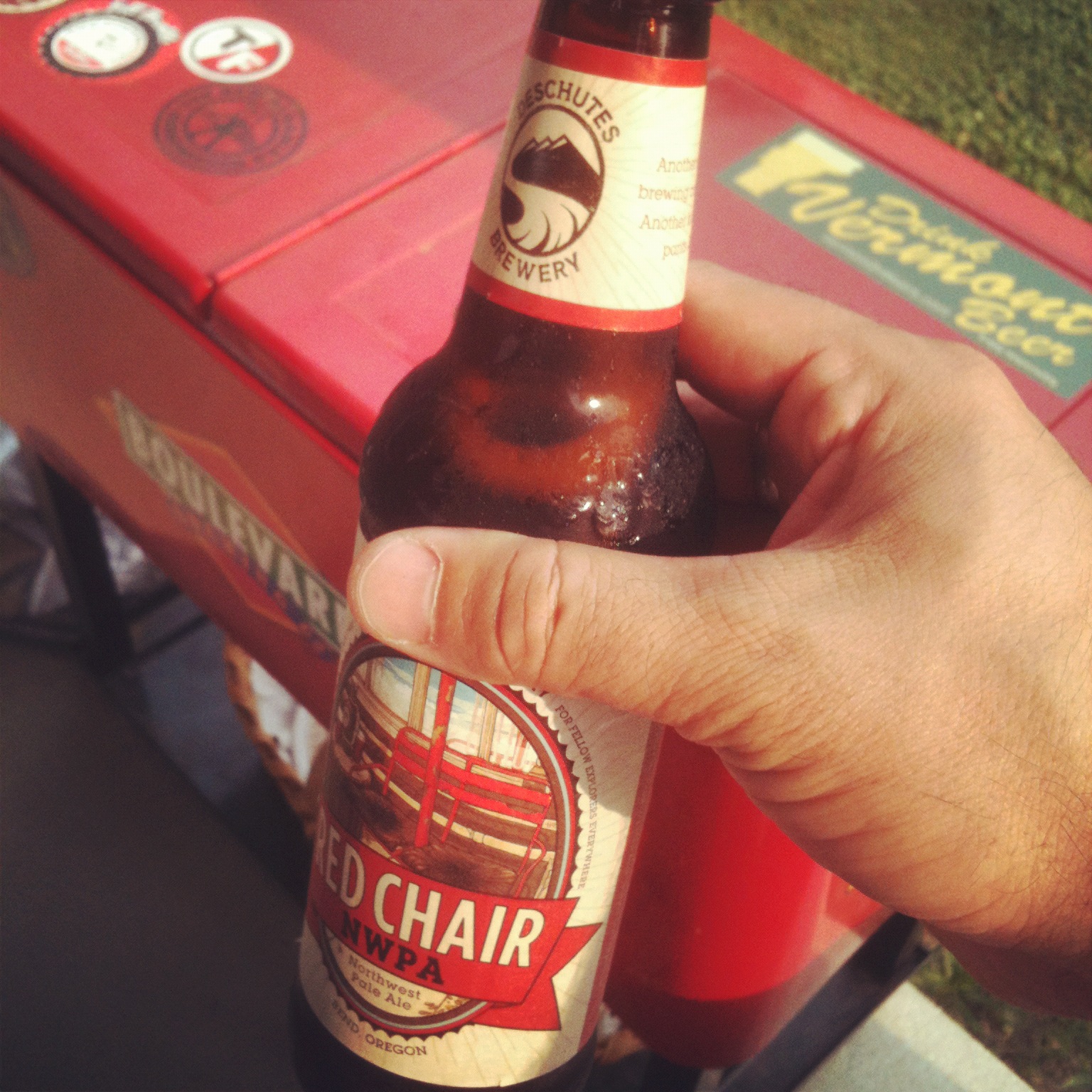
The first of the two APA’s I tried was the Deschutes Red Chair NWPA. It was a nice evening at the community garden. Most of the kids in the ‘hood had just finished their last day of school and so we threw a little barbecue. I grabbed a sixer of Red Chair and even “slummed it” by drinking from the bottle.
At 6.4% ABV and 60 IBU, this beer teeters on the edge of being another great northwestern IPA. However, it goes down much smoother, almost too smooth as I had three before having to drag my kid (and myself) home for her bath. This beer is a gentler, kinder IPA, something I always hope for in a pale ale, even if it makes the purists cringe. Even from the bottle, I could enjoy this beer’s pine forest aroma. It’s just a great and easy drinking beer for a beer geek with some extreme beer fatigue. Mind you, that’s not extreme beerfatigue. I’m talking about extremebeer fatigue. Those are two very different things.
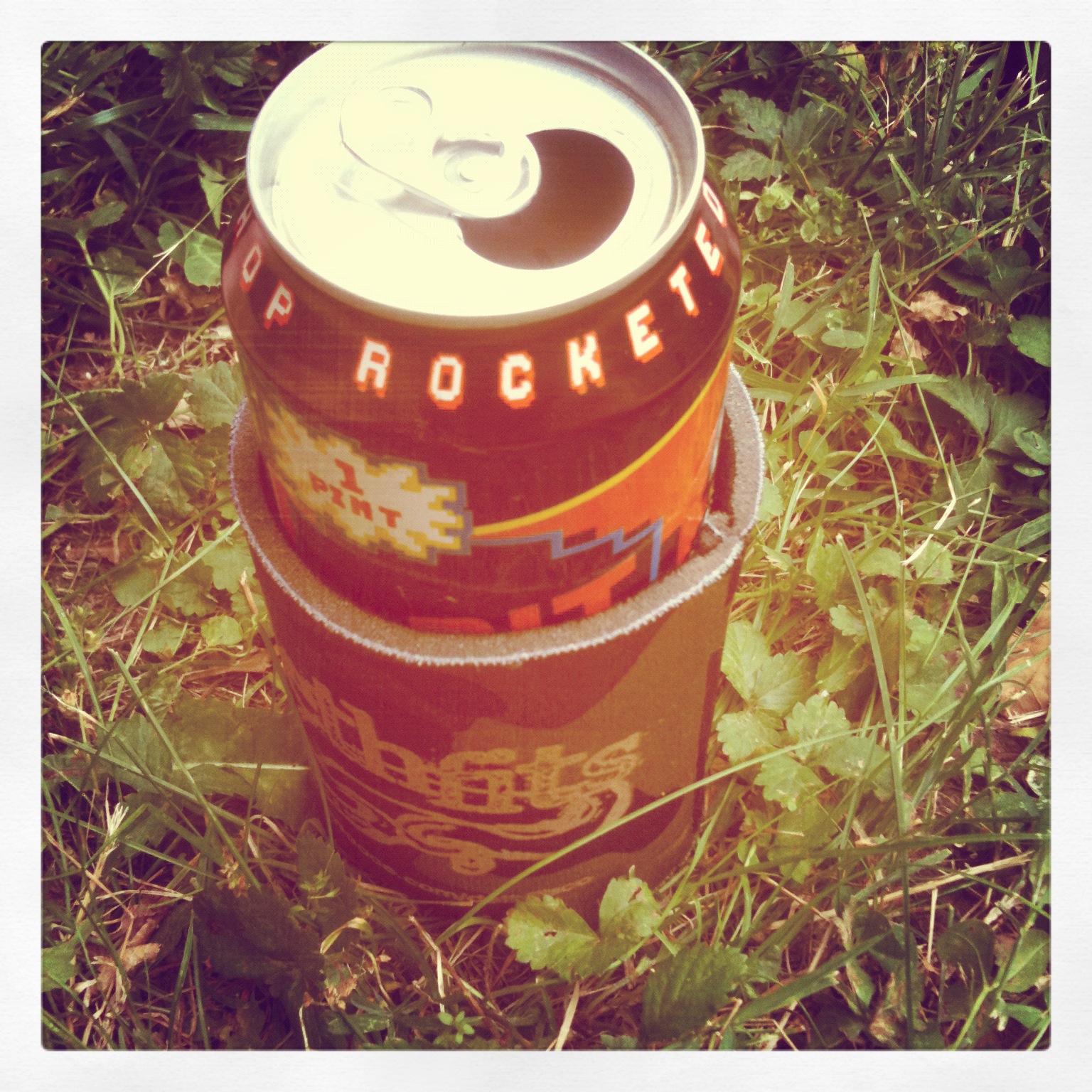
Later in the weekend, my daughter and I embarked on a 60-mile (round trip) bike ride split by a night of camping and live music, better known as the Pedaler’s Jamboree. The featured beers of the fest were those canned creations from Tallgrass. One such beer was waiting for me in a cooler at the end of the first day’s ride: 8-Bit Pale Ale.
8-Bit’s measurables put it much closer to your average pale ale (5.2% ABV, 40 IBU), but it’s still at the high end of the spectrum. Everything Red Chair had, 8-Bit did subtler, but that wasn’t a bad thing. After biking all day in 90+ degree heat, I was happy to have an easy drinking beer with just the right balance of sweetness, bitterness, and floral hoppiness.
And yes, I drank it out of the can. What else are you supposed to do when camping? Besides, how could anyone not love the cartoonish design adorning this 16 oz can? My daughter hoped she could have some but she was out of luck.
The tone of this month’s session felt like a review was in order, but I don’t really feel like ranking these beers or even comparing them. They’re both dynamite examples of (American) pale ales. Red Chair screams Northwest with its piney aromas and 8-Bit comes off more citrusy like its Midwestern wheat-based brethren, but that’s about as different as they get. Otherwise, both beers were smooth going down and made me reconsider my extremebeer pretensions. Whatever that means.
*It should be noted that I finished off a four-pack of Green Flash Rayon Vert not too long ago. That beer is considered a Belgian-style pale ale. I love this beer, but it felt as though it was cheating when this session was considered.
On Cans and Vinyl

Last weekend was Memorial Day weekend, the first of the three summer holidays most noted for BBQ and beer. (Well, and remembering those who died in war, our country’s “independence”, and labor’s many accomplishments.) Much of the beer I consumed came from a can; a little bit of beer nostalgia delivered the good stuff to my gullet.
In recent years, BPA-coated, aluminum cans have become the container-du jour for craft beer fans and brewers. Cans keep out more sun than bottles and arguably more oxygen. While some only see cans as a hipster novelty, most of us realize the importance of these vessels to the portability and preservation of our favorite brews.
I, like most beer geeks, prefer not to drink my beer from cans (nor bottles). I often say that one would never attempt to smell a flower through a straw. So, pour that beer into a glass, let it open up. However, for the holiday, I succumbed to drinking my beer straight from the can without shame.
There are certain contexts for which such pretensions over drinking beer not from the prescribed glass are called. Poolside, floating lazily down a river, camping, and bicycling are a few of these moments. Considering the conditions of the holiday, I enjoyed my Tallgrass beers from the cans, coozy included.
Context dictates how we should consume beer and even the kinds of beer we drink. I don’t feel guilty for drinking from the can. I was in the midst of a 60-mile bike trip with a night of camping in between. Cans were were a practical drinking option. Even bottles were unwieldy and potentially dangerous. The can is much like its close relative which is used to house such camping delicacies as beans or corned beef hash. Enjoyment of the moment was wrapped in an aluminum cylinder. I was not about to soil the moment with a glass and make the beer more important than the enjoyment of the event and those around me.

Vinyl records, like cans, have their own ideal contexts when their less-than-ideal delivery trump advancements in technology and actually add to enjoyment. The context in which a vinyl record is preferable to more digital formats are times when devouring an entire album in the confines of your home is paramount. When I am relaxing in my finished basement with a record, very purposefully spending time with the music, a record that requires me to drop the needle and flip sides now and again is better than simply pushing a button. Vinyl engages the listener physically while delivering a soft, familiar sound.
Unlike cans, vinyl is less portable and arguably auditorily inferior to its digital counterparts. It’s not easy to take a record with you. Digital music is so much more portable, like canned beer. The sound debate is a good one, but I won’t get into that here. Simply, for sharper, more precise sound, go with digital. However, vinyl feels different. It’s softer, warmer, and preferable for those of us who just prefer a more analogical existence.
Both cans and vinyl had good runs that ended too quickly. Newer and better technology arrived. These creature comforts of our fathers became obsolete. Then, retromania hit. People found ways to improve upon old technologies while recapturing lost nostalgia. The can never really left, but craft beer’s adoption has bumped its cred. New can lining technology hasn’t hurt either. Vinyl is better produced than ever and many new records come with digital downloads, giving you both the high quality sounds and artifact in one, neat package.
The comfort and sentimentality of beer cans and vinyl records just feel right in the right context. It’s hard to put a finger on it (as you can probably tell from the rambling above), but they just feel right in the right situations. I don’t always go can or vinyl. However, it’s nice to know that they’re there and are ready for the perfect situation.
Speaking of vinyl, if you’re anywhere near Middle Missouri, come out to Uprise on Monday to see/hear me play some records. The set list will be posted here, but you should come and have a beer with me while I play the “hits.” Also, both images were totally lifted from the great Tumblr better known as Dads Are The Original Hipsters. Go read it now.
Indie-Craft Interview #13: Stone’s Greg Koch
When Stone finally arrived in Missouri, so did Greg Koch, the brewing company’s co-founder and CEO comes correct, preaching the craft beer gospel through a bull horn. His message is the only thing louder than said bullhorn. It’s a message that speaks to the coalition. It’s a message that promotes artisanal products, particularly his own Stone beers.
Unfortunately, Greg did not make it to Columbia during that release. He did however take the time to respond to my blog post on the events of that week. He even responded to each and every footnote. Regardless of your stance on Stone, craft beer hype, or the circus that surrounds Greg, it was pretty cool that he took the time to leave comments on my 100-views-a-day blog. It was even cooler that he took the time to answer my questions for this series.

Imagine this image with a beard… Image lifted from OC Beer Blog.
1. Describe your craft(s).
Our craft at Stone Brewing Company as you might guess is craft beer. We started in 1996 and since then helped introduce the world big character, hoppy, aggressive beers that don’t compromise. Also, our craft is in the Stone Brewing World Bistro Gardens where we have become the largest restaurant purchaser of local, small, farm, organic produce in Sand Diego County – a stat that I am particularly proud of. In addition we have our own small organic farm which only produces a small percentage of our produce needs is about eight miles north of our brewery.
2. What’s the importance or benefit of remaining indie?
It’s substantial. When you’re independent- that is not owned by a large conglomerate or industrial producer or also not publicly traded or held – you can make decisions that aren’t based upon a bottom-line, financial black and white spreadsheet. Now I’m one that argues that actually making “impractical” or “nonstandard” decisions is a very good business model, but it’s extraordinarily hard to do that hundred any circumstances, to trust your gut, to go direction really feel you should go. But if you’re in part of a larger conglomerate or a publicly held company, then the chances that you’re going to do that are almost nil. Being indie allows the creativity to come out and now to go directions that may seem on the surface to many impractical or uncertain but ultimately can allow you to create things that are special and unique and hopefully, ultimately successful.
3. How does your craft contribute to society?
At Stone, our biggest contribution is to do our part to show the world that there are better, more interesting things out there. There are things that have a better connection to the community, a better connection to our local region [through] our eclectic menu, our aggressive and unique beers…that people don’t have only the same old same old to choose from. They also have the ability to choose and learn about things that are of a special and unique quality. We’ve also tried to do our best to display a model that is highly connected to our community as far as community involvement. We participate in more than 500 charitable events each year. We’ve donated more than $2 million in cash and beer to charities for charitable fundraising events over our lives at Stone Brewing Company. We’re an active part of the community. Stone Brewing World Bistro Gardens is a community gathering place. It’s a place where people go to congregate, discuss issues like the old-time pubs and meeting places. Our place – which has no TV’s, a complete ban on high-fructose corn syrup, no commodity beers, no commodity pre-processed foods – is a place that sort of breaks free from the convention that’s all around us, allowing people to more creative in their own direction and their own lives.
4. What other indie-craft products inspire you?
I’m actually stoked to say that there’s quite a number. Maybe coffee would be at the top of the list but coffee would have to share the top of the list with artisanal cheese producers. Pretty much all artisinal and artistic food and drink: local bakeries, kombucha producers – creating great, flavorful, healthy drinks – , and restaurants and pubs… You know, like the gastropub movement to use a broad term. These businesses that are working hard to make sure they’re connected to the community and our environment by carefully curating what they serve, understanding the policies, practices, philosophies behind the items that they bring in the backdoor, prepare, and serve to their guests. All places that approach their business from that perspective I have a high level of respect for and appreciation for because it makes my life as a consumer richer and more rewarding. I get to experience the best that life has to offer. In today’s world, there’s kind of no reason no to enjoy all of these things. Sometimes in certain areas you have to seek it out a little bit more, but overall the level of availability of specialty and artisanal products has continued to grow. I appreciate that.
5. What is your dream of success?
Success to me means the world has changed or is dramatically changing for the better; yhat we are continuing to understand the importance of organic and local produce; that we [consume] actual, real food as opposed to pre-prepared foods or processed foods and all that. They’re better for our society. They’re better for us individually. They’re better for the environment. They’re better for the animals in the case of eating meat. We can live happier, healthier lives. This is a beautiful thing. It’s what I believe in. While it may not look like on the surface from our work that we’re working towards that, but I really feel that we are part of this movement to steer away from commodity, conglomerate, and lowest-common-denominator stuff towards artisinal quality, characterful, and well-crafted items.
Cheers and thanks for including me in the article! I appreciate it.
Greg has a new book out that you should read. Some of it is redundant for those of you who know the story of beer well or even the story of Stone. However, there are some great beer and food recipes included along with a good model for starting a small business the way you want to do it. In the meantime, drink a Stone in honor of this interview.
Click here for the previous twelve indie-craft interviews. If you know of someone I should interview for the series, make a suggestion below.
Mash Tun Reject
I submitted a piece for the new craft beer journal Mash Tun and was all-but-assured that it would be included. Apparently, it was rejected. I say this because there’s no way for me to actually see the journal, but my name is nowhere on the announced list of authors. Plus, the editor quit replying to my emails. Oh well. I don’t have time to be a writer anyway. Below is what I thought would be a first draft, one that would develop after some suggestions from said editor. No hard feelings, just disappointment.
Update – The editor got back to me and explained that the piece didn’t fit with a few of the historical pieces included in the journal. Some assistant was supposed to respond to my emails but never did. Maybe I’ll try again.
Building International Coalitions Through Beer and Pavement
We live in a world of turmoil and uncertainty. Economies are tanking. Tensions are rising with threats of terror and violence at every corner of the earth. Folks arbitrarily take sides. It’s a distressing time to be a human.
So, we look for escape. We take up hobbies to pass the time or alter our minds with chemicals in order to forget all of our troubles. Our daily lives are consumed with activities and interests that help us ignore the unrest all around us.
I have taken up a few hobbies in the interest of helping me avoid dealing with the chaos of our times. One such hobby involves beer, that of the hand-crafted, artisanal variety as well as the kind I brew in my kitchen. The other hobby has to do with my obsession over independent music, better known as indie rock, although no one really calls it that anymore.
On the surface, these two interests have very little in common, aside from the fact that they’re both my interests. However, I have found that one interest tells me more about the other every day and vice versa. Here we have two industries that defy the current downward trajectory of our economy through continuing expansion, improving distribution, and breaking into mainstream markets. Plus, they bring people together. All this is done by breaking from the status quo, suggesting that whatever is mainstream is maybe doing more harm than good.
There’s a coalition here to be built, a coalition between the craft beer world and indie rock community. You see, these two industries have more in common than they realize. It all comes down to the descriptors I and many of you use to describe beer and music. Craft beer is hard to maintain and develop without its independence while indie rock is nothing without a musician’s craft. This is where indie and craft meet.
I have explored the intersections between craft beer and indie rock for some time now. One aspect is simply the fact that we all love beer and rock music. The other aspect is the intersection between those descriptors “craft” and “indie”. For me it’s obvious, but for others, it’s a stretch.
Craft is generally considered a type of skilled work. Historically, craft has been judged not only on quality but also quantity. In order to maintain a high level proficiency, production had to remain small, manageable. Larger production tends to remove the craft, creating product with increased simplicity and often more defects. As more artisans or workers were needed, the craft was diluted. When craft is increased, volume tends to shrink, but the quality of the output grows exponentially. Independence from corporate interests can insure that the craft remains paramount over profits.
Indie is short for “independent.” To be independent, one must be self-sufficient, free from the tyranny and limitations of corporate decision-makers more intent on making a buck than putting out a good product. Independent rock music and music labels are considered such as they are not a part of corporate owned music factories. There are only 3-4 of these major labels left, but they are huge and deeply connected in corporate industries that have nothing to do with art or music. Still, as these major labels deal with the handcuffs of corporate profit margins, indie labels are free to let their artists create and hone their craft.
Craft and indie need one another, feed on one another. Indie labels happen to demonstrate a fair amount of craft among its artists. This focus is lost in the craft at the majors as the shift is toward making music that satisfies corporate bottom lines takes precedence. And craft brewers are the most independent of beer industry as they provide a higher quality alternative to the three or so corporate beer producers. One could really call them craft rock or indie beer if it was desired and neither would lose meaning.
Now, don’t get me wrong, both indie rock and craft beer have intentions to make money. How else would they exist in a capitalist society? The difference between crafty and independent heroes and their corporate counterparts is that they won’t put profit ahead of the craft or their independence. Sure, some indies and crafties have sold their souls to corporations, but they are the exception not the rule. The indie and craft movements are about small scale and high quality. Corporations don’t know how to do this.
And we’ll gladly pay for whatever indie labels and craft breweries are selling despite higher prices. Even during this recession, indie labels (as well as the stores who sell them) and breweries have seen steady growth. Craft beer especially is growing at an incredible rate. Even during economically hard times, we’ll find the money to support independent, craft producers of our favorite goods because we know that their products are worth it. This is no truer than it is for indie rock and craft beer.
Despite the success indie/craft producers are enjoying, our corporate overlords still rule the markets, but their share is shrinking. The large, corporate breweries are watching their sales drop as is the industry as a whole. However, craft beer continues to grow. The music industry is suffering as well. Yet, more and more indies are popping up all the time and they continue to put out music. If there’s room for these smaller players in their respective industries, then they must be doing something right.
So, the indie and craft markets are what’s king these days. They may not own high percentages of their markets, but they have found sustainable business methods that feature slow, controlled growth and a focus on the craft. They maintain their independence through their success. This is where they intersect. I think there’s a lot we can learn from indie rock and craft beer. That’s where the coalition comes in. Here’s to building international coalitions through beer and Pavement and here’s to indie beer and craft rock.
Now, how did I ever come to this place? How have I made a connection that seems trivial at best and absurd at worst?
There are stories to tell that explain my epiphany. The stories are numerous and varied. Few occurred where I felt this deep connection between both craft beer and indie rock. However, the accumulation of these experiences have led me to this great cause of my life: building international coalitions through beer and Pavement.
Honestly, my first epiphanies happened in the 1990’s and they involved music more often than beer. There was a giddiness I remember feeling waiting for my first Pavement show in the Algora Ballroom in Cleveland, OH. A few weeks prior, I experienced an electrical sensation getting pummeled by Archers of Loaf in the old Columbus venue known as Stache’s. There were the hours pouring over records in my favorite record store, Columbus’ own Used Kids. These moments are etched in my mind forever.
Why did this music mean so much to me? There was an urgency, a hunger, a passion missing in the corporate sludge clogging the airways. These musicians were working stiffs like I am. They were doing something I could have done and they did most of it on their own with what little cash they could scrape together. It was accessible. It was authentic. It was ours.
Craft beer came much later. I suppose I had as much experience with music when I discovered Pavement and Guided By Voices as when I gave up corporate, rice adjunct lager for a Stone Ruination for good. I still remember that night I grabbed a sixer of something bland and a bomber of that epically bitter brew with the menacing gargoyle staring back at me. The night I cracked open that beer, it all changed for me.
There were other beer epiphanies. My first Russian Imperial Stout challenging my ability to finish a single beer in one sitting. The beers from Jolly Pumpkin and Russian River awakening parts of my taste buds I had long since neglected, never once thinking I’d rediscover them in a beer. Then there was the first time I tasted my own brew, realizing that I never learned to play guitar at the same level I learned how to properly dry-hop a beer.
Through all of these discoveries and sensations, the value of craft and independence stood out. From the ashes of DIY movements past rose artisans who create beer and art unlike anything corporate money could ever hope to emulate. Craft beer and indie rock share these values. In this, I find comfort in the human condition that encompasses an authentic even intellectual appreciation for a good beer or ear-shattering album.
So, as you enjoy your next finely-crafted double IPA, dry-hopped on unimaginable amounts of Simcoe or tongue-splitting sour ale, aged in Chardonnay barrels and infected with yeast strains formerly considered unacceptable for human consumption, drop the needle on that Guided By Voices record from your college days. Or when you attend the next Pitchfork-endorsed rock show among the PBR-wielding hipster set, order that imperial stout hidden in the back of the cooler. A coalition is being built through beer and Pavement, a coalition dedicated to craft and independence. It’s time to join us.
Indie-Craft Interview #8: New Albanian’s Roger Baylor
I first learned of the New Albanian Brewing Company when they brewed a tasty collaboration with Missouri breweries Schlafly and O’Fallon a while back. Then, I saw their t-shirts touting various brewing equipment as machines for killing facists, a la Woody Guthrie. Finally, I discovered the outspoken NABC owner Roger Baylor on Twitter and knew the Coalition had found another unsuspecting member.
Roger’s stirred up some discussion on Twitter, especially over the expansion east of several larger craft brewers and Goose Island’s AB-InBev move. He never holds back and appears to stay true to the indie-craft ethos. This makes him an ideal subject for the series. Luckily, he agreed to contribute some thought-provoking answers to the interview. Check it…
1. Describe your craft(s).
This may come as a surprise, but actually there exists scant evidence to indicate that I practice any known craft. I’m surely unemployable outside the narrow job description created by me (and exclusively for me) as a restaurant/pub/brewery owner, although many years ago the late beer writer Michael Jackson referred to me as a polemicist, so there it is: Polemicist. Good beer is my preferred metaphor for all other human endeavors, and for advocating the revolution, while at the same time not
sparing the revolution from constructive criticism – and make no mistake, craft beer is in desperate need of self-criticism right about now.
2. What’s the importance or benefit of remaining indie?
The craft beer business has long since entered the phase in which imagery is freely co-opted by conglomerates, and the odd part is that onlookers persist in ignoring the differences between authentic and corporate. The classic, textbook example is Goose Island, still adored by supposed indie-thinking fans, whose cognitive dissonance precludes them from grasping that they’re merely enriching AB-InBev’s coffers whenever they choose to buy Goose. Consequently, remaining indie is important precisely because by doing so, persons and entities remain connected to reality, retain integrity, and restrain the flight of money out of communities, both big and small.
3. How does your craft contribute to society?
There always needs to be a gadfly who reminds us that our sacred cows are mere lumps of clay, tastefully re-arranged to look fetching. Questions need to be asked, and people need to be made accountable and uncomfortable. Is it really good for society to subsidize exurban sprawl, to shop at Wal-Mart, and to tolerate Churchill Downs declaring Stella Artois the official beer of the Kentucky Derby? If someone really drove 1,000 miles for a Dorito Taco from Taco Bell, shouldn’t eugenics be making a comeback?
4. What other indie-craft products inspire you?
The answer comes in the form of questions: What are you good at doing? What explains your ability to do it well? I enjoy listening to, and learning from, those who are good at something/anything, and even when the topic lies outside my immediate range of personal interest, there’s an aspect of one’s experience and abilities that illuminates my own: Orchestra musicians playing as one; Repairing the gears on a bicycle; Milking a goat and transforming the yield into cheese. I never tire of learning, especially when beer drinking can be squeezed into the tutorial.
5. What is your dream of success?
On a day to day basis, success is the ability to earn an honest living, while concurrently, neither compromising one’s ideals nor hurting other people. Long term, after you’re dead, success is when someone thinks about you and smiles at the memory.
Read more from the man’s own blog, The Potable Curmudgeon, and be sure to find New Albanian the next time you’re in Indiana or Kentucky. (Maybe Missouri will be added soon?) Also, read the previous seven interviews here.
Indie-Craft Interview #5: Jim Galligan
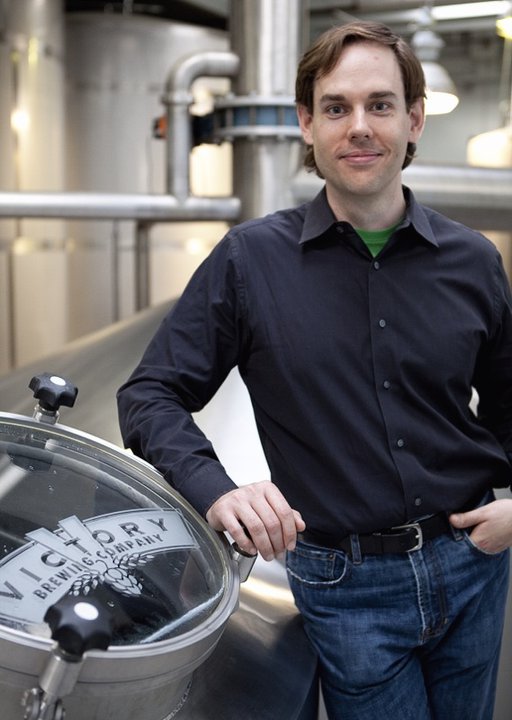
Jim Galligan is the less bear-like half of the Beer and Whiskey Brothers, a semi-popular beer blog that likes to keep things light, aside from their beer and whiskey. The brothers have flirted with a TV series and now Jim writes beery thoughts for one of those awful morning network “news” shows. He’s self-effacing and generally a good guy, plus his favorite brewery is in my backyard (STL).
Jim and his brother Don have made a pretty good go at this beer blogging thing. They actually respond to every comment. It seems their ultimate goal is to sell out, but I just like to refer to that as “making a living doing what you like to do.” It doesn’t lessen the independence or craftiness of their site for me. Wanting to make a living doing what you love is as indie-craft as one can get.
1. Describe your craft(s).
My main craft is creating content, either by writing, designing, making a video, whatever. I like to entertain people and stir things up a bit. I mostly write about craft beer, which is something I love to turn people on to.
2. What’s the importance or benefit of remaining indie?
I find honesty refreshing, especially these days when everyone is afraid they’ll be crucified for saying the wrong thing. Say what’s in your heart, and if it’s wrong, who cares? For me, being “indie” is all about keeping it real. Authenticity is something I cherish.
I’ve found that writing about beer has given me a space where I’m comfortable being 100% honest about what I think, regardless of whether or not anyone else agrees with me. It’s liberating, and I find it has made me more confident sharing my opinions in places where there’s more at stake, like at work.
3. How does your craft contribute to society?
That’s a good question. Most craft brewers are more interested in making something great than getting rich (otherwise they’d work for Budweiser), and by celebrating what they do, I feel that my brother Don and I help whet peoples’ appetites for things that are authentic and special. I know since I’ve gotten into craft beer, I’ve also become much more interested in supporting indie restaurants and local shops, even if they cost more than the chains. I think once you get an appreciation for the good stuff the “little guy” can do, it bleeds into other parts of your life. So in essence we’re saving America – how about that?!
4. What other indie-craft products inspire you?
I like anything that shows how excellent people can be or even that people aren’t perfect. So I guess any product that has a real human element to it – artwork, a great meal, a Pixies song – will catch my interest.
5. What is your dream of success?
My dream of success is making a living doing something I love. I recently got paid for writing about beer for the first time ever – I have a weekly craft beer column for the Today Show’s website – and it was very cool to hold that first check in my hands. It’s far from enough to live on, but it’s a start, and that’s something.
Speaking of checks, I should note that even though I’m getting paid a bit here and there by MSNBC, it hasn’t changed my approach to writing honest stuff from the heart. It HAS impacted my topic selection and the tone of what I write – the sloppy sarcasm we sling on our blog doesn’t play well there – but I’m not out to please anyone more than the truth. I’ve seen you point to Sonic Youth as an indie band that moved to a big label but kept their integrity, and I’d like to think I can pull it off as well, but in a bloggy kind of way. To me “selling out” isn’t about who is writing the checks, it’s about who is pulling the strings.
Well, if there’s a way to sell out, Jim’s doing it the right way. Keep it real, Jimmy.
Beer Thousand, Ep. 2
After posting a bunch over the last couple of weeks, I hit a wall of busy. In the meantime, the second episode of Beer Thousand failed to get edited and uploaded. Never fear. It’s here!
Although we recorded this over two weeks ago, it’s still pretty fresh. The beer is Cigar City’s Kalevipoeg Baltic Porter, a beer they brewed to commemorate CC’s 1000th batch. Somehow, I forgot to mention this in the video. Still, you’ll find that we liked it and I wish I had another.
With this episode, I tried to do a few things differently. Instead of having the featured album playing in the background, I added a couple of tracks to the video during editing. Also, there’s no review. I’ve been listening to Sharon Van Etten’s Tramp pretty much nonstop this winter and spring. I put the first two tracks, “Warsaw” and “Give Out”, on the video to give you a taste. Go check your Spotify account for Tramp and give it a lesson while you sip on your own Baltic Porter.


 Beer and Pavement
6 comments