The Six Degrees of Thurston Moore: Challenge #1
 You may recall that my last post proposed a theory that any indie or alt musician could be connected to Sonic Youth’s Thurston Moore in six steps or less. I demonstrated this to be true with the likes of Ani Difranco, Deerhunter, and Justin Bieber. Then, I invited my readership to come up with some musicians of their own for me to connect to Thurston.
My loyal followers did not disappoint. The first three suggestions included a little-known Australian indie outfit, a local band from right here in Middle-Missouri, and a hard-rocking, bow-toting guitar hero. None are obvious at first, but all prove my theory.
First up: The Go-Betweens – This Australian band enjoyed some minor success throughout the 80’s with songs like “Streets of Your Town” and “Was There Anything I Could Do?”, but are they within six degrees of Thurston Moore?
- The Go-Betweens featured Amanda Brown on violin.
- Amanda Brown played violin for R.E.M. in several tracks and even appeared in their tour documentary, Road Movie.
- R.E.M. recorded “Crush with Eyeliner” with Thurston Moore on background vocals (and possibly guitar?).
Another route I could have taken is as follows…
- The Go-Betweens once collaborated with Nick Cave on a project known as the Tuff Monks.
- Nick Cave curated an All Tomorrow’s Parties in Australia.
- ATP has also been curated by Thurston Moore on two occasions.
Next up: The Foundry Field Recordings – This is a local band here in Columbia and if it works in five steps, I too will be six degrees from Thurston Moore (whom I’ve actually met in-person…wait…)
- The Foundry Field Recordings are on Emergency Umbrella Records.
- EU features Sinkane, AKA Ahmed Gallab, on its lineup.
- Ahmed Gallab is also a current member of Yeasayer.
- Yeasayer appeared on the compilation Dark Was the Night.
- Dark Was the Night featured Matador bands Spoon (formerly), Yo La Tengo, and Cat Power.
- Matador is the current label for Sonic Youth.
Yeasayer also opened for Beck on tour and that’s just a hop, skip, and a jump to Sonic Youth, but you get the picture.
Finally, stepping away from indie bands, my cousin suggested Ted Nugent. This might stretch the theory, but here goes nothing. I mean, how in the hell is a NRA, right-winged, hair metal nut-job only six degrees from one of my heroes? Watch and learn…
- Ted Nugent was in Damn Yankees whose label was Warner Brothers.
- Warner Brothers’ lineup includes The Flaming Lips.
- The Lips once famously opened for and backed Beck while he toured to support Sea Change.
- Sea Change was released on Geffen Records.
- Geffen started the rush for indie and punk bands in the late 80’s/early 90’s by signing (yes, you guessed it) Sonic Youth.
So, there you have it. The theory of the Six Degrees of Thurston Moore lives on! If you have quicker or more interesting connections than the ones I provided, please share. If you have musicians I can’t possibly connect to Thurston Moore, share those as well.
The Six Degrees of Thurston Moore
 So, I got to thinking about the Six Degrees of Kevin Bacon and whether there was an indie rock version. I don’t know that anyone has created one, but I thought I’d like to try. Would I use David Bowie? What about Mike Watt? Nope. The man I believe I can connect to every indie rock artist (maybe even several non-indie rockers) is Thruston Moore.
Why Thurston Moore? Besides being the frontman of the seminal and legendary Sonic Youth, Thurston also has a long history of mentoring young bands. He buys every 7″. There is a connection between Thurston Moore and every band I’ve ever loved. I’m sure of it.
What defines a connection?
Well, with the Kevin Bacon game, people are connected via films and TV shows in which they’ve appeared. So, albums would be the logical place to go with music. However, that is only a part of the equation in defining how artists are connected in this industry. There are tours, video appearances, collaborations, shared producers, etc. So, I’ve attempted to rank the sort of connections one could have that would lead them to Thurston Moore in six steps or less.
- Recorded an album together as a band member, producer, recording engineer, etc. is the most direct connection.
- Collaborated on or curated a project together might include an ATP event or a special one-time performance as a tribute.
- Toured together, especially in a package deal is a bit difficult to pin down as often bands play gigs together without really have much to do with one another. Plus, it’s sometimes difficult to find these connections. However, if the musicians in question played a seminal show together, it should definitely count.
- Friends of friends is even a shakier place to find connections, but indie rock is more of a community than anything. Also at this level, I’d consider labelmates as some bands on labels practically live in incest while other hate each others’ guts.
- Even sketchier is if the musicians are simply lumped together in a scene or genre. I will avoid using these connections, but I reserve my right to use the weakest of connections to prove my theory.
Those are the connections. I feel I can trace any indie rock hero to Thurston Moore in six steps or less. I will first demonstrate below and then open a challenge to you in the comments. If my first tries seem too obvious, that was not done purposely as I really believe this will be easy with any indie rocker. Also, if you think you can connect them in less steps, that’s fine as well. The real goal is to connect Thurston Moore to anyone in indie or alt circles in six steps or less.
First up: Ani DeFranco – Part-time lesbian and independent label owner who beats the hell out of a guitar and growls all feministy at ya.
- Ani Difranco runs Righteous Babe Records whose lineup included Andrew Bird.
- Andrew Bird appeared on Thao with the Get Down Stay Down’s Know Better Learn Faster.
- Know Better Learn Faster was released by Kill Rock Stars.
- Kill Rock Stars’ lineup famously included Bikini Kill who was fronted by Katleen Hanna.
- Kathleen Hanna appeared in Sonic Youth’s “Bull in the Heather” video.
OK. That was easier than I thought. Let’s try another.
Up next: Deerhunter – The sonically lofi P4k darlings fronted by the remarkable Bradford Cox sounds like Sonic Youth, but are they too young to be connected to Thurston Moore? Let’s find out.
- Deerhunter’s latest LP was released on 4AD.
- 4AD was the former home of the Breeders, featuring Kim Deal.
- Kim Deal was not only Kim Gordon and Thruston Moore’s babysitter whenever they passed through Ohio, but she also appeared on Sonic Youth’s “Little Trouble Girl” off Washing Machine.
That was even easier. I realized it as soon as I moved to 4AD. Maybe I should move outside indie rock to see if my theory can hold up outside of Thurston Moore’s circle of influence.
Super Bonus Challenge: Justin Bieber – Yes, the “musician” with a lesbian haircut and hordes of adoring female fans couldn’t possibly connect to Thurston Moore in six steps. Or could he?
- Justin Bieber signed with Usher’s management group.
- Usher was part-owner of the Cleveland Cavaliers whose marquee player before this summer was LeBron James.
- LeBron James is close friends with Jay-Z.
- Jay-Z’s video for “99 Problems” featured Vincent Gallo.
- Vincent Gallo played bass for Jim O’Rourke.
- Jim O’Rourke not only produced albums for Sonic Youth, but he was considered the fifth member for quite some time.
That last one was iffy, but it works. I could have probably connected Usher to someone different or used Rick Rubin, but I successfully connected Thurston Moore within six steps.
Now it’s your turn to come up with musicians that may or may not connect to Thurston Moore in six or less steps. The only rule is that the musician or band in question has to be famous enough that their name appears somewhere on Wikipedia. I can take it from there.
Three Records Reviewed
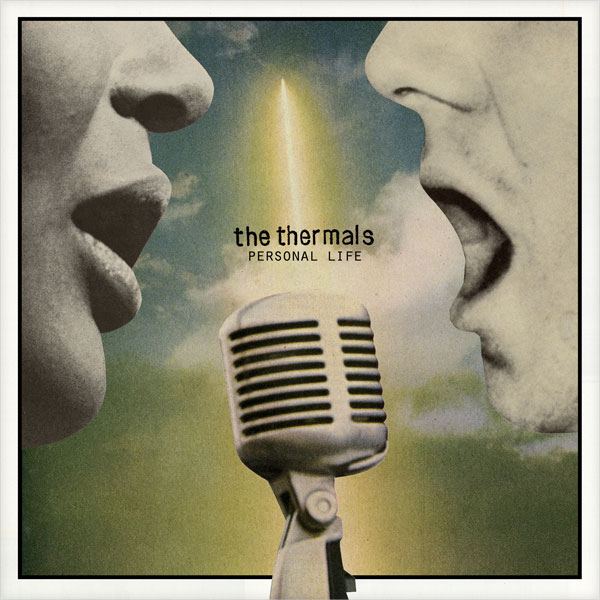 The Thermals recorded a record about relationships. There. I said it. And you know what? This record isn’t as bad as that might sound.
Personal Life is a record that lies closer to Guided By Voices[1]
and Weezer than it is to Billy Bragg or Fugazi. Sure, there’s politic in the personal, but this record deals with relationships in a real way, a way we can all relate. Melodrama is left behind as real emotion comes through in what must be the most mid-tempo record The Thermals have ever set to tape. It’s not completely poppy, but it’s approaching a pop sensibility not normally associated with a KRS act. Still, I like it. It’s relationship music at its finest. I’m a sucker for this and The Thermals did it right.
The biggest difference in this album and previous Thermals records is the aesthetic. Nothing creates more criticism or praise for an album than aesthetic. Which is too bad as the songwriting and musicianship usually remains relatively the same or improves over time. In The Thermals’ case, it’s a cleaner, ready-for-radio sound that mirrors a Weezer or a Ocasek-era GBV[2]. Still, Kathy Foster’s heavy bass lines are more in-front than I’ve ever noticed. All this is good in a lofi era that prefers more bedroom and less digital. The key is that The Thermals did not tweak their aesthetic too much. Personal Life is still unmistakably a Thermals’record. The production and new themes demonstrate a band who knows what they are and are simply growing. I mean, you can’t play punk rock forever, can you Billie Joe[3]?
In much the same way The Thermals have slightly altered their aesthetic, The Walkmen continue to play with their own aesthetic that won them a Saturn commercial and our collective indie rock hearts so long ago. Lisbon is yet another boozy, late-summer gem[4] that not only furthers The Walkmen mystique but also plays with the formula a bit.
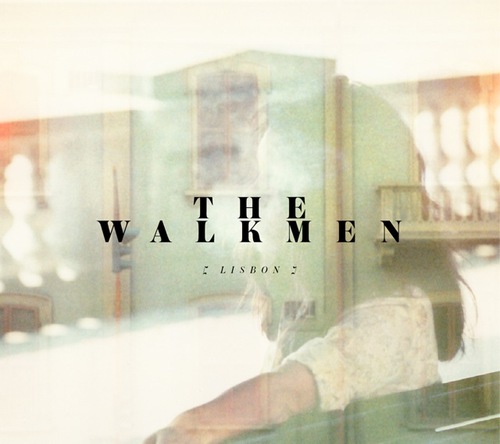 I’m a huge fan of The Walkmen. I’ve made no secret of this fact. They play a post-punk soul like no one since The Afghan Whigs fucked it up back in the mid-nineties[5]. The Walkmen have a recipe that works. They look good. They keep it simple. And they just put out good records.
Lisbon starts off a bit slow, but upon repeated listen, opening track “Juveniles” grows on the listener with nuance and feeling. This is how the rest of the record rolls. The band knows how to use their retro sound and sparse production to create one of the most engaging and sonic aesthetics in music. No one makes records like these. Soul, punk, sonics, feedback, nods to the past, booze, soft-loud dynamics, etc. This just works every time.
Most interesting in the transformation of The Walkmen sound is Hamilton Leithauser’s voice. It’s actually improved. I’m sure it’s from tour after tour of screaming himself hoarse every night or not. And the development feels authentic. This is not a classically trained singer by any means. I always appreciated his imperfections, but the steady improvement of his vocals are noticeable and welcomed.
This post is heavy on aesthetic. All three albums I’m reviewing here represent my tastes as far as aesthetics are concerned[6]. The Thermals represent a youthful punk exuberance. The Walkmen channel ghosts of rock n roll past as played over a sonic wall few can achieve. All three take advantage of some level of lofi, feedback heavy aesthetic, but Deerhunter comes to this most purposefully. Few bands represent the current trend in indie aesthetic more than Deerhunter. This is not to downgrade their material, it’s just how they represent on a superficial level. Of course, their music is anything but superficial or merely for aesthetics alone. This is just how they sound on first listen, without much investigation.
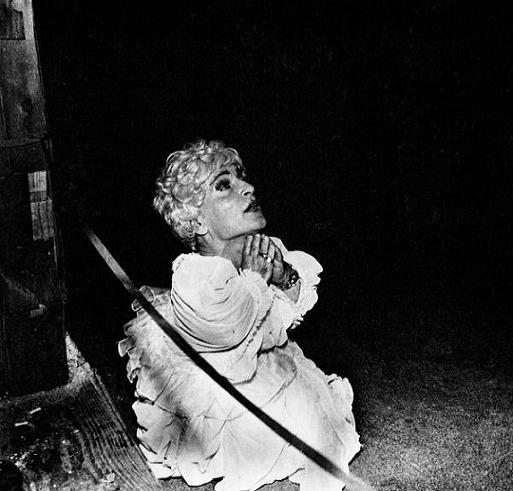 First, Halcyon Digest will never be confused for Microcastle. Or any other heavy-handed previous Deerhunter release[7]. Still, somehow, the band maintains its aesthetic of guitar jangle, muffled bedroom vocals, noise, malleable lyrics, etc. Aesthetic preserved.
Halcyon Digest is not at all what I expected, but it works for the most part. It’s loopy, laid back, and sloppy. There’s plenty of angst in the lyrics. It’s compact and whatever the opposite of sprawling is. It’s a ghost of an album and sometimes that’s all you need. The quieter moments in this record are the strongest and most satisfying for sure[8].
That said, I am having trouble finding some cohesion[9] in this record. At times, it challenges, then it invites air time on your favorite Clear Channel alt radio station. It lulls you to sleep and jerks you awake. I’d say the sequence is uneven, but I can’t figure out where…
OK. I’m nit-picking. There isn’t much wrong with Halcyon Digest, but I am having trouble grasping its brilliance and its folly. The trouble with this indecision is that I don’t think it’s a grower. Some albums tell you that over the course of the first three or so listens. This one doesn’t indicate to me that it will grow on me, but I don’t know that it’s supposed to.
Whatever. Deerhunter still records a better record than 99.9% of the bands earning 9+ on P4k. That should be worth something, maybe a little faith in their recipe. Like I said, at least the aesthetics are there[10].
So, there’s the three record reviews promised in the title. It’s as schizophrenic a post as I’ve done in a while, but the important thing to remember is that aesthetic tells us as much about the music we love as almost anything else. All three records present a different aesthetic, but all are worth your time and hard-earned dollars.
Please comment and make sense of what I just told you.
Notes:
1More Tobin Sprout than Bob Pollard.
2Blinkerton Weezer. Also, Ocasek-era GBV is not the best era and did not involve Tobin Sprout. Yes, I contradict myself.
3Seriously, Billie Joe, hang it up.
4Although Lisbon and You & Me are the only two that have actually been released at the end of the summer, all their records sound that way.
5Seriously. The Afghan Whigs had something going with Gentlemen and even Black Love (to a lesser extent) until they sort of forgot what they were doing. Kids today don’t realize how good that band was.
6This post also represents my tendency to being repetitive. Repeatedly. Again.
7Honestly, I’m not that familiar with Deerhunter’s discography. I’m going by what I’ve heard and read.
8The sonic levels reached are quite enjoyable as well, but they don’t reach as high as the last time out.
9This is the point where this post loses its own cohesion.
10What a copout.
Seeing Puppies, Unicorns, and Rainbows
Being a critic[1] is a hard gig[2]. People have a hard time with a little criticism[3]. When you don’t see things through rose-colored lenses, you’re a Debby Downer or a glass-half-empty or whatever. The trouble is that we don’t live in a black and white world where things are simply good or bad. There’s a ton of gray in between that needs to be acknowledged. Of course, if you’re the one who does the acknowledging, you’re a wet blanket, stick in the mud…You get the picture[4].
Life and art are not all puppies, unicorns, and rainbows[5]. Critique is a part of experience. Just because we try to ignore the blemishes doesn’t mean they’re not there. Ignoring the imperfect makes it tough on those of us who can’t ignore it. We are ostracized for not seeing double rainbows and made to feel guilty for ruining everyone else’s buzz. However, what critics are doing is trying to make sense of an insane world and hopefully connect with those who feel the same[6].
I’m not here to piss on your parade[7]. I just like to discuss the pros and cons of food, drink, locations, people, art, etc. It’s all beautiful in its imperfections. I thrive on this. Imperfection is real, concrete, authentic. Let me have my reality.
From where is this coming?
I used to write a blog called living in misery. You may have heard of it[8]. The name came from a pun I created in fifth grade to remember my states and capitals. It has little to do with my feelings for Missouri and, specifically Columbia, but there are connections. I won’t lie. It was difficult moving here and when I complained, no one would allow me to express my…well…misery. All I wanted to do was work through these experiences in order to make some sense of it. Could it have hurt my friends and acquaintances to wallow a bit with me, to not make me feel like such an outsider? The answer you’re looking for is “no.” Join me in my sorrow and I’ll have your back when it’s your turn.
The crazy part is that I often try balance the positive with the negative. A brewer might drive me crazy when he plasters Comic Sans all over his labels, but I will still proclaim his beers to be among the best in all of craft beer. An album may have a terrible closing track, but the rest of it could still be stellar. Our town has this great documentary film festival, but sometimes it’s a little overcrowded or it tries too hard to come off as apolitical. I love all of these things and just want parts of them to be better. Unfortunately, my detractors only see the negatives. They wonder why I hate that beer, won’t listen to the album, and refuse to attend the film festival. It’s as if they can’t imagine someone liking something without thinking that it’s perfect.
What’s really difficult to deal with is when I am in agreement that something is great or good, but when I mention that one chink in the armor, I’m suddenly seen as a traitor. Take the town in which I live. Columbia is your typical midwestern college town, a bastion of liberalism[9] tucked away amongst a sea of conservatism. However, it’s got issues. There’s uncontrolled suburban sprawl; city government just made a turn for the conservative; it’s rather segregated[10], etc. These things are not unique to Columbia, but whenever I acknowledge COMO’s shortcomings, people are all over me. I get the “It’s a great place to raise kids” when the schools are broke and lack of diversity is stifling. Upon pointing this out, I am automatically thrown in the same pot as Nazis, pedophiles, and Jayhawks[11]. It’s not like I don’t like some things about COMO; it’s just that I don’t think it’s Nirvana and actually prefer larger, more diverse cities. The fact that I disagree doesn’t mean you’re wrong. It just means that we have different opinions and values. It’s OK.
The point is that just because I see more than puppies, unicorns, and rainbows (if I see them at all), doesn’t mean that your [favorite thing] is bad or has no value. Conversely, just because I don’t agree 100% with your assessment doesn’t mean that my critique has no value either.
The reason I blog is to be a part of a conversation. You can join or not, but realize that I won’t always love the same things you do. And just because I critique doesn’t mean I think it’s all bad.
Now that that’s out in the open, it’s time to get back to some bloggin’. There is a record review in my near future (among many that I’ve somehow skipped), but I’ll conclude with some thoughts on two shows about which I have mixed feelings.
Last week, I saw The National in STL. Despite proclaiming their album among the year’s best months ago, I sort of expected this show to be boring. While the material is strong, the images conjured of a live show were not promising. I was wrong about this as The National put on a solid show, playing all the songs we wanted to hear[12]. While it was good, it was not great. I was probably in the minority on this opinion, but I stand by it. They’re not a really excitable band and they don’t play the most excitable music. In fact, The National are a bit brooding. They’re an excellent band, but they don’t put on a punk rock show. In fact, it seems the most excitement happened as frontman Matt Berninger walked out into the crowd. It was a bit premeditated, but it certainly did the trick for most in the audience. Still, it was a nice show[13].
Just last night, I decided to check out the Mountain Goats at the urging of friends. Let me just say that I get why people love the Mountain Goats. John Darnielle is an engaging, emotive singer/songwriter. People knew his songs by heart and he certainly enjoyed performing for his audience. That said, it was a little too earnest for my taste. There’s a reason I don’t attend singer/songwriter shows or play the shit out of the Indigo Girls. Maybe I missed something, but the Mountain Goats are not what I thought they would be.
OK. That felt better. Tear me up in the comments.
Notes:
1I use this term lightly, but it seems to be the most accurate term to use when describing what I do with blogs.
2I use this term even more loosely as this blog is certainly not a “gig” in any way. It’s a hobby and should be treated as such. It has no influence or bearing on your experiences.
3I recognize that I too struggle with the criticism, but I look at this more as a way to stand up for myself. I catch a lot of shit for the blogs I write and most of it is never published in the comments. I typically get bombarded on Facebook or in-person. I don’t deny your right to criticize; I’m just refuting your claims.
4There are many interesting metaphors for being critical/negative.
5Although, I suppose art could be.
6This is similar to the idea that many of us prefer sad songs because they comfort us in letting us know that we’re not the only people who feel that way.
7I prefer using “piss” over “rain” in this analogy. It’s more potent. Rain feels passive.
8Most of you followed me from that old blog to this one. So, you don’t need to respond to this point.
9This is debatable in that it’s relative. COMO is as liberal as possible in middle Missouri. It’s not San Francisco liberal. Hell, it’s not Orange County liberal.
10This is an interesting point. Many COMO-lovers will admit this but claim rich diversity in the same breath. Sorry. If your community is segregated, diversity is not your strong-suit.
11There isn’t much difference between these three in COMO. In fact, the latter might be the least desirable.
12I will say that the show gave me a reason to revisit The National’s entire catalog, one I’ve admittedly neglected for the most part.
13I forgot to mention that Owen Pallett opened and did not disappoint. He’s like a good, stripped-down version of Andrew Bird.
Never Forget Pavement for the Last Time

Image blatantly stolen from a friend on Facebook.
After my two-year-old’s birthday party and a rather stressful Buckeye game[1], I launched my Prius[2] toward Kansas City for what would undoubtedly be my last Pavement show ever. Two hours lay ahead of me with the first last Pavement show playing on my iPod[3] and nothing but time to contemplate my time with my favorite band. I mean, it was 9-11, a day we’d never forget. Or something.
All my punk and indie cred were out the window Saturday. There was the aforementioned birthday party and football game which held me up from making a day out of the jaunt to KC. I could have hit a bar or a nasty taco joint beforehand. Hell, what I should have done was visit every BBQ shack in KC until I found the one where the band was hanging[4], but I didn’t. Instead, I watched that damn football game until the bitter end before making said trip down I-70. Two hours driving to the Uptown Theater, a 90-minute set, and two hours back. That seemed about right.
Anyway, I did use the driving for some proper reflection. It was just over 15 years ago that I first saw Pavement. I was slow to liking them and didn’t see the band until the Wowee Zowee[5]. I saw them twice that summer, once at the Agora Ballroom (not to be confused with the much larger theater) in Cleveland and at Lollapalooza in Columbus[6]. That first gig was maybe the most rocking of all the times I saw the band. Spiral Stairs/Scott Kannberg came out with a homemade Pavement t-shirt a fan had given him earlier that evening. And despite the shirtless mooks upfront moshing, the show was so much raucous fun. I distinctly remember that the set moved along seamlessly when at just the right moment, someone behind me suggested they play “Serpentine Pad” and they did. I felt I had found my band, my community. Even a lackluster Lolla set couldn’t deter me. I was a Pavement fan from then on.
I wouldn’t see Pavement again for almost two years. They didn’t come through Ohio very often in those days, at least not Columbus. Around the time my personal life was going through a great upheaval[7], they rolled into town to play the Newport Music Hall in Columbus. The set was quintessential Pavement as there were many false-starts and even a moment when Malk took over on drums for Westy in order to demonstrate how the song should be played. It was a ramshackle set, but very entertaining.
Six or so months later, I saw Pavement again. This time I saw them at Cleveland’s Odeon. It was maybe their most together and complete set of those early shows. The band played the hits and had their shit together.
The next time I would see my favorite band was also the last…for eleven years. Rumors were swirling over the band’s inevitable demise. Terror Twilight just felt like a last hurrah in its tone and message. In fact, I distinctly remember thinking that it was the lead-up to Malkmus’ first solo effort once that record was released. We somehow knew that this would be it. The show was at Cincinnati’s Bogart’s, the last in their US tour before heading off to the UK. Pavement played a pretty great set, including “Conduit for Sale” for the first time in my presence.
Years would go by and I bounced from band to band, always returning to my favorite. I even started a blog dedicated to their songs, although it is grossly ignored at the moment. Every time a seminal band from the nineties reunited, I’d wonder when Pavement’s turn would come.
Finally, the New York shows were announced last year and many more dates followed. I jumped at the chance to see them at Pitchfork despite disliking large crowds like I do. Shortly after that, the Kansas City show was announced. I didn’t actually decide until the morning the tickets went on sale to buy them, but I knew all along that I’d go anyway.
So, September 11th came. I made it to the Upland Theater, a nice older venue, in the middle of the openers’ set. It didn’t sound like I was missing anything, so I made a pit stop before finding a spot half-way back. For Pitchfork, I was really close, but for this gig I wanted to stand back and watch.
The band walked onto the stage in typical Pavement fashion. They waved. Malk wore a football jersey for his favorite football player[8]. The band looks remarkably similar to the way they looked eleven years ago. Sure, Spiral Stairs and Ibold look a little heavier, but they all look good for the most part. They certainly have not lost their aesthetic that caused them to be unfairly known as slackers[9].
From the start, this was a much better set than Pitchfork. For one, Pavement have been touring for most of the year and that old magic has come back. Also, the band was much looser, almost whimsical throughout. This feeling may have been helped by an obviously tipsy Malkmus[10]. At P4k, he tended to be aloof, almost business-like. His playing may have been better, more inventive in July, but he was incredibly engaging Saturday night. At one point, SM strolled over and played alongside Kannberg, something I don’t think I’ve ever seen before. Back in the day, Malk just stood stage right, only to move when something wasn’t right. He seemed to enjoy himself for once. Even Ibold moved over to SM’s station, exhibiting a fondness for the (un)official leader of the band.
Steve West was somewhat subdued as compared to the mid-summer festival performance, but his percussion-mate was having a hell of a time. Both Saturday’s and July’s performances showed Bob Nastanovich at his best. There hasn’t been a hype man since Flavor Flav that’s been more fun to watch than Nasty this summer. Maybe he knows this is his last hurrah or whatever. All I know is that he has not disappointed on this reunion tour. Of course, I could have used a little more Moog on his part, but you can’t get everything.
The set was huge, a whopping 29 songs. Normally, I grow bored with sets that long, but this one was worth it. The band played eight more songs than P4k and fit in an encore complete with a cover at the end. Strangely, neither show included “Summer Babe”, but I can live with that.
It was a good send-off for my favorite band. As long as they don’t reunite again in two years a la Pixies or play into their 70’s a la the Stones/Who/Led Zeppelin, I’ll be good with them ending things later this fall. They’ll go out on top, more like Jordan than Favre[11].
September 11th has a lot of meaning to me. I remember that day in 2001 when I entered the teachers’ lounge at my school to discover the world had been turned upside-down. Luckily, the day has now been fixed for me. My daughter was born two years ago on the day, forever wiping the slate clean. This September 11th was great since my kid now has a personality and an intellect in which we can relate on some level[12]. The day was certainly topped off with the Pavement show, making it an easy date to never forget.
Notes (Yes, they’re back. Get used to it.):
1OK, so I’ve outed myself. I am a die-hard Ohio State Buckeyes football fan. I had to hang around to see them put away the Miami Hurricanes and maintain their #2 ranking in the polls. I’m OK with this since Pavement are avid sport fans.
2So, I’ve outed myself again. Yes, I own a Prius, but that’s mostly because we got a good deal and I drive a lot for my job. And despite my hyperbole, it does not launch. It mostly scoots away silently.
3I don’t remember where I found it, but one can download a free and somewhat legal recording of that last Pavement gig at the Brixton Academy in London on November 20, 1999. Included is SM’s “handcuff” statement.
4As any self-respecting Pavement fan knows, the band was cookoo for the Cocoa Puffs (AKA BBQ) while recording Wowee Zowee in Memphis.
5To be clear, I listened the shit out of that dubbed copy of Crooked Rain, Crooked Rain before that. It’s just that at the time, I was discovering a lot of music. It was hard to focus on one band. Something about that album and tour helped me see the light.
6Pavement followed a pregnant Sinead O’Connor that day. It turned out to be her last performance on the tour.
7That was a great spring for shows, if I remember correctly. There was the last Brainiac show in Columbus, John Spencer Blues Explosion, Yo La Tengo, Guided By Voices (twice, consecutive nights), The Afghan Whigs, Archers of Loaf, and Pavement to name a few.
8The jersey was a Jamaal Charles #25. Charles is a running back for the Kansas City Chiefs who had an incredible second-half of the season last year. Malk is a notorious fantasy basketball participant, but something tells me he dabbles in the fantasy football as well. Being the Charles is a big-paly back, SM surely has him on his team.
9I will never understand how a band could be called “slackers” when they release five records, countless singles, plus tour almost non-stop for nine or ten years straight. There’s something about nineties bands in their un-tucked shirts, ironic t-shirts, and jeans that make them slackers.
10I once saw Malk trashed for a Jicks show where he proceeded to count the pretty girls in the audience.
11Both came out of retirement, but only Jordan left on top…unless you count that stint with the Wizards or that time he played baseball. OK. Nevermind. No sports analogy works here. I want them to retire on top before they record an album we’ll all regret.
12Well, we can relate as much as an adult and two-year-old can relate. I won’t pretend we’re talking philosophy or politics, but we understand each other. That and she loves “Cut Your Hair”, a song Pavement played both times I saw them. Now even that song has new meaning for me.
This is not a record review
So, I’ve been working on this post for a while. It’s not taking so long because I’m crafting it. Rather, it’s taking so long because I haven’t had time to work on it. In the meantime, there have been ideas for posts pass me by. So, I’m publishing this thing without hyperlinks, pics, or footnotes. Agree with me. Tell me where I’m wrong. Just don’t hold me to any standard set on this blog in previous posts.
Or at least this is not one I should have written weeks ago. I mean, record reviews are dead, right? No one reads them anymore. And when they’re written, they say very little about the music. Besides, we all just check the number or count the stars. Who has time to see if someone else thinks you should buy the record? Buy it or don’t. We don’t need record reviews and we sure as hell shouldn’t write them.
I used to buy records based on what was written in the back of a Rolling Stone or Spin. And when I bought the record without reading a single review, I’d sometimes read the reviewer’s take after the fact to see if at least one person heard it the way I did. I’d often find a disconnect and simply move on to another source of reviews that was closer to my own opinions and tastes. My infatuation with a magazine’s record reviews never lasted long. I eventually turned to online sources for reviews such as Pitchfork, but even that was short-lived.
And like assholes, we all started our own blogs where we pushed our own reviews onto the world. So, now, instead of less record reviews through which to sort, there are now thousands or even millions more. Plus, we had to consider our own reviews. What would my blog say about this band? What will my Facebook status say tomorrow about this record? The review has taken over.
But I don’t like to look at it that way.
The way I see it is that we now have a new platform to discuss art, especially music. No longer do I have to take it from a professional journalist or a punk at P4k. Hell, I don’t even have to blindly accept what a friend has to say in his/her blog post. At the least, I can look elsewhere or leave a comment. At the most, I can publish my own thoughts. Either way, what is created in this (cyber)space is a forum for discussion. No longer is it a one-way distribution. The exchange comes from multiple directions and is inclusive. Is this still a review? I don’t know, but it’s certainly more interesting.
I’m not going to review Arcade Fire’s newest record, The Suburbs. I’m not going to tell you why it’s great or where it falls short. In the end, you’ll make up your own mind. You’ll buy it or not. It doesn’t make any difference to me.
Besides, is it really possible to judge an Arcade Fire album fairly these days? With the president set by “Funeral”, it’s hard to imagine any album could measure up. When I saw Pitchfork’s review, reading just the score as I do these days, I was impressed with its showing of 8.6. Then I read this take and questioned the entire thing, album and review.
But who really cares?
When one plays The Suburbs, it is instantly clear that Win Butler and co. have written their own review. You see, the album isn’t literally about the suburbs. The suburbs are a metaphor for succeeding, for making it. There was a time when every working stiff’s dream was to make enough money to house his family in the ‘burbs. Sure, it was the pinnacle of nuclear familial status, but there was also a certain sense of selling out. Arcade Fire has to deal with that sort of quandary as well.
The opening title track lets the listener know right away that this is not your youth’s Arcade Fire. It’s a mature pop sound that either invites or turns you off. No matter, because this intro and the following tracks of synth-lite pop and Boss-centric dramatics is just the aesthetics, something Arcade Fire used to use like few others ever could. This pop sheen is just a fresh coat of paint or new siding to cover the charm of uncertainty below.
What Arcade Fire does with the content of their latest album is break down how said record will be perceived, how they will be perceived. The band has written the review for us. There’s no need to write our own or give any credence to Rolling Stone‘s take. The band tells you exactly what to make of The Suburbs throughout the record.
The death of anything punk, alternative, or indie is proclaimed over a pop piano playing of what can only be described as the band’s Billy Joel moment. The song breaks down the divisions of culture created in the 70’s at the hands of Sex Pistols and Stooges, longing for the time to just simply enjoy life and art without the inevitable judgment of hipsters and bloggers. This is the first time Arcade Fire rejects youth, something I never thought I’d hear them do.
The second track, “Ready to Start,” continues to toy with youthful cynicism and shows us a band that is both aware of what it’s doing and unconcerned with what you think of it. “Modern Man” asserts Arcade Fire’s rightful place in (modern) dad-rock, albeit rather cool dad-rock. You know, it’s touch being a middle-aged white dude, living in the suburbs and all that. [winking emoticon here] If anything, these two tracks hint at the themes and aesthetics to come.
A full rejection of hipsterdom comes next, but it’s more than what Pitchfork says it is. “Rococo” references a couple of important cultural moments. The first of these moments is also known as “late Baroque”, possibly a response to the band’s silly and somewhat lazy label of “Baroque pop” or simply an assertion of their artistic transition into something different. The original Rococo movement was a significant transition in European culture. The “other” Rococo was a band in the midst of the 70’s punk and progressive rock scenes. Because of either timing, energy, or a combination of the two, Rococo were often lumped in with the The Clash and Sex Pistols. However, they were very different from the punk rock of the day. Both of these meanings hint at something way deeper to the Arcade Fire sound than simply dissing some hipsters.
“Empty Room” certainly starts out like your typical Arcade Fire track with the strings and anthemic guitar feedback. The track celebrates the band’s breaking from their aesthetic shackles, proclaiming, “When I’m by myself, I can be myself,” a typical sentiment from anyone trying so hard to not be what everyone proclaims them to be.
In “City with No Children”, the band provides another take on the youthful perspective of their music. With the amount of information available to kids, their primary audience, the band sadly sees its listeners as cynics well before they should be. The result is that they can’t return to their unknown origins. There is no way this record will be judged on its own merit. There will always be the Arcade Fire mystique created by classic debuts, Pitchfork 10’s, and YouTube videos of the band playing among their fans.
Despite all the assertions of change in Win Butler’s voice, “Half Light I” assures the listener that this is still the same old Arcade Fire you’ve grown to love. They’re just expanding, taking on another appearance in the half light. The abrupt shift in aesthetics of The Suburbs is sort of like a terror twilight, that moment before the sun goes down when things just feel ominous. Interestingly, another reference to the Rococo period happens as the band sings, “They hide the ocean in a shell,” as artists of the time used shells as a popular motif for their designs.
In the track’s continuation, “Half Light II,” Arcade Fire contemplates their shift and development as a band. It’s a track that moves them forward as they grasp at whatever magic brought them together. Also, the aesthetics provided some huge 80’s synthesizers pull the listener to go along with this change.
“Suburban War” is where Arcade Fire lets you go your merry way in case you’ve given up on them at this point. They realize you’ve grown apart from them or vice versa. Here’s where the metaphor of the suburbs as success, particularly in the music industry, hit hardest as sides are chosen, divided by almost exclusively by musical tastes.
And as the band came to terms with this shift and the inevitable loss of a portion of their audience, they set out to write a record. “Month of May” takes the listener to the recording process. The band made their commitment to record this album in an uncompromising style. Cynicism and apathy are called out again (“The kids are all standing with their arms folded tight”) as the band’s groove pleads with the listener to simply move his body, enjoy the moment.
I’m not going to continue through the track list from here. This is beginning to resemble a review and that was not my intent. I think you get the point. Arcade Fire reviewed the album for you. It’s extremely meta. they’ve rejected all those who would turn their nose up at this incredible rock record.
Sure, the punk ethos is gone from the surface and the anthems are not as anthemic, but this album can stand on its own. It can stand up to your skepticism, your expectations.
When I used to go out…
…I would know everyone that I saw. Now I go out alone if I go out at all[1].
Or so goes a popular lyric from a popular alt-rock track from a few years ago. It’s also how life turns out for the aging hipster[2]. We make choices to get jobs and have kids. Our bodies don’t put up with the stresses of late-night living and three or more beers in an evening the way they used to. Our attention span is not capable of reading Pitchfork and updating our blogs.
I used to go out fairly regularly. I’d go see bands, especially local bands. I did this whenever I could afford it in college[3]. I even did it as often as possible when I lived an hour or more from any city with the capacity for such things. I can remember several shows in which I fell into bed at 3 AM, only to get up around 6:30 AM or so to prepare for the day teaching fifth graders. The point is that I made a regular effort regardless of daily responsibilities to see local bands play music.
That doesn’t happen anymore. For one thing, I moved to a much smaller market with fewer good bands. So, it took me a while to catch on with these locals. And even when I did catch on, I found it difficult to make it out to shows where bands didn’t go on until 9 or 10 at night. Sure, I was invited out or promised to see a friend’s band, but occasions when that actually happened became few and far between.
This week, I had no familial responsibilities to keep me in. Work is relatively light in the summer and there was actually a show. So, I made the choice to see a local band for once.
Nonreturner is an outfit on local label/co-op Yards & Gods. The band, and most of the bands on their label, are quite prolific. But it’s not just quantity they produce, it’s also of a high quality. This is pretty amazing considering that they rarely tour[4] and they’re giving away their music for free when it’s worth way more than that[5].
Of course, these facts just make them candidates for favorite local band status. I went through several local bands back in the day. None of them toured really. They were all on tiny labels that were labels in name only. They all made a lot of great music. While not all of it was free, it certainly was cheap. Sometimes, if you would buy a cassette tape, they’d fill it for you[6].
Anyway, Nonreturner had the unfortunate honor of opening for an act that didn’t even bother to show up. It was a hot, Monday night in the summer in a college town. Plus, before the venue reduced the cover, it was $8, a rather steep price for such an event. Well, I showed up anyway. Zach and Carrie[7] of Nonreturner have been regulars in my blogs’ comment sections and I owed them at least $4 and a late bedtime[8].
I’m glad I did go out. Despite there being maybe 15-20 people in attendance and the bad metal band that played after them, Nonreturner were pretty good. Bands like Broken Social Scene and anything Bradford Cox came to mind as textures of drums, samples, guitar, and keyboards[9] held together over Mojo’s shitty-ass soundsystem. Funny thing is, I sort of knew Nonreturner was this good. I didn’t need to see them to confirm this opinion. It was not the most inspired performance[10], but it was certainly worth the night out, making me think I should do it more often.
Notes:
1Sorry, I know the Walkmen are passé for some of you and the sentiment of “The Rat” is a bit clichéd, but I couldn’t resist. This is a post going on in my head every time I go out or choose to stay in.
2This sort of points out why it’s so absurd that I use the term “hipster” so often. There was a time when the word would have applied to me. I’m just too old for that now. Or too boring.
3Which, strangely enough, was quite amazing. I gave up meat so that I could have more money to spend on such things. I remember choosing to smoke at a bar because I couldn’t afford as much beer as I could afford cigarettes. It’s funny how money would appear just so that I could go see a band.
4Well, they might have toured, but what I’m talking about are 1-2 month stints on the road. That’s how bands become nationally known. They tour the shit out of their material. Even then, it’s not guaranteed.
5So, at this very moment, there is no excuse for not going to the Yards & Gods site and downloading everything you can get your hands on. Start with Nonreturner, though.
6I once misread some liner notes that came with a 7″ and sent a guy two 90 or 120 minute cassette tapes to fill. He filled them both even though the offer was really only for one tape’s worth of music. I played the shit out of those tapes. They were so good.
7OK. So, Carrie is not an “original member” of the band, but she is taking the bassist Clint’s place in the lineup. Apparently, Clint knocked up his wife with twins. Babies get in the way of a rock ‘n roll lifestyle, but twins will destroy it.
8And I have promised fancy beers in a public forum. Twice now.
9That and Carrie plays a mean tambourine. She can also take the tambourine and do a figure-eight between her legs Harlem Globetrotters-style.
10This is not a complaint. There was no crowd and their drummer took a 10-minute shit right as they were to go on. So, it was no big deal. The music was good even if the feeling wasn’t great.
5-10-15-20
Pitchfork recently started does a cool little feature[14] where they ask an artist to identify their favorite songs at the ages of 5, 10, 15, etc. The first in the feature is the incredibly hard-rocking Corin Tucker of Sleater-Kinney fame. I’ve done something like this before[1], but I wanted to do one of these features for this blog. Of course, I don’t get to interview cool indie rockers. So, you just get me. Feel free to share your own favorites in the comments or write your own post in response.
5
I turned five in 1980. It’s honestly very hard to remember music when I was five. I do know that my parents were Rolling Stones fans. Mom was a huge fan and my dad saw them in the ’60’s at Dayton’s Hara Arena, the same venue I saw Nirvana many years later[2]. A particular song that resonates throughout my life is “Satisfaction”. It was so raw and powerful. That song was the opposite of sunny, top-40 pop. There’s a direct line from that track to the garage rock-turned-punk of the 1970’s and beyond. Whenever I listen to the Replacements or the Jon Spencer Blues Explosion or Titus Andronicus, I think of the raw dissatisfaction of that one song. I took special notice when PJ Harvey and Bjork once performed “Satisfaction” together, Cat Power remade the song for a covers records[3], and even when I found myself singing the song to my infant daughter. That song will stay with me forever.
10
In the summer of 1984, my brother and I discovered Prince (and his/the Revolution). The little rocker from Minneapolis released a movie, Purple Rain, we were not yet old enough to see. Then, right after my tenth birthday, my mom went on this trip to visit family in California. Dad let us see some rather racy movies[4]. Purple Rain was one of them. We had the LP since September when my brother turned 8 and we quickly gathered as many of his records as Columbia House would allow[5]. Among those purchases was Prince’s classic 1999, another great album loaded with killer track after killer track. Among all the Prince songs we listened to over that two or three year period, I’ve gone back and forth as to which song made the biggest impact, but I’ve somehow landed on “Little Red Corvette”. It had the hook, a story, and well…It was all Prince. From the 1982 album by the same name, this was the hit we played more than any other.
15
Truth be told, my introduction to indie/alternative music was not Nirvana. That came a year later. No, the shit hit the fan in 1990 with Jane’s Addiction’s Ritual De Lo Habitual. That record came at a time when I was listening to a lot of classic/hard rock. Radio stations had picked up “Been Caught Stealing”, a track I was all over. I mean, it had dogs barking. However, even my gateway track was not the most memorable off the album. “Ain’t No Right” which might not even be the best track on the record touched on a lot of anger I had stewing beneath when I was 15. It was the punkest thing I had at the time. Anything remotely punk was a rare thing in those days in West-Central Ohio. Somehow, Jane’s Addiction combined hippie-like politics, heavy metal heroics, and punk grit to everything they touched. It would be another year before the inaugural Lollapalooza and another three before I’d start even going to shows, but this was the track on the record that sent me on my way.
20
In 1995, I saw Pavement for the first time. I attended the third of three Lollapalooza’s. It was the middle of my college years, years that were greatly influential in shaping my musical tastes. Although Wowee Zowee was in full rotation for much of the year, I discovered another band on Matador that had been around for a while who was also playing Lolla that year. The band was Yo La Tengo and the album they released in ’95 was Electr-O-Pura. The track that has always given me a tingle was “False Alarm”. I saw the band twice that year[6] and “False Alarm” was easily the highlight of both sets. Ira Kaplan just seemed to fall all over his Hammond B-3 organ, choosing to play with his elbows or chest rather than the more conventional fingers. The song is so loaded with angst and lust and jittery goodness that I didn’t hesitate when I hit my 20th year on this list.
25
2000 was a strange year for me, musically. Pavement was out of the picture for a year, a reunion a long way off. I struggled to find that groove in the scene within I used to fit so comfortably. Modest Mouse was leaving their indie years behind and fully embracing their major label selves[7]. My music collection needed a swift kick in the ass. Enter The White Stripes. De Stijl was not a wickedly popular album at the time and Jack and Meg were still siblings/married couple. My sister turned me on to them. I still remember picking up the record in a tiny basement record shop in Athens, OH where she was living. “You’re Pretty Good Looking (for a Girl)” was the opening track that pulled me in[8]. Despite the fact that it’s nothing like the rest of the album, the song made the rest, which was the jolt I needed, so much more approachable for me. Anyway, say what you will about Jack White, but he made some pretty amazing music back in those days[9].
30
Thirty may have been the year of the greatest change for me. Within a week in July of 2005, I passed a Master’s exam, supported my partner as she successfully defended her dissertation[10], closed on our first house, married said partner, and moved 500 miles from the only state in which I ever lived[11]. It was stressful to say the least. I needed some music to address this uneasiness.
Spencer Krug’s “You Are a Runner and I Am My Father’s Son” hit me like a ton of bricks from the first listen. My sister had pushed Wolf Parade on me, citing the fact that Pitchfork loved them and they were from Canada, which at the time was a winning combination. Anyway, that song still gives me goosebumps. Instead of flipping the record on that first go around, I simply moved the needle back to the beginning just so I could here that song with that drum beat, those piano blasts, and those lyrics. Man. Goosebumps.
35
Oh, that’s now. Well, I’ve decided not to over-think this one. Easily, the song that has it’s stamp all over this year is “I Won’t Lie to You” by Let’s Wrestle. Again, my sister is to blame[12]. She put the track on a CD for my daughter. We played that thing into the ground for most of this year. Then I bought the Let’s Wrestle album and it was all over. The song is still the standout track[13], but the entire album has captured my longing for days gone by and that giddiness I used to get at rock shows or in record stores. The opening lines say all you need to know about me: “No matter how many records I buy, it still won’t fill this void.”
Those were the most meaningful songs to me every five years of my life. What were/are yours?
Notes:
1OK. So, it was nothing like this post. That older link is to a post where I picked an album for every year of my life using my current experiences and perspective. This list takes into account what I was into at each age.
2Normally, this would have been a footnoted item. Oh, wait. I did just footnote it.
3Which was OK, but way better than her last covers record, Jukebox.
4In retrospect, might have not been the best move. It wasn’t perverted or anything. We watched Purple Rain, Up the Creek, and Revenge of the Nerds. These films are pretty tame by today’s standards, but they did have an effect on my perspective of sex and women. The good thing my dad did throughout the weekend moviefest was remind us that none of this was real. It was pre-AIDS can infect straight people. It was a simpler time for sure. Where was I going with this footnote?
5I don’t know how many times we joined one of these clubs. It was always a penny plus shipping for something like 10 or 12 records/cassette tapes. We would just stock up, buy a few records over the course of the three year commitment, quit the club, and join another. The best was when one of them started offering Matador albums in the mid-nineties.
6The first was on the second stage at the aforementioned Lollapalooza. The second was a great little show at Stache’s in Columbus, OH.
7However, Modest Mouse did release Building Something Out of Nothing, a collection of rare EP and 7″ tracks from their indie label Up (RIP). I had all these songs on the original EP’s or vinyl, but it was a nice collection all together and helped expose a lot of major label Mouse fans to their earlier work.
8Very popular with the lesbians. I ran around with a lot of lesbians in those days. Of course, I’ve been called a “lesbian” before, but that is another post/footnote for another time.
9It could be argued that Jack White still does make good music, but I’m not the one to make that argument.
10Actually, I had very little to do with her successful defense and possibly less to do with her finishing her book earlier this summer. However, whenever she feels the stresses of the academy, I feel them too and remind myself why I never took that route.
11This does not count the summer I spent in Seattle. Of course, does a summer spent anywhere really count as living there?
12Actually, my siblings and I have influenced each other’s music collection than is normal. I love Swearing at Motorists and other Dayton, OH bands because of my brother. I still remember my sister sneaking my CD’s in high school and college so that she could dub tape-after-tape of her own mixes. Music is a huge connection for the three of us, maybe even more than that whole blood thing.
13Although, the version my sister sent us was from an earlier release which is superior to the one on the proper album. It’s rawer, more immediate, livelier.
14Thanks to Carrie the Wade for setting me straight on this one. Sometimes in my old age I get the facts mixed up or am totally out of the loop as to what all the kids are into these days. Had she not pointed out this grave error I would totally look like an out-of-touch, aging hipster. Just to be clear, Carrie Wade reads the P4k all the time, a pursuit my frail old body cannot handle anymore. For more information I am too old to share with you (I mean, I’m thinking of writing an Arcade Fire review next. What am I? NPR?), go to Carrie’s blog where she covers way cooler music than I do. See you at Pavement, Carrie!
Session Beers
 My beer club is having a session beer tasting next month. What a session beer is, I’m not completely sure. I knew that it was something lower in alcohol so as to keep sessioners from over-doing it. I also knew that session beers has a different meaning to those in the UK than here. Steve over at Wait Until Next Year shudders whenever I mention drinking beers 6% or higher, yet he loves to partake in the beer session whenever possible. To me, a session consists of a beer or two at 6-7%, followed by a 9+% beer to finish off the evening[1].
Over at Make Mine Potato, the author ponders the end of the session beer as limited to 4 or 5% ABV. He proposes some nice IPA’s or extreme sours as the ideal session beers, none of them fitting neatly beneath the British threshold of 4% ABV. Instead, he views the session as a daily occurrence when he can enjoy a beer no matter the ABV. Of course, as he argues elsewhere, who’s the deity that decided a session beer had to be 4-5%[2]?
My good friend at Double Word Score had his own take. To make a long story short, he defined a session beer like so:
A session beer is a beer an individual consumer enjoys (subject to personal tastes in, among other things, hop to malt ratio and logo design) and is able to enjoy and drink more than two 12 oz. cans or pints of without doing something stupid (including but not limited to: making a wager of more than 10% of your paycheck on a poker game, calling old rivals and/or former lovers, urinating on your neighbor’s porch, etc.[3])
I don’t know that there’s a better definition I’ve read than the one above.
So, where does this all leave us? I don’t really know. Is ABV a good barometer over taste or quality[4]? Is an arbitrary number what I want to use to choose a beer for a session? What about sessionable beers that are crap? Are they worth an evening of my time?
To take the argument in another direction, I responded to Steve’s own post on the session beer in this manner:
That’s a rather reasonable take on the subject. However, I’m not sure why a higher gravity beer cannot be sessionable. Say we hit the bar and over the course of a few hours, you down four or so beers near 4% ABV and I sip on two beers in the 8-9% range. We’re looking at about the same amount of alcohol even though it’s obviously not equal amounts of liquid. I would argue that the advantage in the session goes to me.
1. Since you are drinking more beers, you are hitting the can at least twice as often during the session than I[5]. In fact, I may never once interrupt conversation with a trip to the restroom.
2. When one consumes more, they spend more. Typically, a session beer might run in the ballpark of $3.50 for a pint (usually tonic, not imperial). My barley wine is probably $4.50-$5.00 a glass. You’ve just spent $14 and I have given the bartender $10 at the most.
3. “Traditional British beer is best when it is quaffed. It is not there to be sipped and savoured [sic][6].” I couldn’t have said it better myself. While I would like to discuss the complexities of the beer on hand, you would gulp the remainder of your second, immediately raising a finger for another. I look at beer drinking as more of a Zen-like experience, meant to be savored in the moment.
4. What do binge drinkers really drink? A hefty Russian Imperial Stout with notes of coffee, chocolate, and cherries as it sits at 10% ABV and 70 IBU’s or the bros downing a case of rather sessionable Bud Lite and it’s sub-4% 10 IBU status? I’d argue that the more sophisticated, more civilized drink is the high gravity beer.
That comment pretty much sums up my entire opinion of drinking beer. The question of what’s sessionable is merely a distraction[7]. What we’re talking about here is drinking beer. Which would you rather do? Would you rather drink all that your belly can hold over the course of an evening or would you rather sip and enjoy a finely crafted beer over the course of a session? I mean, we all know the results of the former, don’t we Great Britain?
I choose the high gravity session beer for the same reasons I choose LP’s over MP3’s. There is care put into the recording and sequencing of an entire album. I don’t want just the hits, give me the filler; give me the bridge between hit #1 and hit #2. I want the big picture to give the great songs context. I want to enjoy all aspects of the craft, not simply consume it.
Of course, the biggest difference in opinions with which we are working is between the opinion held by Brits and the one promoted by Yanks. As with most of our language, the session is based on a British idea. The trouble is that a session, like many British philosophies[8], doesn’t work in an American context. There was never a prohibition period in the UK like there was here[9]. That time greatly affected the way Americans viewed beer. While British brewers continued to perfect their craft and beer drinkers across the United Kingdom met in pubs for a session of pints, Americans were going ape-shit for any beer or other alcoholic beverage they could obtain.Prohibition was lifted and the few brewers who survived produced a bland shadow of beer, opting for abstracts such as rice and corn, brewing flavorless, characterless “beer”.
American beer became something to guzzle. It was a means to an end. That end was to get wasted. Sure, there were sessions, but Americans do everything to the extreme. Binge drinking became a common occurrence as beer was cheaper by the case. It’s ingrained in our modern culture that to drink beer is to consume as much as possible. That has somehow become the norm in the American beer session.
Enter the craft beer movement…
Another group of brewers and beer enthusiasts discovered that beer didn’t have to be flavorless. They discovered the sessions in British pubs. They found there were monks in Belgium crafting the most beautiful beers. In other parts of Europe, brewers used the best ingredients in order to produce the tastiest beers. These were people who were choosing beer for its flavor and not just its “medicinal” purposes.
So, the session here in the States is either a binge-fest with your bros or an opportunity to sip on something more refined with other beer enthusiasts. This model doesn’t fit the British session. In the UK there is a culture of the session as community builder. The beer is merely the lubricant that does little damage in the process. I won’t bash British cuisine too harshly here, but let’s just say the flavors enjoyed across the pond are not the most spectacular, especially when it comes to the beer[10]. Of course, that’s OK when you’re not sipping the beer slowly. The British session doesn’t depend on flavor as much as the American craft beer session. It depends on friendship, good conversation, and whoever is buying the next round. It seems to me that the Brits aren’t about savoring the beer, they’re about savoring the experience.
At some point, Steve proposed that maybe there needs to be a new term for the session of higher gravity beers I prefer. I considered something like “high-gravity session” or “craft beer session”, but they seemed to take the fun out of the session. Maybe it doesn’t matter what I call it. It’s a session. It’s a chance to try a really great beer. It’s beer on my deck on a hot summer night. It’s beer in front of the fire in the dead of winter. It’s beer with pizza. It’s beer for dessert. Really, it’s just beer.
So, I still don’t know that a session beer is the same for everyone. I guess it doesn’t really have to have one definition. I suppose it’s whatever you want it to be. If you’re at the pub, it’s probably a 4% bitter. If you’re at Sycamore, it might be a 9% hopbomb. If you’re at the frat house, it might even be a case of Natty Light[11]. The term “session” doesn’t really matter. I’ll show up to my tasting next month with a beer in the 4-6% range as anything lower isn’t really worth the cost in flavor, but I’ll long for the session that will take place after the tasting when I finally get a chance to sip on that big, oak-aged imperial stout I’ve had my eye on.
[BA’s Top Session Beers]
[The Session Beer Project]
Notes:
1Although, I don’t choose my beers based on ABV. It just usually ends this way. Also, I usually opt for a lower gravity beer at the end of the evening in order to keep that hangover bug away.
2Please don’t name-drop some king or queen here. First, monarchs are not deities. Second, they have no say over Americans via the Revolutionary War.
3I have never done any of these, but I suspect the “etc.” refers to the things I have done when intoxicated inebriated annihilated.
4However, we beer geeks often discuss the booziness of a beer, suggesting that ABV does have an effect on flavor. Also, it was suggested somewhere that American brewers up the ABV so as to squeeze more flavor out of generally flavorless American strains of malt. I don’t think that’s true at all. However, if American malt is weak, I’d argue that British yeast tastes like stale vegetables. I don’t want to go there. This is not an anti-UK post. I promise.
5This is quite possibly the strongest point of my argument.
6This “[sic]” is only meant as a jab at British spellings. It’s meant to be funny. Even more ironic is how many grammatical and spelling mistakes can be found in the original comment which I have conveniently edited for the purposes of not looking like a bumbling idiot on my own blog.
7A distraction that has warranted many a blog post.
8“Philosophies” is a bit hyperbolic, I admit, but we’re talking about a cornerstone of British culture here.
9I sort of half-assed Googled this and decided Britain has never had prohibition. This very well could be wrong, but I stand by the fact that the British never experienced anything like our prohibition.
10A friend often refers to beers as tasting “British”, meaning that odd, stale, vegetably flavor in British yeast. The Belgians produce raisins in their beer; the British produce old vegetables. That’s not a knock on British beer. That’s just how it tastes to me.
11No. It’s never a case of Natty Light.


 Beer and Pavement
6 comments