On Soul

There's a whole lotta soul under those caps. - Click for source.
Some big news in the beer world this week was AB InBev’s announcement that they will be opening Belgium beer cafes, sort of akin to the influx of Irish pubs 20 years ago. For such stories, I like to depend human filters such as Stan Hieronymus at Appellation Beer Blog. Stan sorted through an article to find a key quote. One line caught my eye:
“You don’t build create a Belgian beer cafe in five minutes,” De Baets says. “It’s generations of owners and customers that build the place, and then give a soul to it.”
De Baets is Yvan De Baets, masterbrewer and co-owner of De la Senne brewery in Brussels. Stan sees De Baets as a trusted mind in the beer community. So, by proxy, I trust him as well.
Regardless, the part that really struck me was the fact that an authentic Belgian beer cafe has a soul. That’s the biggest difference between an actual Belgian beer cafe and whatever AB InBev will establish in every mall and airport across the country. The idea of the soul of a place (or things – that’s coming) speaks to me. It feels like the clear difference between the authentic and corporate is the soul.
How does a place or thing develop a soul? As suggested above, it’s the people who frequent a place. It’s experiences and memories that contribute to a soul. I suppose that’s not entirely different from people, but we tend to have souls to begin with (if you believe in that sort of thing). All the marketing in the world cannot construct a soul. If anything, the sterilized, watered-down, corporate aesthetic that is sure to pervade these AB InBev beer cafes will hardly leave room for a soul to develop.
Anything corporate tends to be soulless. Despite what Mitt Romney tells us, corporations are not people and they have no soul. Of course, an authentic Belgian beer cafe isn’t technically able to have a soul either, but try telling that to its loyal patrons. For anyone who has a regular place at which they socialize and imbibe, said place is a living, breathing thing. So, such a place can have a soul. It just takes a while to develop.
Before you all jump down my throat for discounting anything corporate, I’ll admit that these places and things can have a soul. It’s just more difficult in a corporate model. Apple products have a soul, even when some of their corporate actions are a bit soulless. Some of the old auto factories in Detroit certainly had souls as the center of their communities…until they were shut down and their jobs were sent south of the border. (I’m not talking about Ohio.) There are other examples, but I don’t think it’s nearly as prevalent as the non-corporate world.
Like the Belgian beer cafes, craft beer has a soul. It’s in the people who found breweries and brew the beer. It comes from the cicerones and beer enthusiasts. Homebrewers almost certainly play a role in the soul of craft beer as well. While corporate beer depends on its own people, hard-working, salt of the earth kinds of people, it’s not the same thing. Any semblance of a soul is sucked out corporate rice adjunct lagers when you find the Budweiser you get in St. Louis is exactly the same as the one you get in Hong Kong or Germany. Corporate efforts to standardize their product everywhere strips it of its humanity and its soul with it.
Craft beer demonstrates its soul through the characters who represent it. Although Boston Beer Co. has nearly outgrown its craft beer status, Jim Koch remains the face of Sam Adams beers and continues to fight for the company’s soul. Better examples might be found at Dogfish Head (Sam Calagione), Stone (Greg Koch), Russian River (Vinnie Cilurzo), Jolly Pumpkin (Ron Jeffries), Stillwater (Brian Strumke), etc. All these people are not only advocates for their industry, they are also personality that encapsulates their breweries. This personality and humanity gives these breweries soul.
Soul is how I separate what’s indie and what’s not. No, I’m not talking about that kind of soul, but it can fit my definition if need be. I’m talking about the same kind of soul that goes into craft beer. It’s that soul that can only be associated with humanity that defines indie rock. Can a band on a major label have soul? Sure. However, so many musicians are constructed or manipulated in a way that strips their art of any kind of soul.
Music, like all art, is tougher to pin down to what has soul and what doesn’t. It’s so much more subjective. Also, all art comes from a very human place, meaning that just about all of it demonstrates a soul at work. So, I won’t go much further into what constitutes soulful music and what doesn’t. I have a post on the way about what’s indie. That should suffice to define my criteria.
Anyway, the original point is that something that is indie, craft, artisanal, whatever demonstrates soul or soulfulness. The human component should be strong in order for that soul to exist. As producers grow and become more corporate, some of that humanity and consequently the soul is lost. So, the next time someone asks why you choose to drink that craft beer, tell them it’s because it has soul.
On “Boring”
How are beer and music boring, or rather, “boring?” There’s been a discussion online over what makes something both artistically significant and boring. Now, months too late, I’m joining the fray.
Instead of rehashing the entire saga, I’ll point to the two pieces that inspired this post. First, there was Dan Kois’ “Eating Your Cultural Vegetables” where the author had the gull to suggest that the critical darlings of film are actually rather slow, boring even. Other film critics did not agree. Then, his good buddy, Steven Hyden, over at AV Club said basically the same thing about music. I suspect the AV Club piece will garner less vitriol than the film piece. Still, both critiques are spot-on. The most critically-acclaimed film and music can be a bit tedious.
Hyden differentiates the boringness of film and music. In music criticism, he writes, “…we have no problem classifying art as boring.” Eventually, he differentiates the boring from the “boring.” Hyden writes:
Any kind of music can be boring depending on the listener. No song is inherently not-boring—not even CCR’s “Ramble Tamble”—because boring is obviously based on subjective perception. This makes boring music hard to pin down. In a sense, all music is boring. The same, however, can’t be said about “boring” music. “Boring” is its own genre. It is a code word that instantly conjures artists with clearly definable attributes. “Boring” music is slow to mid-tempo, mellow, melodic, pretty in a melancholy way, catchy, poppy, and rooted in traditional forms. It is popular (or popular-ish). It is tasteful, well-played, and meticulously produced. (Or it might sound like it was recorded in somebody’s bedroom under the influence of weed and Sega Genesis.) It is “easy to like”—or more specifically, “easy for white people to like” (“white people” being a sub-group of white people singled out by other white people). It is critically acclaimed (perhaps the most critically acclaimed music there is), and yet music critics relish taking “boring” musical artists down a peg more than any other kind of artist.
He continues by naming BICTBAP favorites Fleet Foxes, The National, ST. Vincent, among others whom he considers to be “boring.” I can’t really argue with that assessment. I’m white people. I like that music.
Then, I consider whether or not I still like that music. Sure, it’s fine, but I haven’t listened to the last National album since well over a year ago and that’s because I rode in a car playing it on the way to seeing them in St. Louis. Hyden argues that “boring” is not necessarily bad. I’d argue that it’s not necessarily good either. “Boring” has the same effect as boring. The only difference is that we can’t figure out how to dislike some art when it’s “boring” until one day, it just occurs to us. With boring art or music, we know right away.
So, I considered what the effects of “boring” music on my musical tastes are. Well, I think not too long ago, I proclaimed (more like hinted) that the Fleet Foxes album, Helplessness Blues was the album of the year. I did the same for Bon Iver. While I still think these are very good records (I am still a white guy), they have long since been passed by more-immediate-but-just-as-deftly-performed albums by Wild Flag and Stephen Malkmus. Those last two records contain so much more urgency and soul (more on this tomorrow).
“Boring” music may impress me at first, but it doesn’t stay with me for long. I get, well, bored after a while and need something to properly get me to move my feet. Records by Cults, Tune-Yards, and Eleanor Friedberger are not boring. I get up and dance with my three-year-old when these records play. Bon Iver? not so much.
And since this is a music and beer blog, I considered the “boring”-ness of craft beer, because it’s out there. I’ll refrain from naming breweries as I want to support all craft breweries and recognize that they have a certain clientele that enjoy “boring” beer. I will also brace myself for the inevitable backlash from beer critics who, like their counterparts in film and music criticism, will be outraged* at the thought that traditional styles such as British pale ales, ESB’s, American wheat ales, or amber ales could possibly be “boring.” Well, they kinda are. I recognize that a well-made beer in any style can be enjoyable, but “boring” beer just doesn’t do it for me.
To be clear, a “boring” beer isn’t necessarily bad. The run of the mill pale ale at your local brewery is probably a fine brew, but sometimes we want more than fine. Typically, but not always, “boring” beers are your basic styles with little variation in traditional ingredients. They are true to customary recipes and are often executed well. However, they’re just “boring.” I don’t often reach for “boring.” I’ve had it and now I want something else.
Beers that push the limits are beers that won’t qualify as “boring.” Now, that doesn’t mean all these beers have to be imperial or extreme to be considered not “boring.” Non-“boring” beers challenge the palate and wow the drinker with each sip. These beers will make you excited to be a craft beer convert. These beers inspire blog posts and cause one to try their hand at homebrewing. No “boring” beer for me, thankyouverymuch.
What’s interesting to me, is that in both the case of “boring” music and “boring” beer, they both appeal to middle-aged, white guy (says the middle-aged white guy). We like our Boulevard Wheat and our Wilco. We watch baseball and may even be caught with a baseball cap on now and again. We too are “boring.” And there’s nothing wrong with that. However, sometimes (more often for some than others), we need to break free of “boring.” Let’s have a La Folie, listen to some Japandroids, and squeeze into a pair of jeans that fit you for christ’s sake.
As you may have noticed “boring” begins to take on a value for me, making it seem more like the other boring. I cannot lie. “Boring” music and beer… well… bores me. Again, there’s nothing wrong with any of it. I just find “boring” to be boring at some point. There may be moments when “boring” is fine, but I prefer to look for anything but “boring.”
What are your thoughts on “boring?” Am I right on or way off base? Are there good examples out there of “boring?” Is this blog becoming “boring?” As usual, leave your thoughts and/or self-righteous indignation in the comments below.
*Outraged might be a bit too strong. Mildly annoyed? LOL? This blog’s title is too long.
Eff PIPA
Do you like dark beer?
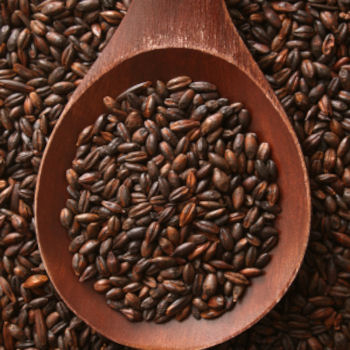 I HATE it when a server asks whether or not I like dark beer. Dark beer is not a style. Dark beer does not contain more nutrients. Dark beer is just dark. Typically, a beer’s color is caused by the type of grains used in the brewing process. It often accompanies certain flavor profiles (roasted, chocolate, raisins, etc.), but it’s not limited to just one. There are big differences between porters, strong dark Belgian ales, bourbon barrel aged Russian imperial stouts, and Doppelbocks.
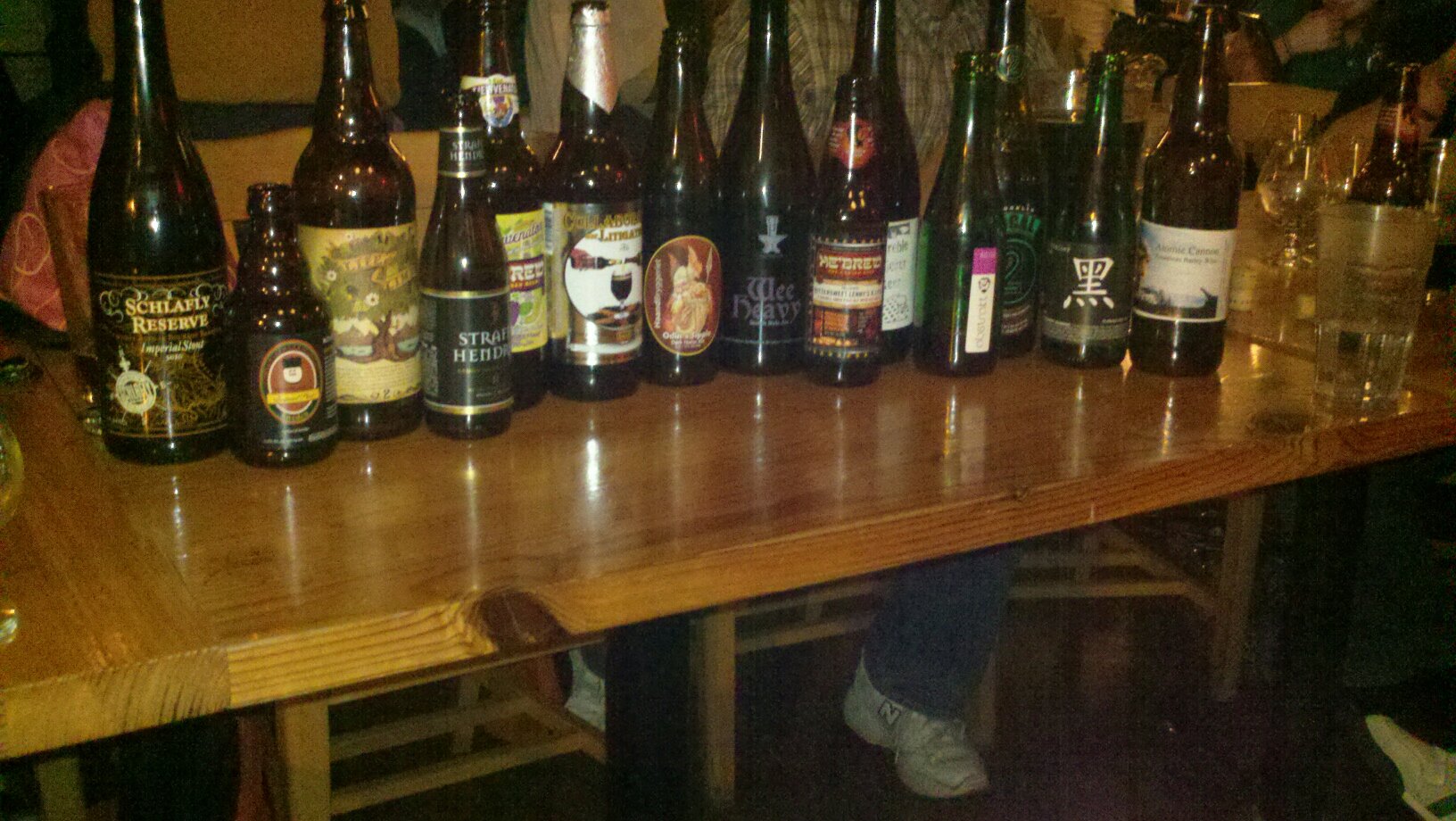
So, dark beer is just a way for people to describe beers who don’t know anything about beer. That’s why my beer club had some fun and decided to do a tasting featuring only dark beers. After a few objections, folks warmed up to the idea and ran with it. The following is what we drank in reverse order. (Keep in mind that each sample was maybe a couple ounces. So, I didn’t get as tanked as it may seem.) I’ll see if I can remember what each beer tasted like…
Mikkeller Black – I tweeted that this was maybe one of the best beers I’ve had this year. Whatever it was, it was really intense. So smooth despite all the heat. I look forward to drinking this one again as I have one sitting in my cellar/closet.
Shmaltz Bittersweet Lenny’s R.I.P.A. – This beer is so ridiculously full despite its reasonable price point, much like all the Schmaltz/He’Brew beers. To be honest, at this point in the evening, my taste buds were beyond shot.
Avery & Russian River Breweries Collaboration Not Litigation Ale, Batch# 2 – I don’t know whether or not this counts as a dark beer, but we drank it anyway. After a load of heavy beers, though, it just didn’t stand up. Still, it’s a nice beer and surprisingly strong.
AleSmith Brewing Company Wee Heavy – Much milder for this style, IMO. I was sort of surprised that it wasn’t more impressive, but what can a Wee Heavy do with a bunch of stouts?
BrewDog Abstrakt – Strange, but totally worth the sips I was able to have.
Brooklyn Brewery Local 2 – Nice beer. Somewhat delicate among the heavies, sort of like all Brooklyn brews.
HaandBryggeriet Odin’s Tipple HaandBryggeriet – A big, shining example of an imperial stout done right. Or so I think.
Life and Limb 2 – This one was sort of a letdown. Too subtle or too “boring?” More on that concept later this week.
He’Brew Rejewvenator (Year Of The Grape) 2010 – I really liked this one. The grape really comes through. Despite my hesitancy to buy He’Brew fruit beers, this one and the Pomegranate beer are really good.
Treble Kicker Black Francis Imperial Stout – The bourbon has all but disappeared from this beer. The chocolate is still there, however. I’m looking forward to seeing how this beer ages.
Schlafly Reserve – Imperial Stout (2010) – Man, this beer could use some time in the cellar to age. It’s just too much bourbon and basically tastes like the barley wine. I bought one with the intention of aging it. So, we’ll see.
Atomic Cannon American Barley Wine – John is a homebrewer in our group. He did one of those deals where you brew a barley wine and turn around to use the spent grains to brew a ESB. I don’t know about the ESB, but this barley wine was superb. Tons of flavor and aroma like most great American barley wines. It could have been a little more carbonated, though.
Schlafly Reserve – Imperial Stout (2006) – The local Schlafly rep showed up with this bottle and we were glad he did. Where the younger version was overpowering with it’s bourbon flavor, this one had settled quite a bit. Gone as well was the thick, syrup-like mouthfeel of Jr. I loved this beer a ton. One interesting thing we learned was that the batches before 2009 (I think) were aged in either Maker’s Mark or Jack Daniels barrels. Today’s batches are aged in something else. (The rep couldn’t remember.) Whatever the difference is, get back to the 2006-2008 versions ASAP!
Hantverksbryggeriet Kosacken (Prototyp X) – I don’t know where this one came from, but it was a decent stout. (It’s a stout, right?) A couple of us were struggling to figure out what’s that thing that makes it taste so Scandinavian. Could it be juniper? I don’t know, but most of the beers from that region taste the same. From what I gather, double stouts are the “lighter” version of imperial stouts, body-wise.
Casa de Elwess Nuts About Porter – Jade is president of our little club and has recently taken up homebrewing. The beer showed up a bit flat, but she brews a nice porter. This one featured hazelnut, which had me a bit weary, but it wasn’t too overpowering.
Schlafly Black IPA – This beer was not officially part of the tasting, but the Schlafly rep showed up with a keg and most of us tried some anyway. It’s a decent Black IPA/Cascadian Dark Ale. It’s not too roasty and the hops have a nice presence. It’s not a hop bomb like some BIPA’s, but it’s pretty good. Several of us felt this would be a go-to beer if it were regularly available.
Update: Here’s the proof in picture form…
Where Indie and Craft Meet
If you’re just stopping by for the first time, you should know that this blog explores the intersections between indie rock and craft beer. One aspect is simply the fact that we all love rock music and beer. The other aspect is the intersection between indie and craft. For me it’s obvious, but for others, it’s a stretch.
Indie is short for “independent.” To be independent, one must be self-sufficient, free from the tyranny and limitations of corporations more intent on making a buck than putting out a good product. Independent rock music and music labels are considered such as they are not a part of corporate owned music factories. There are only 3-4 of these major labels left, but they are huge. Still, as the majors deal with the handcuffs of corporate profit margins, indie labels are free to let their artists create.
Craft is generally considered a type of skilled work. Historically, craft was judged not only on quality but also quantity. In order to maintain a high level proficiency the production had to remain small. Larger production tends to remove the craft, creating product with increased simplicity and often more defects. When craft is increased, volume tends to shrink, but the quality of the output is pleasurable.
Indie and craft meet in both the music and beer industries. Indie labels also happen to demonstrate a fair amount of craft among its artists. This focus is lost in the craft at the majors as the shift is toward making music that satisfies corporate bottom lines takes precedence. And craft brewers are the most independent of beer industry as they provide a higher quality alternative to the three or so corporate beer producers. One could really call them craft rock or indie beer if it was desired and neither would lose meaning.
Now, don’t get me wrong, both indie rock and craft beer have intentions to make money. How else would they live? The difference between these guys and their corporate counterparts is that they won’t put profit ahead of the craft or their independence. Sure, some indies and crafties have sold their souls to corporations, but they are the exception not the rule. The indie and craft movements are about small scale and high quality. Corporations don’t know how to do this.
And we’ll gladly pay for whatever indie labels and craft breweries are selling despite higher prices. Even during this recession, these labels (as well as the stores who sell them) and breweries have seen steady growth. Craft beer especially is growing at an incredible rate. Even during economically hard times, we’ll find the money to support independent, craft producers of our favorite goods because we know that their products are worth it. This is no truer than it is for indie rock and craft beer.
Despite the success indie/craft producers are enjoying, our corporate overlords still rule the markets, but their share is shrinking. The large, corporate breweries are watching their sales drop as is the industry as a whole. However, craft beer continues to grow. The music industry is suffering as well. Yet, more and more indies are popping up all the time and they continue to put out music. If there’s room for these smaller players in their respective industries, then they must be doing something right.
So, the indie and craft markets are what’s king these days. They may not own high percentages of their markets, but they have found sustainable business methods that feature slow, controlled growth and a focus on the craft. They maintain their independence through their success. This is where they intersect. I think there’s a lot we can learn from indie rock and craft beer. That’s where this blog comes in. If I had time and this was my full-time job, I’d provide you with a lot of statistics. For now, you’ll just have my opinions and vignettes to go on. Here’s to building international coalitions through beer and Pavement and here’s to indie beer and craft rock.
Top 5 Beers in My Cellar

The following list is based on my anticipation for cracking open the following beers. I may have some beers that are rated better or that I may actually like more, but this is more of a list that highlights some oddball beers and beers I just can’t wait to open. Some I’ve had already, but some will be new to me once I open them in the coming months or years.
5. Allagash 2010 Odyssey and 2009 Interlude – The Odyssey was scored in a Yankee Swap last Xmas. I have no idea what’s inside. The Interlude was found while on a business trip in Richmond, VA. Again, I have no idea what’s inside. Anything barrel aged and produced on a small scale by one of the more respected American craft breweries has me intrigued. Now, if they’re terrible, the brewery’s mystique will fade. However, I suspect these beers will be pretty awesome.
4. 2009 Alaskan Barley Wine – Someone told me that they had this beer and vintage at a beer festival recently. It was the hit of the fest according to this one guy, but I trust his opinion. That’s why this beer’s days are numbered and I’ll be cracking it open at some point this winter.
3. Never Forget Barley Wine – This was the barley wine I had planned for my daughter’s first birthday. I didn’t get around to brewing and bottling until a few months after her birthday, but quite a bit of it has been consumed, leaving me with only two bottles. At some point, I’ll open one to see what happens. The other may have to wait until a significant birthday. 18? 21? We’ll see.
2. Cantillon Lou Pepe – This one I just bought this past week. At $22, several factors are at play. First, I could only justify buying one as I had already purchased three bottles of something else that day. So, I will have no idea what it tastes like. This may mean that this one has a short stay in the cellar/closet. Second, the high price point makes me hesitant to just open it for any old reason. Regardless, it will be saved for a special occasion, of which there will be plenty with the oncoming holiday season.
1. Stone Vertical Epic Series – With 11/11/11 happening, another in the series of beers not meant to be consumed until after 12/12/12 hits stores this week. My sister’s birthday happens to be December 12th and the goal is to consume as many of these as possible – in a commemorative glass – on or more likely after her birthday next year. We’re now one year and beer closer. I currently have ’08-’10. My sister grabbed a bottle of ’11, but I may grab another when it arrives here next week just to be sure. It will be a surprise no matter what the beers taste like. Hopefully they all do stand the test of time.
A Few Beers I’ve Enjoyed Over the Last Week+
For whatever reason, I’ve backed off of straight beer review posts. Still, I do drink a fair amount of beer and thought I’d share a few from the past week.
Founders Backwoods Bastard – I might as well have skipped the beer and gone with something stronger. The beer is super boozy, malty sweet, oaked to hell, and flat. At 10%, I could get more bang for my buck with something stronger like whiskey, bourbon, or scotch. Either way, it just made me sleepy. I’ll have to save the other three bottles to see how this beer mellows.
Jolly Pumpkin Weizen Bam – I swear that Jolly Pumpkin just brews variations of its popular Bam Bier and there’s nothing wrong with that. I opened this beer and stepped away to retrieve a glass only to find that the bottle had exploded all over the counter. I often don’t get a chance to enjoy the full 750 mL of a Jolly Pumpkin as this happens a lot. Still, the activity doesn’t take away from the beer, if anything, it only adds to it. Present is that Jolly Pumpkin funk and what turns out to be a rather cloudy beer. Surprisingly, the beer is rather flat after the initial onslaught of beer on my countertop. The sourness in this version of the Bam series is not as sharp as the original, but plenty enjoyable.
Boulevard Saison-Brett (2011) – Apparently, there’s more of this beer lying around as a fellow beer enthusiast showed up at a gathering with a bottle. The sharpness missing in the beer above comes tenfold in this beer – as expected. This is a bucket list beer and I’m thankful it graces our shelves once a year.
Pretty Things Beer & Ale Project Hedgerow Bitter – I’ve had a couple of Pretty Things beers in the past. This brewery gets a lot of attention, mostly due to their lack available, queer brewery name, and unique artwork. However, my experience with the brewery has been somewhat disappointing. This beer came through, however. As an English Pale Ale, my expectations were already lowered, but this is a pretty solid beer. The bitterness is most dominant and welcomed. I don’t know whether the lowered expectations or just the fact that this is a really good beer. Either way, Hedgerow Bitter was thoroughly enjoyed Friday night.
Barley Legal Collaboration #1 – I hang out with these guys who brew every Sunday. Often, the recipes and ingredients are their own, but they like to help folks brew their beers (my Simcoe-Dependency was brewed there) as well as collaborate with whoever is interested. Recently, we gathered to brew this beer. I wanted it to have a molasses feel without getting too heavy. So, I contributed brown sugar and molasses. The results are a pretty amazing old ale-like beer. It’s super boozy and sweet with a surprising hop bitterness. It’s one of the more complex homebrews I’ve had and really worth the efforts of the entire group.
Schlafly No. 20 Volume 3 – Citrus Witbier – I had this beer a couple of times this weekend. The first was in the midst of a tasting that involved many of the other beers on this list. So, this little witbier didn’t stand up. The nose was citrusy and included the proper amount of funk. However, the results on the tongue were lost among all the other beers sampled. I gave the beer a second chance as I watched my Buckeyes stick a fork in this miserable season with a loss at Purdue. Alone, the beer is a solid witbier. The missing flavors from the night before were there when the beer was enjoyed alone. This beer would be perfect for a fish recipe I tried a while back.
Ska Euphoria Pale Ale – I had a moment to kill at a favorite water hole. This seasonal was on tap. I had purchased a full sixer last year and sort of struggled to get through it. It wasn’t that the beer was bad, I just grow tired of the same beer over and over. Anyway, I thought I’d have a glass on tap now for my annual indulgence. This beer is the dry, bitter APA I’ve been craving as of late. So, I may have to reconsider my aversion to the six-pack.
Founders Breakfast Stout – I don’t actually like coffee stouts. However, this one is different. The trouble with most coffee stouts is that the base stout is thin and relatively unremarkable so as to showcase the coffee flavors. Founders takes another route and brews a solid imperial stout with loads of coffee. The flavorful beer balances flavors of coffee, roasted malt, molasses, and a touch of bourbon. I will, however, need to be sure to drink these beers quickly as coffee fades much in the same way hops do in IPA’s.
He’Brew Genesis 15:15 – Lord have mercy! What a conglomeration of flavors and booze. This is a whole lotta beer at 15% ABV and including multiple fruits aged in barrels…You can only imagine all that comes with this beer. I had a snifter of the stuff at a bar and will hang on to a bomber to see how well it ages.
Straffe Hendrik Quadrupel – Someone had one of these when I was done drinking for the evening. The discussion surrounding it had me intrigued. I looked to buy the beer in a store a few days later, but couldn’t justify $18 for a four-pack I wasn’t even sure what I would be getting. Luckily, I found a bottle at a bar and took the plunge. This is the quad of all quads. Deep, dark, rich, complex, reeking of raisins and fig. And it’s huge at 11% ABV, but you don’t notice the booze which can be dangerous.
There have been other beers, but this is what I’ve had lately. You can follow me on Untappd. I don’t leave much insight there, mostly just keeping a list. What have you been drinking? Have you had any of the above beers? Tell me what you’d like in the comments.
Ten Signs of an Indie Rock Label
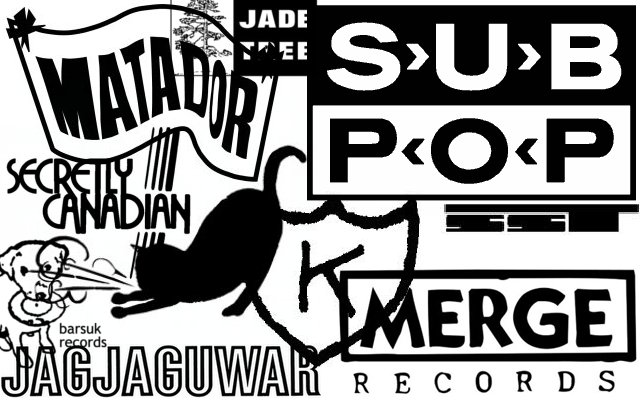
One feature of this blog has been to use beer/ indie rock to inspire posts about the other. Today’s post does that. This time, I read this post at Boak & Bailey’s Beer Blog detailing ten signs of a craft brewery. They explain their reasoning for such a list:
We were pondering the hard-to-define, much-loathed term “craft beer” again this morning and decided that, rather than a firm definition, it makes much more sense to think about indicators or signs.
The following list, off the top of our head, is not exhaustive and, clearly, we’re not suggesting that any brewery needs to be able to tick all ten to be considered to be making craft beer. Equally, some of these apply to breweries that, instinctively, we wouldn’t consider craft brewers.
Since I have often made the connection between the craft breweries and indie labels (beers are the equivalent of bands on a roster; vintages the equivalent of albums), it seemed to me that a post detailing the ten signs of an indie label might also have some merit.
Like, B&B’s list, mine is off the top of my head and will only be enriched by your comments.
1. Vinyl is among the formats offered and is often their best-seller. Vinyl is saving the record industry, IMHO. It’s not doing anything for major labels, but it benefits high quality music for niche markets. Plus, with the addition of a “free” digital download, record collectors like myself can have their cake and eat it too. Extra bonus points for labels who also sell cassette tapes.
2. Their releases are found in real, mom-and-pop record stores. Sometimes, depending on distribution deals, one can find an indie release at Target or Best Buy, but this is the exception, not the rule. I know that I can pretty much find a label’s entire roster in small, independent record stores. In fact, record stores depend on indie releases to keep their inventory unique and attractive to the discerning indie music fan just as much as the labels depend on the stores to sell their product.
3. There is a unifying aesthetic to their releases’ artwork and/or music. Whether it’s the fact that labels have limited resources for graphic design or they got into music because of one particular genre, indie labels tend to be more focused aesthetically than their corporate brethren. There’s no better example than early Sub Pop. Before it was known as grunge, the music from Sub Pop just sounded like Sub Pop. And the graphic design, featuring blurry, black-and-white images of flailing guitarists with simple, block lettering denoting the band’s name, was as identifiable as the music.
4. Indie labels are connected to the underground scenes of the 80’s or 90’s in some way. The former underground rockers of our youth eventually turned the business side of the scene, opening avenues for other artists or simply giving them their own outlet for distribution. These legends eventually grew weary of the road and recording studios, often choosing to sit at a desk while younger bands carried the torch. The indie label has a clear lineage that begins in the 80’s hardcore scene. Those same characters play a large role in today’s scene as well.
5. There are actual t-shirts and other memorabilia featuring the label. No one wears an “Epic” or “Warner Bros.” t-shirt. I have yet to see a punk with a pin reading “Sony” or “Atlantic” next to his SST pin. In some arenas, it’s cool to promote your corporate overlords/sponsors, but not with music. Sure, kids wear t-shirts for their bands regardless of label, but only those who follow indie bands will wear a K Records or Merge t-shirt.
6. They are active on social media. Maybe this is just because I only follow indie labels, but a quick search of labels on Facebook and Twitter reveals that indies are way more active and engaging than major labels. I have had actual conversations on Twitter with various indie labels. I also depend on regular updates via Facebook for a label’s release schedules and/or roster tour dates. Because they are small companies with a personal touch, indies thrive at social marketing.
7. There is often one major money-making band on an indie label’s roster that keeps them afloat. Merge has Arcade Fire. Pavement is still listed on Matador’s roster. Sub Pop had Nirvana, then Iron & Wine, then Band of Horses, then Fleet Foxes…etc. Jagjaguar features Bon Iver. There are even better examples out there, but the fact remains that depend on bands who pull in major label-like dollars keep indies afloat. The good part about these bands is that they make enough money to resist overtures made by major labels and they insure that their indie labels will continue to put out great music by lesser-known artists because the profits keep their books in the black…or close to it.
8. There is at least one artist on the roster that is mostly there for street cred or simply out of loyalty. The best indie label rosters resemble the major label rosters of the ’70’s. In those days, someone like Bruce Springsteen could struggle for three albums before finally breaking big. On the other end of the spectrum, older artists find their final resting place on labels that love and adore them to the point that they’ll continue releasing their work despite diminishing sales. Dinosaur Jr still has a label because Jagjaguar gives them their due. A guy like Eric Bachman has time to hone his craft because of the credibility he built during his years with Archers of Loaf. Indie labels are loyal and they make sure good music gets heard, even if it doesn’t appeal to everyone.
9. Bands on their labels may define or establish their own genres and sub-genres with each release. I’ve mentioned Sub Pop before, but they are yet again another great example. There was grunge, then they seemed to single-handedly bring back folk music in more recent years. Other labels that may feature specific genres might include Fat Possum, De Stijl, Astralwerks, Jade Tree, etc.
10. Artists are seen as…well…artists or people as opposed to commodities or assets at a corporate label. Often, people at an indie label see each other and their artists as co-workers or clients at least. The focus is not on the profit they can make from a band. Rather, it’s about getting the music to fans. And the deals artists often sign with indies are so much more fair than what major labels will provide. Bands get a bigger piece of the pie, better representing the part they play in the final product. Sometimes, this can be for a loss or minimal profit, but it seems to pay off in the end as most indie labels are doing well at the moment despite the industry’s struggles.
What did I miss? What would you add to this list? Do you have examples that disprove my assertions or examples that add further proof? Contribute below.
On Moderation
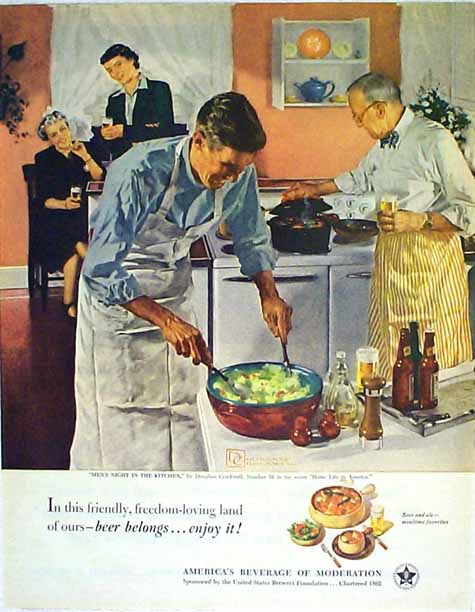
Moderation is tough. A truer White Whine™ has never been uttered. Moderation gets me every time. When I was young, my struggles with moderation affected my bank account. Now that I’m older, it’s wreaking havoc on my health.
No, don’t worry about me. I am not announcing major health problems or anything. However, if I don’t change some habits, my health will become an issue in the next ten or so years. I weigh 45 more pounds than I did as a senior in high school. Granted, I was pretty skinny, but that’s a lot of weight. I wouldn’t mind losing half of that. 20-25 pounds over my high school weight wouldn’t be so bad.
So, I’ve been on this diet of sorts. No breads, flour, sugar, fruit, etc. At every meal I have beans, meat, and vegetables. I’m supposed to drink a ton of water as well. And, of course, I’ve had to cut way back on beer.
My wife keeps telling me that the diet leaves room for one day a week of decadence, but I can’t only have beer once a week. Instead, what I’ve done is cut back to like one or two during the week and a couple two nights every weekend. So, a little moderation will have to do. It’s worked, in fact, to the tune of eight pounds lost in two weeks. (Plus, I’ve been running fairly consistently.)
The key has been moderation. The key for maintaining whatever weight I finally level off at will also be primarily due to moderation.
Moderation is a tough thing to maintain. It’s easy to over-indulge, especially with things like beer and music. However, if you want to enjoy such indulgences for a long time, you have to take it easy.
With beer, I’ve got to get back to the quality over quantity factor. Of course, my large quantities also featured a decent amount of quality, but that’s not any better for my health. So, the focus has been on enjoying one beer at a time, letting it marinade a bit, and being satisfied with just the one.
With music, it’s just a matter of picking my spots. I can’t go to every show, but I can go to the ones I really want to see or the ones that don’t interfere with family time. I’ve seen a lot of shows over the years and I don’t need to see every one that passes through town. My LP purchases haven’t really slowed down. Although, I haven’t bought an album in a couple of weeks as nothing has really been released lately that piques my interest.
More moderation means enjoying what you have and not always longing for the next big thing. I’ve talked a lot with other beer nerds who hate the constant arms race that is beer purchasing these days. It seems every major release means there will be an inevitable race to the stores. Of course, it doesn’t help that some like to clear the shelves to feed their greed, but I’ll live. There will be other beers. There will be other shows and more records. Moderation is probably the way to go to insure that I still enjoy my hobbies.


 Beer and Pavement
15 comments